Showing posts with label First World War. Show all posts

Monday, 1 May 2017

The Best Selling Novelist of All Time


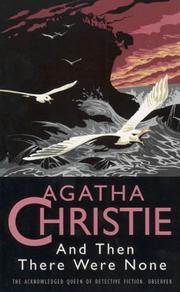
My husband Rob and daughter Jacqueline used to play a video mystery game called Murder on the Orient Express based on the famous novel written by Agatha Christie.  More recently, they played Death on the Nile.  Currently they are playing Evil Under the Sun.  These games peaked Jacqueline's interest and she started searching our bookshelves for Rob's old Agatha Christie Novels.  Last night she begged to stay up later so she could read Murder on the Orient Express.  How could I say no?  I mentioned to her that Daddy and I watched the movie of the same name, directed by Alfred Hitchcock, a few years ago.  The movie was filmed in 1972 but I didn't realize that the book was first published in 1934.  "It's almost as old as Grandpa!" I said to Jacqueline.  


It turns out that Rob has ten of the Agatha Christie mysteries, but the famous author wrote at least 66 detective novels.  In fact, she is the most widely published novelist in history, only outsold by the Bible and Shakespeare.  For a complete list of Christie's novels, visit http://www.agathachristie.com/stories.


Image result


Agatha Christie's main character Hercule Poirot could have been inspired by someone she met while attending school in France where she learned how to speak fluent French.  One source, however, says that Christie's character was inspired by a Belgian gendarme she met in Britain after he fled the Germans during the First World War.  http://www.telegraph.co.uk/culture/books/10825492/Poirot-unmasked-the-Belgian-refugee-who-inspired-Agatha-Christie-character.html


Agatha Christie served as a nurse during the First World War.  Her knowledge of poisons, which she learned at the time, could have been used in any one of the 83 poisonings in her books.  For instance, cyanide features in The Mirror Cracked from Side to Side, And Then There Were None, A Pocket Full of Rye and Sparkling Cyanide.  Kathryn Harkup writes about this in her book A is for Arsenic:  The Poisons of Agatha Christie https://bookshop.theguardian.com/catalog/product/view/id/323440/


Agatha Christie travelled widely through Europe and Africa.  She participated in archeological digs in the Middle East with her second husband Max Mallowan which inspired many book titles.  While on digs, Mallowan discovered artifacts as old as 3000 years.  Christie, always conscious of the fact that she was 15 years older than her husband, used her face cream to clean the artifacts.  As archeologist Charlotte Trumpler explained:  "Christie was of course fascinated by puzzles, by the little archeological fragments, and she had a gift for piecing them together patiently." http://www.cnn.com/2011/WORLD/europe/03/12/uk.christie.writer.archaeology/ Her novel, Murder in Mesopotamia, with an archeologist as the culprit, was the result of these digs.  


Another viewpoint of the Iamassu sculpture, captured by Christie in 1949, shows the figure which guarded the royal court from evil at the ancient site of Nimrud  


Tuesday, 7 June 2016

Canada Post Recognizes British Home Children


A group of British Home Children, accompanied by Dr. Barnardo's widow, head to Canada courtesy http://www.guelphmercury.com/news-story/4532437-wellington-county-families-explore-their-connections-to-british-home-children/


From 1869 to 1939, 100,000 destitute children from Britain's cities immigrated to Canada where they worked as child labourers (http://alinefromlinda.blogspot.ca/2011/08/british-home-children.html).   While the churches and philanthropic organizations which sent them here had good intentions, they were unable to properly monitor their situations.  Some of these "little immigrants" were treated well, but many were overworked and even abused.

One in ten Canadians, including myself, is a descendant of a British Home Child, named after the Children's Homes that they lived in.  They settled all across Canada, but the majority settled in Ontario.  The highest concentration of Home Children was in North Muskoka, where my great- grandma lived once she immigrated here.  These children worked on Canada's farms, in Canada's factories and on the battlefield in Europe during the First World War.  They helped build this country.

Many people do not know that they are descendants of the Home Children since it was a source of shame for the children. As they die off, however, some are sharing their stories.  Rose McCormick Brandon, another Home Child descendant, features many of these accounts in her book Promises of Home:  Stories of Canada's British Home Children (https://littleimmigrants.wordpress.com/promises-of-home-stories-of-canadas-british-home-children/).

Brant MP Phil McColeman, the nephew of a British Home Child, championed a bill declaring 2010 the Year of the British Home Child in Canada.  The same year, Canada Post issued a stamp in their honour.  "The stamp features an image of the SS Sardinian ( a ship that carried children from Liverpool to Quebec), a map symbolizing their trans-Atlantic journey, a photograph of a child at work on a farm and one of a newly arrived Home Child, standing beside a suitcase while en route to a distributing home in Hamilton, Ontario."


Saturday, 4 June 2016

The Group of Seven

The Group of Seven, also known as the Algonquin School, was a collection of Canadian landscape artists from 1920 to 1933.   Their inspiration was Algonquin Park, where Thom Thomson, another painter associated with the group, was a guide.  One of their members, Lawren Harris, heir to the Massey-Harris fortune, financed their studio in Toronto where Franklin Carmichael, Frank Johnston, Arthur Lismer, J. E. H. MacDonald, and Frederick Varley painted.  A.Y. Jackson and Frederick Varley served as official war artists during the First World War.  Thom Thomson died mysteriously while canoeing in Algonquin Park.  However, the remaining members reunited after the war.  The Group of Seven held their first official exhibition in 1920, the same year as Frank Johnston left the group.  A.J. Casson joined the group in 1926 followed by Edwin Holgate in 1930 and LeMoine Fitzgerald in 1932.  In 1995, Canada Post issued ten stamps to commemorate The Group of Seven, seven for the original members and another three for the additional members.

1.  Serenity Lake of the Woods (Frank Johnston)


2.  A September Gale, Georgian Bay (Arthur Lismer)


3.  Falls, Montreal River (J. E. H. MacDonald)


4.  Open Window (Frederick Varley)


5.  October Gold (Franklin Carmichael)


6.  NOrth of Lake Superior (Lawren Harris)


7.  Evening, Les Eboulements (A. Y. Jackson)


8.  Mill Houses (A. J. Casson)


9.  Pembina Valley (LeMoine Fitzgerald)


10.  The Lumberjack (Edwin Holgate)


Wednesday, 2 March 2016

Koenigsberg Remembered

“A homeland is truly lost when one keeps silent about it, when no one remembers it anymore.” (Siegfried Lenz)


I watch footage of peacetime KoenigsbergEast Prussia and am struck by the beauty of the city:  its turreted castle, its red brick churches, its Tudor style shops, its magnificent architecture, its pretty parks, its meandering river, its gorgeous gardens, its charm.  I see the hustle and bustle as people walk up and down its cobblestone streets.  I can almost feel the vibe in the air.  It is a city full of culture, full of character, full of history.  I can only imagine what it would have been like to visit the capital city when Rob’s Oma was young.  Now it is but a memory, bombed by the Allies, razed by the Soviets, officially part of Russia.

Koenigsberg, population 375,000 in 1939, was a city of churches, castles, culture and character.  The Teutonic Knights arrived 700 years before.  The Koenigsberg castle was erected in the 16th and 18th centuries. They also built a wall around their heavily fortified fortress.  A city grew up around the castle, filled with massive brick churches, Tudor style shops, hotels and restaurants.  Horse and carriages travelled on the cobblestone streets, followed by streetcars and later automobiles.  The large boulevards, lined by trees, filled with pedestrians making their way from shop to shop.  East Prussian farmers made their way up and down the streets with their carts loaded with potatoes and vegetables, ready to sell them at the market. 


Down by the wharf sat fishing boats bringing in their catch for the day.  Rowboats floated up and down the Pregel River under arched bridges.  Sailboats from Germany’s oldest sailing club founded in 1855, made their way down the river.  Bigger boats floated under the drawbridge which lifted for them to pass.  A canal was dug between Koenisberg and Pillau in 1901, increasing trade between East Prussia and Russia.


The University of Koenigsberg, founded in 1544 by Duke Albert, was filled with students ready to listen to the lectures of philosopher Immanuel Kant.  Poles were among the first professors at the University of Koenigsberg.  While Koenigsberg was overwhelming German, its population was also composed of Poles, Jews Lithuanians and Russians.  It was considered to be a pluralistic city. 
Koenigsberg also boasted an Academy of Painting, a School of Music and a School of Business, making the city an academic centre.

Koenigsberg was a publishing centre of Polish literature.  The first Polish translation of the New Testament took place there in 1551.  The first Lutheran catechism was printed there in 1547.  The Royal Library, which held 200,000 volumes on its shelves, opened in Koenigsberg Castle in 1534.  It was used often by the university students in town.  Its most famous librarian was the philosopher Immanuel Kant who worked there in the 1700’s.  


The railroad has always been a foundation for the city’s commerce.  It also served as a way to transport troops to the Russian border.  The Prussian Eastern Railway linked Koenigsberg with the city of Berlin in 1853 along with towns like Breslau, Thorn, Insterburg, Tilsit, Pillau and Eydtkuhnen.  In 1860, a railroad was completed from Berlin to St. Petersburg, thereby increasing trade between Prussia and Russia.  Koenigsberg got its first tram in 1895.

The Koenigsberg Zoo opened in 1896 under the direction of the Tiergarten Society.  At the time it had 893 specimens representing 262 species.  By 1911, East Prussian children could ride on their resident elephant named Jenny.  Adults were charged 50 pfennigs to enter and children were charged 20 pfennigs.  The Botanical Gardens, planted in 1811, flourished under Koenigsberg’s sunny skies.

Bakeries flourished on the city’s alleyways where specialties like marzipan were served, a Koenigsberg creation.  Butchers sold oshsenblut or ox blood.  Restaurants served Koenigsberger Pleck or bovine tripe soup as an appetizer.  Wineries sold kopsklekelwein or currant wine and barenfang or a honey liqueur with a vodka base.    Koenigsberg, however, was known more for its breweries of which there were 224 in 1774.


The capital of East Prussia was also a Protestant stronghold.  Its oldest church was St. Nicholas.  The Cathedral Church, on an island in the middle of the Pregel River, was also a magnificent building.  One of the only churches to survive the Allied bombing of 1944 was the Dom Cathedral. 

The French Army captured Koenigsberg in 1814 and Emperor Napoleon paid a visit to the East Prussian capital.  Finally, in 1900, 12 forts were constructed around the city of Koenigsberg as a stronghold.  Russian troops arrived in the city again in 1914 at the opening of the First World War, but they were driven back by the East Prussians


Monday, 11 January 2016

Eaton's Catalogue Covers Reflect the Times

Eaton's Catalogue covers changed dramatically over its almost 100 year history.  Early catalogues seemed to focus on the Eaton's store and the country of Canada.  Later catalogues focussed on the family, and eventually, the individual.  For more information about the catalogue, visit http://alinefromlinda.blogspot.ca/2016/01/eatons-catalogue-icon-of-canadian.html.  Here is a small sampling of what Canadians used to call The Homesteader's Bible.


The original Eaton's Catalogue circa 1884 displayed the Toronto storefront courtesy http://www.historymuseum.ca/cmc/exhibitions/hist/biography/images/eaton-chro-catalogueb.jpg.


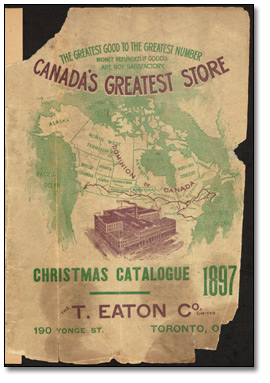
The Eaton's Catalogue circa 1897 reminds me of my elementary school notebooks courtesy http://www.archives.gov.on.ca/en/explore/online/toys/pics/229_231_0_1_1897cover.jpg.


Eaton's Catalogue circa 1903 boasts mail order service "from sea to sea" courtesy 


The Eaton's Catalogue of 1908 reminds me of the Flintstone's episode where Fred (aka Santa) parachutes over chimneys as he delivers presents.  Photo courtesy https://www.pinterest.com/lynettehaynes/t-eaton/.


The Eaton's Catalogue circa 1918 features a patriotic image given the First World War has just ended courtesy http://www.collectionscanada.gc.ca/obj/029006/f1/nlc005411-v6.jpg.


Good quality artwork featured on the 1922 Eaton's Catalogue courtesy https://s-media-cache-ak0.pinimg.com/originals/bb/eb/db/bbebdbde86cad035e1b383d81d1bbd96.jpg.


Eaton's Catalogue circa 1942 focusses on a mother and daughter courtesy https://upload.wikimedia.org/wikipedia/commons/1/19/Eaton's_Spring_and_Summer_Catalogue_1942.jpg.


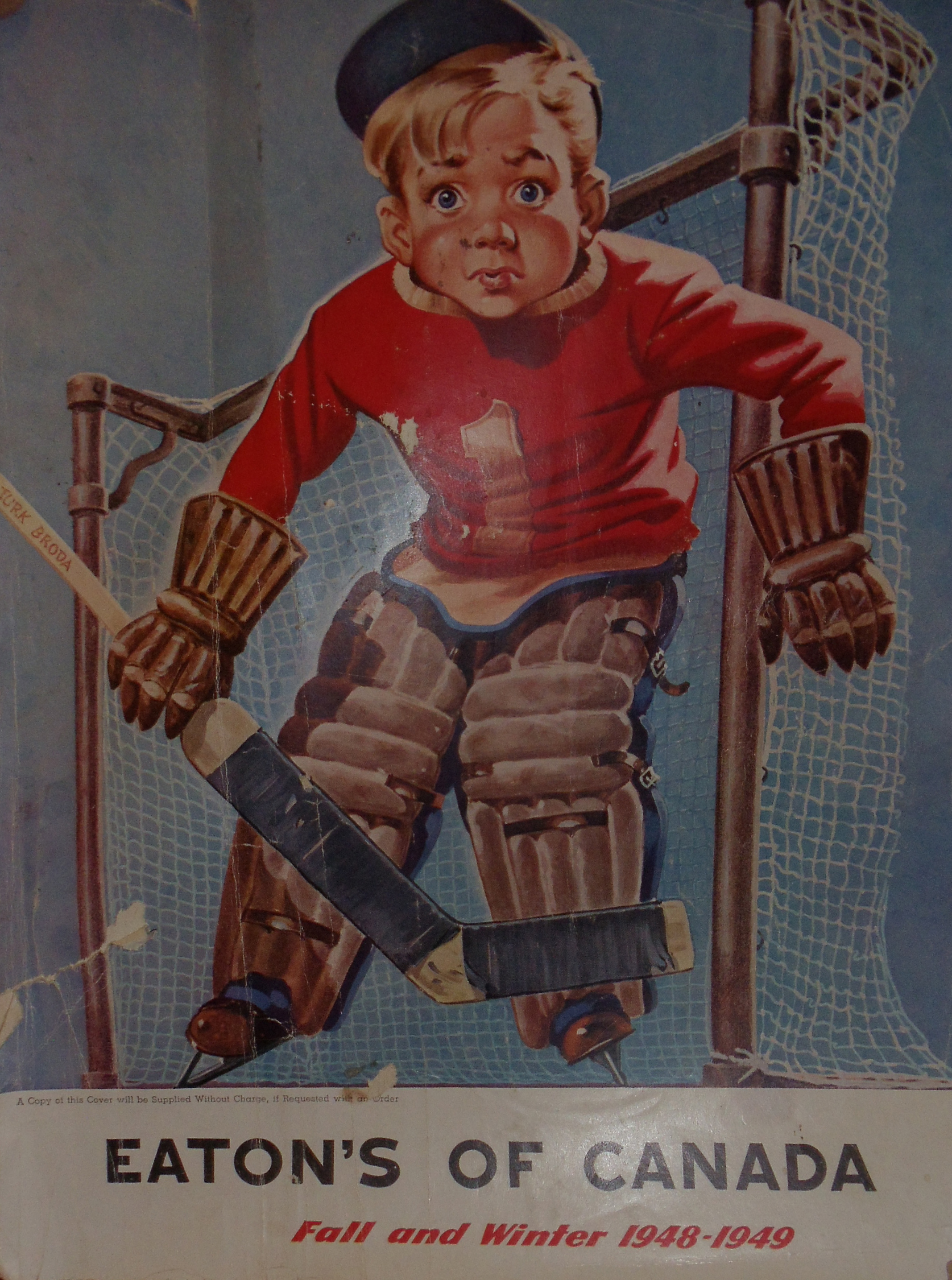
A young hockey player could be outfitted at Eaton's circa 1948 courtesy http://www.lakecountrymuseum.com/wp-content/uploads/2013/08/Eatons-of-Canada-catalogue.jpg.


Christmas 1959 courtesy http://www.archives.gov.on.ca/en/explore/online/eatons/pics/catalogue21b.jpg. 


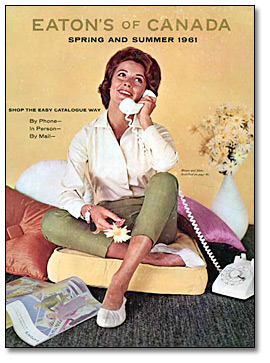
This woman reminds me of Jacqueline Kennedy circa 1961 courtesy http://www.archives.gov.on.ca/images/f_229_1_0_235_no_35_cov_270.jpg.


Sisters waiting for Santa circa 1967 courtesy https://www.pinterest.com/pin/261208847110940603/.


Sunday, 10 January 2016

Eaton's Goes to War

They were faithful unto Death.  In proud remembrance of the two hundred and sixty three members of the Eaton staff who made the supreme sacrifice in World War II, having gone forth valiantly to
fight for the survival of freedom.  Their names are here inscribed so that all may read who pass this way. (Eaton's War Memorial Plaque, 1948)


On Remembrance Day, 1948, Eaton's unveiled a plaque honouring the staff who served in the Second World War at their Toronto, Winnipeg and Montreal stores.  The plaque was similar to the one commissioned by Sir John Craig Eaton to honour employees who served in the First World War.  Sir John Craig had paid the salaries of those fighting overseas.  R. Y Eaton reinstituted the practice of subsidizing employees who served during the Second World War.  Married men were given a salary that when added to their military salary was equal to their regular pay.  Bachelors were given two thirds of their salary.  Eaton's employees who received an honourable discharge were given their old jobs back or given an equivalent position.  After the war, John David Eaton had his staff organize a series of banquets to honour the veterans, the first of which was held at Eaton Hall in King City north of Toronto.  Twenty five hundred veterans attended the event.  Attendees were honoured with 18 karat gold signet rings.


Portrait of Sir John Craig Eaton

Eaton's World War victory statue promoting victory bonds courtesy http://www.archives.gov.on.ca/en/explore/online/soldiers/pop_up_big/1918_Victory_statue.aspx


Wednesday, 9 September 2015

King George VI & Churchill Plan to Land at Normandy Beach on D-Day

"The war had immeasurably strengthened the link between the King and his people." (http://www.royal.gov.uk/HistoryoftheMonarchy/KingsandQueensoftheUnitedKingdom/TheHouseofWindsor/GeorgeVI.aspx)


King George VI wrote a letter to Sir Winston Churchill on May 31, 1944.  Its contents were shocking:  the prime minister, pushing 70 years old, and the king, pushing 50, both intended on landing on the Normandy beach on D-Day.  How was their plan foiled?

Sir Winston Churchill, a veteran of the Boer War in Africa, was no stranger to combat.  King George VI, a veteran of the First World War, was also familiar with battle.  The king had remained at Buckingham Palace, which was bombed nine times during the first few years of World War II.  He had toured London's East End, sifting through the rubble after the Blitz.

Even so, when Churchill proposed that he would land on the beaches at Normandy with the British troops on D-Day, King George was shocked.  "I don't think I need to emphasize what it would mean if...a chance bomb, torpedo or mine should remove you from the scene," he explained in his letter to Churchill.

King George thought that he would deter Churchill by suggesting that he join him in the D-Day landing.  Churchill, "the Lion", was all for it, however.  Admiral Ramsay intervened and explained to both leaders that they were needed at home to make crucial decisions if D-Day did not go as planned. "I would ask you to reconsider your plan," wrote King George to Churchill.

In the end, neither the king nor the prime minister participated in the D-Day landings.  Sir Winston Churchill made his famous V for Victory sign from 10 Downing Street.  King George delivered a D-Day speech from Buckingham Palace to build moral among the British population.  "The war had immeasurably strengthened the link between the King and his people."


Monday, 10 November 2014

Blood Swept Lands & Seas of Red

This Armistice Day, the Tower of London moat was a sea of red (http://www.express.co.uk/news/uk/532317/eBay-stops-sale-Tower-of-London-poppies-online).  To honour the 880,000 plus British soldier swho served in the First World War, the same number of ceramic poppies was placed in the moat over the past few months.  The display, titled "Blood Swept Lands and Seas of Red" was created by artist Paul Cummins and theatre designer Tom Piper.  Prince William and Princess Kate visited the display when it first opened this past August.  It remains open until November 11 to honour the soldiers.  Each night, people gather at the Tower of London to do a roll call of honour followed by the playing of the Last Post.  After Armistice Day the display will be taken down.  All of the poppies have been sold to raise money for military charities.  What a great way to honour the sacrifice of these brave soldiers!


Tuesday, 14 October 2014

Murdoch Mysteries


A man murdered at a dinner at Toronto's Queen's Hotel.  A woman found floating in Toronto Harbour.  A brawl between dockworkers and the Toronto Constabulary.  A protest staged by new suffragettes at Queen's Park.

Today I watched my first episode of Murdoch Mysteries.  I wondered why I didn't start watching it in Season 1 rather than Season 8.  While I usually don't like murder shows, Murdoch focuses more on the mystery.  It is chock full of Canadian history.  Set at the turn of the last century, the Canadian TV series is based on a police detective named William Murdoch who solves crimes in Toronto.  He is engaged to a female doctor, surely one of the province's first, named Julia Ogden.  He is straitlaced and proper, indicative of Victorian times.  Crossing himself when he finds a dead body, Murdoch is a staunch Roman Catholic, something that might preclude him from a top position in the Toronto Constabulary, which is full of Protestants.  

Murdoch's Canada is still a young country, not divided the way the country is today.  You couldn't find British Columbia or Newfoundland on Murdoch's map, but you could find Assiniboine and Athabasca.  It is still very British, the Union Jack flying outside its public institutions.  Murdoch's Canada still enjoys an innocence; it hasn't participated in the First World War.  At the same time, the gang activity down by the Toronto docks shows the dark side of its second biggest city.

I was pleased to discover that much of the Murdoch Mysteries episodes I watched, "On the Waterfront:  Parts I & II", were filmed in my hometown of Hamilton.  The directors found an old warehouse on Sherman Avenue North which served as the sight for much of the drama.  Queen's Park in Toronto, of course, served as a location for the suffragettes' protest.  The old stone building remains much the same as it did in 1893 when it was built.

I am excited about watching more episodes of Murdoch Mysteries.  The 100th episode, due to be aired on October 27, will include a short scene with my friend Marlena Kaesler.  I am grateful to her for letting me know about her guest appearance.  Otherwise, I might never have discovered how interesting the show is.  So, tune in Mondays at 8 pm on CBC.