
Agatha Christie courtesy http://www.twincities.com/2016/11/16/minneapolis-theater-round-agatha-christie-murder-on-the-nile.
My husband Rob and daughter Jacqueline used to play a video mystery game called Murder on the Orient Express based on the famous novel written by Agatha Christie. More recently, they played Death on the Nile. Currently they are playing Evil Under the Sun. These games peaked Jacqueline's interest and she started searching our bookshelves for Rob's old Agatha Christie Novels. Last night she begged to stay up later so she could read Murder on the Orient Express. How could I say no? I mentioned to her that Daddy and I watched the movie of the same name, directed by Alfred Hitchcock, a few years ago. The movie was filmed in 1972 but I didn't realize that the book was first published in 1934. "It's almost as old as Grandpa!" I said to Jacqueline.

It turns out that Rob has ten of the Agatha Christie mysteries, but the famous author wrote at least 66 detective novels. In fact, she is the most widely published novelist in history, only outsold by the Bible and Shakespeare. For a complete list of Christie's novels, visit http://www.agathachristie.com/stories.

Agatha Christie's main character Hercule Poirot could have been inspired by someone she met while attending school in France where she learned how to speak fluent French. One source, however, says that Christie's character was inspired by a Belgian gendarme she met in Britain after he fled the Germans during the First World War. http://www.telegraph.co.uk/culture/books/10825492/Poirot-unmasked-the-Belgian-refugee-who-inspired-Agatha-Christie-character.html
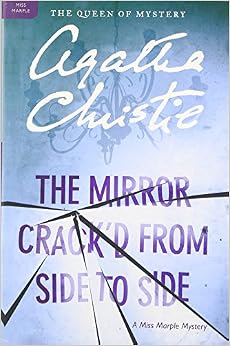
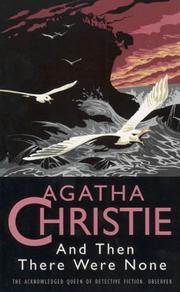
Agatha Christie served as a nurse during the First World War. Her knowledge of poisons, which she learned at the time, could have been used in any one of the 83 poisonings in her books. For instance, cyanide features in The Mirror Cracked from Side to Side, And Then There Were None, A Pocket Full of Rye and Sparkling Cyanide. Kathryn Harkup writes about this in her book A is for Arsenic: The Poisons of Agatha Christie https://bookshop.theguardian.com/catalog/product/view/id/323440/.
Agatha Christie travelled widely through Europe and Africa. She participated in archeological digs in the Middle East with her second husband Max Mallowan which inspired many book titles. While on digs, Mallowan discovered artifacts as old as 3000 years. Christie, always conscious of the fact that she was 15 years older than her husband, used her face cream to clean the artifacts. As archeologist Charlotte Trumpler explained: "Christie was of course fascinated by puzzles, by the little archeological fragments, and she had a gift for piecing them together patiently." http://www.cnn.com/2011/WORLD/europe/03/12/uk.christie.writer.archaeology/ Her novel, Murder in Mesopotamia, with an archeologist as the culprit, was the result of these digs.

Christie helped husband Mallowan uncover the lost city of Nimrud in the late 1940's and early 1950's courtesy http://www.dailymail.co.uk/news/article-4095210/Photographer-Mesopotamia-Incredible-pictures-taken-Agatha-Christie-reveal-helped-uncover-Iraq-s-lost-city-Nimrud-archaeologist-husband-writing-detective-novels.html.


