Showing posts with label Bible. Show all posts

Monday, 1 May 2017

The Best Selling Novelist of All Time


My husband Rob and daughter Jacqueline used to play a video mystery game called Murder on the Orient Express based on the famous novel written by Agatha Christie.  More recently, they played Death on the Nile.  Currently they are playing Evil Under the Sun.  These games peaked Jacqueline's interest and she started searching our bookshelves for Rob's old Agatha Christie Novels.  Last night she begged to stay up later so she could read Murder on the Orient Express.  How could I say no?  I mentioned to her that Daddy and I watched the movie of the same name, directed by Alfred Hitchcock, a few years ago.  The movie was filmed in 1972 but I didn't realize that the book was first published in 1934.  "It's almost as old as Grandpa!" I said to Jacqueline.  


It turns out that Rob has ten of the Agatha Christie mysteries, but the famous author wrote at least 66 detective novels.  In fact, she is the most widely published novelist in history, only outsold by the Bible and Shakespeare.  For a complete list of Christie's novels, visit http://www.agathachristie.com/stories.


Image result


Agatha Christie's main character Hercule Poirot could have been inspired by someone she met while attending school in France where she learned how to speak fluent French.  One source, however, says that Christie's character was inspired by a Belgian gendarme she met in Britain after he fled the Germans during the First World War.  http://www.telegraph.co.uk/culture/books/10825492/Poirot-unmasked-the-Belgian-refugee-who-inspired-Agatha-Christie-character.html
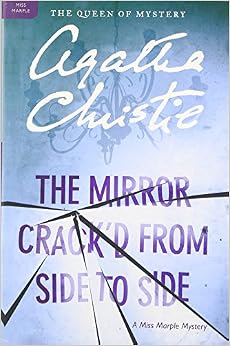


Agatha Christie served as a nurse during the First World War.  Her knowledge of poisons, which she learned at the time, could have been used in any one of the 83 poisonings in her books.  For instance, cyanide features in The Mirror Cracked from Side to Side, And Then There Were None, A Pocket Full of Rye and Sparkling Cyanide.  Kathryn Harkup writes about this in her book A is for Arsenic:  The Poisons of Agatha Christie https://bookshop.theguardian.com/catalog/product/view/id/323440/


Agatha Christie travelled widely through Europe and Africa.  She participated in archeological digs in the Middle East with her second husband Max Mallowan which inspired many book titles.  While on digs, Mallowan discovered artifacts as old as 3000 years.  Christie, always conscious of the fact that she was 15 years older than her husband, used her face cream to clean the artifacts.  As archeologist Charlotte Trumpler explained:  "Christie was of course fascinated by puzzles, by the little archeological fragments, and she had a gift for piecing them together patiently." http://www.cnn.com/2011/WORLD/europe/03/12/uk.christie.writer.archaeology/ Her novel, Murder in Mesopotamia, with an archeologist as the culprit, was the result of these digs.  


Another viewpoint of the Iamassu sculpture, captured by Christie in 1949, shows the figure which guarded the royal court from evil at the ancient site of Nimrud  


Thursday, 20 October 2016

Walking to Church

"No man with a conscience can just bat out illustrations.  He's got to put all of his talent, all of his feeling into them." (Judy Goffman, The Great American Illustrators)


Walking to Church features a family of five walking down a street, Bibles in their hands, dressed in their Sunday best.  The businesses, a barbershop, a hair salon and a restaurant, are all closed on this day of rest.  Milk bottles sit on stoops, not yet brought in by the customers.  The steeple pokes up from the businesses, the bell ringing.

Rockwell based the steeple on the one from the North Bennington Church.  The street is based on one in Little Italy in Troy, Vermont which included a restaurant called the Silver Dollar.  Rockwell's inspiration for the painting was a piece by Johannes Vermeer's called View of Houses in Delft.

Rockwell's attention to detail is always evident.  Notice the intricate designs below the parapet of the barbershop.  Take note of the antennas on the rooftops.  A flock of birds draws our eye to the church tower.  "[Without] them, one might not have realized that the family was going to church." (http://www.sothebys.com/en/auctions/ecatalogue/2013/american-art-n09048/lot.23.html)  As Rockwell explained:  "No man with a conscience can just bat out illustrations.  He's got to put all of his talent, all of his feeling into them."

Walking to Church, which first appeared in The Saturday Evening Post on April 4, 1953, sold at Sotheby's Auction for $3.2 million in 2013.


Wednesday, 13 May 2015

Acrostic Poetry: A Hidden Message

Acrostic is derived from the French word "acrostiche".  "Stich" refers to a line or row of verse.  An acrostic is a poem in which the first letter, symbol or word of each line or paragraph spells out a word or message.  Acrostics date back to the Bible; examples can be found in the Book of Lamentations as well as the Psalms of the Hebrew Bible.  Psalm 145, which has an acrostic, is repeated three times a day in Jewish services.

Acrostics are also found in Medieval literature in which a poet is often highlighted; some acrostics were written as prayers to saints.  In chronicles, acrostics were often used in German and English. However, the Greeks also used acrostics; one such example spells out JESUS CHRIST, SON OF GOD, SAVIOUR.  The Dutch national anthem is an example of an acrostic, spelling out the name WILLEM VAN NASSOV, referring to the Dutch royal William of Orange.  Examples of acrostics can be found in literature, such as the final chapter of Lewis Carroll's Through the Looking Glass, which spells out the real Alice's full name, ALICE PLEASANCE LIDDELL.


Here is a French acrostic:

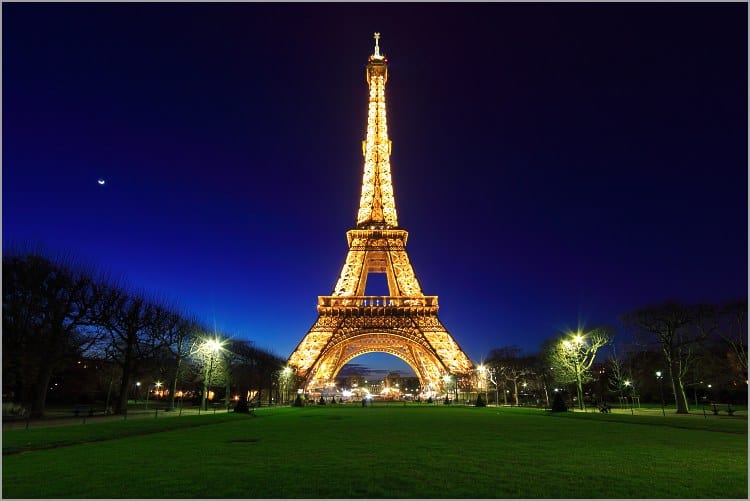
Paradis des monuments
Attend petits et grands
Reve des touristes et des enfants
Illumine par tous le temps
Sur la tour Eiffel c'est geant.


Here is a calendar acrostic to help remember the months of the year:

JANet was quite ill one day
FEBrile trouble came her way
MARtyr-like she lay in bed
APRoned nurses softly sped
MAYbe said the leech judicial
JUNket would be beneficial
JULeps, too, though freely tried
AUGured ill, for Janet died
SEPulchre was sadly made
OCTaves pealed and prayers were said
NOVices with ma'y a tear
DECorated Janet's bier.


The following poem is my attempt at an acrostic:

Put her hair in braids today;
It may be your only chance.
Give her a nice red ribbon.
Time will pass very quickly
And before you tie the bow,
I think she'll be all grown up.
Little girls become young women fast;
So put her hair in pigtails, for it sure won't last.


Visit http://grammar.about.com/od/ab/g/acrosticterm.htm for more examples of acrostics.


Saturday, 4 April 2015

The History of the Chapter Book

The chapter dates back two millennia.  The Bible is divided into numbered, titled segments of text. The modern novel, divided into chapters, debuted in the 17th and early 18th Century.  Works like The History of Charlotte Summers by Sarah Fielding (1750) , The Pickwick Papers by Charles Dickens (1836) and The Warden by Anthony Trollope (1855) are but three examples.


The chapter book, or middle grade novel, did not appear until the 20th Century.  According to Marsha Skrypuch, early chapter books, geared to ages seven to ten, are anywhere from 500 to 3000 words.  Unlike picture books, chapter books include a story told mainly through prose, although they can include illustrations.  They are divided into short chapters to give the young reader, often with a shorter attention span than an adult, a chance to pause.  The vocabulary is controlled.  Flat Stanley (1964) and Busybody Nora (1976) are two examples of early chapter books.


The middle grade chapter book, geared to ages ten to twelve, is 10,000 to 50,000 words in length.  It serves as a good transition between readers and novels.  Sold at book clubs and fairs, it is the easiest to sell of the chapter books.  The children select them and their parents pay for them.  The middle grade protagonist is a child, the topics are still child-related, and the vocabulary is rich. Stolen Child and One Step at a Time, both by Marsha Skrypuch, are examples of middle grade chapter books.


Finally, the young adult chapter book (Y/A novel) is 40,000 to 60,000 words in length and is geared to teens.  The protagonist is a teen.  The subjects are gritty, but they are "handled with kid gloves", according to Marsha Skrypuch.  The covers are usually "edgy and sophisticated".  Judy Blume, author of Are You There God?  It's Me Margaret, was the "Queen of the Y/A novels" in the 1970's and 1980's.


For more information, read http://www.calla2.com/wordpress/tips/types-of-kids-books/.


Sunday, 12 October 2014

Thanksgiving Blessings

Thanksgiving Sunday dawned sunny and warm, not a cloud in the sky, not a whisper of wind in the air.  Rob, Thomas, Jacqueline and I piled into the van to go to church.  Rob and Thomas sat in the sanctuary for the service while Jacqueline and I taught Sunday school.  We met our class of Senior Kindergarten students for the first time.  Their cute faces, their Sunday dresses, their legs dangling from the chairs, were a welcome sight.  Jacqueline was thrilled that her reading buddy from school was in the class.  So was her reading buddy!  We sang "The B-I-B-L-E" a song that I learned in Sunday School 40 years ago.  I read a story about Adam, Eve and the Garden of Eden.  Jacqueline drew a picture of a pink and green snake on the board, much appreciated by a teacher lacking artistic talent.  The kids stared at it with wide eyes.  Afterwards, Jacqueline collected the books, Rob stacked the chairs and we rushed home to prepare the Thanksgiving dinner.

Jacqueline set the dining room table with my Royal Doulton china plates, most of which were wedding gifts.  She placed a Thanksgiving serviette on each plate.  I set out the crystal glasses, also wedding gifts, above each plate.  To complement the chrysanthemum flowers in a black vase which served as a centerpiece, Jacqueline added two cinnamon candles.

I stuffed the Butterball turkey and placed it in my new roasting pan.  The old one was really meant for a roast, not a turkey.  I put the sour cream mashed potato casserole in the microwave to warm up. Julie tossed her Seven Layer Salad, always a hit in our family.  I unthawed Laurie's turnip and carrots along with her homemade turkey gravy.

As the turkey roasted to a golden brown, its smell wafting through the house, I thought I could escape from the kitchen for a few minutes.  I went outside in the backyard to watch Rob and Bill play soccer with Thomas and Jacqueline.  I soaked in the sun which bathed the patio in warmth.  Once again, we were enjoying an Indian summer for Thanksgiving.  My reverie was interrupted by sudden shouts from Rob who had scored or missed a shot.

Inside the house, my nephews Bo and Mason played with the 40 year old Fischer Price toys.  Bo chose everyone's favourite, the castle, dropping the men down the trap door.  The adults sat upstairs in the living room chatting.

Finally, we sat down to eat the Thanksgiving feast.  We said a prayer, each thanking God for one of our blessings.  Just when we thought we couldn't eat another bite, I brought out the apple pie and pumpkin pie dessert topped off with spoonfuls of whipped cream.  The food was tasty, the company pleasant, the weather gorgeous.  May the peace of Thanksgiving be in everyone's heart today and always!