Saturday, 14 November 2015

Elizabeth Gilbert's Your Elusive Creative Genius

Elizabeth Gilbert, author of Eat, Pray, Love, delivered a speech about how a creative genius resides in all of us; we just have to tap into it.  After the success of her memoir, people approached her and asked if she was worried about topping the success she had just experienced.  However, Elizabeth pointed out that, over twenty years before, people had the same reaction when she first announced that she wanted to become a writer.

Elizabeth goes on to mention how writers, and creative people in general, tend to be tortured souls who suffer from depression (Ernest Hemingway committed suicide; Norman Mailer was a raging alcoholic; Stephen King was addicted to drugs).  A writer's career is tied directly to his or her creative success.  Something like writer's block can spell the end of a literary career.

The author mentions how the Romans and the Greeks believed that creativity came from a separate spirit, something the Greeks called a "daemon", that lived in an artist's studio.  However, during the Renaissance, people started to believe that genius came from the self, rather than from a separate entity.  Elizabeth believes that such a belief puts too much of a burden on the shoulders of the artist.  "[I think] the pressure of that has been killing off our artists fort he past 500 years," she explains.

Elizabeth gives the example of poet Ruth Stone who used to work in the fields of rural Virginia.  All of a sudden, she would fell a poem coming on:  "it was like a thunderous train of air".  She would race to the farmhouse for a piece of paper and a pen before she forgot the poem, furiously scribbling the words down from end to beginning, the way she had remembered it.  Elizabeth says that is how the creative process works for her as well.  It is elusive:  she must catch it when it's whizzing by.
Elizabeth compares herself to a mule:  she must sweat and labour every day to get to her destination. The road is not easy.  It is full of bumps and twists.  But her stubbornness allows her to persevere.

Elizabeth drives home her point with the following paragraph:

And what I have to sort of keep telling myself when I get really psyched out about that {duplicating her initial success] is don't be afraid.  Don't be daunted.  Just do your job.  Continue to show up for your piece of it, whatever that may be.  If your job is to dance, do your dance.  If the divine, cockeyed genius assigned to your case decides to let some sort of wonderment be glimpsed for just one moment through your efforts, then Ole! And if not, do your dance anyhow.  And Ole! to you nonetheless.I believe this and I feel that we must teach it.  Ole! to you, nonetheless, just for having the sheer human love and stubbornness to keep showing up.(https://www.ted.com/talks/elizabeth_gilbert_on_genius/transcript?language=en)



Friday, 13 November 2015

Sir Winston Churchill's Blood, Toil, Tears & Sweat

"I have nothing to offer but blood, toil, tears and sweat." (Sir Winston Churchill)


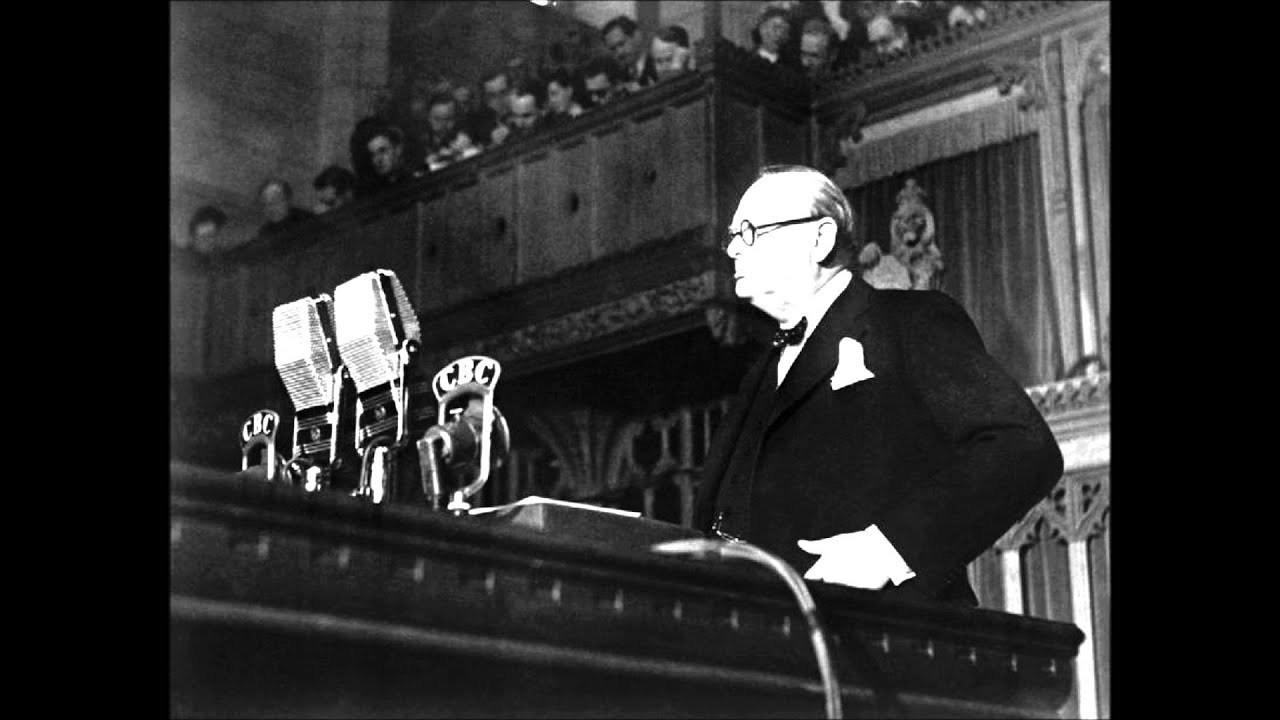
Sir Winston Churchill stood up in the House of Commons and delivered this famous speech on May 13, 1940.  Nazi Germany was goosestepping its way across Europe.  Only three days had passed since the Nazis had invaded Holland.  They had also invaded France and were only weeks away from a takeover of Paris.  Britain was getting nervous.  Would it be next?  

After the appeasement policy of Neville Chamberlain, Britain needed a strong leader.  Churchill was the man for the job.  He had fought on the battlefield in the first World War.  He knew what it was like to get his hands dirty.  He brooked no opposition.  When he stood up and delivered his speech, he rallied the troops, the country and the cause.  Here is an excerpt from his address:

I have nothing to offer but blood, toil, tears and sweat.  We have before us an ordeal of the most grievous kind.  We have before us many long months of struggle and of suffering.  You ask, what is our policy?  I will say, it is to wage war by sea, land and air, with all of our might and with all the strength God can give us; to wage war against a monstrous tyranny; never surpassed in the dark and lamentable catalogue of crime.  That is our policy.  You ask, what is our aim?  I can answer in one word:  victory; victory at all costs, victory in spite of all terror, victory, however long and hard the road might be; for without victory, there is no survival.  Let that be realized; no survival for the British Empire, no survival for all that the British Empire has stood for, no survival for the urge and impulse of the ages, that mankind will move forward towards its goal.  But I take up my task with buoyancy and hope.  I feel sure that our cause will not be suffered to fail among men.  I this time I feel entitled to claim the aid of all and I say:  Come then, let us go forward together with our united strength. (http://www.historyplace.com/speeches/churchill.htm)


Thursday, 12 November 2015

Elie Wiesel's The Perils of Indifference

The opposite of love is not hate, but indifference. (Elie Wiesel)


Elie Wiesel was a Romanian Jew who survived imprisonment in Auschwitz and Buchenwald during the Second World War, documented in his book Night.  Like many imprisoned Jews, Elie assumed that the powers that be did not know about the Nazi death camps.  After all, if they did, they would do something to stop the mass killings.

However, Elie eventually discovered that the United States State Department knew about the Nazi death camps; the Pentagon knew, as did President Roosevelt.  In fact, in 1939, when the ship the S.S. St. Louis arrived on the shores of the United States filled with 1000 Jewish refugees requesting asylum, President Roosevelt said no (see http://alinefromlinda.blogspot.ca/2015/09/ss-st-louis-ship-of-jewish-refugees.html).

Why did the Americans (and Canadians in the case of the SS St. Louis) show such indifference to the Jewish condition.  Elie said that the opposite of love is not hate, but indifference.  Such an attitude is dangerous.  "In a way, to be indifferent to suffering is what makes the human being inhuman. Indifference, after all, is more dangerous than anger and hatred.  Anger can at times be creative.  One writes a great poem, a great symphony.  One does something special for the sake of humanity because one is angry at the injustice that one witnesses.  But indifference is never creative."

The Americans, and the rest of the Allies, finally acted when they invaded the Nazi occupied countries and started liberating the Nazi death camps.  There was no indifference in their eyes when they saw the skeletons piled high.  Elie remembers the soldiers rage at what they saw.  He remembers the gratitude that he felt upon his liberation.  Here is an excerpt from the speech he delivered to President Clinton and some dignitaries in Washington DC in 1999:

Fifty four years ago to the day, a young Jewish boy from a small town in the Carpathian Mountains woke up, not far from Goethes beloved Weimar, in a place of eternal infamy called Buchenwald.  He was finally free, but there was no joy in his heart.  He thought there never would be again.  Liberated a day earlier by American soldiers, he remembers their rage at what they saw.  And even if he lives to be a very old man, he will always be grateful to them for that rage, and also for their compassion. Though he did not understand their language, their eyes told him what he needed to know -- that they too would remember and bear witness.


Wednesday, 11 November 2015

George Marshall's The Marshall Plan

For many Europeans, especially Germans, World War II did not end on V-E Day.  It marked the beginning of a decade long struggle:  struggle to overcome diseases like typhus which ran rampant in the closing days of the war, struggle to accept the displacement faced by the changing borders, struggle to overcome the worry they felt waiting for their POWs to come home from the Soviet Union, struggle to rebuild their cities which were covered in rubble and struggle to feed their population as their dollar plunged.

The United States, knowing that Germany was facing certain disaster, planned to intervene.  George Marshall, the Secretary of State, met with several representatives to draft a plant to rebuild Western Europe.  Congress agreed to give $13 billion in aid, the equivalent of $130 billion today, towards the Marshall Plan.  The Plan would be carried out over four years, from 1947 to 1951.  Eighteen European countries would benefit from the aid, including the United Kingdom (26%), France (18%) and West Germany (11%).

Here is an excerpt from George Marshall's speech of June 5, 1947:

"In considering the requirements for the rehabilitation of Europe, the physical loss of life, the visible destruction of cities, factories, mines and railroads, was correctly estimated, but it has become obvious during recent months that this visible destruction was probably less serious than the dislocation of the entire fabric of the European economy...Such assistance must not be on a piecemeal basis, as various crises develop.  Any assistance that the government may render in the future should provide a cure rather than a mere palliative."


"We want coal, we want bread" reads the sign as thousands protest during the Hunger Winter of 1947-1948 in Germany courtesy https://en.wikipedia.org/wiki/Marshall_Plan#/media/File:Bundesarchiv_Bild_183-B0527-0001-753,_Krefeld,_Hungerwinter,_Demonstration.jpg.

Tuesday, 10 November 2015

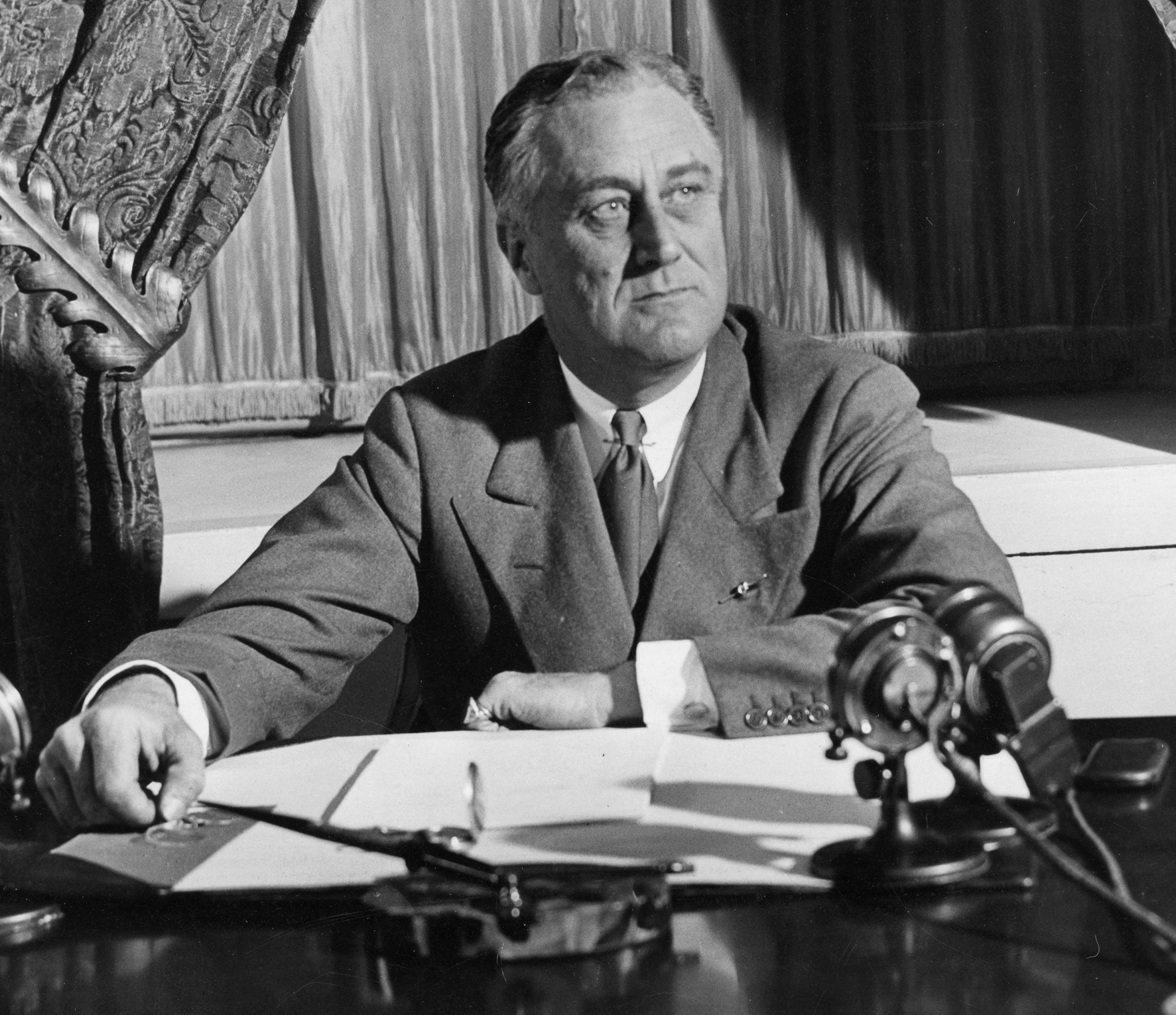
Franklin D. Roosevelt's The Great Arsenal of Democracy

"No man can tame a tiger into a kitten by stroking it." (Franklin D. Roosevelt)


By December of 1940, when the world was at war, President Roosevelt had already delivered dozens of fireside chats.  This speech however was different.  He talked about a world crisis and how the United States would have to be courageous and realistic.  He talked about the alliance of the Soviet Union, Germany and Japan.  He reminded the American people that they could not bury their heads in the sand.  The president pointed out that a hundred years before, the Monroe Doctrine had been drafted in response to another European alliance that threatened the existence of the United States.

"Let us not blind ourselves to the fact that the very forces which have crushed, undermined and corrupted so many others are already within our gates."  The President pointed out that some thought the United States was safe even if Britain fell.  However, the Atlantic Ocean was no longer the obstacle it once was.  Planes could fly from the British Isles to New England and back without refueling.  

President Roosevelt condemned Nazi Germany for its tyranny over Europe.  He said that a dictatorship like Germany could not reconcile itself with a democracy.  He called on America:  "We must be the great arsenal of democracy."  Here is an excerpt from President Roosevelt's speech:

"The experience of the past two years has proven beyond doubt that no nation can appease the Nazis.  No man can tame a tiger into a kitten by stroking it.  There can be no appeasement with ruthlessness.  There can be no reasoning with an incendiary bomb.  We know now that a nation can have peace with the Nazis only at the price of total surrender.  Even the people of Italy have been forced to become accomplices of the Nazis; but at this moment they do not know how soon they will be embraced to death by their allies."  

President Roosevelt's words were prophetic.  On December 7, 1941, Pearl Harbor was bombed by the Japanese and the United States finally entered the Second World War.  In October of 1943, Italy was "embraced to death" by Germany and switched sides in the war.


Monday, 9 November 2015

Dr. Martin Luther King Jr.'s I Have a Dream

"With a single phrase, Martin Luther King Jr. joined Jefferson and Lincoln in the ranks of men who've shaped America." (John Meacham)


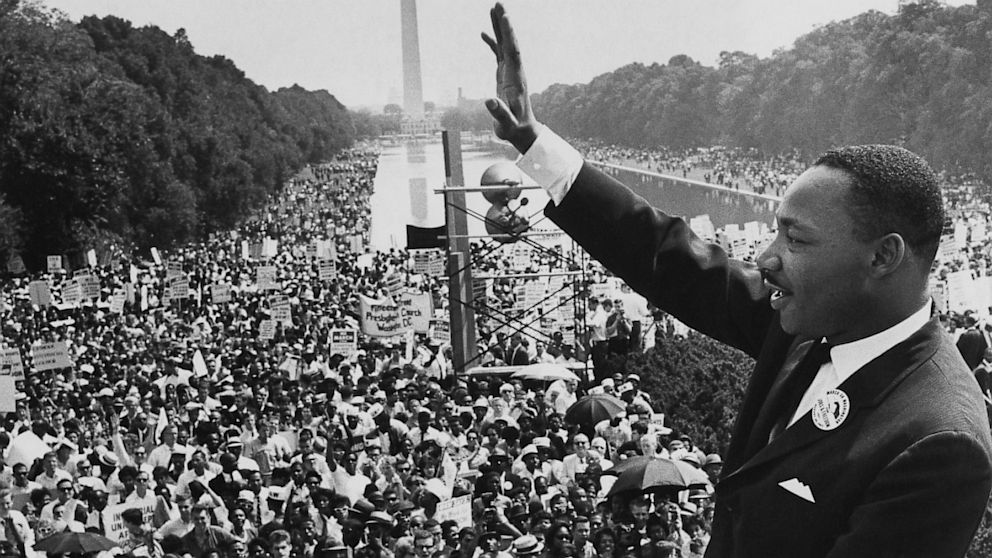
It was a defining moment of the Civil Rights Movement.  Dr. Martin Luther King Jr. stood on the steps of the Lincoln Monument and delivered a "masterpiece of rhetoric", calling on America to make good on its promise laid out in the Emancipation Proclamation 100 years before.  Dr. King said that America had given the Negro people "a bad check" and now it was time to "cash that check".  He punctuated his speech with the words "I have a dream", repeating them over and over for effect.

You would think that such an eloquent discourse would have been practised weeks or even months in advance.  However, a mere twelve hours before its delivery, Dr. King was not sure what he would say.  His focus had been on the planning on the March for Jobs and Freedom, not on the speech. While he had brought a prepared speech for the occasion, it was the black singer Mahalia Jackson who really got him stirred up with her comment:  "Tell the about the dream, Martin!" spurring him to depart from his script and deliver the most moving part of his speech.  

Dr. King quoted from the Bible and from Shakepeare's Richard III.  He mentioned the "sweltering summer of the Negro's discontent" which he hoped would be followed by "an invigorating autumn". His words rang true:  that fall, president Kennedy signed the Civil Rights Act, which put the ball in motion to free the blacks from oppression. 

Here is an excerpt from Dr. King's speech:


"I say to you today, my friends, so even though we face the difficulties of today and tomorrow, I still have a dream. It is a dream deeply rooted in the American dream.
I have a dream that one day this nation will rise up and live out the true meaning of its creed: "We hold these truths to be self-evident: that all men are created equal."
I have a dream that one day on the red hills of Georgia the sons of former slaves and the sons of former slave owners will be able to sit down together at the table of brotherhood.
I have a dream that one day even the state of Mississippi, a state sweltering with the heat of injustice, sweltering with the heat of oppression, will be transformed into an oasis of freedom and justice.
I have a dream that my four little children will one day live in a nation where they will not be judged by the color of their skin but by the content of their character.
I have a dream today.
I have a dream that one day, down in Alabama, with its vicious racists, with its governor having his lips dripping with the words of interposition and nullification; one day right there in Alabama, little black boys and black girls will be able to join hands with little white boys and white girls as sisters and brothers.
I have a dream today.
I have a dream that one day every valley shall be exalted, every hill and mountain shall be made low, the rough places will be made plain, and the crooked places will be made straight, and the glory of the Lord shall be revealed, and all flesh shall see it together.
This is our hope. This is the faith that I go back to the South with. With this faith we will be able to hew out of the mountain of despair a stone of hope. With this faith we will be able to transform the jangling discords of our nation into a beautiful symphony of brotherhood. With this faith we will be able to work together, to pray together, to struggle together, to go to jail together, to stand up for freedom together, knowing that we will be free one day.
This will be the day when all of God's children will be able to sing with a new meaning, "My country, 'tis of thee, sweet land of liberty, of thee I sing. Land where my fathers died, land of the pilgrim's pride, from every mountainside, let freedom ring."


Sunday, 8 November 2015

Ronald Reagan's Remarks at the Brandenburg Gate

After the Second World War ended, Germany was divided into East and West Germany.  The city of Berlin was divided down the centre by a wall, to mark the communist East, and the democratic West. Six million Berliners escaped from East to West before the Berlin Wall was built.  The entire continent of Europe was divided by a figurative Iron Curtain; land to the east of the curtain was controlled by the communist Soviet Union while land to the west was democratic.

North American leaders, particularly American leaders, spoke out against the Berlin Wall.  President Kennedy visited the city in 1963 shouting "Ich bin ein Berliner".  President Reagan visited Berlin in 1987.  His speech, punctuated with the words "Mr. Gorbachev, tear down this wall!", left its mark. Only two and a half years later, the Berlin Wall came tumbling down (see http://alinefromlinda.blogspot.ca/2011/11/this-wall-will-fall.html).

Here is an excerpt from his speech:

"We welcome change and openness; for we believe that freedom and security go together, that the advance of human liberty can only strengthen the cause of world peace.  There is one sign the Soviets can make that would be unmistakable, that would advance dramatically the cause of freedom and peace.  General Secretary Gorbachev, if you seek peace, if you seek prosperity for the Soviet Union and eastern Europe, if you seek liberalization, come here to this gate.  Mr. Gorbachev, open this gate.  Mr. Gorbachev, tear down this wall!" (http://www.artofmanliness.com/2008/08/01/the-35-greatest-speeches-in-history/)


ronald reagan speech 1987 berlin wall brandenburg gate