Showing posts with label Nazis. Show all posts

Friday, 24 February 2017

Mordechai Anielewicz: Leader of Warsaw Ghetto Uprising


Mordechai Anielewicz died fighting for the freedom of Poland's Jews.  He led a revolt in January of 1943, the prelude to the Warsaw Ghetto Uprising, the biggest Jewish revolt of the Second World War.

Anielewicz, nickanmed the Little Angel, was born and raised in Poland.  In his youth, he joined the Zionist Youth Movement.  In September of 1939, when the Nazis invaded Poland, Anielewicz escaped to eastern Poland to connect with the Polish Army, hoping to fight the Germans.  However, soon after, they met the Red Army, invading from the east.

The young Zionist attempted to enter Romania to find a route for Jews to get to Palestine.  However, he was arrested by the Communists.  Anielewicz, released a short time later, returned to Warsaw where he discovered that only 60,000 of the original 350,000 Jews remained, the rest having been deported to Treblinka concentration camp.


In January of 1943, Anielewicz led a group of a dozen fighters, armed with pistols, to prevent the Nazis from deported a second wave of Jews to the concentration camps.  It was a prelude to the infamous Warsaw Ghetto Uprising of April of 1943 (http://alinefromlinda.blogspot.ca/2012/04/warsaw-ghetto-uprising.html).

It is assumed that the Jewish Resistance leader died on May 8, 1943 at the surrounded ZOP command post on Mila Street in Warsaw.  His body was never recovered.  Anielewicz was awarded both the Cross of Valour and the Cross of Grunwald posthumously.

Note:  Watch the movie Uprising (2001) starring Hank Azaria as Mordechai Anielewicz.


Warsaw Ghetto Heroes Monument with Mordechai Anielewicz at the centre courtesy https://en.wikipedia.org/wiki/Mordechai_Anielewicz#/media/File:Monument_of_ghetto_uprising_crop.JPG.


Saturday, 19 November 2016

Hongerwinter


Operation Manna courtesy http://bombercommandmuseum.ca. 


"One could see the gunners waving in their turrets. A marvellous sight. One Lancaster roared over the town at 70 feet. I saw the aircraft tacking between church steeples and drop its bags in the South. Everywhere we looked, bombers could be seen. No one remained inside and everybody dared to wave cloths and flags. What a feast! Everyone was excited with joy. The war must be over soon now."
(Arie de Jong, 17 year old Dutch student)

Four and a half million unliberated Dutch survived on tulip bulbs and sugar beets during the Nazi occupation of 1944-1945.  With a blockade in effect, and with the early onset of winter making the barges impassable, unliberated Holland was slowly starving.  Flour was impossible to come by.  In October of 1944, butter became obsolete.  Meat coupons were rendered worthless.  A ration consisted of:  100 grams of cheese every two weeks, 1000 g of bread per week (later 400 g), 1 kilo of potatoes per week and 1.3 litres of vegetable fat per seven months.  Some farmers were compassionate enough to give vegetables to their fellow Dutchmen in the city.  Many survived on tulip bulbs and sugar beets.

While their stomachs grumbled, their bodies shivered as the Dutch had no heat, no gas or electricity during the Hongerwinter.  Some became desperate enough that they swapped their wedding rings.  Others took apart furniture to burn or even houses. 

Help came in the form of Swedish flour which the Dutch used to bake bread.  However, what saved thousands of the Dutch was Operations Manna, Chowhound and Faust, launched in April and May of 1945.  Manna was run by the Royal Air Force in which over 3000 Lancaster bombbers and almost 50 Mosquitoes, loaded down with food rations, flew at 150 metres above the occupied zone and dropped their contents.  Chowhound was executed by the United States Air Force and fulfilled the same purpose as Manna.  Faust was launched by the Allies, a smaller operation.  

The Dutch welcomed their liberators with open arms.  Some savoured their food, others wolfed it down and vomited shortly thereafter.  A few even died because their body could not handle the shock of digesting real food again.  The Dutch were so filled with gratitude that they planted tulip bulbs which spelled out MANY THANKS!  They would not forget their Allied liberators.  Ever since, the Dutch have sent tulips to Ottawa each year to show their appreciation for Canada's role in their freedom.  

Sadly, about 20,000 Dutch citizens still perished during the Hongerwinter.  But the number would have been much higher if not for the help of Operations Manna, Chowhound and Faust.

"For I was hungry and you gave me something to eat, I was thirsty and you gave me something to drink, I was a stranger and you invited me in," (Matthew 25:35)


Line up at soup kitchen during winter of 1944-1945 courtesy http://themasterforger.wordpress.com. 


Tuesday, 17 November 2015

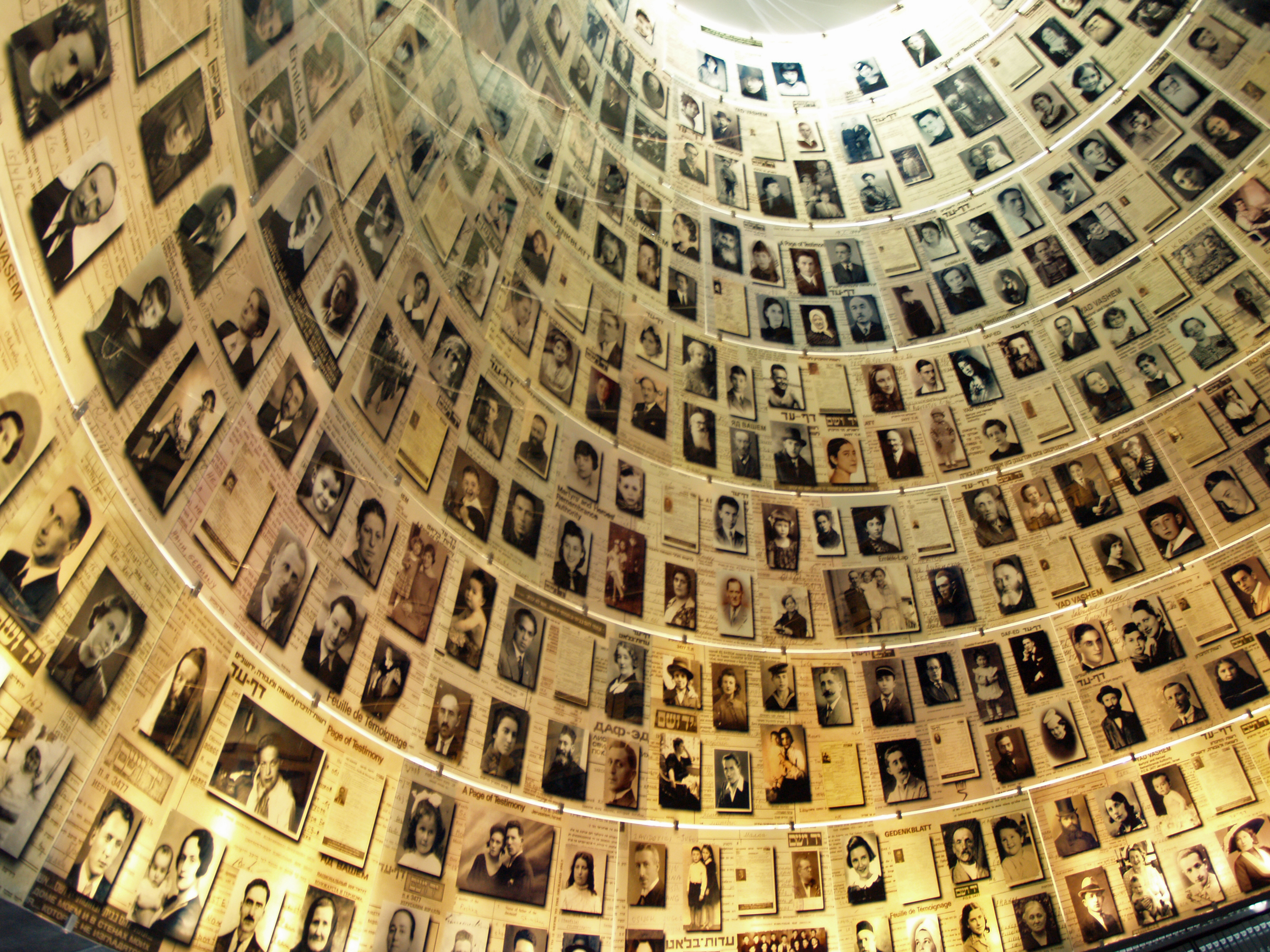
Pope John Paul II's Speech at Israel's Holocaust Memorial

Pope John Paul II made a pilgrimage to Israel in March of 2000 to pay tribute to the six million Jews who were murdered during the Holocaust from 1938 to 1945.  At Yad Vashem, he laid a wreath and lit a flame in memory of the victims.  Pope John Paul II was a seminary student in Poland when the Hitler's Wehrmacht was invading country after country, rounding up Jews and throwing them in concentration camps.  Fifty survivors, including thirteen who were from the Pope's hometown of Wadowice, Poland, were present at the memorial ceremony.  Sadly, Pope John Paul II did not go so far as to apologize on behalf of Pope Pius XII (and the Vatican) who did not speak out against the Holocaust, even though he knew about the death camps.  Here is an excerpt from Pope John Paul II's speech:

"The words of the ancient Psalm, rise from our hearts:  "I have been like a broken vessel.  I hear the whispering of many -- terror on every side -- as they scheme together against me, as they plot to take my life.  But I trust in you, O Lord:  I say, you are my God. (Psalm 31:13-15)

In this place of memories, the mind and heart and soul feel an extreme need for silence.  Silence in which to remember.  Silence in which to try to make some sense of the memories which come flooding back.  Silence because there are no words strong enough to deplore the terrible tragedy of the Shoah.  

My own personal memories are of all that happened when the Nazis occupied Poland during the war.  I remember my Jewish friends, some of whom perished, while others survived.  I have come to Yad Vashem to pay homage to the millions of Jewish people who, stripped of everything, especially of human dignity, were murdered in the Holocaust.  More than half a century has passed, but the memories remain.  

Here, as at Auschwitz, and many other places in Europe, we are overcome by the echo of the heart rending laments of so many.  Men, women and children, cry out to the depths of the horror that they knew.  How can we fail to heed their cry?  No one can ignore or forget what happened.  No one can diminish its scale.  

We wish to remember.  But we wish to remember for a purpose, namely to ensure that never again will evil prevail, as it did for millions of victims of Naziism.  

How could man have such utter contempt for man?  Because he had reached the point of utter contempt for God.  Only a godless ideology could plan and carry out the extermination of a whole people.  

The world must heed the warning that comes to us from the victims of the Holocaust, and from the testimony of the survivors.  Here at Yad Vashem the memory lives on and burns itself into our souls.  It makes us cry out:  "I hear the whispering of many -- terror on every side -- but I trust in you, O Lord, I say:  You are my God."


Thursday, 12 November 2015

Elie Wiesel's The Perils of Indifference

The opposite of love is not hate, but indifference. (Elie Wiesel)


Elie Wiesel was a Romanian Jew who survived imprisonment in Auschwitz and Buchenwald during the Second World War, documented in his book Night.  Like many imprisoned Jews, Elie assumed that the powers that be did not know about the Nazi death camps.  After all, if they did, they would do something to stop the mass killings.

However, Elie eventually discovered that the United States State Department knew about the Nazi death camps; the Pentagon knew, as did President Roosevelt.  In fact, in 1939, when the ship the S.S. St. Louis arrived on the shores of the United States filled with 1000 Jewish refugees requesting asylum, President Roosevelt said no (see http://alinefromlinda.blogspot.ca/2015/09/ss-st-louis-ship-of-jewish-refugees.html).

Why did the Americans (and Canadians in the case of the SS St. Louis) show such indifference to the Jewish condition.  Elie said that the opposite of love is not hate, but indifference.  Such an attitude is dangerous.  "In a way, to be indifferent to suffering is what makes the human being inhuman. Indifference, after all, is more dangerous than anger and hatred.  Anger can at times be creative.  One writes a great poem, a great symphony.  One does something special for the sake of humanity because one is angry at the injustice that one witnesses.  But indifference is never creative."

The Americans, and the rest of the Allies, finally acted when they invaded the Nazi occupied countries and started liberating the Nazi death camps.  There was no indifference in their eyes when they saw the skeletons piled high.  Elie remembers the soldiers rage at what they saw.  He remembers the gratitude that he felt upon his liberation.  Here is an excerpt from the speech he delivered to President Clinton and some dignitaries in Washington DC in 1999:

Fifty four years ago to the day, a young Jewish boy from a small town in the Carpathian Mountains woke up, not far from Goethes beloved Weimar, in a place of eternal infamy called Buchenwald.  He was finally free, but there was no joy in his heart.  He thought there never would be again.  Liberated a day earlier by American soldiers, he remembers their rage at what they saw.  And even if he lives to be a very old man, he will always be grateful to them for that rage, and also for their compassion. Though he did not understand their language, their eyes told him what he needed to know -- that they too would remember and bear witness.


Thursday, 5 November 2015

Charles DeGaulle's "Appeal of 18 June"

In June of 1940, the Paris streets were filled with people fleeing the city by car, by train, by bus or by bicycle, including authors H. A. and Margret Rey (http://alinefromlinda.blogspot.ca/2012/10/october-21.html).  The Nazis were at the gates of the City of Light, ready to crush any resisters.  Prime Minister Paul Reynaud resigned, essentially giving up the fight.  Disappointed, General Charles DeGaulle refused to give up on his city and his country.  Leader of the Free French Forces, he fled to England on the 15th of the month where he delivered a passionate speech on the BBC radio.  

"But has the last word been said?  Must hope disappear?  Is defeat final?  No!  Believe me, I am speaking to you with full knowledge of the facts and who can tell you that nothing is lost for France.  The same means that overcame us can bring us victory one day.  For France is not alone!  She is not alone!  She has a vast Empire behind her.  She can align with the British Empire that holds the sea and continues to fight.  She can, like England, use without limit the immense industry of the United States." (http://www.artofmanliness.com/2008/08/01/the-35-greatest-speeches-in-history/)

The Free Forces, operating out of England, gradually took over colonial outposts in Africa (l'Armee d'Afrique).  They joined forces with the French Free Forces to form L'Armee Francaise de la liberation.  Multiplying to 400,000 strong by D-Day in 1944, they participated in the Normandy landings and the invasion of Southern France, culminating with the liberation of Paris.  Charles DeGaulle, who had inspired the movement, headed up the new post war government. (https://en.wikipedia.org/wiki/Free_France)


Crowd members hold up sign saying "Vive de Gaulle" on Liberation Day in August of 1944 courtesy https://en.wikipedia.org/wiki/Free_France#/media/File:Crowds_of_French_patriots_line_the_Champs_Elysees-edit2.jpg.

Wednesday, 16 September 2015

Young Italian Girl Pens Letter to Auschwitz Survivor Primo Levi

"The question you ask me about the Germans cruelty has long perplexed historians." (Primo Levi)


In 1982, a young Italian girl penned a letter to Auschwitz survivor Primo Levi, after reading his book If This is a Man.  The letter sat in a treasure box for decades.  Recently it was published in the Italian newspaper La Stampa.

After Monica Perosino read the Primo Levi's 1947 novel, If This is a Man, her head was buzzing with questions.  "Why didn't anyone do somthing to stop the massacre?  Were the Germans evil?"  It was hard to imagine that something as horrific as the Holocaust could happen.  Little Monica got out a piece of stationery and penned a letter to the Italian author posing her poignant questions.  Then she took out a Turin phone book, where she lived, and searched for Levi's address.  She postmarked her letter and waited for a response.

I'm sure no one who went through the gates of Auschwitz would ever forget the horror.  And Levi was no exception.  In his time at the concentration camp, from February of 1944 to January of 1945, Levi saw enough horror stories to fill several books.  Yet somehow he was able to write an eloquent response to Monica.  He explained:

"The question you ask me about the Germans cruelty has long perplexed historians.  In my opinion it would make no sense accusing of cruelty the whole German nation of those days -- let alone pointing the finger at today's Germans... Nevertheless, many Germans must have known directly or indirectly what was going on...I would accuse the Germans of those days of selfishness, of being indifferent and intentionally ignorant..." http://www.haaretz.com/jewish-world/jewish-world-news/.premium-1.639195

On the one hand, many Germans (and non-Germans) aided and abetted the Nazis during the Holocaust.  On the other hand, there were Germans who stepped up to the plate and saved Jewish lives, at great risk to their own lives:  who hid Jewish children; who employed Jews in their factories to prevent them from being deported to concentration camps (Oskar Schlinder); who renounced the Nazis from the pulpit (Dietrich Bonhoeffer for which he was executed); and who even helped Jews from within the walls of the concentrations camps.

Back in Italy, Monica grew up to become a journalist.  For a long time, she forgot about Primo Levi's letter, which sat in a treasure box in her apartment.  Recently, she rediscovered it when she was packing to move.  Her editor at by La Stampa, the same newspaper that Primo Levi had written for. convinced her to publish it.  Monica thought it was an appropriate course of action, explaining:
"I understand his [Primo Levi's] answer wasn't just for me, it was for everybody."

Note:  For more information, read Primo Levi's book Survival in Auschwitz.


Primo Levi circa 1940s courtesy http://www.basisdruck.de/images/primo-levi-1.jpg.


Saturday, 11 July 2015

Lindsay & Crouse's "The Sound of Music"

"The hills are alive with the sound of music, with songs they have sung for a thousand years." 
(The Sound of Music)


The Sound of Music debuted at the Lunt-Fontanne Theatre on November 16, 1959.  Loosely based on Maria von Trapp's memoir "The Trapp Family Singers", the musical was the last creation of the famous team of Rodgers and Hammerstein.  While the critics considered it too "sappy", audiences loved it.  It ran for 1443 performances before the final curtain came down in 1963.

The original production starred seasoned actress Mary Martin as Maria von Trapp and Theodore Bikel as Captain von Trapp.  Maria is a young nun who enjoys singing in the hills more than reciting her Hail Mary's.  Her Mother Superior sends her to be governess to the seven children of Captain von Trapp, a captain in the Austrian Navy.  While the Captain runs his household the way he would run his ship, Maria gets to know the children.  She plays with them and teaches them how to sing famous songs like "Do, Re, Mi", "Edelweiss" and "My Favourite Things".

Maria starts to have feelings for the Captain.  Unsure of what to do, she returns to the Abbey where Mother Superior suggests that she can't run away from her troubles.  Upon returning to the Trapp's, she hears Captain von Trapp announce that he is engaged to socialite Elsa Schrader.  However, Elsa is a champion of the Anschluss.  The Captain however refuses to greet others with "Heil Hitler" as well as to hang the Nazi flag.  Elsa calls off their engagement.

In the meantime, Captain von Trapp realizes he is really in love with Maria.  After a magnificent church wedding in Salzburg, the children are coached by Max for the upcoming Salzburg Festival. After their performance, with the help of the nuns who sabotage the Nazis' cars, the von Trapps escape through the Alps to Switzerland.

The Sound of Music garnered five Tony Awards and was adapted for the big screen in 1965.  The movie starred Julie Andrews and Christopher Plummer.