Showing posts with label Communists. Show all posts

Monday, 27 February 2017

Apostolos Santas & Manolis Glezos: Greek Folk Heroes Who Tore Down Swastika


The Nazis raise the Swastika over the Acropolis in Athens, Greece courtesy https://en.wikipedia.org/wiki/Apostolos_Santas.


More than any other building, the Parthenon defines Greece.  As a child, I remember doing a project about the Parthenon, one of a number of ancient buildings in the Acropolis on a hill overlooking Athens, Greece.    Acropolis comes from akron, meaning highest point and polis, meaning city.  The building is no stranger to warfare as it was damaged during the 1687 siege by the Venetians when gunpowder stored inside was hit by a cannonball.

It is no surprise that on April 27, 1941, the Nazis claimed the city of Athens by planting their flag on the Parthenon.  Little did they know that only a month later, two university students, Manolis Glezos and Apostolos Santas, would climb the Parthenon in the dead of night, tear down the Swastika and replace it with the Greek flag.  It became known as one of the first acts of Greek resistance and the two became folk heroes.


Apostolos Santas, left, and Manolis Glezos, right, courtesy https://hellasforce.com/2015/05/30/.


Glezos and Santas, both teenagers at the time, discovered from a library book that the north side of the Acropolis contained a natural cave leading from the base to the top.  Used as a secret passage way in ancietn times, the duo figured that they could climb it undetected.  With only a flashlight and a pocketknife, the two teens sneaked into the cave in the dark of night.  They were disappointed to discover at the exit to the cave that the flagpole was 50 feet high.  It took them three hours to scale the flagpole.  Thrilled, they tore off the Swastika, took some swatches for souvenirs, and threw it to the ground.  They replaced it with the blue and white Greek flag.  Sentenced to death in absentia by the occupying Nazis, the two went into hiding.  Their mothers burned the Swastika swatches as well as diaries explaining their exploits.  The Nazis, however, did not know their identity at the time.


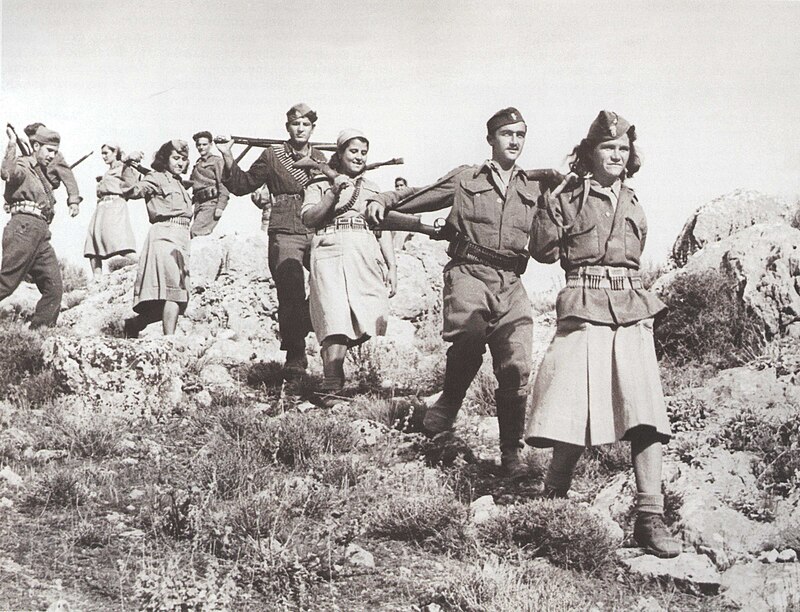
Greek guerillas during WWII courtesy https://en.wikipedia.org/wiki/Greek_People's_Liberation_Army.
 

The mountainous country of Greece was long known for its guerilla warfare.  Santas joined one such force, ELAS, in 1943, participating in several battles against the Axis.  While Santas survived the war, because of his Communist leanings, he was again imprisoned under sentence of death in 1948. He escaped from the Makronisos Island prison, however, to Italy where he sought and received political asylum in Canada.  In 1962 he returned to Greece and to more turmoil.  He passed away in his homeland in 2011.

Glezos worked for both the Hellenic Red Cross and the Greek Resistance.  In March of 1942, he was arrested by the Nazis, imprisoned and tortured, contracting tuberculosis as a result of his mistreatment.  Freed, he was arrested again by the Italian occupying forces in 1943.  The Greek collaborators arrested him a third time in 1944; he escaped in September of that year.  The end of the Second World War did not signal the end of Glezos' persecution.  Greece erupted in a Civil War and with his Communist leanings, Glezos was imprisoned yet again.  In total he would spend 11 years in prison and 4 years in exile.  With the restoration of democracy in Greece n 1974 Glezos was elected a member of the Greek Parliament.  He continues his political protest activity to this day, arrested as recently as 2012 by riot police.


Manolis Glezos Communist stamp, with the Acropolis in the background, courtesy https://en.wikipedia.org/wiki/Manolis_Glezos.

Friday, 24 February 2017

Mordechai Anielewicz: Leader of Warsaw Ghetto Uprising


Mordechai Anielewicz died fighting for the freedom of Poland's Jews.  He led a revolt in January of 1943, the prelude to the Warsaw Ghetto Uprising, the biggest Jewish revolt of the Second World War.

Anielewicz, nickanmed the Little Angel, was born and raised in Poland.  In his youth, he joined the Zionist Youth Movement.  In September of 1939, when the Nazis invaded Poland, Anielewicz escaped to eastern Poland to connect with the Polish Army, hoping to fight the Germans.  However, soon after, they met the Red Army, invading from the east.

The young Zionist attempted to enter Romania to find a route for Jews to get to Palestine.  However, he was arrested by the Communists.  Anielewicz, released a short time later, returned to Warsaw where he discovered that only 60,000 of the original 350,000 Jews remained, the rest having been deported to Treblinka concentration camp.


In January of 1943, Anielewicz led a group of a dozen fighters, armed with pistols, to prevent the Nazis from deported a second wave of Jews to the concentration camps.  It was a prelude to the infamous Warsaw Ghetto Uprising of April of 1943 (http://alinefromlinda.blogspot.ca/2012/04/warsaw-ghetto-uprising.html).

It is assumed that the Jewish Resistance leader died on May 8, 1943 at the surrounded ZOP command post on Mila Street in Warsaw.  His body was never recovered.  Anielewicz was awarded both the Cross of Valour and the Cross of Grunwald posthumously.

Note:  Watch the movie Uprising (2001) starring Hank Azaria as Mordechai Anielewicz.


Warsaw Ghetto Heroes Monument with Mordechai Anielewicz at the centre courtesy https://en.wikipedia.org/wiki/Mordechai_Anielewicz#/media/File:Monument_of_ghetto_uprising_crop.JPG.


Friday, 11 March 2016

War Comes to East Prussia


As a little girl, I would travel with my parents to the city of Koenigsberg to sell our potatoes at the market.  Walking along the sidewalk, I would look way up at the turrets of the King’s Castle where Frederick the Great was sworn in.

As an adult, World War II brought the British bombings, making the city a smouldering ruins and the castle, a burnt out shell. 

As a little girl, my sister and I would spot the flags on the ships sailing through the Frisches Haff, a freshwater lagoon opening to the Baltic Sea.

As an adult, thousands of refugees fleeing the enemy advance crossed the frozen Frisches Haff to waiting rescue boats.  But we never made it to the Haff, our horse spooked by gunfire.

As a little girl, I would dream of my wedding day. 

As an adult, I read the report saying my husband went missing in action on the Eastern Front


Photo of Elfriede (top left), Otto, Manfred & Irmgard circa 1943 courtesy Elfriede Neumann.


As a little girl, my father built U-boats in Hamburg.

As an adult, a Russian u-boat torpedoed and sank the ship, the Wilhelm Gustloff, drowning 9000 East Prussian refugees in the icy Baltic Sea.  That was the ship I was supposed to board!

As a little girl, I used to hunt for Easter eggs in the forest only 100 metres from our house.


Photo of Easter eggs courtesy www.potomaccollege.edu. 


As an adult, the same forest was hiding the Red Army ready to invade our village.

As a little girl, my father would cut down a tree in our forest on Christmas Eve and decorate it in the parlour while we waited outside the door

As an adult, my parents’ parlour overflowed with Russian soldiers shouting:  “Ten minutes to get out!”

As a little girl, I would admire my mother’s jewelry, made from amber floating on the Baltic Sea. 


Photo of Elfriede's amber broach courtesy Thomas Jonasson.


As an adult, the Russians stole my jewelry, even my wedding ring.

As a little girl, I would receive a report card from my teacher, Herr Laucht, at the Nautzwinkel School.

As an adult, my little girl could not attend school since it was occupied by enemy soldiers.

As a little girl, my father ran for mayor; we went door to door, campaigning for votes from our Nautzwinkel neighbours.

As an adult, enemy soldiers took my farmhouse, livestock, crops and furniture.  My children and I went door to door looking for shelter, roaming the Prussian plains.

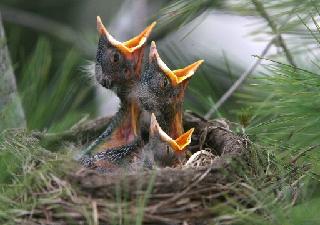
As a little girl, I would wake up to the birds chirping as they made nests in our forest.


Photo courtesy http://4.bp.blogspot.com. 


As an adult, I watched my niece eat a bird’s nest to survive.

As a little girl, I played truant from school since I had a fever.

As an adult, a fever kept me in bed for weeks.  A nice nurse said I had malaria and gave me quinine pills to get better.

As a little girl, I would devour the sausages cooked by my mother, purchased from our butcher.

As an adult, my little girl and her Opa went on a scrounging tour in Lithuania.  At one house, Opa stole the meat cooking on the stove so his granddaughter could eat.

As a little girl, my mother and I would bake topfkuchen, a marble cake, using an old family recipe.


As an adult, I dug a hole to bury my mother since she had no food to eat. 

As a little girl, my sister and I would play with the wooden kitchen set carved by our father.

As an adult, I buried my sister soon after my parents.  I took in her children whose father was still at the Front.

As a little girl, I would run as fast as I could when I played tag.

As an adult, my little boy ran as fast as he could away from Russian soldiers looking for German children to kidnap.

As a little girl, I was proud of myself the first time I went on the potty. 

As an adult, my daughter and I went to the washroom in a cooking pot on a cattle train, expelled from our homeland by the Russians. 


Photo of East Prussian expellees courtesy www.dw.de.


As a little girl, I was separated from my father as he served in World War I.

As an adult, I was separated from my son for a whole year.  Thanks to a chance meeting my sister had on a Lithuanian road with my little boy and his grandparents, we were reunited.

As a little girl, Herr Laucht taught us about the Russian Revolution and the Communists.

As an adult, the Communists took over East Germany.  In Ruhla, I worked so hard at my factory job that I was given many medals by the Communists.

As a little girl I would hear the trains whistle as they left Koenigsberg station.


Photo courtesy http://image1.masterfile.com.


As an adult, my children and I escaped from East to West Berlin on an underground train. 

As a little girl, I was amazed by World War I flying ace, Manfred von Richtofen, nicknamed the Red Baron, who downed dozens of enemy planes.

As an adult, I flew in a plane for the first time from West Berlin to West Germany, my escape now complete.

As a little girl, I would listen attentively to Herr Laucht as he pointed out different countries on his map, including Canada.

As an adult, I steamed west across the Atlantic Ocean to Canada aboard the Castel Felice. 


Map of Oma's route from East Prussia to East Germany to West Germany to Canada courtesy Thomas Jonasson.  


As an East Prussian, I suffered under the Nazis and the Communists.


As a Canadian, I am free.

In memory of Rob's Oma, Elfriede Neumann (1911-2007).


Photo of Elfriede (Oma) courtesy Elfriede Neumann.


Monday, 7 March 2016

East Prussia: A Fourth Baltic State?

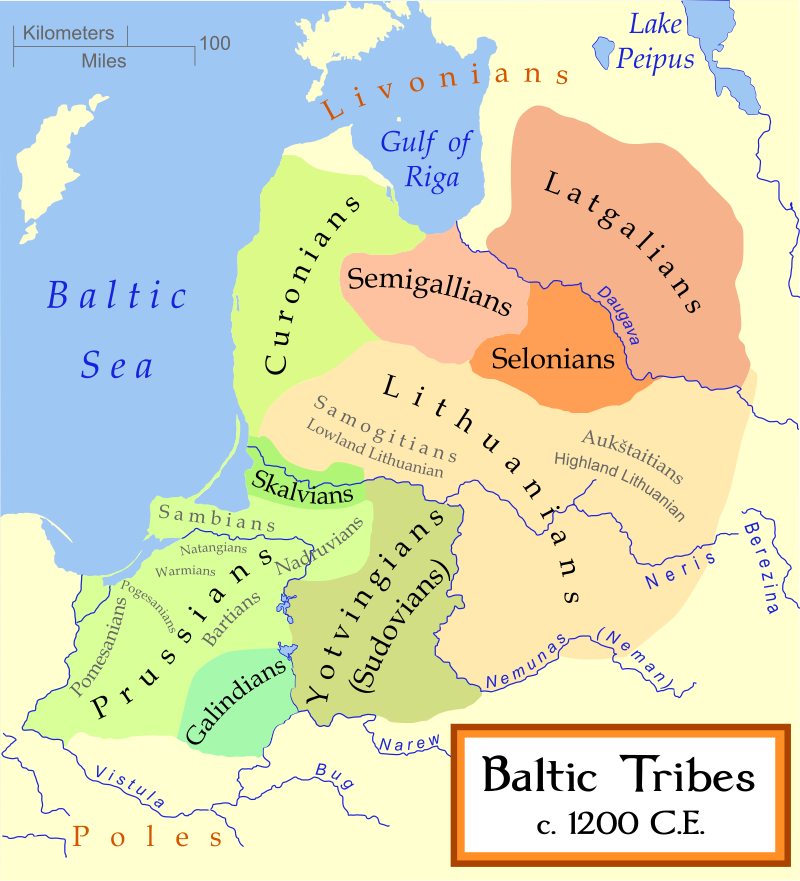
After the Second World War, under the Communist occupation, Rob's Oma, a war widow, was struggling to feed her two children.  Her in-laws offered to take first her daughter, Irmgard, and then her son, Manfred to scavenge for food in Lithuania.  The Lithuanians were sympathetic to the East Prussian's cause, I assumed because the Lithuanians had also suffered under the Communists as part of the U.S.S.R.  However, there may have been a second reason that the Lithuanians were sympathetic:  the original Prussians were related to the Lithuanians and Latvians (Estonians comprised the third Baltic state).

East Prussia was originally inhabited by Pruzzen, not a Germanic tribe, but a Baltic one.  In 1262, the Pruzzen united with the Kashubians, a Slavic Pomerian tribe also living in the Baltic region, to fight the invading Teutonic Knights.  The Teutons won the war and Christianized the region.  While the Pruzzens largely merged with the German settlers brought in from the west, the Kashubians managed to retain their language, Kashubian, and their religion, Catholicism.  The Pruzzens were largely Germanized by the Teutonic Knights:  their religion, formerly pagan, became Protestant;  their language was rendered extinct by 1600; their surnames, some of which sounded Slavic, took on a Germanic flavour.  Martin Luther's break with the Catholic church, and formation of the Lutheran Church, helped solidify the region as a Lutheran enclave.

The Pruzzen and the Kashubians did influence one another.  As I blogged about the other day, Oma's childhood tradition was to spank her brothers and sisters on Easter morning to wake them up.  The Kashubians used to gently whip each other with pussy willows on Easter Monday.  Kashubian boys used to gently whip the girls with juniper twigs.

Note:  Here is an interesting Christian Science article, "A Fourth Baltic State Emerges", a result of the break up of the Soviet Union in 1991 at http://www.csmonitor.com/1990/0620/efink.html.


https://en.wikipedia.org/wiki/Prussian_Crusade#/media/File:Baltic_Tribes_c_1200.svg

Sunday, 30 November 2014

Erasing the Christian Calendar

The Ontario Public School system was started by Egerton Ryerson, a Christian.  Originally, it was the Protestant system, the alternative being the Roman Catholic system.  When I was growing up, we still recited the Lord's Prayer at the beginning of the day.  We talked about Thanksgiving in October.  We had a Christmas Concert in December.  We talked about Easter in March of April.  Our school calendar was based on the Christian calendar (and still is).

However, in Montgomery County (Washington D.C.) in the United States, the school board has voted to erase the Christian calendar.  In fact, they are erasing all religious holidays.  Since the 1970's, they have recognized holidays like Yom Kippur due to their large Jewish population.  However, in recent years, there has been a push from some Muslim parents for them to recognize Muslim holidays.  The Montgomery County Board will still offer a vacation in December, but they won't call it Christmas.  

Erasing the calendar reminds me of how the Communists were notorious for renaming cities, especially when a leader fell into disfavour.  St. Petersburg, named after Peter the Great, became Petrograd, then Leningrad after Lenin died, and now it's back to its original name.  Yekaterinburg became Sverdlosk after Czar Nicholas II and his family were murdered.  

Just because you rename a city, doesn't mean you can erase it from the map.  Nor can you erase its history.  It's the same with the christian calendar.  Just because you rename Christmas, doesn't mean you can erase it.  Nor its 2000 year plus history.  


war on christmas shutterstock art

pennlive.com