Showing posts with label Paris. Show all posts

Friday, 9 December 2016

Home Alone


Home Alone house in Chicago courtesy 


When Rob and I were attending Teachers' College in Windsor, we saw the Christmas movie Home Alone at the theatre.  I fell in love with McCauley Culkin's character, Kevin McAllister.  I clipped a photo of the little boy with the big blue eyes out of a magazine, pinned it to the bulletin board in my dorm room, and named him "Little Thomas" (the name we picked out for our future son).


The photo that I clipped out of the magazine circa 1990 and called "Little Thomas" courtesy http://www.eonline.com/news/715334/home-alone-s-most-iconic-quotes-ranked-in-honor-of-the-25th-anniversary.


Twenty six years have passed, but I still love that movie.  Kevin is mistakenly left at his Chicago home by his parents, who fly to Paris, France with his siblings.  He could have easily panicked; instead, he rose to the occasion.  I love how Kevin manages to outsmart the two crooks who keep trying to break into the family home.  I love how Kevin uses cardboard cutouts to make it look like he's having a party at his house, even thought he's really home alone.  I love how Kevin goes into the magnificent church with the giant manger scene outside and meets up with his eccentric neighbour.  For the first time he discovers that his neighbour isn't a character from a horror movie but a real person with a heart.  Kevin listens to his dilemma, how he and his son haven't spoken for years.  Later, we see Kevin peeking out his window and seeing the father and son reconciling.  Yes, after all these years, Home Alone doesn't lose its charm.


Kevin talks to his "scary" neighbour in the church courtesy https://cool.com.ng/home-alone-everyones-favourite-holiday-movie/.


Saturday, 29 October 2016

Norman Rockwell Visits a Country Editor

"At a time in which the noble tradition of community based journalism is being challenged by societal and technological transformation, Norman Rockwell's charming and realistic portrayal of a country editor and team of journalists diligently working to share the news of the day with their community readers, epitomizes the attributes of American journalism and its contribution to the life of America." (Barbara Cochran, National Press Club Journalism Institute)


Norman Rockwell Visits a Country Editor appeared on the cover of The Saturday Evening Post in 1946, when the painter was at the height of his career.  The picture depicts a scene from the Monroe County Appeal, a small town newspaper located in Paris, Missouri.  The bustling office contains nine characters all working towards the publication of the day's paper.  With the typewriters on the desks, one can imagine the clinging of the bell every time a journalist reaches the end of a line.  The picture of a serviceman on the wall indicates that it is wartime or shortly after the war's end.  Rockwell himself is in this painting at the far right with a portfolio of artwork under his arm.  A man in overalls indicates it is a rural rather than urban newspaper.  A man wearing an apron and sailor hat appears to be running, indicating that the paper is working towards a deadline.  The man in the chair reading the newspaper seems to be oblivious to everyone else.

Norman Rockwell Visits a Country Editor hung in the office of the National Press Club for decades, a gift from the artist.  The piece was sold at Christy's Auction House on November 19, 2015 to the tune of $10.2 million.  Proceeds from the sale went to the National Press Club Journalism Institute to support its programs.  As Barbara Cochran explained:  "At a time in which the noble tradition of community based journalism is being challenged by societal and technological transformation, Norman Rockwell's charming and realistic portrayal of a country editor and team of journalists diligently working to share the news of the day with their community readers, epitomizes the attributes of American journalism and its contribution to the life of America."(http://www.christies.com/about/press-center/releases/pressrelease.aspx?pressreleaseid=8079) 


"Norman Rockwell Visits A Country Editor," by Norman Rockwell. (Photo credit: National Press Club.)


Tuesday, 27 October 2015

Anatole France: His Dying Wish was to Expire in his Library

"Each one dreams the dream of life in his own way.  I have dreamed it in my library; and when the hour shall come in which I must leave this world, may it please God to take me from my ladder -- from before my shelves of books!" (Anatole France)


A century ago, upper class people used to have libraries in their homes, with bookshelves which stretched from the floor to the ceiling, sometimes a distance of eight feet or more.  A ladder, attached to a tract, which ran the length of the bookshelves, could be used to stand on and browse for books.  This is where author Anatole France dreamed he would be when he died -- in front of his beloved books.  

Born Francois Anatole Thibault in Paris, France, he later changed his name to Anatole France.  His father owned a bookstore, Librairie France, which he worked in as a young man.  This is where his love of books took shape.  Librairie France was known for its supply of books about the French Revolution.  

Anatole went on to take a job as a cataloguer at Bacheline Deflorenne.  Later, he held a position as a librarian with the French Senate.  Anatole's position in politics would not end there.  When the Dreyfus Affair erupted in France over the Jewish officer accused of being a spy, Anatole signed a manifesto supporting him.  

Anatole started writing articles in 1867.  He published his first poem, La Part de Madeleine, in 1869.  He penned his first novel Le Crime de Sylvestre Gonnard, in 1881.  His novel, Monsieur Bergeret, published in 1901, was based on the Dreyfus Affair.  In 1914, Anatole wrote La Revolte des Anges, considered by some to be Frances' most profound novel.  Anatole wrote in the style of French Classicism. 

Anatole passed away in 1924, at the age of 80.  It remains a mystery whether or not he died in his library, but he remained a bibliophile all of his life.


Thursday, 10 September 2015

Lindbergh Delivers First Air Mail Across Atlantic

He was a barnstormer, delivering mail from town to town, across the state.  No one, other than those in aviation circles, had ever heard of him.  That was all about to change.

In May of 1927, Charles Lindbergh had a special destination for his plane, the Spirit of St. Louis:  Paris, France.  But on this trip he would not carry a mail sac the size of Santa's; he had to keep his weight limit down.  He was about to make the first flight across the Atlantic Ocean.

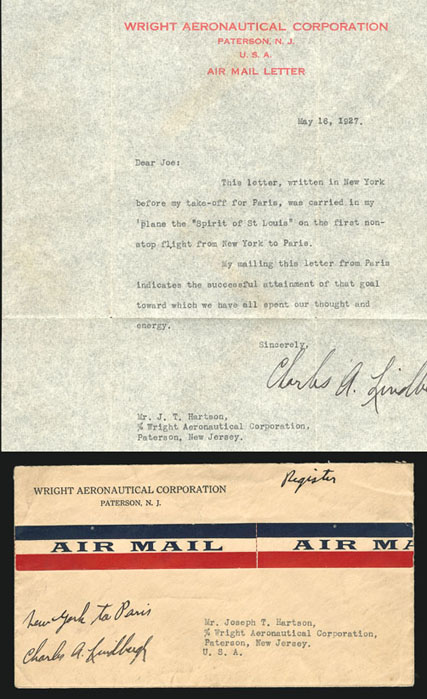
Lindbergh drafted a letter to the Wright Aeronautical Corporation in Paterson, New Jersey.

"This letter, written in New York before my takeoff for Paris, war carried in my plane, the Spirit of St. Louis, on the first nonstop flight from New York to Paris.  My mailing this letter from Paris indicates the successful attainment of that goal toward which we have all spent our thought and energy."
http://www.charleslindbergh.com/images/365.jpg

While it may have been sprayed with salt water, while it might have had crumbs on it from the sandwiches Lindbergh ate en route, the letter made it to its destination.  And Lindbergh made history.

Today, the Spirit of St Louis sits in the Smithsonian Institute in Washington DC.  The letter was put up for auction in 2002.  For more information about Charles Lindbergh's famous flight, visit http://alinefromlinda.blogspot.ca/2011/05/3-sandwiches-2-canteens-of-water-451.html.


Friday, 31 July 2015

Joseph Fields & Anita Loos' "Gentlemen Prefer Blondes"

Based on the book of the same name, Gentlemen Prefer Blondes follows the life of Lorelei as she takes a voyage on the Ile de France to Paris to perform in a nightclub.  Already engaged to be married to a much older man, Lorelei flirts with many men aboard the ship including a rich Philadelphia man and an Englishman.  Lorelei's fiance's father, who has never approved of Lorelei, hires a private detective to track her whereabouts in Paris.

Lorelei sings hits "I'm Just a Little Girl from Little Rock" as she is wined and dined by the Philadelphian and the Englishman.  She even turns the eye of a zipper king who is pedalling the first dress with a zipper.

However, when Lorelei's fiance arrives in Paris and declares his undying love for her, to the tune of  "Diamonds are a Girl's Best Friend", she decides he is the man for her after all.  Her fiance's father finally accept Lorelei when he discovers she is wearing a dress with buttons, his own invention.

Gentlemen Prefer Blondes debuted on Broadway in 1949 and ran for 740 performances.  It was the debut performance of Carol Channing, who became synonomous with the song "Diamonds are a Girl's Best Friend".  Gentlemen Prefer Blondes premiered on the big screen 1953, starring Marilyn Monroe and Jane Russell.


https://www.youtube.com/watch?v=UcyDo0fthZI


Friday, 17 July 2015

Samuel Taylor's "Sabrina Fair"

Sabrina Fairchild lives in Long Island with her widowed father who works as a chauffeur for a wealthy family named Larabee.  Somewhat of a dreamer, Sabrina longs to see the world.  She sails for Paris where she works as a private secretary for a politician for five years.  She returns to America well educated, beautiful, charming, and with a wealthy French suitor in tow (en.wikipedia.org/wiki/Sabrina_Fair).

However, Sabrina has always had a crush on David Larabee.  David's older brother, Linus, schemes to make David fall in love with Sabrina and he succeeds.  However, in the meantime, Sabrina falls in love with Linus, attracted to his worldliness and intelligence.  

In another plot twist, the working class chauffeur has secretly been investing in the stock market for years and has amassed a fortune.  Knowing that her father is financially set, Sabrina chooses to return to Paris, this time with Linus, her new love.

Sabrina Fair, which comes from a John Milton song from his masque Comus, premiered at the National Theatre on Broadway on November 11, 1953.  Starring Margaret Sullavan and Joseph Cotten, it ran for 318 performances.  The Saturday Review called it "the best American comedy of manners in more than a decade" (http://www.samuelfrench.com/p/6569/sabrina-fair-samuel-taylor).

The play was adapted for the big screen as Sabrina, premiering in 1954 and starring Audrey Hepburn, Humphrey Bogart and William Holden.  In 1995, a remake featured Juliette Ormond, Greg Kinnear and Harrison Ford.


Wednesday, 13 May 2015

Acrostic Poetry: A Hidden Message

Acrostic is derived from the French word "acrostiche".  "Stich" refers to a line or row of verse.  An acrostic is a poem in which the first letter, symbol or word of each line or paragraph spells out a word or message.  Acrostics date back to the Bible; examples can be found in the Book of Lamentations as well as the Psalms of the Hebrew Bible.  Psalm 145, which has an acrostic, is repeated three times a day in Jewish services.

Acrostics are also found in Medieval literature in which a poet is often highlighted; some acrostics were written as prayers to saints.  In chronicles, acrostics were often used in German and English. However, the Greeks also used acrostics; one such example spells out JESUS CHRIST, SON OF GOD, SAVIOUR.  The Dutch national anthem is an example of an acrostic, spelling out the name WILLEM VAN NASSOV, referring to the Dutch royal William of Orange.  Examples of acrostics can be found in literature, such as the final chapter of Lewis Carroll's Through the Looking Glass, which spells out the real Alice's full name, ALICE PLEASANCE LIDDELL.


Here is a French acrostic:

Paradis des monuments
Attend petits et grands
Reve des touristes et des enfants
Illumine par tous le temps
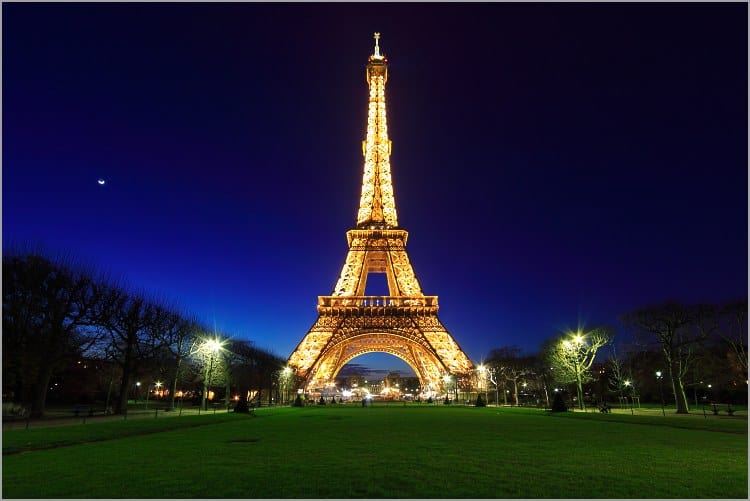
Sur la tour Eiffel c'est geant.


Here is a calendar acrostic to help remember the months of the year:

JANet was quite ill one day
FEBrile trouble came her way
MARtyr-like she lay in bed
APRoned nurses softly sped
MAYbe said the leech judicial
JUNket would be beneficial
JULeps, too, though freely tried
AUGured ill, for Janet died
SEPulchre was sadly made
OCTaves pealed and prayers were said
NOVices with ma'y a tear
DECorated Janet's bier.


The following poem is my attempt at an acrostic:

Put her hair in braids today;
It may be your only chance.
Give her a nice red ribbon.
Time will pass very quickly
And before you tie the bow,
I think she'll be all grown up.
Little girls become young women fast;
So put her hair in pigtails, for it sure won't last.


Visit http://grammar.about.com/od/ab/g/acrosticterm.htm for more examples of acrostics.


Thursday, 2 October 2014

Jumbo the Elephant

"He strode along all right until the gate of the garden closed behind them and then lay down in the street.  It was a pure case of elephant obstinacy, and the animal wouldn't budge...The animal marched to the boat.  Weeping women and children lined the way." 
 (Paul Chambers, on the occasion of Jumbo's transfer from the London Zoo to a ship to America)


It took 200 pounds of hay to fill his tummy.  It took 18 horses to transport him through the streets of London.  It took 150 men to move his body down a hill after he died.  And it took 100,000 schoolchildren to write letters to the queen to lodge a protest against his sale from the London Zoo. His name was Jumbo the Elephant.

Paul Chambers says that:  "A visit to the London Zoo was considered incomplete without a ride on Jumbo".  In fact, in sixteen years at the zoo, 16 million adults and 4 million children rode on the back of the famous elephant.  At 13 feet tall, and 6.5 tonnes, it would take a lot to satisfy the animal captured in the French Sudan in 1863.  His daily diet consisted of:  200 pounds of hay, 1 barrel of potatoes, 2 bushels of oats, 15 loaves of bread, a slew of onions and several pails of water.

Jumbo was named after the Swahili words "jambo", which means hello, and "jumbe" which means chief.  He was a treasured animal at the London Zoo, which the Zoological Society had acquired in a trade with Paris' Jardin des Plantes which included:  a rhino, a jackal, 2 eagles, 2 dingoes, a possum and a kangaroo.  Jumbo's favourite trainer, Matthew Scott, thought at first that the London Zoo had received a raw deal.  Jumbo came to them with a disease that covered his hide and had spread to his eyes; they almost had to be removed.  However, Mr. Scott slowly nursed him back to health. 


Queen Victoria courtesy i.dailymail.co.uk.


Schoolchildren visited the London Zoo by the thousands.  For a price, they could climb up on the back of Jumbo and go for a ride.  It is rumoured that even former Prime Minister Winston Churchill went for a ride.  Soon Londoners saw Jumbo as their own pet.  That's why they were up in arms at the announcement stating circus man P. T. Barnum had offered the zoo $10,000 to buy the elephant and take him to America in 1882.  One hundred thousand British schoolchildren sat down at their desks, dipped their pens into their inkwells and wrote letters to Queen Victoria telling her how much they loved their beloved Jumbo and begging her to stop the sale.  The schoolchildren made such a fuss, that the decision wound up in court, but a judge ruled that the sale was legal and would go ahead.

The schoolchildren weren't the only ones to protest the move:  when the trainers at the zoo tried to take Jumbo off of the property, he would lay down at the zoo gate, refusing to the budge.  It took days to get him into the crate, only after Mr. Scott cajoled him.  A line of Londoners wept as Jumbo was transported through the cobblestone streets to a waiting ship on the River Thames.  The 18 day voyage across the Atlantic brought the elephant to North America.  


P. T. Barnum had big plans for Jumbo in New York City.  He wanted to showcase him in "The Greatest Show on Earth", a circus in held in the Hippodrome (later Madison Square Garden). Americans came from far and wide to see the African elephant perform under the Big Top.  It was not long before P. T. Barnum recouped both the money he paid for Jumbo and his transportation overseas.  Jumbomania overtook the nation:  trading cards, hats, jewelry, canes and cigars were among the paraphernalia sold at gift shops.  

After a couple of years, P. T. Barnum's circus went on the road to other states as well as Canada. Jumbo performed for a sold out audience in St. Thomas.  As the trainers were herding the elephants back to the tent, one of the baby elephants ended up on the railroad tracks.  Rumour has it that Jumbo tried to usher the elephant off the tracks when a train approached.  The little elephant was hurled clear of the tracks, but Jumbo was hit full force.  It was like two trains colliding:  the engine and two train cars derailed from the track.


Jumbo at the side of the railroad tracks courtesy https://www.pinterest.com/prtprepress/jumbo/


Jumbo crumpled in a heap at the side of the tracks.  His beloved trainer tried to calm him down. Jumbo wrapped his trunk around his trainer and within half an hour passed away.  P. T. Barnum did not want people to forget about Jumbo.  He took his hide to a taxidermist who stuffed it.  It was mounted in a museum at Tufts University in Boston where the businessman had been a trustee. Jumbo became the beloved mascot of the university.  Rumour has it that if a Tufts student had an upcoming exam, he would put a nickel in Jumbo's trunk for good luck.  The Jumbo's, the university football team members, would rub the elephant's trunk for good luck.  Sadly, a fire burned the stuffed elephant in 1975.  Jumbo's skeleton was reassembled at the Natural Museum of History in New York City where it still is housed today.  Rumour has it that the ashes from Jumbo's hide were placed in a peanut butter jar; before a football game, Tufts players rub the jar for good luck.


"Tufts University Digital Archives: Football players with Jumbo, 1935, Munro, Melville S." Archival image courtesy of Tufts University jumboelephant 07FallArt

Stuffed Jumbo at Tufts University circa 1935 courtesy bostonglobe.com.


So, the next time you complete a "jumbo" crossword puzzle or board a jumbo jet, think of the elephant that inspired the adjective:  Jumbo the Elephant.

Note:  For more information, read:
1.  Jumbo;  The Greatest Elephant in the World (Paul Chambers)
2.  Incredible Jumbo (Barbara Smucker)