Showing posts with label Poland. Show all posts

Tuesday, 22 November 2016

The Great Escape


Photo of Stalag Luft III courtesy www.wackyowl.com.


Stalag Luft III, a Nazi prisoner of war camp 100 miles southeast of Berlin, now part of Poland, was the site of the largest Allied escape during World War II.  The escape required incredible brain power, manpower, materials and courage.  Six hundred prisoners worked on the project.  And yet only three made it to freedom.  What happened on that fateful day in March of 1944?

The plan to dig three tunnels at Stalag Luft III was implemented in April of 1943.  One tunnel, nicknamed Tom, started in a dark corner of Hut 123.  A second tunnel, Dick, was located under a bathroom drain in Hut 122.  A third tunnel, Harry, was hidden behind a stove in Hut 110.  Some prisoners built a vaulting horse big enough to house two diggers; they would move the horse over the opening to the tunnel, and then the workers would crawl down it and start to dig, while several prisoners would distract the guards with their vaulting.  They made sure that they dug 30 feet below the surface so the guards would not hear them work.

The resourcefulness of the prisoners amazes me.  Everyone had a job:  Robert Bushell was the overseer of much of the project; Tim Walenn forged official documents for when the fugitives were stopped and asked for identification; Al Hake was a compass maker to help the escaped prisoners find their way to neutral countries; Des Plunkieett was a map tracer; Tommy Guest was the head tailor, trying to outfit the prisoners in civilian clothing for life on the outside; "Lookouts" made sure that the guards were distracted and not privy to what was going on at digging time; and "Penguins" wore pants with yellow sand hidden inside (excavated from the tunnels) which they slowly let fall out as they paced back and forth on the prison grounds.


A list was compiled with prisoners deemed fit for the escape; those who were claustrophobics, for example, were prohibited from being added to the list since the tunnels were so narrow.  As the men made progress on the tunnels, the guards discovered "Tom", and shut it down.  "Dick", which they had been using for storage anyway, was shut down.  Only "Harry" remained.  The prisoners waited for a moonless night to make their move.  On March 24, 1944,  they seized the opportunity to try out "Harry".  The prisoners, mostly Commonwealth Airmen, crawled through Harry one by one.  The first to reach the exit discovered that they were only a few feet shy of the forest, their intended target, which made them more visible to the guards.  After the 76th man, popped his head out, they were busted.

The Nazis searched for them for weeks.  Sadly, all of the fugitives were recaptured with the exception of three men, two of whom reached Sweden, the third ending up in Spain.  Hitler ordered that fifty of these prisoners executed and the remaining ones were sent to another prison where they lived out the duration of the war.

Note:  Paul Brickhill, one of the prisoners who helped orchestrate the escape, but who was not on the list due to his claustrophobia, wrote a book called The Great Escape documenting the experience.  A movie of the same name debuted in 1963 starring Steve McQueen.

Fore more information, read The Great Escape:  A Canadian Story by Ted Barris (2013).


Tuesday, 15 November 2016

A Pile of Books, A Pile of Rocks & A Pile of Shoes

A pile of books sits in a glass case:  Das Kapital by Karl Marx, All Quiet on the Western Front by Erich Maria Remarque, Albert Einstein's works.  These are just some of the thousands of books that were burned on a Berlin street back in 1933, an early sign that Hitler would not tolerate any views but his own.  Some of the greatest thinkers came out of that era, people that would go on to help build the atom bomb and to put the first man on the moon.  But they didn't fit in to Hitler's agenda.  Freedom of thought would not be tolerated. Propaganda would rule for the next twelve years.


A pile of rocks sits on display, each one perfectly cut in a cube.  Above them hangs a photograph of emaciated humans lugging the rocks up and down a cliff.  Some workers, too weak to move another inch, fall down.  They are punished for their disobedience.  The same scene repeats itself day after day, week after week, month after month.


"Stairs of Death" at Mauthausen courtesy https://www.pinterest.com/pin/325736985526835210/.


A pile of shoes sits in another case, turned green from years of exposure to the elements.  A rubber smell permeates the air.  Despair permeates the soul.  These are the shoes of thousands of Jews who worked at Majdanek, a Nazi concentration camp.  Despite their number, these shoes are just a drop in the bucket.  A map shows us that Majdanek was one of hundreds of Nazi interment camps, work camps and death camps by running by the end of World War II.  Hitler took their ideas, their belongings and their lives.  But he could not take their spirits.


Piles of shoes worn by Jewish victims of Holocaust courtesy www.jewishjournal.com.


We walked past a small wooden boat, one of dozens used to transport Jews across the water from Denmark to Sweden during World War II.  Thanks to this evacuation, nine out of ten Danish Jews survived the war.  But sadly, Poland's 3 million Jews were reduced to 45,000 by the Holocaust.  By war's end, two thirds of Europe's Jews had been murdered.

Later, as we walked down Washington's 12th Avenue to dinner at the Elephant and the Castle, we ran into a women from our tour group.  We mentioned we had just visited the Holocaust Museum.  She said that she would not visit it because she did not want to see "man's inhumanity to man".  I thought to myself that she had hit the nail on the head with that statement.  Although the Holocaust happened decades ago, it could happen again -- with different players.  Let us never forget.

Tuesday, 17 November 2015

Pope John Paul II's Speech at Israel's Holocaust Memorial

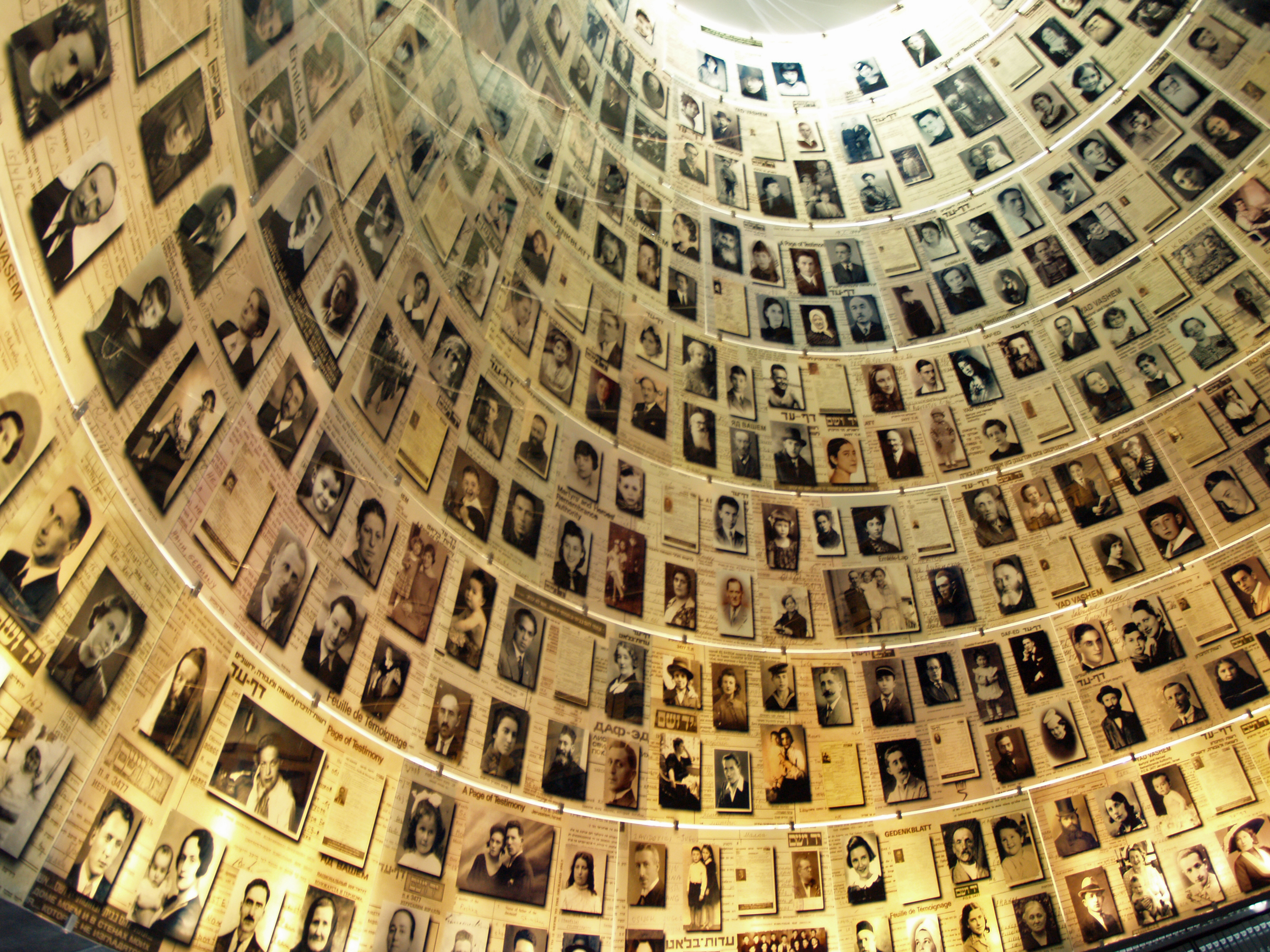
Pope John Paul II made a pilgrimage to Israel in March of 2000 to pay tribute to the six million Jews who were murdered during the Holocaust from 1938 to 1945.  At Yad Vashem, he laid a wreath and lit a flame in memory of the victims.  Pope John Paul II was a seminary student in Poland when the Hitler's Wehrmacht was invading country after country, rounding up Jews and throwing them in concentration camps.  Fifty survivors, including thirteen who were from the Pope's hometown of Wadowice, Poland, were present at the memorial ceremony.  Sadly, Pope John Paul II did not go so far as to apologize on behalf of Pope Pius XII (and the Vatican) who did not speak out against the Holocaust, even though he knew about the death camps.  Here is an excerpt from Pope John Paul II's speech:

"The words of the ancient Psalm, rise from our hearts:  "I have been like a broken vessel.  I hear the whispering of many -- terror on every side -- as they scheme together against me, as they plot to take my life.  But I trust in you, O Lord:  I say, you are my God. (Psalm 31:13-15)

In this place of memories, the mind and heart and soul feel an extreme need for silence.  Silence in which to remember.  Silence in which to try to make some sense of the memories which come flooding back.  Silence because there are no words strong enough to deplore the terrible tragedy of the Shoah.  

My own personal memories are of all that happened when the Nazis occupied Poland during the war.  I remember my Jewish friends, some of whom perished, while others survived.  I have come to Yad Vashem to pay homage to the millions of Jewish people who, stripped of everything, especially of human dignity, were murdered in the Holocaust.  More than half a century has passed, but the memories remain.  

Here, as at Auschwitz, and many other places in Europe, we are overcome by the echo of the heart rending laments of so many.  Men, women and children, cry out to the depths of the horror that they knew.  How can we fail to heed their cry?  No one can ignore or forget what happened.  No one can diminish its scale.  

We wish to remember.  But we wish to remember for a purpose, namely to ensure that never again will evil prevail, as it did for millions of victims of Naziism.  

How could man have such utter contempt for man?  Because he had reached the point of utter contempt for God.  Only a godless ideology could plan and carry out the extermination of a whole people.  

The world must heed the warning that comes to us from the victims of the Holocaust, and from the testimony of the survivors.  Here at Yad Vashem the memory lives on and burns itself into our souls.  It makes us cry out:  "I hear the whispering of many -- terror on every side -- but I trust in you, O Lord, I say:  You are my God."