Showing posts with label Jews. Show all posts

Sunday, 11 September 2016

French Immigrant Lara Bisset

"I saw the Statue of Liberty.  It was so impressive, so majestic, so meaningful.  Freedom!  Opportunity!  And most of all, it linked to us, America and France, because we knew that it was given to America by France." (Lara Bisset)


Jews flee the Cossacks circa 1905 courtesy 


In 1990, Lara Bisset visited the newly renovated Ellis Island for the first time since she immigrated to America in 1920.  What struck her was the Odessa, Ukraine Exhibit which explained the murder of hundreds of Jews at the hands of Russian Cossacks in 1905.  Lara's parents, also Odessa Jews, had escaped over the German border with their six month old son.  Trudging through the deep snow, her mother was "frozen up to the waist".  But she refused to go on without her baby, her legs "like two purple sticks".  

The Bisset's wandered around first Germany, then Luxembourg and finally Belgium, but didn't like any of the countries.  However, once they entered France, they knew they were home.  It was there that Lara was born in 1909.  While the Bisset's were poor, they managed to survive thanks to the help of their uncle who owned a dry goods store.  They would buy up dry goods to sell at foires (country fairs) which would help to put food on the table.  

It was a happy time for Lara.  The Bisset's new hometown did not have a synogogue but it did have a Roman Catholic church.  "You have to be exposed to religion," said Mrs. Bisset, who sent them to the Roman Catholic church only a block away.  She remembers picnics in the park where the family would munch on saucisses and peasant bread.  Entertainment came in the form of an accordion.  


After Mr Bisset served in the French Legion during the First World War, Mrs. Bisset begged him to go to America where her three siblings lived.  After much resistance, Mr. Bisset gave in and the family immigrated in 1920.  As the Touraine entered New York Harbor, Lara recalled:  "I saw the Statue of Liberty.  It was so impressive, so majestic, so meaningful.  Freedom!  Opportunity!  And most of all, it linked to us, America and France, because we knew that it was given to America by France." 


While the boat ride was exciting, the immigration process was less pleasant.  Adults and children were immediately segregated, a scary experience for Lara.  The sights and sounds were an assault to the senses.  Lara recalls:  "I remember hordes of people.  There were quite a few children and mothers, walking up those wide steps into the main building.  I remember the darkness, the wooden benches, the poorly lit hall, the babies screaming the children crying, adults crying.  It was awful."

With the tedious paperwork behind them, the Bissett family collected their luggage and took the ferry to the mainland where Lara's uncle picked them up in a Model T at Battery Park.  Language was an immediate barrier as the Bissett's spoke French and their brother spoke English.  Yiddish was their only common language.  

Lara would forge a new identity in New Jersey, retiring to Florida in the 1980's.  


Tuesday, 17 November 2015

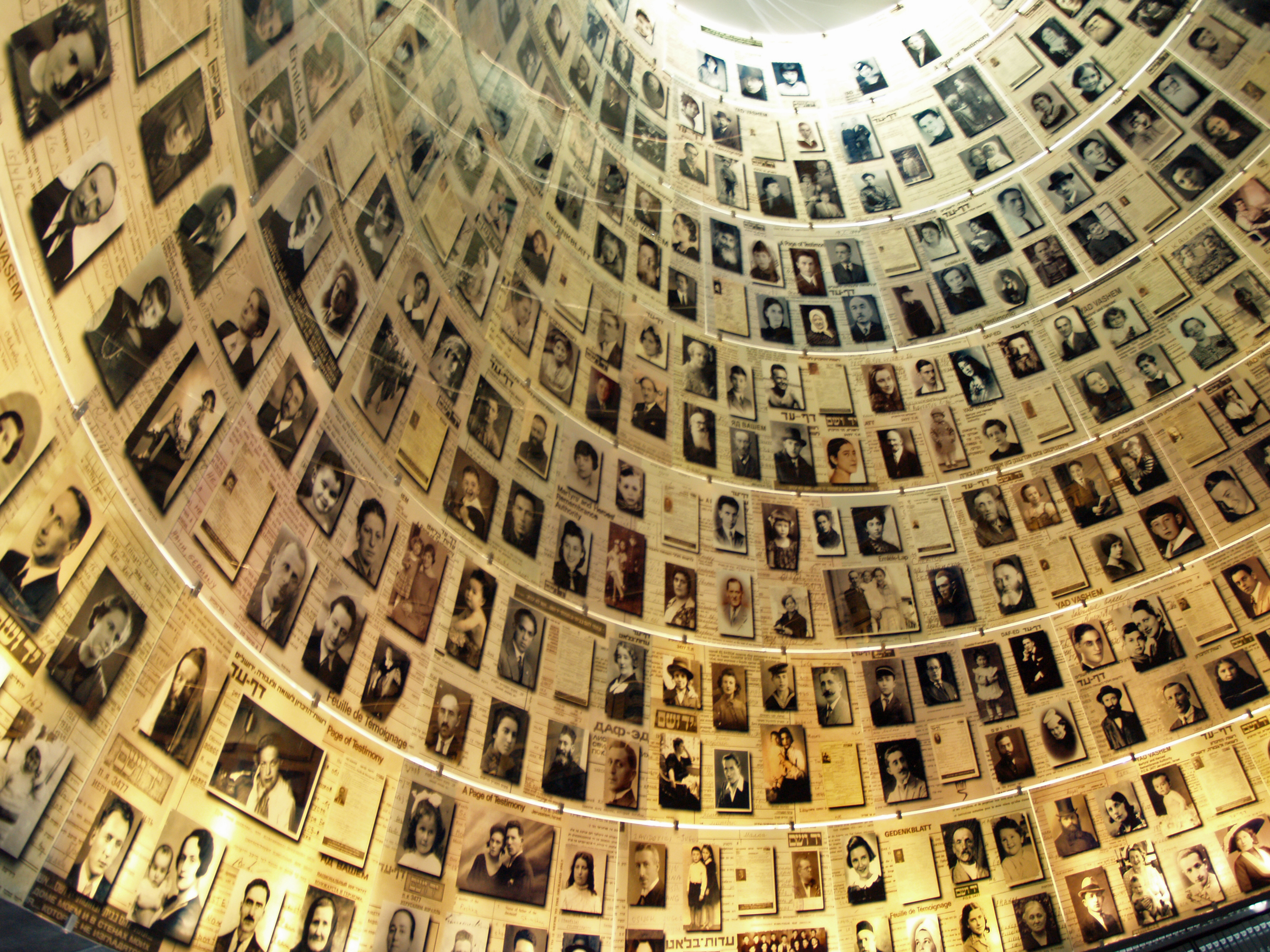
Pope John Paul II's Speech at Israel's Holocaust Memorial

Pope John Paul II made a pilgrimage to Israel in March of 2000 to pay tribute to the six million Jews who were murdered during the Holocaust from 1938 to 1945.  At Yad Vashem, he laid a wreath and lit a flame in memory of the victims.  Pope John Paul II was a seminary student in Poland when the Hitler's Wehrmacht was invading country after country, rounding up Jews and throwing them in concentration camps.  Fifty survivors, including thirteen who were from the Pope's hometown of Wadowice, Poland, were present at the memorial ceremony.  Sadly, Pope John Paul II did not go so far as to apologize on behalf of Pope Pius XII (and the Vatican) who did not speak out against the Holocaust, even though he knew about the death camps.  Here is an excerpt from Pope John Paul II's speech:

"The words of the ancient Psalm, rise from our hearts:  "I have been like a broken vessel.  I hear the whispering of many -- terror on every side -- as they scheme together against me, as they plot to take my life.  But I trust in you, O Lord:  I say, you are my God. (Psalm 31:13-15)

In this place of memories, the mind and heart and soul feel an extreme need for silence.  Silence in which to remember.  Silence in which to try to make some sense of the memories which come flooding back.  Silence because there are no words strong enough to deplore the terrible tragedy of the Shoah.  

My own personal memories are of all that happened when the Nazis occupied Poland during the war.  I remember my Jewish friends, some of whom perished, while others survived.  I have come to Yad Vashem to pay homage to the millions of Jewish people who, stripped of everything, especially of human dignity, were murdered in the Holocaust.  More than half a century has passed, but the memories remain.  

Here, as at Auschwitz, and many other places in Europe, we are overcome by the echo of the heart rending laments of so many.  Men, women and children, cry out to the depths of the horror that they knew.  How can we fail to heed their cry?  No one can ignore or forget what happened.  No one can diminish its scale.  

We wish to remember.  But we wish to remember for a purpose, namely to ensure that never again will evil prevail, as it did for millions of victims of Naziism.  

How could man have such utter contempt for man?  Because he had reached the point of utter contempt for God.  Only a godless ideology could plan and carry out the extermination of a whole people.  

The world must heed the warning that comes to us from the victims of the Holocaust, and from the testimony of the survivors.  Here at Yad Vashem the memory lives on and burns itself into our souls.  It makes us cry out:  "I hear the whispering of many -- terror on every side -- but I trust in you, O Lord, I say:  You are my God."


Thursday, 13 November 2014

Swastikas, U-boats & Bulletproof Cars

Here are ten facts you may not know about World War II.

1.  World War II was the bloodiest conflict ever.  It cost more money, damaged more property and killed more people than any other war in history.

2.  For every five German soldiers killed, four died on the Eastern Front.

3.  It is estimated that 1.5 million children died in the Holocaust.  Approximately 1.2 million were Jews and tens of thousands were Gypsies.

4.  Eighty percent of Soviet males born in 1923 didn't survive World War II.

5.  Over 2 million German women were raped by the Red Army.

6.  Max Heiliger was the fictitious name the Nazis used to establish a bank account in which they deposited Jewish money, jewelry and gold.

7.  The word Nazi derives from a Bavarian word meaning "simple minded".  The word, originally used as a term of derision, was coined by journalist Konrad Heiden.

8.  The swastika derives from a Sanskrit word meaning "hooked cross".  Symbolizing fertility and good fortune, it has been found in the ruins of India, Egypt, Greece and China.

9.  Out of the 40,000 people who served in U-boats during World War II, only 10,000 returned.

10.  More Russians (civilians and military) lost their lives during the Siege of Leningrad than did American and British soldiers combined during World War II.

11.  The SS ran a brothel in Berlin for foreign diplomats and VIPs called The Kitty Salon.  Twenty prostitutes were hired and trained specifically to glean information from their clients through innocuous conversations.

12.  After the sneak attack on Pearl Harbor, President Franklin D. Roosevelt requested a bulletproof car.  However, presidents were only allowed to spend $750 on a car.  The only one available at that price was Al Capone's limousine, absconded when he went to jail for tax evasion.

Source:  facts.randomhistory.com


Siege of Leningrad photo courtesy weebly.com.