Showing posts with label starvation. Show all posts

Sunday, 20 November 2016

The Siege of Leningrad: A Lost Diary, A Lost Treasure & A Lost (Almost) City

I always knew that the Siege of Leningrad was a long, drawn-out, horrific chapter in the life of Russians during the Second World War.  However, I did not comprehend the sheer size of the tragedy. It goes a long way to explain the hatred in the hearts of the Red Army when they sought revenge on the Germans in late 1944 and early 1945.  Here are ten facts, courtesy Wikipedia, that you may not know about the initial stage of Hitler's Operation Barbarossa.


1.  The Siege of Leningrad, also called the Leningrad Blockade, lasted an agonizing 872 days, from September of 1941 to January of 1944.

2.  A total of 414, 148 children and about 1 million adults (mainly women) were evacuated during the Siege to the Volga, Urals, Siberia and Kazakstan.


filipp-moskvitin-a-survivor-of-the-siege-of-leningrad-2004


3.  A total of 1.2 million civilians perished, many due to starvation, during the Siege.

4.  The Soviet Baltic Fleet made over 100,000 missions during the Blockade to save the city.

5.  Leningrad was isolated from the rest of the country until an ice road formed over Lake Ladoga, called the "Road of Life" https://en.wikipedia.org/wiki/Road_of_Life


Lake Ladoga, the Road of Life, offers way of escape and transportation route for food for Leningradians courtesy http://www.dw.com/image/17378704_303.jpg,


6.  Hitler ordered that the Palaces of the Czar be looted and destroyed.  Russians had hastily wallpapered over the famous Amber Room in the St. Catharine Palace.  Discovered by the German Army, they disassembled it and brought it to Koenigsber Castle in East Prussia where it went missing in 1944 http://alinefromlinda.blogspot.ca/2011/07/amber-room.html.

7.  The economic destruction and loss of life at the Siege of Leningrad was greater than that of both Hiroshima and Nagasaki.

8.  The Diary of Leningradian Tanya Savicheva, found later in the war, describes the starvation of each of her family members https://en.wikipedia.org/wiki/Tanya_Savicheva
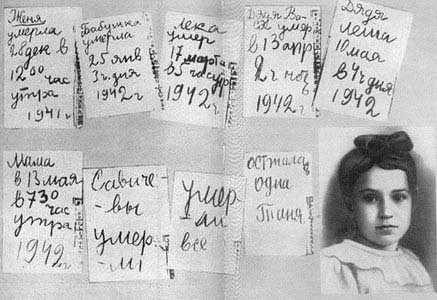


9.  Deaths in Leningrad peaked in January and February of 1942 when temperatures dropped to -30 Celsius and food rations to 125 grams of bread per day, half of which was usually sawdust.

10.  Adolf Hitler was so convinced that the Wehrmacht would capture Leningrad that he sent out invitations for a celebration at the Russian city's Hotel Astoria.  However, the Red Army finally drove the Germans out in January of 1944.

Note:  Rob's great Uncle Artur, Oma's brother, who served with the German Army, froze to death at the Gates of Leningrad.

Saturday, 19 November 2016

Hongerwinter


Operation Manna courtesy http://bombercommandmuseum.ca. 


"One could see the gunners waving in their turrets. A marvellous sight. One Lancaster roared over the town at 70 feet. I saw the aircraft tacking between church steeples and drop its bags in the South. Everywhere we looked, bombers could be seen. No one remained inside and everybody dared to wave cloths and flags. What a feast! Everyone was excited with joy. The war must be over soon now."
(Arie de Jong, 17 year old Dutch student)

Four and a half million unliberated Dutch survived on tulip bulbs and sugar beets during the Nazi occupation of 1944-1945.  With a blockade in effect, and with the early onset of winter making the barges impassable, unliberated Holland was slowly starving.  Flour was impossible to come by.  In October of 1944, butter became obsolete.  Meat coupons were rendered worthless.  A ration consisted of:  100 grams of cheese every two weeks, 1000 g of bread per week (later 400 g), 1 kilo of potatoes per week and 1.3 litres of vegetable fat per seven months.  Some farmers were compassionate enough to give vegetables to their fellow Dutchmen in the city.  Many survived on tulip bulbs and sugar beets.

While their stomachs grumbled, their bodies shivered as the Dutch had no heat, no gas or electricity during the Hongerwinter.  Some became desperate enough that they swapped their wedding rings.  Others took apart furniture to burn or even houses. 

Help came in the form of Swedish flour which the Dutch used to bake bread.  However, what saved thousands of the Dutch was Operations Manna, Chowhound and Faust, launched in April and May of 1945.  Manna was run by the Royal Air Force in which over 3000 Lancaster bombbers and almost 50 Mosquitoes, loaded down with food rations, flew at 150 metres above the occupied zone and dropped their contents.  Chowhound was executed by the United States Air Force and fulfilled the same purpose as Manna.  Faust was launched by the Allies, a smaller operation.  

The Dutch welcomed their liberators with open arms.  Some savoured their food, others wolfed it down and vomited shortly thereafter.  A few even died because their body could not handle the shock of digesting real food again.  The Dutch were so filled with gratitude that they planted tulip bulbs which spelled out MANY THANKS!  They would not forget their Allied liberators.  Ever since, the Dutch have sent tulips to Ottawa each year to show their appreciation for Canada's role in their freedom.  

Sadly, about 20,000 Dutch citizens still perished during the Hongerwinter.  But the number would have been much higher if not for the help of Operations Manna, Chowhound and Faust.

"For I was hungry and you gave me something to eat, I was thirsty and you gave me something to drink, I was a stranger and you invited me in," (Matthew 25:35)


Line up at soup kitchen during winter of 1944-1945 courtesy http://themasterforger.wordpress.com.