Showing posts with label Ken Burns. Show all posts

Monday, 30 May 2016

Country Music

"Country music is the people's music.  It just speaks about real life and about truth and it tells things how they really are." (Faith Hill)


Country music knows how to tell a story, with the aid of fiddles, banjos and steel guitars  Ken Burns knows how to tell a story, with the aid of cameras, tripods and microphones.  The two are uniting for the filmmaker's latest project, Country Music, due out in 2018.  As Ken Burns explains:

"From southern Appalachia's songs of struggle, heartbreak and faith to the rollicking western swing of Texas, from California honky tonks to Nashville's Grand Ole Opry, we will follow the evolution of country music over the course of the twentieth century, as it eventually merged to be America's music."


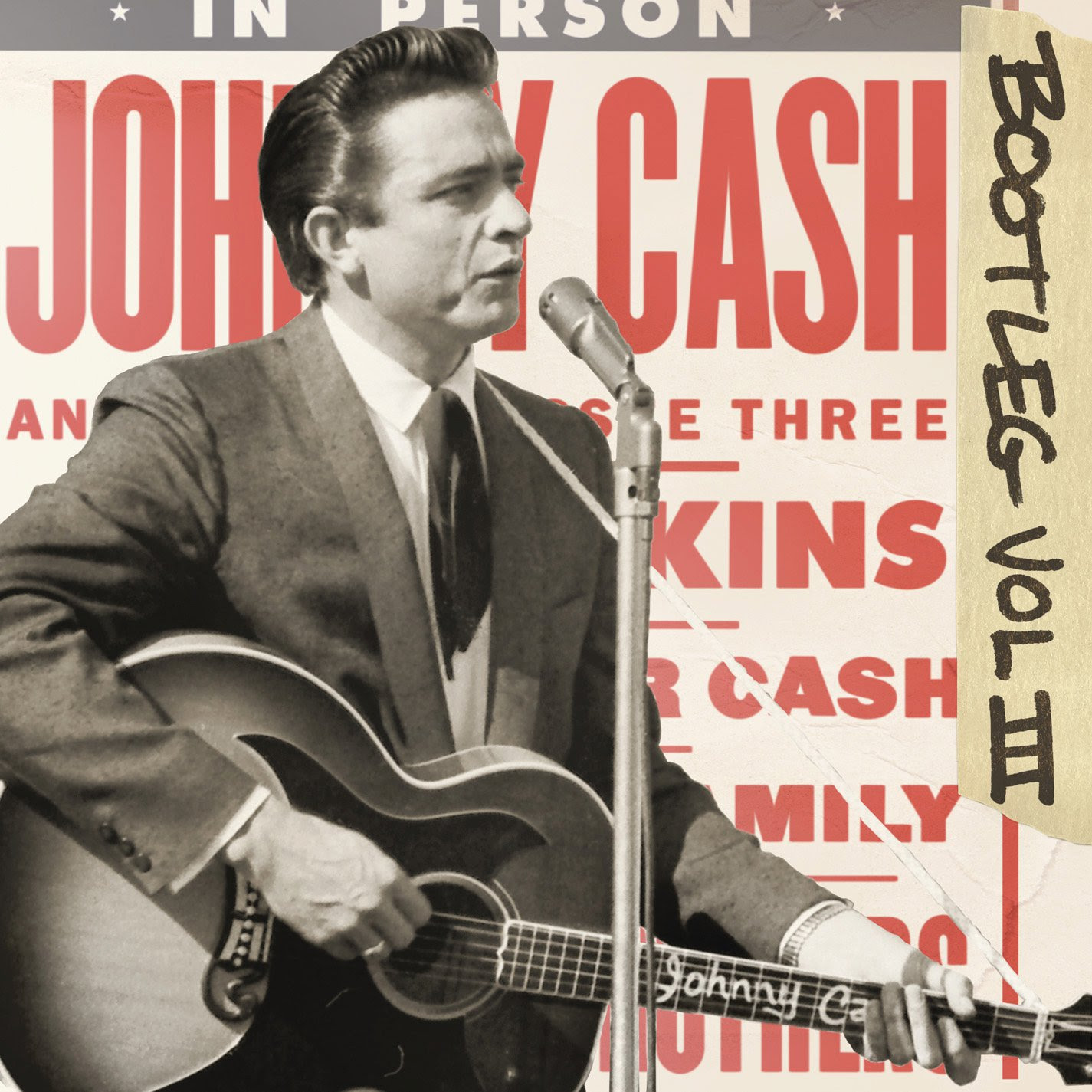
Johnny Cash's Bootleg Volume III:  Live Around the World courtesy https://plus.google.com/u/0/+Johnnycashonline/posts.


According to Wikipedia, country music can be divided into six generations;


  • 1920's:  hillbilly music from the South ex. Carter family, Jimmie Rodgers
  • 1930's/1940's:  cowboy songs, western swing, boogie ex. Bob Willis, Johnny Barfield
  • 1950's/1960's:  bluegrass, gospel, honky tonk, rockabilly ex. Lester Flatt, Earl Scruggs, Johnny Cash, Jerry Lee Lewis
  • 1970's/1980's:  outlaw country, country pop, countrypolitan, folk rock ex. Dolly Parton, Kenny Rogers, Willie Nelson, John Denver
  • 1990's:  worldwide phenomenon of country rock ex. Garth Brooks, Dixie Chicks, Faith Hill, Tim McGraw
  • 2000's to present:  country pop, country rap ex. Carrie Underwood, Taylor Swift, Lady Antebellum


Carrie Underwood's Just a Dream courtesy https://www.youtube.com/watch?v=jLntFKtR66g.


Just as America is made up of many different ethnicities, country music is made up of many different influences.  From its humble roots, it evolved into a world phenomenon in the 1990's in large part thanks to Garth Brooks.  The genre is more popular than ever today.  One thing remains the same: country music continues to weave a good tale.  


Friday, 27 May 2016

Cancer: Emperor of All Maladies


"In 2010, more than 600,000 Americans and more than 7 million humans around the world will die of cancer" (https://www.amazon.ca/Emperor-All-Maladies-Biography-Cancer/dp/1439170916). 

Cancer touches all of us.  We all know a relative, a friend or a co-worker who has suffered from cancer.  Ken Burns teamed up with Dr. Siddhartha Mukherjee, author of The Emperor of All Maladies, to discuss the disease, the patients and the survivors in the documentary Cancer:  Emperor of All Maladies.  Above all, this film is about the heroism displayed by the survivors.

For Ken Burns, this is a personal journey.  "My work as a filmmaker is directly linked to the death of my mother from cancer when I was 11.  From the age of three, I watched her suffer and struggle with this awful disease, forever creating for me a desire to explore the past and to listen deeply to the stories that we all have to tell."

Dr. Siddhartha Mukherjee, coming at the disease from the perspective of a physician, demonstrates a "profound compassion" for patients, their families and their oncologists.  His book, The Emperor of All Maladies, won the Pulitzer Prize for Non-Fiction.  He is also an associate professor at Columbia University who spends much of his time researching cancer, its origin and its treatment.


Wednesday, 25 May 2016

The Address

"[Delivering the Address] is a minefield for these kids [which involves] acts of courage which are embedded in this speech." (Ken Burns)


Lincoln's Gettysburg Address, written over 150 years ago, is arguably the most famous speech delivered by an American President (http://alinefromlinda.blogspot.ca/2011/11/to-be-continued.html).  Ken Burns' documentary follows Greenwood's students as they memorize and recite the Gettysburg Address.

The Greenwood School is a boarding school for fifty boys with learning disorders such as dyslexia and ADD.  Vermont's Greenwood School has used the Address as a teaching tool for over 35 years.  The boys spend a good chunk of time learning and memorizing the Address which they recite at a recital.  Ken Burns has served as a judge at the recital for ten years.

Ken Burns says that due to their learning disorders,, "[Delivering the Address] is a minefield for these kids [which involves] acts of courage which are embedded in this speech."
 Headmaster Stewart Miller points out that the Gettysburg Address is about "finding the inner strength to push through. What we talk about is grit -- setting a goal and sticking to it."

Lincoln's speech served to embolden the Union troops to keep fighting, to persevere against all odds after one of the worst defeats in the Civil War.  His speech marked the turning point in the war.  The Union regained its courage and fought on, achieving victory a year and a half later.

Greenwood's Headmaster explains that if you put something to memory, "you own it".  Ken Burns' is challenging all Americans to learn or relearn the Address, which is inscribed on the wall of the Lincoln Memorial in Washington DC.  The speech may be short, but it is powerful and gains more meaning with the passage of time.  Like the Greenwood students, we can all learn something from this speech.


Greenwood School student recites Gettsyburg Address courtesy 


Tuesday, 24 May 2016

Yosemite: A Gathering of Spirit

"I bless Yosemite for waking me up to the natural wonders but also for waking me up to my own history.  I was able to reclaim an entire trip that I had put away and lost.  I could feel my dad's hand in mine as we walked and the hike we took to the little waterfall." (Ken Burns)


Vernal Falls, Yosemite circa 1889 by Thomas Hill courtesy https://en.wikipedia.org/wiki/Yosemite_National_Park.


After three intense days of filming his documentary Yosemite:  A Gathering of Spirit, Ken Burns found himself restless and unable to sleep.  That night he had a vivid memory of visiting another National Park, Shenandoah in Virginia, with his father when his mother was dying of cancer.  The trip was a chance to realize nature's beauty, to lift his demoralized spirits.  It was also a chance to reconnect with his father.  "I bless Yosemite for waking me up to the natural wonders but also for waking me up to my own history.  I was able to reclaim an entire trip that I had put away and lost.  I could feel my dad's hand in mine as we walked and the hike we took to the little waterfall"  (http://www.usatoday.com/story/travel/2016/04/14/ken-burns-national-parks-americas-best-idea/82499256/).


Yosemite:  A Gathering of Spirit focusses on the fact that "National Parks have a way of connecting people not just to their soil, but to their soul."  While all the National Parks are beautiful, people who have visited more than one tend to have a favourite.  It's not just what people see in the Parks, but who they experience it with.  Writer Dayton Duncan, who has visited all 59 National Parks, prefers National Glacier Park, which he visited with his future wife.  


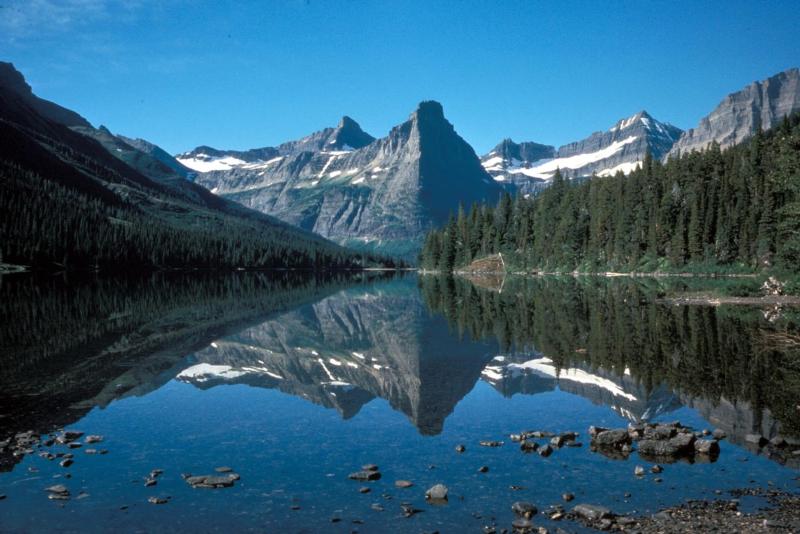
Glenns Lake

Glacier Park, Montana courtesy 


There is something revolutionary about America's National Parks.  As Duncan explains:  "National Parks are the Declaration of Independence expressed on the landscape.  We were the first nation in the history of mankind to say that the most special places should be set aside not for royalty, not for the rich, not for the well-connected, but for everyone and for all time."  

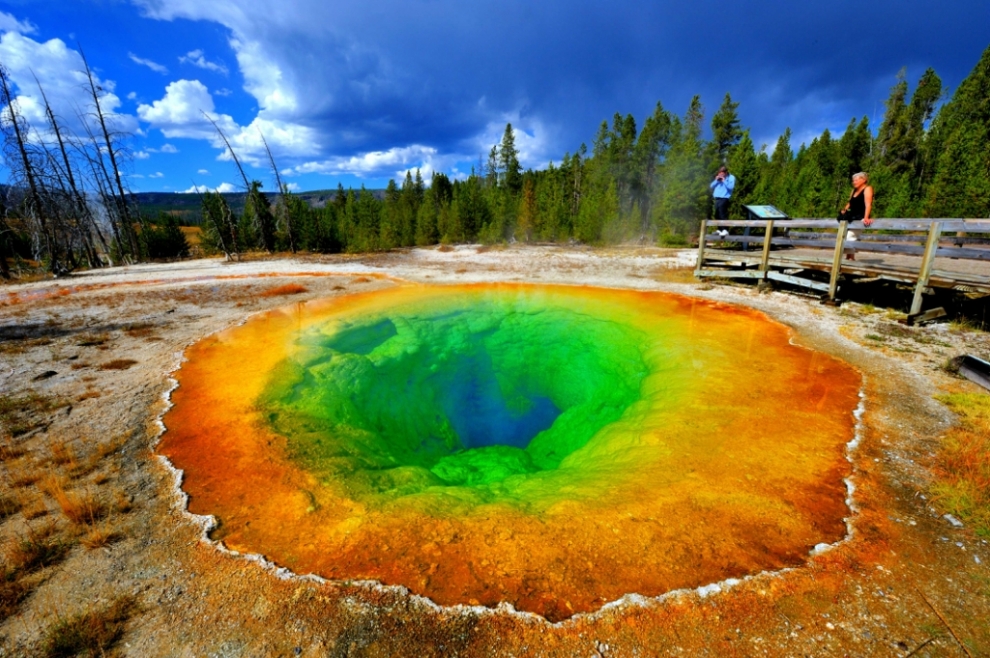
Since 1904, 13.5 billion visitors have flocked to America's National Park sites.  As of 2014, over 3.8 million people have visited Yosemite alone.  The beauty of Yosemite is its giant sequoias.  For someone who has never visited a National Park, Ken Burns recommends starting with the original one, Yellowstone, for its "geysers, thermal pools, waterfalls, and wildlife".  


However, Burns points out that Americans don't have to travel very far to find a Park:  every state has a National Park or a national monument except Delaware.  


Thursday, 19 May 2016

Unforgivable Blackness: The Rise & Fall of Jack Johnson

"The press reacted [to Johnson's victory] as if Armageddon was here.  That this might be the moment when it all starts to fall apart for white society." (Randy Roberts)


The Battle of the Century in Reno, Nevada circa 1910 courtesy http://onmilwaukee.com/images/articles/ja/jackjohnsonmke/jackjohnsonmke_fullsize_story1.jpg.


Black American Jack Johnson started boxing as a teenager in Galveston, Texas.  A relatively new sport, boxing was banned in some states.  In the late 1800's, Blacks were permitted to box as long as they didn't compete for the ultimate title, Heavyweight Champion of the World.  Johnson made considerable money winning numerous fights against both blacks and whites.  However, one opponent eluded him, James Jeffries, the Heavyweight Champion of the World.  He refused to fight a Black, and chose to retire instead.

In 1908, new heavyweight champion Tommy Burns agreed to box Jack Johnson in Australia for the hefty sum of $30,000.  After Johnson beat on Burns for fourteen rounds, the match was stopped and Johnson declared the Heavyweight Champion of the World.  Johnson biographer Randy Roberts explained:  "The press reacted [to Johnson's victory] as if Armageddon was here.  That this might be the moment when it all starts to fall apart for white society." (http://www.pbs.org/unforgivableblackness/about/)

Johnson's victory sparked a search for a "great white hope", someone to challenge Johnson for the title.  James Jeffries returned to the ring to fight Johnson.  "The Battle of the Century" took place in Reno, Nevada on July 4, 1910.  Johnson won the match in the 15th round, sparking nationwide race riots.  "Congress eventually passed an act banning the interstate transport of fight films for fear that the images of Johnson, beating his white opponents, would provoke further unrest." 
Equally troubling for America was Johnson's penchant for white women.  He was frequently seen in the company of white prostitutes Hattie McClay and Belle Schreiber.  In 1910, congress passed the Mann Act prohibiting the transportation of women in interstate and foreign commerce "for the purposes of prostitution, debauchery or any other immoral purpose."  Johnson did not take well to being told what to do.  As James Earl Jones explained:  "He was a self defined man.  And this issue of being black was not that relevant to him.  But the issue of his being free was very relevant."  He was about to lose that freedom.  

In 1913, Johnson was convicted of violating the Mann Act after Belle Schreiber testified against him in court.  Johnson fled the country and spent several years as a fugitive in Europe.  In the meantime, he lost his world title to Jess Willard in Cuba.  Finally, in 1920, Johnson returned to America where he served his time in prison.  In 1946, after someone directed a racist comment at him in a restaurant, he drove home, swerved and was killed in an accident.


Thursday, 12 May 2016

Thomas Jefferson

"I think one approaches Thomas Jefferson with the sense that he is, in a biographical sense, the Holy Grail of American History." (Ken Burns)


Thomas Jefferson, a Renaissance man, represented two polar opposite ideas.  As Ken Burn explains, "He may be the man who distilled a century of Enlightenment thought into this sentence that begins:  'all men are created equal.'  But he was also the owner of more than 200 human beings and never saw fit in his lifetime to free them..."

Jefferson believed in education:  when he lost his entire book collection to a fire at his birthplace home, he responded:  "I cannot live without my books."  He spent the next several years re-amassing his literature, which would total 6,500 titles (http://alinefromlinda.blogspot.ca/2015/10/thomas-jefferson-i-cannot-live-without.html).  When the British Army burned the White House in the War of 1812, the retired president sold his beloved collection to replenish the shelves at the Capitol.

While Jefferson was an avid reader, he was also an avid writer; his writings have been condensed into 19 volumes.  His most famous work was the Constitution of the United States, which he penned in 1787:  

"We the people of the United States, in order to form a more perfect Union, establish Justice, insure domestic Tranquility, provide for the common defence, promote the general Welfare, and secure the blessings of Liberty to ourselves and to our Posterity, do ordain and establish this constitution for the United States of America..."

As Ken Burns says, the statement "all men are created equal" is one of the most important, and revolutionary, parts of the Constitution.  However, when it came right down to it, Jefferson didn't "walk the walk".  He kept over 200 slaves, like so many other Americans.  It never occurred to him to free them, even though he pushed for equality among men.  

Even so, Burns believes that Jefferson's influence on America was more positive than negative.  As Burns explains:  While Jefferson's words "gave comfort to the secessionists and the army of Jefferson Davis.... it is more important that his words inspired Abraham Lincoln, a generation of abolitionists, and thousands of runaway slaves."


Wednesday, 11 May 2016

The West: Four-Way Stop Sign of American History

"I return to the West every year with my two daughters to explore some new aspect of it.  I feel like it beckons me.  And while I can't imagine living anywhere else but New England, I still feel like a citizen of the West.  I think that's true of all Americans who are touched by its breathtaking beauty, exhilarated by its vast distances and moved by its often-tragic and heroic story." (Ken Burns)


"I see the West as a four-way stop sign of American history, a place of surprising collisions of culture," explains Stephen Ives, director and co-producer of the PBS series The West (http://www.pbs.org/weta/thewest/program/producers/ives.htm). While the American West was the place where dreams were realized, it was also the place where dreams were destroyed.  In the nation's effort to fulfill Monroe's Manifest Destiny, The West became a land to be conquered.  

As co-producer Ken Burns explains, you cannot separate the United States from the West.  It is an integral part of American history.  "I return to the West every year with my two daughters to explore some new aspect of it.  I feel like it beckons me.  And while I can't imagine living anywhere else but New England, I still feel like a citizen of the West.  I think that's true of all Americans who are touched by its breathtaking beauty, exhilarated by its vast distances and moved by its often-tragic and heroic story." (http://www.pbs.org/weta/thewest/program/producers/burns.htm)
)


The PBS series The West is divided into eight sections.  Section One, The People, focusses on explorers Lewis and Clark, at a time when the West was largely undiscovered.  

Section Two, Empire Upon the Trails, examines the fur trade, the battle for Texas, the flight of the Mormons to Utah, and the endless line of Conestoga wagons rolling down the Oregon Trail.  It also highlights the expulsion of the Cherokee Indians east of the Mississippi to Oklahoma along the famous "Trail of Tears". 


                                                               Oregon Trail courtesy 
        http://news.discovery.com/adventure/travel/traveling-the-oregon-trail-photos-150725.htm.


Episode Three, Speck of the Future, tells the story of the California Gold Rush of 1849, "littering the hills with mining towns and creating the West's first metropolis".  

In Episode Four, Death Runs Riot, Burns explains how the Civil War comes early to the West. Abolitionists fight for free soil in Kansas; Mexican Americans rebel along the Rio Grande; and in Utah, federal troops march against Mormon polygamy.

In Episode Five, The Grandest Enterprise Under God, the opening of the transcontinental railroad transforms the West, bringing with it cowboys, buffalo hunters and suffragists.  


Buffalo skull pile circa 1870 courtesy 


In Episode Six, Fight No More Forever, the federal government imposes its authority over the West. However, three individuals protest:  Sitting Bull, Brigham Young and Chief Joseph. 

Episode Seven, The Geography of Hope, speaks of the many newcomers to the West, including Chinese Americans, the first of which came to build the railroad.  "For every Indian in the West, there were nearly 40 whites."  Native Indian children are encouraged to forsake their heritage.  The legend of the Wild West is embodied by the greatest showman of the age, Buffalo Bill. 

In Episode Eight, One Sky Above Us, settlers race to grab tribal lands, as in the "Oklahoma Land Rush".  Native Indians perform ghost dances, hoping to reclaim a lost way of life.

As Stephen Ives explains:  "I hope they [the viewers] will come away with a clear eyed sense of what it took for this country to become the United States we know today, both good and bad.  I don't think we can every look at The West without feeling what Tom Watkins...describes as a 'mixture of both pride and shame.'  I think that's a fundamentally healthy way to look at the history of our nation."


Oklahoma Land Rush circa 1889 courtesy 
                                         https://en.wikipedia.org/wiki/Land_Rush_of_1889.

Sunday, 8 May 2016

The Civil War

"The Civil War was history running on all four cylinders.  It was the most important event in the history of our nation, and its importance continues today.  The blueprint of the America we know was drawn up then, and whether we know it or not, we are still walking around in the shadow of that war." (Ken Burns)


It had all the makings of a hit:  Matthew Brady's stirring photographs; tear jerking letters penned by soldiers on the battlefield; star power narratives; and a haunting Scottish lament.  Ken Burns Civil War series, which debuted in 1990, would reach 40 million viewers.  It would make documentary maker Ken Burns a household name and commentator Shelby Foote, a millionaire https://en.wikipedia.org/wiki/The_Civil_War_(TV_series).


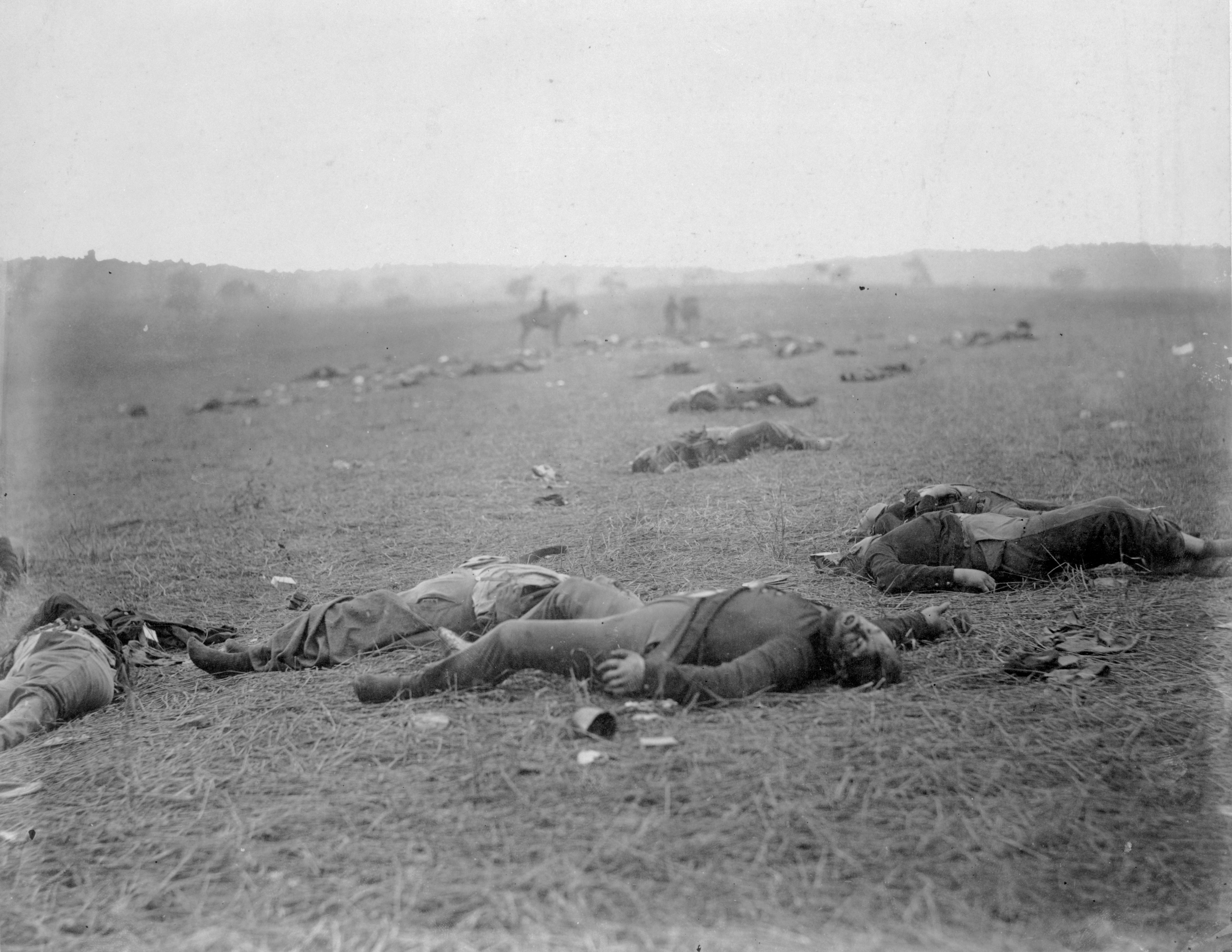
"Dead at Gettysburg 1863" courtesy https://en.wikipedia.org/wiki/Battle_of_Gettysburg.


Ken Burns was inspired to create the Civil War series after discovering Matthew Brady's massive collection of photographs.  Brady studied under Samuel Morse, who had learned about the daguerrotype from Louis DaGuerre himself.  Brady, along with three associates, was able to capture 16,000 images on the battlefield.  His secret to success was his portable darkroom which travelled with him wherever he went.  His very first photographs were taken at the Battle of Bull Run (https://en.wikipedia.org/wiki/Mathew_Brady).


Battle of Bull Run courtesy 


Ken Burns other discovery was the Civil War correspondence.  In 1986, someone sent him the Sullivan Ballou letter which was penned at Bull Run by a 32 year old major from Rhode Island.  Burns read it to his wife, brother and a staff member; when he looked up from the page, they all had tears welling up in their eyes.  Burns explained:  "It's the most beautiful letter I've ever read in my life.  It's a Grand Canyon of a letter.  You can read the strata of meaning.  It's all about love.  First and foremost is love of country...It's about love of government...It's a love of cause...It's a love of family." (https://www.washingtonpost.com/lifestyle/style/civil-war-soldiers-heartbreaking-farewell-letter-was-written-before-death-at-bull-run/2011/07/11/gIQAFe3MQI_story.html).  The Sullivan Ballou letter became the crux of all the soldiers' letter, so eloquently written, by Civil War soldiers and so eloquently read by star power narrators for the series.  The now famous letter has since been read a weddings, funerals and memorial services.


Sullivan Ballou letter circa 1861 courtesy 


No Ken Burns series is complete without an expert commentator.  For the civil war series, Burns chose a historian and author named Shelby Foote.  With his Southern drawl and his erudition, Foote hooked the audience.  Foote had penned by hand a 3000 page trilogy called The Civil War:  A Narrative (Fort Sumter to Perryville in 1958; Fredericksburg to Meridian in 1963; and Red River to Appomattox in 1974).  A relative unknown before the Ken Burns series, by late September of 1990, his trilogy was selling 1000 copies per day; by mid-1991, the trilogy had sold 400,000 copies.  "Ken, you've made me a millionaire," said Foote (https://en.wikipedia.org/wiki/Shelby_Foote).


Shelby Foote.jpg


Ken Burns knew the importance of music.  He chose a haunting Scottish lament to play during his series.  Ashokan Farewell, played at the end of the Fiddle and Dance Camps at the Ashokan Reservoir in New York State, conveyed a "sense of loss and longing" appropriate to the Civil War.  The tune, played 25 times during the series, comprises an hour's play time.  Viewers started to associate the haunting melody with the Civil War period although the tune was only composed in 1982 (https://en.wikipedia.org/wiki/Ashokan_Reservoir).


Confederate soldiers plays the fiddle courtesy https://brandonraykirk.wordpress.com/2013/02/.


The Civil War became the most watched program ever aired on PBS.  It resonated with Americans.  Ken Burns explained:  "The Civil War was history running on all four cylinders.  It was the most important event in the history of our nation, and its importance continues today.  The blueprint of the America we know was drawn up then, and whether we know it or not, we are still walking around in the shadow of that war." (http://www.pbs.org/kenburns/civil-war/about/about-overview/)


Friday, 6 May 2016

The Congress

"Get up there with that lady that's up on top of this Capitol dome, that lady that stands for liberty.  Take a look at this country through her eyes if you really want to see something.  And you won't just see scenery; you'll see the whole parade of what Man's carved out for himself, after centuries of fighting." (Mr. Smith Goes to Washington)


Originally called "The Continental Congress", the United States Congress was established in 1789.  It has the power to pass laws, declare war, admit new states to the Union, post roads, establish post offices, and collect taxes.  Composed of the Senate and the House of Representatives, the Congress also oversees the Executive Branch and has the power to impeach the President.

The Congress meets in the Capitol, one of the biggest symbols of democracy in America.  In his documentary The Congress, Ken Burns widely quotes the Frank Capra movie Mr. Smith Goes to Washington.  The main character, a new senator played by Jimmy Stewart, takes on corruption in the Congress:  "Get up there with that lady that's up on top of this Capitol dome, that lady that stands for liberty.  Take a look at this country through her eyes if you really want to see something.  And you won't just see scenery; you'll see the whole parade of what Man's carved out for himself, after centuries of fighting."

According to Ken Burns, the United States Congress has been one of the country's "most important and yet least understood institutions".  The aim of the congress is to provide checks and balances for the President.  Presidents have had varied relationships with Congress over the last 200 plus years.  Andrew Johnson was the only president to be impeached, although Richard Nixon came close.  While John F. Kennedy came up against resistance by the Congress to pass bills, his successor Lyndon Johnson was known for his Great Reform.  In the aftermath of 9/11, George Bush Jr. was given free reign to counter terrorism.  More recently, Barack Obama has had an icy relationship with Congress.


Members of the 43rd Congress stand on the steps of the Capitol courtesy http://www.pbs.org/kenburns/congress/about/.


Thursday, 5 May 2016

Huey Long: Populist Hero, Corrupt Demagogue

"He was hailed as a champion of the poor and reviled as a dictator.  Louisiana's Huey Long rose to Governor and U.S. Senator on a platform of social reform and justice, all the while employing graft and corruption to get what he wanted." (Ken Burns)


Huey Long's childhood home in Louisiana courtesy 


Huey Long, one of nine children, grew up on a farm in North Louisiana.  While most children wanted to go fishing or hunting, Long loved to read, but books were scarce in his community.  He had an insatiable curiosity which he indulged early when he learned how to walk at eight months old.  As a young boy, he could be found in the nearby town underneath a train to see how it worked.  As a teenager, he eschewed farm work for delivering baked goods, setting newspaper type and sales jobs.  

His hometown, Winnfield, was a stronghold of populism.  Long learned from an early age to look out for the needs of the less fortunate.  His mother, a Christian woman who read from the Bible daily and attended evangelical revivals, was always helping the poor.  She would often send Long or one of his siblings to a neighbour's home with gifts of food or clothing.

Long was a champion of the "small man" which would become evident when he embarked on a political career.  As Governor of Louisiana from 1928 to 1932, he supported many reforms which endeared him to the poor.  Long was so determined to become the next President of the United States, that he wrote a book My First Days in the White House.  Just as Franklin D. Roosevelt had his New Deal, Huey Long had his Share Our Wealth program which included some radical ideas for the pre-welfare 1930's.  

He suggested that every household have a minimum income of $5000 per year so that they could enjoy life's necessities:  a radio, a car and a home.  Everyone over age 60 should receive an old-age pension.  An opponent of banks and big business, Long proposed limiting private fortunes to $50 million, legacies to $5 million and annual incomes to $1 million (https://www.ssa.gov/history/hlong1.html).

In 1929, Long tried to increase taxes on the production of oil but faced strong opposition from the Congress.  Long was determined to get what he wanted.  As a result, charges of "corruption, bribery and gross misconduct" were brought against Long in an attempt to impeach him.  However, he sought the signatures of one third of the Senators to prevent a two thirds majority impeachment.  Those senators who signed the document were later rewarded by Long with state jobs, cash or other rewards.  Huey Long, who had made many enemies in his career, was assassinated in the State Capitol in 1935, pre-empting his run for president.


Huey Long listed as one of the "Ten Most Corrupt Politicians" courtesy http://www.realclearpolitics.com/lists/most_corrupt_politicians/huey-long.html.


Note:  Ken Burns documentary, Huey Long, premiered in 1986 http://www.pbs.org/kenburns/hueylong/film/.


Wednesday, 4 May 2016

The Statue of Liberty

"And in that moment, I sensed a palpable fragility in her structure, floating there above us.  But at the same time, I felt how powerful the idea she represents is -- an idea more indestructible than anything made of copper or steel, an idea as imperishable as the stars that were shining that night." 
(Ken Burns)


Lady Liberty at Paris World's Fair circa 1878 courtesy 


It was the first thing that immigrates to the New World saw when they entered New York Harbor.   For some, it represented a friendship between the donor, France, and the recipient, the United States.  For others it was much more:   a landmark of freedom.  

The concept for the Statue of Liberty was conceived in 1865 by a staunch abolitionist and supporter of the Union in the Civil War named Edouard Rene de Laboulaye.  At his home in Versailles, he broached the idea to French sculptor Frederic Auguste Bartholdi:  "If a monument should rise in the United States , as a memorial to their independence, I think it only natural if it were built by united effort." (https://en.wikipedia.org/wiki/Statue_of_Liberty).  IN 1870, Bartholdi visited New York City, sketches of Lady Liberty in hand, and fixed his eyes on Bedloe's Island as the site for the copper statue.

Designed by Frederick Auguste Bartholdi and built by Gustave Eiffel, the architect of the famous tower, the 151 foot statue was built piece by piece.  Lady Liberty's head and shoulders were exhibited at the Paris World's Fair in 1878.  Her torch was displayed at the Centennial Exposition in Philadelphia in 1876.  The full statue was shipped to the United States where it was assembled in 1886 on a pedestal built by the Americans, partly financed by public donations.  , the statue was dedicated on October 18, 1886 on Liberty Island in New York Harbor.  Lady Liberty represents Libertas, a Roman goddess, who holds a torch and a tabula ensata inscribed with the date July 4, 1776, the day the Declaration of Independence was signed.  New Yorkers celebrated the statue's completion with their first ticker tape parade, presided over by President Grover Cleveland.

Over the next several decades, from 1892 to 1954, over twelve million immigrants would feast their eyes on Lady Liberty as they entered New York Harbor.  Authors Margret and H.A. Rey, creators of Curious George, were two such immigrants, fleeing Nazi occupied Europe.  Novelist Isaac Asimov fled Communist Russia.  Dance studio legend Arthur Murray came from Poland.  For more information on Ellis Island, visit http://alinefromlinda.blogspot.ca/2013/05/may-31.html.

I would guess that some of Ken Burns' relatives sailed past the famous statue as well upon immigrating to the United States.  Ken Burns first became interested in Lady Liberty as she approached her 100th birthday.  Given permission to film night scenes on Liberty Island for his upcoming documentary, he and his crew camped out there overnight.  However, tucked into their sleeping bags under the colossal monument, they could not sleep.  Burns explained:

"And in that moment, I sensed a palpable fragility in her structure, floating there above us.  But at the same time, I felt how powerful the idea she represents is -- an idea more indestructible than anything made of copper or steel, an idea as imperishable as the stars that were shining that night." (http://www.pbs.org/kenburns/statueofliberty/about/)

Note:  For more information on the Statue of Liberty, visit http://alinefromlinda.blogspot.ca/2013/05/may-31.html.


Tuesday, 3 May 2016

The Shakers: Hands to Work, Hearts to God

"Back in the early 1980's, when my then wife Amy Stechler and I were driving through rural western Massachusetts, we came across a remarkable round stone barn on the side of the road whose shape and exquisite workmanship made me stop in my tracks...Who are the people who would make such a thing?  It turned out to be the religious converts at the Hancock Shaker Village." (Ken Burns)

After completing The Brooklyn Bridge, an urban based documentary, Ken Burns turned his attention towards a rural documentary, The Shakers:  Hands to Work, Hearts to God.  While their official name remained the "United Society of Believers in Christ's Second Appearing", unofficially they were called the Shakers after the ecstatic dancing they performed.

Ken Burns came upon the Shakers by accident.  "Back in the early 1980's, when my then wife Amy Stechler and I were driving through rural western Massachusetts, we came across a remarkable round stone barn on the side of the road whose shape and exquisite workmanship made me stop in my tracks...Who are the people who would make such a thing?  It turned out to be the religious converts at the Hancock Shaker Village." (http://www.pbs.org/kenburns/shakers/shakers/)

The Shakers movement began with a former factory worker from England named Ann Lee who immigrated to America in 1774 with eight pilgrims on the eve of the American Revolution.  She practiced celibacy, never married and never had children as did all of the Shakers.  She told her followers to give up their families, property and ties "to know...the peaceable nature of Christ's kingdom" Quakers believed that Christ had come again in the form of "Mother Ann".  Soon, the religious movement was sweeping New England.  At its peak, in 1840, the Quakers included 6,000 people in 19 communal villages which stretched from New England to Ohio to Kentucky.

Shakers were passionate about their work which produced reliable goods and bounteous gardens.  Surplus food was given to the poor.  They were ahead of their time:  women were granted equal rights within the commune by 1787, the year that the United States drafted their Constitution.  In 1817, members who had joined the movement with slaves set them free.  The Emancipation Proclamation was not signed until 1863.  A Shaker owned one of the first automobiles in New Hampshire.  While the state capitol was burning gas, Shakers in the state already had electricity.  

Because the Shakers did not believe in procreation, they eventually died out.  At the time of Ken Burns' documentary debut, there was only a single village of Shakers remaining in Maine.


Monday, 26 October 2015

Shelby Foote: PBS Civil War Series Made Him a Millionaire

"Interested more in the process of learning than in earning an actual degree, Foote was not a model student.  He often skipped class to explore the library and once he even spent the night among the shelves." (Wikipedia)


Before Ken Burns' civil War series debuted on PBS, Shelby foote was a relative unknown.  However, as soon as the series aired, Foote started selling 1000 copies a week of his massive work The Civil War:  A Narrative.  

Shelby Foote was born in the Mississippi Delta in 1917, the only child of Shelby Dade Foote and Lillian Foote.  Foote claimed that having no siblings had its advantages:  "Getting close to books, and spending time by myself, I was obliged to think about things I would have never thought about if I was romping around with a brother and sister."  (https://en.wikipedia.org/wiki/Shelby_Foote)  Foote lost his father at the age of five, perhaps making him retreat even more into books.

Foote was accepted at the University of North Carolina by the skin of his teeth.  There he was "interested more in the process of learning than in earning an actual degree, Foote was not a model student.  He often skipped class to explore the library and once he even spent the night among the shelves."

After two years, Foote returned to greenville Mississippi where he started writing for The Delta Democratic Times with a side job in construction.  In 1946, he had a piece titled Flood Burial published in the Saturday Evening Post.  He quit his job to write fulltime.  

Foote's first nove, Tournament, was published in 1949.  He said he was heavily influenced by his literary hero, William Faulkner.  By the mid-1950's, he started working on a massive volume called The Civil War:  A Narrative with grant money from the Guggenheim Fellowships and Ford Foundation.  Volume 1, Fort Sumter to Perryville, was first published in 1958.  Volume 2, Fredericksburg to Meridian, debuted in 1963.  Volume 3, Red River to Appomattox, first appeared in print in 1974.  Foote always maintained that President Abraham Lincoln and Confederate General Forrest, were the "two authentic geniuses of the war," a conflict that his great-grandfather participated in.  

In the late 1980's, Ken Burns came calling.  He did several interviews with the author.  When Burns' Civil War series debuted in September of 1990, "Foote's drawl, erudition and quirk of speaking as if the war were still going on  made him a favorite".  In one week at the end of September, Foote's The Civil War:  A Narrative sold 1000 copies a day.  Foote told Burns:  "Ken, you've made me a millionaire."

Foote passed away in 2005 and is buried next to the family plot of General Forrest.


Friday, 25 September 2015

Jackson's Indomitable Spirit as Indispensable as Fuel for his Car

"Throughout it all, Jackson's indomitable spirit and sheer enthusiasm was as indispensable as the fuel for his car." (Ken Burns)


Horatio Nelson Jackson took out a fountain pen and paper to write a letter to his beloved wife back home in Vermont.  The motorist, at a stopover in Idaho, had just undertaken to cross the United States, from coast to coast, in a Winton roadster, a feat never performed before.  The tone of his letter suggested that he had nothing but minor setbacks thus far.  In truth, he encountered enough problems to sink a ship.  But his "indomitable spirit" kept him going.

"Just a line to say everything is all right with your wandering boy..." is how Jackson opened his letter of June 17, 1903.  He described how the running gear of the front wheels had broken down.  "We have patched it up and shall leave in the morning hoping that it will take us to Cheyenne." (http://www.richchristianpoorchristian.com/2010/07/optimistic-determination-jackson-and.html)

The roadster, nicknamed the Vermont, suffers constant breakdowns on Jackson's jury across the continent.  But that is not all.  In the era before paved roads, Jackson endures "speed bumps the size of Mount Everest" which caused innumerable flat tires.  In an age without gas stations, the roadster was constantly running out of oil.  Before the invention of GPS, Jackson and his co-driver often got lost.  With no roof or windshield, Jackson endured the heat of the desert.  In an age before hotels and motels, he ate inedible meals and drank tainted water.  To top it all off, this married man suffered many lonely nights without his wife by his side.

Jackson ended his letter with the words:  "Well, old girlie, I can't say anymore -- you know how I feel.  I shall make up for lost time."  Jackson kept to his word.  The roadster pulled into New York City on July 26, 1903.  The cross country motorist returned to Vermont for a reunion with his wife soon after.

Supplies replace the back seat of the Vermont. Photo Credit: University of Vermont, Special Collections

The loaded down Winton roadster circa 1903 courtesy http://www.pbs.org/horatio/car/.


For more information:

1.  Read "Horatio's Drive:  America's First Road Trip" at http://alinefromlinda.blogspot.ca/2012/08/horatios-drive-americas-first-road-trip.html.
2.  Watch Ken Burn's documentary "Horatio's Drive:  America's First Road Trip" (2003).