Showing posts with label Yosemite. Show all posts

Tuesday, 24 May 2016

Yosemite: A Gathering of Spirit

"I bless Yosemite for waking me up to the natural wonders but also for waking me up to my own history.  I was able to reclaim an entire trip that I had put away and lost.  I could feel my dad's hand in mine as we walked and the hike we took to the little waterfall." (Ken Burns)


Vernal Falls, Yosemite circa 1889 by Thomas Hill courtesy https://en.wikipedia.org/wiki/Yosemite_National_Park.


After three intense days of filming his documentary Yosemite:  A Gathering of Spirit, Ken Burns found himself restless and unable to sleep.  That night he had a vivid memory of visiting another National Park, Shenandoah in Virginia, with his father when his mother was dying of cancer.  The trip was a chance to realize nature's beauty, to lift his demoralized spirits.  It was also a chance to reconnect with his father.  "I bless Yosemite for waking me up to the natural wonders but also for waking me up to my own history.  I was able to reclaim an entire trip that I had put away and lost.  I could feel my dad's hand in mine as we walked and the hike we took to the little waterfall"  (http://www.usatoday.com/story/travel/2016/04/14/ken-burns-national-parks-americas-best-idea/82499256/).


Yosemite:  A Gathering of Spirit focusses on the fact that "National Parks have a way of connecting people not just to their soil, but to their soul."  While all the National Parks are beautiful, people who have visited more than one tend to have a favourite.  It's not just what people see in the Parks, but who they experience it with.  Writer Dayton Duncan, who has visited all 59 National Parks, prefers National Glacier Park, which he visited with his future wife.  
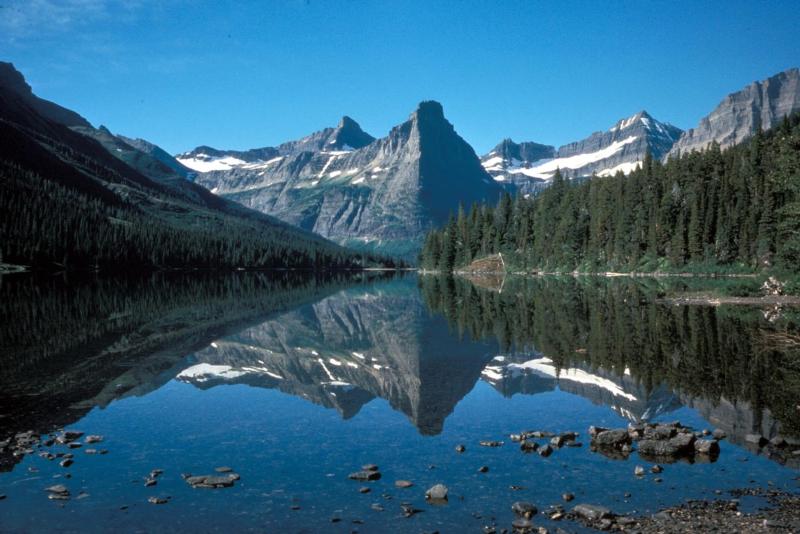

Glenns Lake

Glacier Park, Montana courtesy 


There is something revolutionary about America's National Parks.  As Duncan explains:  "National Parks are the Declaration of Independence expressed on the landscape.  We were the first nation in the history of mankind to say that the most special places should be set aside not for royalty, not for the rich, not for the well-connected, but for everyone and for all time."  

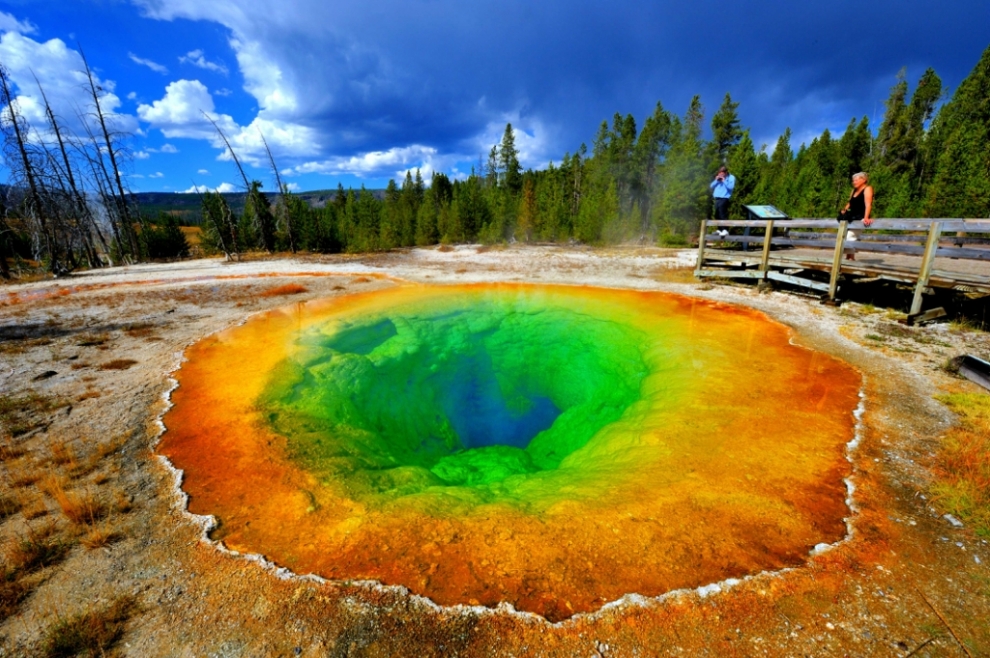
Since 1904, 13.5 billion visitors have flocked to America's National Park sites.  As of 2014, over 3.8 million people have visited Yosemite alone.  The beauty of Yosemite is its giant sequoias.  For someone who has never visited a National Park, Ken Burns recommends starting with the original one, Yellowstone, for its "geysers, thermal pools, waterfalls, and wildlife".  


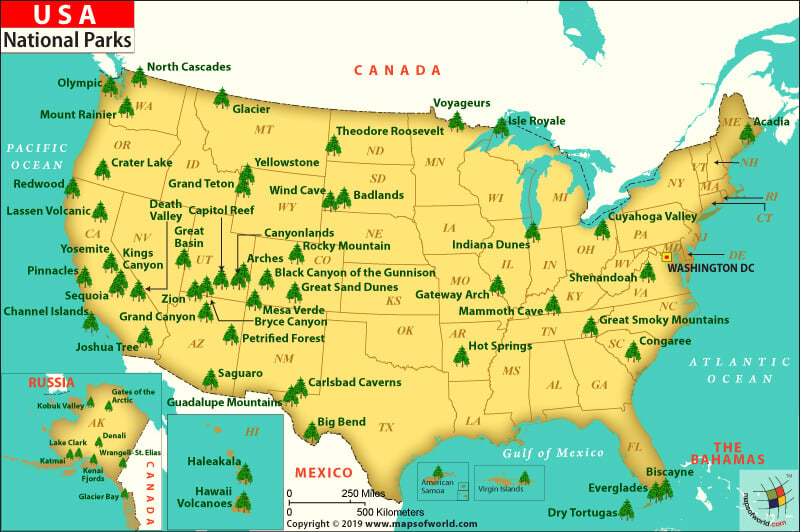
However, Burns points out that Americans don't have to travel very far to find a Park:  every state has a National Park or a national monument except Delaware.  


Saturday, 21 May 2016

The National Parks: America's Best Idea

"The National Parks:  America's Best Idea" is nonetheless the story of people...who were willing to devote themselves to saving some of the precious land they loved and in doing so, reminded their fellow citizens of the full meaning of democracy." (http://www.pbs.org/nationalparks/)


The National Park Service has a presence in 49 of the 50 states (all but Delaware).  It overseas 58 national parks as well as 333 national monuments and historic sites.  "As America expanded westward, pioneers would 'discover' landscapes of such breathtaking and unusual beauty, that written descriptions of the lands were sometimes assumed by people in the East to be works of fiction.  Eventually there emerged a belief that these places should be kept untarnished by development and commerce so they could be experienced by all people." (http://www.pbs.org/nationalparks/about/)


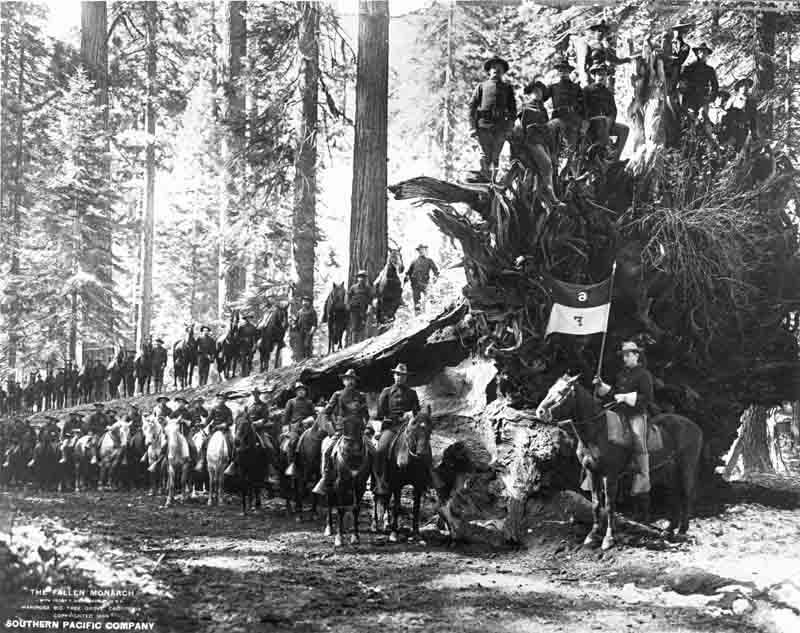
US 6th Calvary on top and beside the Fallen Monarch Tree, Yosemite, circa 1899 courtesy https://www.nps.gov/media/photo/gallery.htm?id=B17BC4E5-155D-4519-3EC6B73FCE2806A8.


"The National Parks:  America's Best Idea is nonetheless the story of people...who were willing to devote themselves to saving some of the precious land they loved and in doing so, reminded their fellow citizens of the full meaning of democracy."  John Muir, a deeply religious man, found inspiration in the mountains of Yosemite.  James Mason Hutchings, a magazine publisher who promoted Yosemite.  George Masa, a Japanese immigrant, took photographs of North Carolina and Tennessee's Great Smoky Mountains, which later became a national park.  Marjory Stoneman fell in love with the Florida Everglades and convinced the powers that be to make it a national park.  Adolphe Murie, a young biologist who focussed on protecting the land but also the animals that inhabited it.   And city slicker Thomas Moran, who joined the trek through the Rocky Mountains to Yellowstone River and painted the mural which later convinced Congress to make it a national park. (http://www.yellowstonepark.com/the-history-of-yellowstone-national-park/


Sunday, 13 September 2015

The Camping Trip That Changed America

"I wish to write you personally to express the hope that you will be able to take me through the Yosemite." (President Theodore Roosevelt's letter to John Muir, 1903)


Theodore Roosevelt & John Muir at Glacier Point circa 1903 courtesy http://www.nps.gov/yose/learn/historyculture/muir-influences.htm.


In 1903, President Theodore Roosevelt sat down in his overstuffed chair and read conservationist John Muir's book about his adventures in the Sierra Mountains.  Muir complained about how America's "wild forests were vanishing".  Roosevelt took out a pen and paper and wrote a letter to Muir, asking if he would accompany him on a tour of Yosemite in California to see the problem firsthand (http://www.theodore-roosevelt.com/images/trenvpics/trmuirletters.pdf).

The rich New Yorker, Roosevelt, and the poor immigrant farmer, Muir, were opposites.  But Roosevelt took great delight in their adventure, exclaiming that he felt like "a runaway schoolboy". The president was treated to the sight of Mariposa Grove's towering sequoias and Glacier Point's Overhanging Rock.  Roosevelt was alarmed by the plethora of fallen sequoias and the pollution spewing into the air.

The Yosemite trip was burned into Roosevelt's memory.  Not long after, in 1906, he signed the Antiquities Act to protect the national natural treasures.  Today, almost 85 million acres of land are located within America's national parks.

For more information, read The Camping Trip That Changed America at http://www.amazon.ca/Camping-Trip-that-Changed-America/dp/0803737106.


Roosevelt, Muir and company in front of a giant sequoia courtesy