Monday, 17 April 2017

Mont Royal Park Designed by Central Park Architect


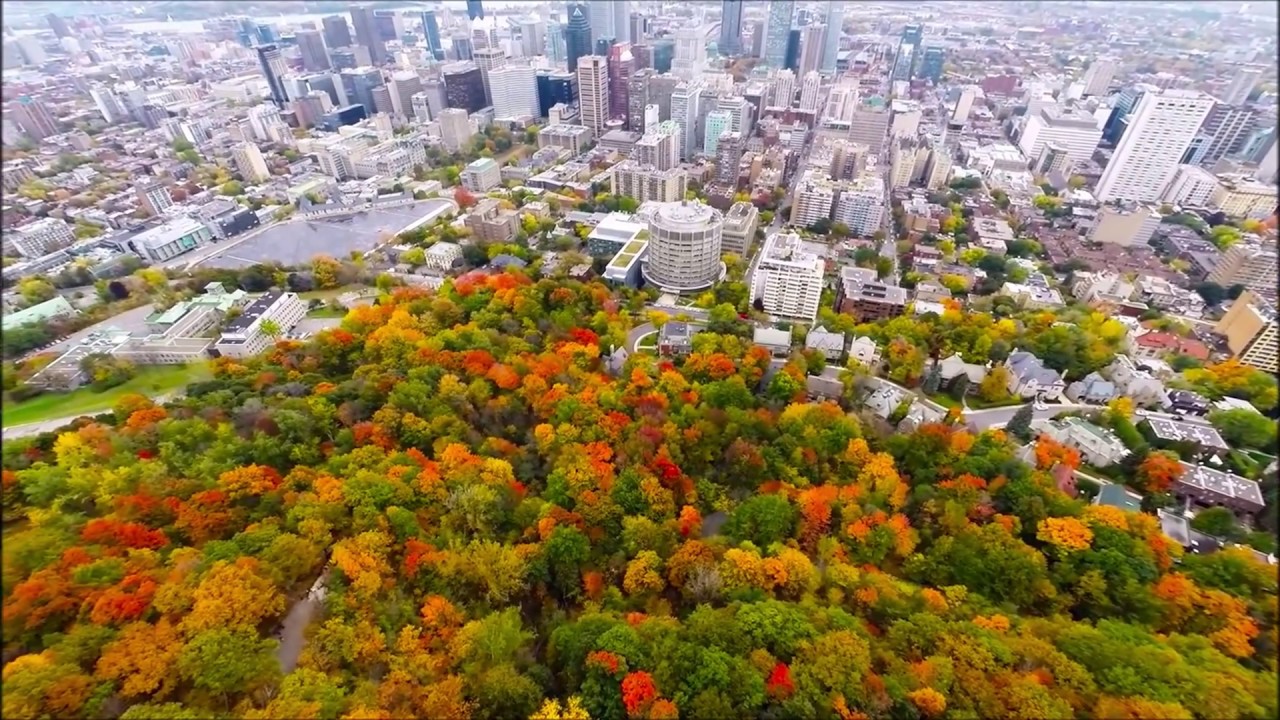
View of Montreal, Quebec from Mont Royal Park courtesy 


Mont Royal is a dormant volcano that sits in the Montregian Hills, a chain running between the Appalachians and the Laurentians.  The hill consists of three peaks, Colline de la Croix, or Mont Royal, Colline d'Outremont, or Mount Murray and Westmount Summit.  The mountain was created when the North AMerican Plate moved westward over the New England area, along with the other mountains of the Montregian Hills, creating a volcanic complex active about 125 million years ago. The first European to scale Mont Royal, the explorer Jacques Cartier, named it after Francis I of France.

Frederick Law Olmsted, the designer of New York City's Central Park, also mapped out Mont Royal Park in 1876.  He patterned the park's design after the mountainous topography:  shade trees at the bottom of the park resembled a valley; further up the trees became more sparse to make it look like the side of a mountain; a reservoir, planned for the top of the mountain was never built due to a depression.

The park features two belevederes, including Kondiaronk Belevedere, is a semi circular plaza with a chalet overlooking downtown Montreal.  Other highlights of the park include:


  • Beaver Lake
  • a sculpture garden
  • Smith House
  • an interpretive centre
  • toboggan runs
  • cross country trails
  • a gazebo (bandstand)
  • George-Etienne Cartier Monument
The forest has been damaged by both Mayor Drapeau's morality cuts (to prevent anyone from having sex in the bushes) and the Ice Storm of 1998.  The forest, which rises above Montreal, is particularly beautiful in autumn.

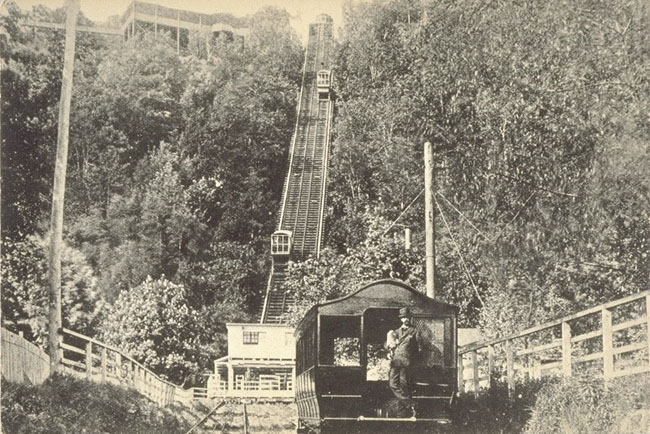
From 1885 to 1920, the Mont Royal Funicular Railway transported people to its peak; later Montreal's Number 11 streetcar took over the route.  A roadway now bisects the mountain named after former Mayor Camillien Houde who was jailed during the Second World War for his opposition to the war effort.


Sunday, 16 April 2017

Toronto's Boulevards of Broken Dreams

"If a 1929 plan had come to fruition, there'd be a lot more grandeur to downtown Toronto." 
(Kenneth Kidd)


It all started at Richmond Street and University Ave in Toronto back in 1929.  As part of the City Beautiful Movement, a plan was sketched out to make the intersection a roundabout, called Vimy Circle, with a towering memorial at the centre, a tribute to the Canadian heroes who took Vimy Ridge.  University Ave would have continued south to Front Street as Queen's Park Ave.  A new major street, Passchendaele Rd, named after another great Canadian victory, would head southwest from the circle to the existing Clarence Square at Spadina Ave near Front Street.  Another new street marking a World War I battle, Cambrai Ave, would have run north from Union Station exactly where the eastern addition to the Royal York sits.  Cambrai Ave would have cut through the present day Toronto Dominion Centre and Exchange Tower.  Halfway between King St. and Adelaide St., Cambrai Ave would have split into two, encircling an office tower and some greenery, until it joined together again south of Queen St.  It would have continued north to St. Julien Place, the battle where 18,000 Canadian soldiers first experienced poison gas.  It would be a magnificent park with statues and fountains and Osgoode Hall, the present day site of Nathan Phillips Square.  

Motivation was not so much to beautify the city of Toronto but to make it more accessible for the growing number of automobiles on the road.  The plan to make the Toronto;s downtown resemble the Champs Elysees in Paris, however, was interrupted by the Great Depression.  The only grand boulevard in the end would be University Ave.  The only monuments erected were the South African War Memorial, built already in 1909, and the Sir Adam Beck monument, created in 1934 on Queen St.  The only grand buildings would be Union Station, the Royal York Hotel and the Dominion Public Building.


Mathew Borrett's illustration of Vimy Circle, from Queen St. and University Ave. looking south, as it would look today.

Saturday, 15 April 2017

Robert Speer's Denver Design Inspired by World's Fair


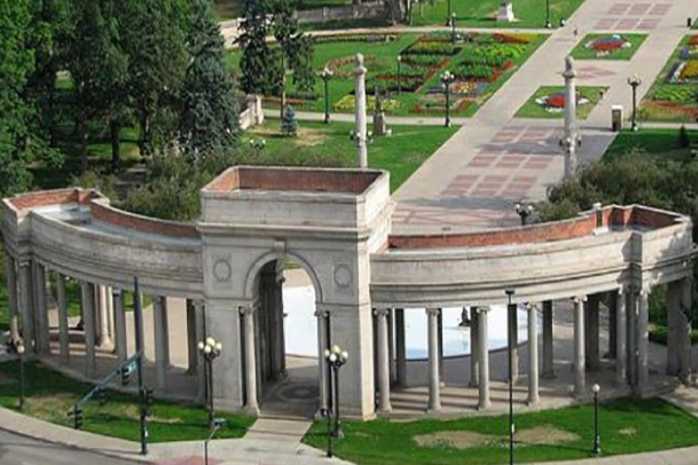
Denver Civic Center Park courtesy https://www.denver.org/listing/civic-center-park/6823/.


Mayor Robert Speer came to Denver as a tuberculosis patient in 1878.  While the city was thriving it was also ugly.  Speer visited the White City at Chicago's World Fair in 1893.  During Speer's three terms as mayor, 300 miles of streets were paved, sandstone sidewalks were installed along with granite curbs.  A 12000 seat auditorium, at the cost of $650,000, was opened where free Sunday concerts were held.  The auditorium hosted the 1908 Democratic National Convention.  In 1909. Denver Municipal Facts started publication announcing the newest improvements to the city.

Speer especially loved the parks system developped during his terms in office.  The parks were landscaped; benches, playgrounds, fountains and drinking fountains were installed, the latter part of the temperance movement.  Children were encouraged to play in the fountains and there were no Keep Off the Grass signs like in New York City's Central Park.

Speer patterned Denver's Civic Center after the Chicago World Fair's Court of Honor.  While the Civic Center became a seedy area by the 1940's, surrounded by bars and strip joints, it was cleaned up by the 1950's when the Denver Public Library and Denver Art Museum were built there.


Friday, 14 April 2017

Memphis, Tennessee: Nation's Cleanest City

The Memphis riverfront

Riverside Drive before picture courtesy http://memphiscitybeautiful.org/about-us/history.


The City Beautiful Commission, established in 1930, championed the cause of cleaning up Memphis, Tennessee.  In 1935, at the cost of nearly $1 million, the Riverside Drive Project got underway.  The City Beautiful Commission landscaped the bluffs with crepe myrtle, redbuds, magnolias, dogwoods and Paul Scarlet roses.  Memphis gained the title of the cleanest city in Tennessee from 1940 to 1946.  It also received the title of the nation's cleanest city from 1948 to 1951.


The Riverside Drive project in 1935.

Riverside Drive after picture courtesy http://memphiscitybeautiful.org/about-us/history.

Thursday, 13 April 2017

Kansas City Embraces Beaux Arts Architecture

"The City Beautiful Movement...transformed Kansas city from a sparse, dirt-road laden town to a thriving metropolis." (Joey Hill)


Kansas City Board of Trade Building opened in 1908 courtesy 


Educated in the art of city planning in Paris, Moscow, Germany and New York City, Kessler was hired to redesign the boomtown Kansas City in the early 1900's.  Kessler believed that people need "beautiful, natural scenery", his motivation behind the series of wide boulevards and public parks that he designed.


Penn Valley Park

Penn Valley Park courtesy http://www.kchistory.org.


Kansas City opened a new library in 1897, built at the cost of $200,000.  It housed not only books but also an art gallery and museum artifacts.  The Board of Trade Building opened its doors in 1908.  The Kansas City Museum is also built in the Beaux Arts style in 1910, is the former residence of Robert Alexander Long.  Union Station, a magnificent building constructed in 1914, saw train service peak in 1945 and decline in the 1950's.  While the train station shut down in 1985, it reopened a few years later as a museum.  One Beaux Arts Building which opened in 1923 is now The Sophian, renovated into modern condominiums.The Liberty Memorial, done in the Egyptian architecture style, opened in 1926.  


Kansas City Union Station under construction courtesy http://www.unionstation.org/timeline.

Wednesday, 12 April 2017

San Francisco Center Heart of City Beautiful Movement


The City Beautiful Movement arrived in San Francisco in 1904 when former mayor James Duval Phelan invited Daniel Burnham to town.  Burnham the architect of the Chicago World's Fair White City, was a student of classicism and the Beaux Arts.  He recommended a Civic Center at the heart of the city with boulevards radiating from it.  A landscaped park would begin at the Civic Center and extend to the Golden Gate Park panhandle.  A neo-classic library would overlook the Pacific Ocean.

The San Francisco Earthquake of 1906 was a cloud with a silver lining.  Much of the city was destroyed but this now gave the city planners a blank canvas to work with.  The final say, however, would be up to the merchants.  The City Hall and the Exposition Auditorium were both completed in time for the Pan Pacific Exposition of 1915, an exhibit that Little House on the Prairie author Laura Ingalls Wilder visited and wrote about in West From Home.  The War Memorial Opera House, the War Memorial Veterans Building, the Main Library and the State and Old Federal Buildings were completed in the 1920's and 1930's.  A central park, or civic center, brought all of the buildings together.  A reflective pool, surrounded by columns of London Plane trees, was the focus of the park.  Two banks, the Savings Union Bank and the Wells Fargo Bank, reflect the Beaux Arts design.


Tuesday, 11 April 2017

Harrisburg Rebuilds Capitol, Thumbs Nose at Philadelphia

Harrisburg Capitol Building


The City Beautiful Movement, which started in Chicago with the World's Fair in 1893, spread to Washington DC, Boston, Cleveland and Philadelphia.  Smaller cities were not to be outdone.  When a fire consumed the Capitol in Harrisburg, Pennsylvania, there was talk of moving the Capitol to Philadelphia.  However, the House of Representatives voted 103 to 75 to keep the Capitol. Concerned citizens, in the meantime, formed a city improvement committee.  Just as Chicago had risen from the ashes after the Great Fire of 1871, owing its reputation for great architecture from the subsequent rebuilding, so too could Harrisburg.

Conservationist Mira Lloyd Dock delivered a riveting speech, "The City Beautiful", to the Harrisburg Board in 1901.  Dock joined forces with Horace McFarland, president of the Civic Association, to promote the cause of civic improvement.  The same year, The City Telegraph printed a front page article pointing out Harrisburg's problems and highlighting Dock's message of beautification and recreation.  In February of 1901, the public voted to set aside $1.1 million for new buildings and city planning.

Harrisburg was bound and determined that they, not Philadelphia, deserved the title of state capital.  A contest was held to find an architect to build the new Capitol won by Joseph M. Huston.  Painters Violet Oakley and Edwin Austin Abbey along with sculptor George G. Barnard, were hired to decorate the building.  A Philadelphia newspaper called the new Capitol, built in 1906, "one of the most artistic monuments of the state".

The project  however was not without controversy.  Oakley's paintings, which highlighted that Pennsylvania was founded on religious freedom, offended some Roman Catholics.  The bas-relief heads on the Capitol doors, intended to represent the different men who lived in Pennsylvania, were mocked by political cartoonists.  The nude statues which arrived from France offended some Pennsylvanians and were covered up in 1911.

Nonetheless, the Times of Buffalo pointed out that it was the only Capitol to be completed within its estimates.  President Theodore Roosevelt presided over the official opening of the building on February 5, 1906.  Mary D. Fitzgerald called the new Capitol "perfectly wonderful, marvelously beautiful [and] a superb success."


8 final.tif