Showing posts with label City Beautiful Movement. Show all posts

Sunday, 16 April 2017

Toronto's Boulevards of Broken Dreams

"If a 1929 plan had come to fruition, there'd be a lot more grandeur to downtown Toronto." 
(Kenneth Kidd)


It all started at Richmond Street and University Ave in Toronto back in 1929.  As part of the City Beautiful Movement, a plan was sketched out to make the intersection a roundabout, called Vimy Circle, with a towering memorial at the centre, a tribute to the Canadian heroes who took Vimy Ridge.  University Ave would have continued south to Front Street as Queen's Park Ave.  A new major street, Passchendaele Rd, named after another great Canadian victory, would head southwest from the circle to the existing Clarence Square at Spadina Ave near Front Street.  Another new street marking a World War I battle, Cambrai Ave, would have run north from Union Station exactly where the eastern addition to the Royal York sits.  Cambrai Ave would have cut through the present day Toronto Dominion Centre and Exchange Tower.  Halfway between King St. and Adelaide St., Cambrai Ave would have split into two, encircling an office tower and some greenery, until it joined together again south of Queen St.  It would have continued north to St. Julien Place, the battle where 18,000 Canadian soldiers first experienced poison gas.  It would be a magnificent park with statues and fountains and Osgoode Hall, the present day site of Nathan Phillips Square.  

Motivation was not so much to beautify the city of Toronto but to make it more accessible for the growing number of automobiles on the road.  The plan to make the Toronto;s downtown resemble the Champs Elysees in Paris, however, was interrupted by the Great Depression.  The only grand boulevard in the end would be University Ave.  The only monuments erected were the South African War Memorial, built already in 1909, and the Sir Adam Beck monument, created in 1934 on Queen St.  The only grand buildings would be Union Station, the Royal York Hotel and the Dominion Public Building.


Mathew Borrett's illustration of Vimy Circle, from Queen St. and University Ave. looking south, as it would look today.

Thursday, 13 April 2017

Kansas City Embraces Beaux Arts Architecture

"The City Beautiful Movement...transformed Kansas city from a sparse, dirt-road laden town to a thriving metropolis." (Joey Hill)


Kansas City Board of Trade Building opened in 1908 courtesy 


Educated in the art of city planning in Paris, Moscow, Germany and New York City, Kessler was hired to redesign the boomtown Kansas City in the early 1900's.  Kessler believed that people need "beautiful, natural scenery", his motivation behind the series of wide boulevards and public parks that he designed.


Penn Valley Park

Penn Valley Park courtesy http://www.kchistory.org.


Kansas City opened a new library in 1897, built at the cost of $200,000.  It housed not only books but also an art gallery and museum artifacts.  The Board of Trade Building opened its doors in 1908.  The Kansas City Museum is also built in the Beaux Arts style in 1910, is the former residence of Robert Alexander Long.  Union Station, a magnificent building constructed in 1914, saw train service peak in 1945 and decline in the 1950's.  While the train station shut down in 1985, it reopened a few years later as a museum.  One Beaux Arts Building which opened in 1923 is now The Sophian, renovated into modern condominiums.The Liberty Memorial, done in the Egyptian architecture style, opened in 1926.  


Kansas City Union Station under construction courtesy http://www.unionstation.org/timeline.

Tuesday, 11 April 2017

Harrisburg Rebuilds Capitol, Thumbs Nose at Philadelphia

Harrisburg Capitol Building


The City Beautiful Movement, which started in Chicago with the World's Fair in 1893, spread to Washington DC, Boston, Cleveland and Philadelphia.  Smaller cities were not to be outdone.  When a fire consumed the Capitol in Harrisburg, Pennsylvania, there was talk of moving the Capitol to Philadelphia.  However, the House of Representatives voted 103 to 75 to keep the Capitol. Concerned citizens, in the meantime, formed a city improvement committee.  Just as Chicago had risen from the ashes after the Great Fire of 1871, owing its reputation for great architecture from the subsequent rebuilding, so too could Harrisburg.

Conservationist Mira Lloyd Dock delivered a riveting speech, "The City Beautiful", to the Harrisburg Board in 1901.  Dock joined forces with Horace McFarland, president of the Civic Association, to promote the cause of civic improvement.  The same year, The City Telegraph printed a front page article pointing out Harrisburg's problems and highlighting Dock's message of beautification and recreation.  In February of 1901, the public voted to set aside $1.1 million for new buildings and city planning.

Harrisburg was bound and determined that they, not Philadelphia, deserved the title of state capital.  A contest was held to find an architect to build the new Capitol won by Joseph M. Huston.  Painters Violet Oakley and Edwin Austin Abbey along with sculptor George G. Barnard, were hired to decorate the building.  A Philadelphia newspaper called the new Capitol, built in 1906, "one of the most artistic monuments of the state".

The project  however was not without controversy.  Oakley's paintings, which highlighted that Pennsylvania was founded on religious freedom, offended some Roman Catholics.  The bas-relief heads on the Capitol doors, intended to represent the different men who lived in Pennsylvania, were mocked by political cartoonists.  The nude statues which arrived from France offended some Pennsylvanians and were covered up in 1911.

Nonetheless, the Times of Buffalo pointed out that it was the only Capitol to be completed within its estimates.  President Theodore Roosevelt presided over the official opening of the building on February 5, 1906.  Mary D. Fitzgerald called the new Capitol "perfectly wonderful, marvelously beautiful [and] a superb success."


8 final.tif


Sunday, 9 April 2017

Philadelphia Design Influenced by Vienna Ringstrasse

tour gallery

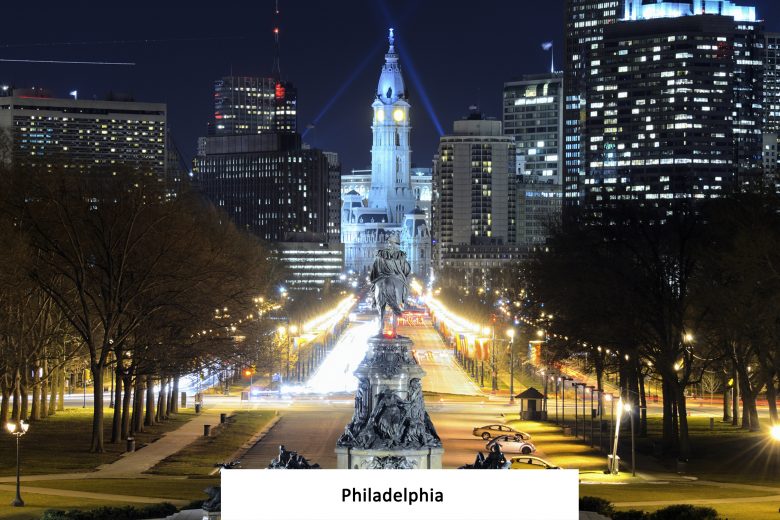
Philadelphia was rated as one of the Top Ten Cities for Parks in the World by Frommers courtesy https://comforttour.com/holiday/philadelphia-gettysburg-bus-tours-from-toronto/.


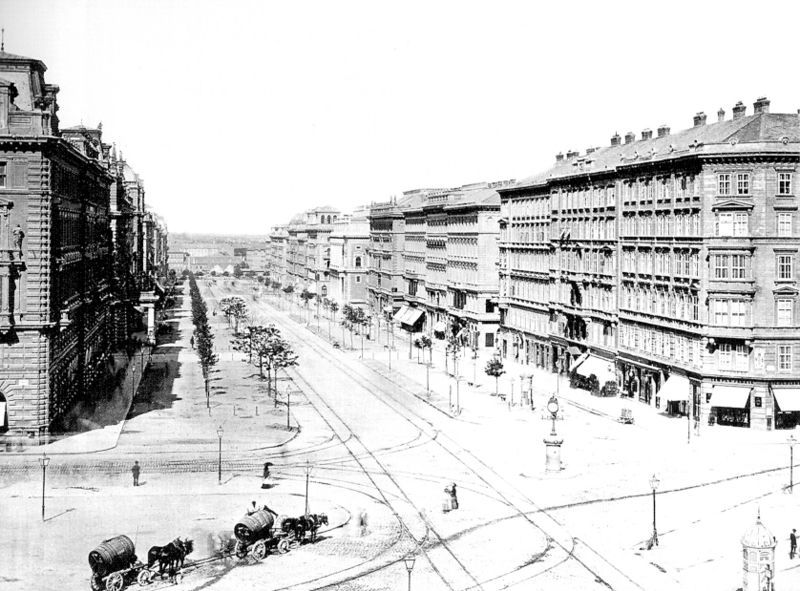
The City Beautiful Movement of the 1890's and early 1900's not only influenced Washington DC and Chicago, but also Philadelphia.  The movement came about as a reaction to the physical decay and congestion of America's urban centres.  Architects Danile Burnham and Andrew Jackson Downing were influenced by projects in Europe such as Vienna's Ringstrasse, Baron Haussmann's redesign of Paris and Idefons Cerda's work in Barcelona.  The goal was to create urban areas with "wide boulevards,ennobling buildings and manicured parklands to allow people of all backgrounds spaces for reflection and recreation."


After the Civil War, the city of Brotherly Love had grown to 700,000 people.  Its factories, refineries and shipyards emitted significant amounts of pollution which called for a beautification of the city.  Environmental groups like the City Parks Association and the Garden Club of Philadelphia campaigned for grand Beaux Arts architecture, boulevards in North Philadelphia, a city wide playground system, a park along the Schullkill River and a system of radial boulevards for South Philadelphia similar to Washington DC's.


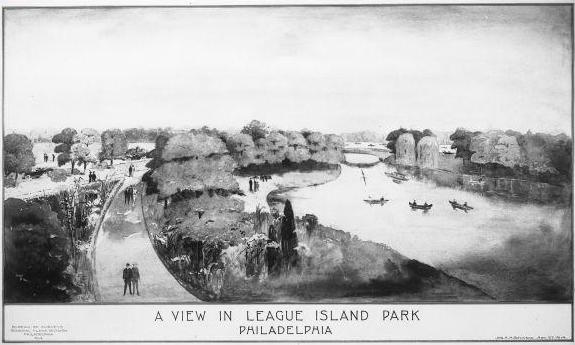
Black and white illustration of a park along a body of water with trees and wide walkways.

League Island Park (later FDR Park) circa 1912 courtesy http://philadelphiaencyclopedia.org/archive/city-beautiful-movement/.


Local architects Albert Kelsey and David K. Boyd proposed the clearing of two city blocks to make Independence Hall, the original city of the Capital, more visible.  While it took decades, the resulting Independence Mall came to fruition after World War II.  A Parisian style parkway connecting Center City and Fairmount Park got underway in 1907.  The City Parks association created League Island Park in 1912.  Today it is called FDR Park.  By 1930, much of Fairmount Parkway, which included the Free Library, Rodin Museum, Municipal Court, Logan Circle and the Philadelphia Museum of Art was completed or under construction.


Image result

Independence Mall circa 1952 courtesy https://en.wikipedia.org/wiki/Independence_Mall_(Philadelphia).


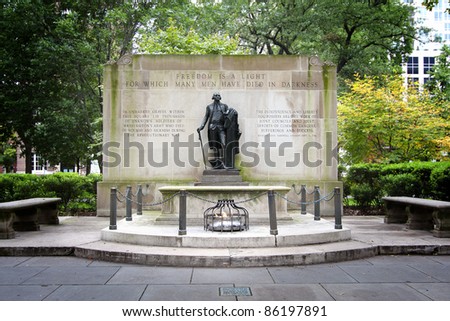
Washington Square was beautified with statuary and refurbished fountains thanks to the Philadephia Fountain Society.  Two high rises, Penn Mutual and the Curtis Buildings, reflected "City Beautiful sensibilities".  In 1933, Alfred P. Shaw designed 30th Street Station in the Neoclassical/Art Deco Design, commissioned by the Pennsylvania Railroad.


Grave of the Unknown Soldier at Washington Square courtesy https://www.shutterstock.com/search/washington+square.