Monday, 23 May 2016

The Dust Bowl


Abandoned farm north of Dalhart, Texas circa 1938 courtesy http://www.pbs.org/kenburns/dustbowl/photos/.


John Steinbeck wrote books about it.  Dorothy Lange photographed it.  Woody Guthrie wrote ballads about it.  It was the Great American Dust Bowl.  In the 1930's, the American west was struck by Black Blizzards. Dust choked people's lungs and blinded their eyes.  It invaded people's houses and destroyed their crops. It stopped automobiles and derailed freight trains.   The resulting drought drove tens of thousands of families from their farms.  You can read about the Dirty Thirties in Don Brown's picture book The Great American Dust Bowl (https://www.amazon.ca/Great-American-Dust-Bowl/dp/0547815506).

Famous photo by Dorothea Lange courtesy http://www.pbs.org/kenburns/dustbowl/photos/.


Ken Burns "The Dust Bowl chronicles the worst man made ecological disaster in American history in which the frenzied Wheat Boom of the Great Plow Up, followed by a decade long drought during the 1930's nearly swept away the breadbasket of the nation" (http://www.pbs.org/kenburns/dustbowl/about/overview/).  


At the turn of the last century, European immigrants, as well as Americans, settled the Great Plains, a grasslands area that had not previously been farmed.  In the 1920's, these farmers enjoyed a wheat boom thanks to advanced technology and the thriving economy in the United States.  However, prices plummeted after the Stock Market Crash of 1929.  Rather than harvesting less wheat, farmers harvested more in an attempt to counteract the effects of the Great Depression.  Fields were left exposed and vulnerable to drought, which hit in 1932 (http://www.livinghistoryfarm.org/farminginthe30s/water_01.html).


Panic sets in on Wall Street in New York City after Stock Market Crash of 1929 courtesy 


The previously fertile soil turned into dirt.  The wind stirred it up and it accumulated into massive clouds called "black blizzards" (http://alinefromlinda.blogspot.ca/2012/05/black-blizzard.html). The dust lodged itself in people's homes and in their lungs.  Many developped "dust pneumonia".  No longer able to farm, they joined the mass exodus of Okies headed to California to pick fruit, a journey so aptly illustrated by Steinbeck in his novel The Grapes of Wrath (http://alinefromlinda.blogspot.ca/2015/11/tom-joads-ill-be-there-speech.html).


Black Blizzard approaches Elkhart, Kansas circa 1937 courtesy https://prairieskies.files.wordpress.com/2011/07/31.jpg.

Ken Burns says that The Dust Bowl is also a story of perseverance. Burns interviewed 26 survivors and shared their stories.  His documentary chronicles the families who struggled to hold onto their land, New Deal programs which kept families afloat, and attempts by government and farmers to develop new strategies of farming and land conservation (http://americanhistory.about.com/od/greatdepression/tp/new_deal_programs.htm).


FDR talks to farmer and his son circa 1936 courtesy http://www.pbs.org/kenburns/dustbowl/photos/.


Sunday, 22 May 2016

Prohibition

"When the mayor of Berlin, Gustav Boess, visited New York City in the fall of 1929, one of the questions he had for his host Mayor James J. Walker, was when Prohibition was to go into effect.  The problem was that Prohibition had already been the law of the United States for nearly a decade.  That Boess had to ask tells you plenty about how well it was working." (Michael Lerner)


The Alcoholic Republic talks about the great alcoholic binge that took place in America from 1790 to 1830.   Wives were worried about their husbands drinking away their pay cheques, about them coming home and taking out their frustrations on them and their children, about the possibility of living on the streets (http://alinefromlinda.blogspot.ca/2012/01/carry-nations-hatchetations.html). The Temperance Movement, a direct response to this problem, peaked in 1850 with 238,000 women (http://www.encyclopedia.com/topic/temperance_movements.aspx).


In time, the Temperance Movement's strategy changed from one of moral to legal reform.  The Prohibition Party debuted in 1869.  The Women's Christian Temperance Union emerged in 1874.  Their strategy focussed more and more on empowering women.  One way to do this was by securing the vote for women.  The W.C.T.U. joined forces with the suffragettes to make this happen.  
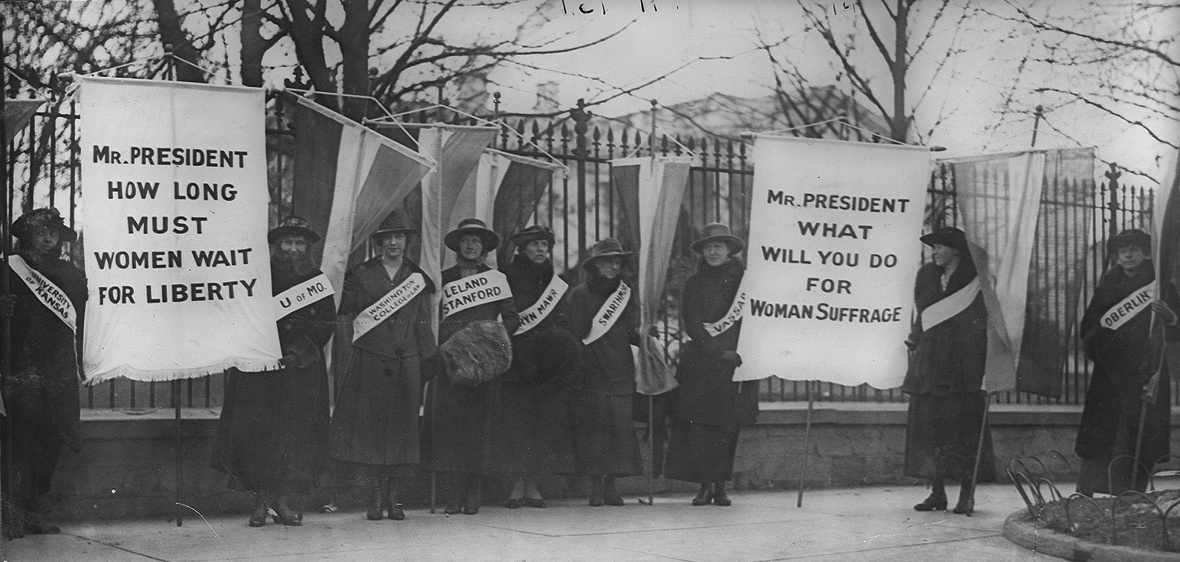
It is no surprise then that right on the tails of the women's right to vote (1919) came Prohibition (1920).  


Reformers were hoping that Prohibition would not only curb drinking, but also improve the quality of life in American towns and cities.  Merchants expected sales of clothing and household goods to rise. Real estate agents expected house prices to rise with the closing of saloons and the improvement of neighbourhoods.  Soft drink companies expected their profits to skyrocket.  Theatre producers expected bigger crowds as Americans looked for new outlets for entertainment.  According to historian Michael Lerner, however, this did not happen.  


Instead, the closing of breweries and saloons led to the loss of thousands of jobs.  Restaurants closed because they could no longer make a profit without a liquor licence.  Theatre revenues also declined.  On the other hand, Prohibition did lead to the rise of bootlegging, speakeasies and organized crime.  Corrupt police officers succumbed to bribes.  The number of "pharmacists" in New York tripled since a pharmacist could prescribe alcohol for many an ailment.  Enrollment at churches increased as well as the number of "self-professed" ministers who could obtain liquor through legal means.


By 1933, the 19th Amendment was repealed.  Many Americans agreed that the experiment had failed, even though Prohibitionists intentions were well-founded.

Saturday, 21 May 2016

The National Parks: America's Best Idea

"The National Parks:  America's Best Idea" is nonetheless the story of people...who were willing to devote themselves to saving some of the precious land they loved and in doing so, reminded their fellow citizens of the full meaning of democracy." (http://www.pbs.org/nationalparks/)


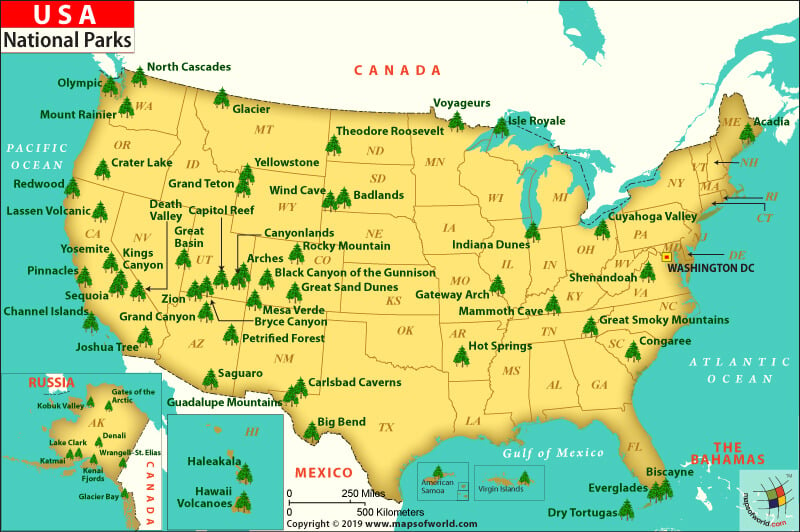
The National Park Service has a presence in 49 of the 50 states (all but Delaware).  It overseas 58 national parks as well as 333 national monuments and historic sites.  "As America expanded westward, pioneers would 'discover' landscapes of such breathtaking and unusual beauty, that written descriptions of the lands were sometimes assumed by people in the East to be works of fiction.  Eventually there emerged a belief that these places should be kept untarnished by development and commerce so they could be experienced by all people." (http://www.pbs.org/nationalparks/about/)


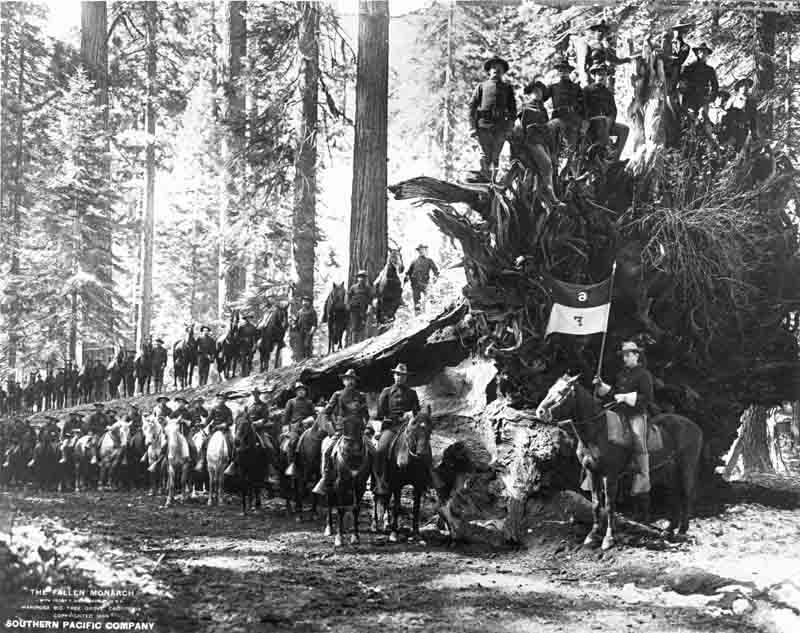
US 6th Calvary on top and beside the Fallen Monarch Tree, Yosemite, circa 1899 courtesy https://www.nps.gov/media/photo/gallery.htm?id=B17BC4E5-155D-4519-3EC6B73FCE2806A8.


"The National Parks:  America's Best Idea is nonetheless the story of people...who were willing to devote themselves to saving some of the precious land they loved and in doing so, reminded their fellow citizens of the full meaning of democracy."  John Muir, a deeply religious man, found inspiration in the mountains of Yosemite.  James Mason Hutchings, a magazine publisher who promoted Yosemite.  George Masa, a Japanese immigrant, took photographs of North Carolina and Tennessee's Great Smoky Mountains, which later became a national park.  Marjory Stoneman fell in love with the Florida Everglades and convinced the powers that be to make it a national park.  Adolphe Murie, a young biologist who focussed on protecting the land but also the animals that inhabited it.   And city slicker Thomas Moran, who joined the trek through the Rocky Mountains to Yellowstone River and painted the mural which later convinced Congress to make it a national park. (http://www.yellowstonepark.com/the-history-of-yellowstone-national-park/) 


Friday, 20 May 2016

The War

"Only the soldier really lives the war." (Eric Sevareid)


It is hard to imagine the scope of a war that took 50 to 60 million lives including 400,000 Americans. It touched every corner of the globe.  During the 1940's, everyone was affected by the Second World War.


Ken Burns studies the effects that "the greatest cataclysm in human history" had on residents of these four cities: Mobile, Alabama.  Sacramento, California. Waterbury, Connecticut.  Luverne, Minnesota.  The series is an attempt to explain "the things men do in war and the things war does to men" (https://www.pbs.org/thewar/about_letter_from_producers.htm)

Resident expert Geoffrey Ward wrote the script for Ken Burns series The War and provides much of the commentary.  The War series is divided into seven episodes:

Episode One:  A Necessary War
Episode Two:  When Things Get Tough
Episode Three:  A Deadly Calling
Episode Four:  Pride of Our Nation
Episode Five:  FUBAR
Episode Six:  The Ghost Front
Episode Seven:  A World Without War 


Thursday, 19 May 2016

Unforgivable Blackness: The Rise & Fall of Jack Johnson

"The press reacted [to Johnson's victory] as if Armageddon was here.  That this might be the moment when it all starts to fall apart for white society." (Randy Roberts)


The Battle of the Century in Reno, Nevada circa 1910 courtesy http://onmilwaukee.com/images/articles/ja/jackjohnsonmke/jackjohnsonmke_fullsize_story1.jpg.


Black American Jack Johnson started boxing as a teenager in Galveston, Texas.  A relatively new sport, boxing was banned in some states.  In the late 1800's, Blacks were permitted to box as long as they didn't compete for the ultimate title, Heavyweight Champion of the World.  Johnson made considerable money winning numerous fights against both blacks and whites.  However, one opponent eluded him, James Jeffries, the Heavyweight Champion of the World.  He refused to fight a Black, and chose to retire instead.

In 1908, new heavyweight champion Tommy Burns agreed to box Jack Johnson in Australia for the hefty sum of $30,000.  After Johnson beat on Burns for fourteen rounds, the match was stopped and Johnson declared the Heavyweight Champion of the World.  Johnson biographer Randy Roberts explained:  "The press reacted [to Johnson's victory] as if Armageddon was here.  That this might be the moment when it all starts to fall apart for white society." (http://www.pbs.org/unforgivableblackness/about/)

Johnson's victory sparked a search for a "great white hope", someone to challenge Johnson for the title.  James Jeffries returned to the ring to fight Johnson.  "The Battle of the Century" took place in Reno, Nevada on July 4, 1910.  Johnson won the match in the 15th round, sparking nationwide race riots.  "Congress eventually passed an act banning the interstate transport of fight films for fear that the images of Johnson, beating his white opponents, would provoke further unrest." 

Equally troubling for America was Johnson's penchant for white women.  He was frequently seen in the company of white prostitutes Hattie McClay and Belle Schreiber.  In 1910, congress passed the Mann Act prohibiting the transportation of women in interstate and foreign commerce "for the purposes of prostitution, debauchery or any other immoral purpose."  Johnson did not take well to being told what to do.  As James Earl Jones explained:  "He was a self defined man.  And this issue of being black was not that relevant to him.  But the issue of his being free was very relevant."  He was about to lose that freedom.  

In 1913, Johnson was convicted of violating the Mann Act after Belle Schreiber testified against him in court.  Johnson fled the country and spent several years as a fugitive in Europe.  In the meantime, he lost his world title to Jess Willard in Cuba.  Finally, in 1920, Johnson returned to America where he served his time in prison.  In 1946, after someone directed a racist comment at him in a restaurant, he drove home, swerved and was killed in an accident.


Wednesday, 18 May 2016

Horatio's Drive: America's First Road Trip

It reads like a movie script:  "Two men and a dog cross American continent in Winton roadster!"  Normally, such a story would not merit the first page of the newspaper.  However, back in 1903, such a trek was no small feat.


Photo of Horatio's Winton touring car courtesy www.pbs.org.


Horatio Nelson Jackson, a Vermont doctor on vacation in San Francisco, with no car and little driving experience, took a $50 dare to cross the United States in a horseless carriage.  He enlisted the aid of a local mechanic, Sewall K. Crocker, and the two men packed up his new Winton touring car in San Francisco, and headed east across the desert.  At only 20 horsepower, the touring car did not go very fast; of course, it had no roof or windshield so the drivers had to wear goggles.  In the day and age before paved roads (only 150 miles of the entire trek were paved), before gas stations, and before road maps, Dr. Jackson had to rely on his own resources.


Photo of Horatio's pit bull, Bud, courtesy www.pbs.org.


On the trek, the travelling companions saw caravans of pioneers in Conestoga wagons; they met cowboys with lariats which came in handy to tow their roadster out of sandhills; they encountered ranchers' wives who served them home-cooked meals for a chance to ride in the new automobile; and they even photographed Native Indians in full headdress (in the last days of the frontier).  They also met a pit bull in Idaho which Horatio adopted and named Bud; he was given his own pair of driving goggles.  The co-drivers crossed streams and saw buffalo wallow; they crossed railroad trestles over wide rivers; their roadster spooked horses not used to motorized vehicles.


Photo of Great Plains Indians courtesy http://1.bp.blogspot.com.


As word spread about Horatio's drive, crowds started to line the streets of the towns that he passed through.  Some locals would give him the wrong directions just so he would head through the town where that person's aunt or grandma or cousin lived.  What a spectacle to see a horseless carriage!  Nineteen hundred and three was the year that Henry Ford started his company; the age of the Model T was still 5 years away and the age of the car for the common man was still at least a a decade away.  Other car companies got in on the act:  Packard and Oldsmobile both dispatched vehicles with drivers to beat Dr. Jackson to New York City.


Photo of Henry Ford with Model T courtesy www.antiques-bible.com.


As Horatio crossed the country, he wrote letter after letter to his wife Bertha with accounts of his adventure:  the flat tires, the burnt out side lanterns, the fuel leak, running out of oil, the tainted water which made Horatio sick, the lost coat (with money inside), the broken drive chain and wheel bearings, and the list goes on.  Even so, Horatio retained an indomitable spirit, bent on finishing the trip that he had started.  After 63 1/2 days, on July 26, the roadster reached New York City.  The touring car had sucked up 800 gallons of gasoline.


Photo of New York City circa 1903 courtesy http://img262.imageshack.us.


The car later went into the Smithsonian Institution.  Dr. Jackson returned to Vermont with his dog, Bud where he lived out his life with his wife Bertha.   He later owned a newspaper, bank and radio station and became one of the founders of the American Legion.  Horatio once was fined for driving above the 6 mph speed limit in his hometown of Burlington, Vermont.


Display of Horatio Nelson Jackson, his dog Bud, and the Winton roadster at Smithsonian courtesy http://farm3.static.flickr.com.


Source:  www.en.wikpedia.org
              www.pbs.org/kenburns/films/horatio.html

For more information:

1.  Watch the Ken Burns documentary "Horatio's Drive:  America's First Road Trip".
2.  Read the book by the same name by Dayton Duncan & Ken Burns.


Tuesday, 17 May 2016

Mark Twain

"All of American literature began with Huck Finn." (Ernest Hemingway)


When I visited Disney World with my children, we went for a ride on a Mississippi Riverboat in Frontierland.  The Mississippi River plays a big role in American history.  And Mark Twain, who grew up on the Mississippi, plays a big role in American literature.  

Born Samuel Langhorn Clemens grew up in Hannibal, Missouri, the town that served as his inspiration for St. Petersburg in The Adventures of Huckleberry Finn.  Like Huck Finn, young Samuel used to play for hours along the shores of the Mississippi.  As a teenager, he worked as an apprentice printer, likely inspiring him to later publish his writing.  Later, he worked as a riverboat pilot, serving as fodder for his novels.  During the Civil War, Samuel formed a Confederate militia called the "Marion Rangers" which disbanded after only two weeks.  Samuel moved to Nevada to take up mining.

In 1867, Samuel published his first novel Advice for Little Girls, the first of 30 books.  He adopted the pen name Thomas Jefferson Snodgrass briefly followed by Mark Twain.  After travelling in Europe and The Holy Land, Twain published Innocents Abroad, his first bestseller, in 1869.  The Adventures of Tom Sawyer did not appear until 1876 and Huckleberry Finn, his most popular work, in 1884.    

As Ernest Hemingway said:  "All American literature began with Huck Finn." (http://www.pbs.org/marktwain/filmmakers/making_choosing.html).  Referred to as The Great American Novel, The Adventures of Huckleberry Finn has influenced American authors such as Thomas Wolfe, Erskine Caldwell and William Faulkner and countless others (https://marktwainahf.wikispaces.com/Impact+of+Huck+Finn+on+American+Literature).

Ken Burns weaves the tale of Mark Twain's life in nine episodes.  Burns points out that Twain loved filling scrapbooks with old pictures and clippings.  He even invented a scrapbook with sticky pages to eliminate the need for glue or paste.  Burns invites you to open up Twain's scrapbook to follow the adventures of his life, the adventures of America.