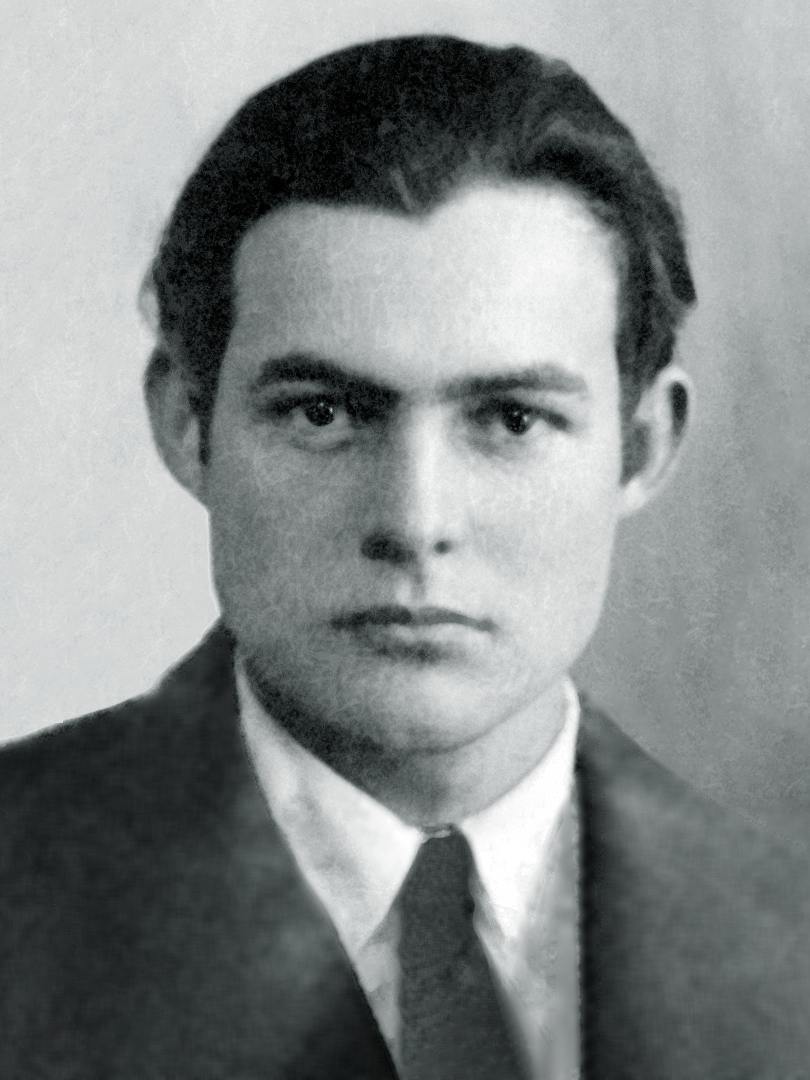
"Libraries raised me. I don't believe in colleges and universities. I believe in libraries because most students don't have any money. When I graduated from high school, it was during the Depression, and we had no money. I couldn't go to college, so I went to the library three days a week for 10 years." (Ray Bradbury)
It is ironic that the author of Fahrenheit 451, about a book burning, in essence an author witch hunt, is the descendant of Mary Bradbury, who was tried at the Salem Witch Trials. But Ray Bradbury's story did not begin in a Massachussetts courtroom, but rather an Illinois library.
Ray Bradbury was born and raised in Waukegan, Illinois in 1920. His aunt would read him short stories, building the foundation for a future writer. Bradbury became a frequent visitor to the Waukegan Carnegie Library where he would read H. G. Wells, Jules Verne and Edgar Allen Poe. By 11 years of age, he was already writing stories on Depression era butcher paper.
The Bradbury family fell on hard times and twice they moved to Arizona where his dad looked for worked, but returned to Waukegan, Illinois. Finally, in 1934, the family moved permanently to Los Angeles, arriving with 40 dollars in their possession. Bradbury, thrilled to be in town, roller-skated through Hollywood, hoping to meet some celebrities. His encounter with George Burns led to his first paid writing job on the Burns & Allen Show at the tender age of 14.
In 1936, Bradbury joined the Los Angeles Science Fiction Society which met once a week. Bradbury loved to read comics and was heavily influenced by Flash Gordon and Buck Rogers. By 1938, he was writing for fanzines. In 1942, Bradbury's first short story was published, The Lake, for $13.75. At 22 years of age, he was a full time writer. By 1947, his first short story collection, Dark Carnival, was published.
The novel, however, had proven elusive to Bradbury. But the young author had developped self discipline. From the time he was a young boy, he had been writing everyday. By the time he and his wife were expecting their first child in 1949, he was hard at work on a story. He visited UCLA's Powell Library where he rented out a typewriter for ten cents every half hour until he had completed his manuscript. Bradbury bought a bus ticket for New York City, checking into a YMCA for 50 cents a night.
Bradbury walked up and down Madison Avenue trying to get a contract for his book. After a dozen rejections, he was ready to go home. However, he would try Doubleday first. He explained to the publisher that everyone wanted a novel, but he was selling a short story. The publisher asked him if he had enough short story to make a book. They could call it The Martian Chronicles.
In 1951, Bradbury approached a publisher with a story, The Fireman, about a book burning future society. It was published in Galaxy Science Fiction that year. The publisher at Ballantine Books convinced Bradbury to double the manuscript, which he accomplished in just nine days, and resubmit the book as a full-fledged novel. Re-titled Fahrenheit 451, it was published in 1953 and went on to become Bradbury's greatest work.
In his lifetime, Bradbury penned 27 novels and over 600 short stories. His works were translated into 36 languages. The sci-fi author credited John Steinbeck with his writing style which earned him a Pulitzer Prize in 2007. While he received many literary awards, Bradbury never forgot where he got his start. Remembering the Waukegan Library, the famous author raised money to prevent the closure of several California libraries.
As Bradbury explained: "Libraries raised me. I don't believe in colleges and universities. I believe in libraries because most students don't have any money. When I graduated from high school, it was during the Depression, and we had no money. I couldn't go to college, so I went to the library three days a week for 10 years." (https://en.wikipedia.org/wiki/Ray_Bradbury)

Ray Bradbury was born and raised in Waukegan, Illinois in 1920. His aunt would read him short stories, building the foundation for a future writer. Bradbury became a frequent visitor to the Waukegan Carnegie Library where he would read H. G. Wells, Jules Verne and Edgar Allen Poe. By 11 years of age, he was already writing stories on Depression era butcher paper.
The Bradbury family fell on hard times and twice they moved to Arizona where his dad looked for worked, but returned to Waukegan, Illinois. Finally, in 1934, the family moved permanently to Los Angeles, arriving with 40 dollars in their possession. Bradbury, thrilled to be in town, roller-skated through Hollywood, hoping to meet some celebrities. His encounter with George Burns led to his first paid writing job on the Burns & Allen Show at the tender age of 14.
In 1936, Bradbury joined the Los Angeles Science Fiction Society which met once a week. Bradbury loved to read comics and was heavily influenced by Flash Gordon and Buck Rogers. By 1938, he was writing for fanzines. In 1942, Bradbury's first short story was published, The Lake, for $13.75. At 22 years of age, he was a full time writer. By 1947, his first short story collection, Dark Carnival, was published.
The novel, however, had proven elusive to Bradbury. But the young author had developped self discipline. From the time he was a young boy, he had been writing everyday. By the time he and his wife were expecting their first child in 1949, he was hard at work on a story. He visited UCLA's Powell Library where he rented out a typewriter for ten cents every half hour until he had completed his manuscript. Bradbury bought a bus ticket for New York City, checking into a YMCA for 50 cents a night.
Bradbury walked up and down Madison Avenue trying to get a contract for his book. After a dozen rejections, he was ready to go home. However, he would try Doubleday first. He explained to the publisher that everyone wanted a novel, but he was selling a short story. The publisher asked him if he had enough short story to make a book. They could call it The Martian Chronicles.
In 1951, Bradbury approached a publisher with a story, The Fireman, about a book burning future society. It was published in Galaxy Science Fiction that year. The publisher at Ballantine Books convinced Bradbury to double the manuscript, which he accomplished in just nine days, and resubmit the book as a full-fledged novel. Re-titled Fahrenheit 451, it was published in 1953 and went on to become Bradbury's greatest work.
In his lifetime, Bradbury penned 27 novels and over 600 short stories. His works were translated into 36 languages. The sci-fi author credited John Steinbeck with his writing style which earned him a Pulitzer Prize in 2007. While he received many literary awards, Bradbury never forgot where he got his start. Remembering the Waukegan Library, the famous author raised money to prevent the closure of several California libraries.
As Bradbury explained: "Libraries raised me. I don't believe in colleges and universities. I believe in libraries because most students don't have any money. When I graduated from high school, it was during the Depression, and we had no money. I couldn't go to college, so I went to the library three days a week for 10 years." (https://en.wikipedia.org/wiki/Ray_Bradbury)
Waukegan Public Library courtesy
http://www.waukeganpl.org/history.