Showing posts with label Allied Bombing. Show all posts

Wednesday, 23 November 2016

Koenigsberg Burning

On the nights of August 26 and 27 and August 29 and 30, 1944, Elfriede Neumann sat in her Taplacken farmhouse and listened to the drone of the planes as the British dropped 480 tons of bombs on the nearby city of Koenigsberg, the beautiful capital of East Prussia, Germany.  Churchill had called Koenigsberg a "modernized heavily defended fortress" and targeted it for attack.  The initial raid resulted in minimal damage; however, the second raid inflicted sheer terror in the hearts of the Koenigsberg residents.  Only nine months had elapsed since the Neumann family had sat for their family portrait at a studio in the city, the last time that Elfriede saw her husband alive; now he was missing in action on the Eastern front and his home province was under siege.

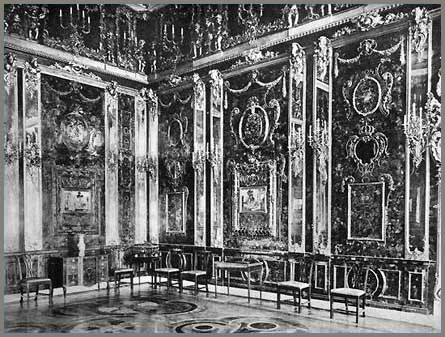
The bombing destroyed all seven bridges in the city.  The university was obliterated.  Many churches were targetted inlcuding the centuries-old Koenigsberg Cathedral, on an island in the Pregel River, which took a direct hit.  One hundred Koenigsbergers, including many children, were hiding beneath the church's large spire and were killed instantly.  This was not just a regular bombing, but a fire bombing.  Thousands of civilians drowned themselves in the Pregel River, their clothes burning as they ran into its waters.  Even the magnificent King's Castle was bombed (see my post "The Amber Room") and damaged, although its frame remained intact.  Statues were smashed and landmarks demolished.  Ninety percent of the 700-year-old city was destroyed.  Koenigsberg burned for an entire week and smouldered for several more weeks.  People were forbidden to enter the city.    The British had sent 800 bombers to fly over the city and drop incendiary bombs, tracking a path from the North train station to the Main train station.  Almost all of the cultural buildings, like the university, cathedral, and castle, were hit by the raids.  One hundred and fifty thousand citizens were made homeless as a result of the bombings.

Elfriede's sister, Doris, saw it all happen from her parents' farm in Nautzwinkel, a village only a few kilometres from the East Prussian capital.  She was called in by the Red Cross to help the victims of the bombings.   The fire departments and air defence were rendered helpless.  A makeshift hospital set up at the outskirts of the city was where Doris and other volunteers tended the wounded.  In the centre of the city, even those who took cover in basements were incinerated due to the intense heat of the incendiary bombs, including napalm.  The bombing of Koenigsberg was like a prelude to the attack on Dresden six months later.  When the smoke cleared, all that was left was a charred ruins.  Incandescent traces of red and orange lingered above the city for days.  Koenigsberg, the bustling metropolis where Elfriede had once shopped with her family, now resembled a ghost town.

Dedicated to my husband Rob's Oma, Elfriede Neumann (1911-2007).


Portrait of Koenigsberg Castle courtesy http://en.wikipedia.org


Photo of Koenigsberg Castle ruins courtesy www.amberroom.org


Tuesday, 29 March 2016

Koenigsberg Cathedral Rebuilt

On August 30, 1944, 100 people, mostly children, hid under the spire of the Koenigsberg Cathedral, covering their ears to block out the sound of the bombs exploding over their heads (http://alinefromlinda.blogspot.ca/2011/08/koenigsberg-burning.html).  Sadly, the bombs killed most of the people in the church that day.  However, the 600 year old Gothic cathedral, which sat on an island in the Pregel River, remained, the only building left standing on the island.  In the decades after the war, nature started to overtake the burnt out shell of the cathedral.  In the 1960's, there was talk of demolishing the cathedral, just as they demolished the Koenigsberg Castle, but local residents would have no part of its destruction.


Koenigsberg cathdedral prior to its restoration circa 1988 courtesy https://en.wikipedia.org/wiki/K%C3%B6nigsberg_Cathedral.

In the early 1990's, with the opening of the Soviet Union to foreigners, people showed a renewed interest in the Koenigsberg Cathedral.  In 1994, a new spire was added to the roof using a helicopter.  Over the next decade, Koenigsberg Cathedral's interior was rebuilt, including an Orthodox chapel, a Lutheran chapel and a museum.  The Lutheran chapel is the location of where the 100 Koenigsbergers hid during the Second World War Allied bombing of their city.


Koenigsberg Cathedral today courtesy https://en.wikipedia.org/wiki/K%C3%B6nigsberg_Cathedral.


Note:  For more information, read A Childhood Under Hitler and Stalin by Michael Wieck.

Sunday, 27 March 2016

Koenigsberg Castle: Hornet's Nest of Militarism or Treasured Monument?

"At some point Russians living in Kaliningrad also began to fall in love with the old Koenigsberg.  They unearthed German street signs and hung them up in their apartments.  They protested when local officials threatened to pave over old cobblestone roads with asphalt." (http://www.spiegel.de/international/zeitgeist/architectural-competition-held-to-rebuild-koenigsberg-city-center-a-980260.html)


Koneigsberg Castle courtesy http://archimaps.tumblr.com/page/276.


Koenigsberg Castle, the focal point of Koenigsberg since the 13th Century, was heavily damaged by Allied bombs towards the end of the Second World War in August of 1944 (see "Koenigsberg Burning" at http://alinefromlinda.blogspot.ca/2011/08/koenigsberg-burning.html).  Its thick heavy walls prevented it from being completely destroyed and its skeleton remained for several years.  In 1946, with the Soviet occupation of East Prussia and purging of the local Germans, the city was renamed Kaliningrad.


THe ruins of Koenigsberg Castle circa 1950 courtesy http://canitz.org/site/.


In 1968, Breshnev ordered the castle, "a hornet's nest of militarism and fascism", demolished.  Photographers snapped photographs of the remnants of the castle which quickly became a cloud of dust.  On the original site was built the most ghastly structure in history, The House of Soviets, nicknamed The Monster.  Resembling a giant robot, the 20-story Soviet style structure was never completed. While the outside was painted for a 2005 visit by Putin celebrating the city's 750th anniversary, the inside remains incomplete.


Koenigsberg history has not completely been erased:  underneath the ghastly structure remain tunnels built by the Prussians.  In 2001, the German magazine Der Spiegel financed the excavation of the castle's cellar in an attempt to find lost art.  Rumour has it that the Amber Room was hastily disassembled and stored in the basement when the Red Army was advancing towards East Prussia in 1944.  


"At some point Russians living in Kaliningrad also began to fall in love with the old Koenigsberg.  They unearthed German street signs and hung them up in their apartments.  The protested when local officials threatened to pave over old cobblestone roads with ashphalt."  And they developped a fascination with the old Prussian castle.  In 2010, Russia's Minister of Culture announced a referendum would be held in 2011 regarding whether or not to rebuild Koenigsberg Castle.  In 2014, a competition was held to rebuild the city centre to reflect its German roots.  It remains to be seen whether Koenigsberg Castle will be part of the architectural project (http://www.spiegel.de/international/zeitgeist/architectural-competition-held-to-rebuild-koenigsberg-city-center-a-980260.html).