Sunday, 7 December 2014

Christmas in Chicago


1.  Christmas in Chicago courtesy upchicago.com.


2.  Bloomingdale's Christmas tree courtesy blogspot.com.


3.  Logan Square courtesy wordpress.com.


4.  The Art Institute courtesy blogspot.com.


5.  The Water Tower courtesy huffpost.com.

Saturday, 6 December 2014

Christmas in Boston


1.  Christmas in Boston courtesy saskbiz.com.


2.  Boston Blue Christmas courtesy fineartamerica.com.


3,  Quincy Market courtesy wikimedia.org.


4.  Faneuil Hall courtesy www.thechristiangift.com.


5.  Boston Christmas Tree in Boston Common courtesy www.kensingtonboston.com.

Friday, 5 December 2014

Christmas in Washington D.C.


1.  Capitol Building courtesy www.allaccess.com.


2.  Washington Monument courtesy www.photographybykent.com.


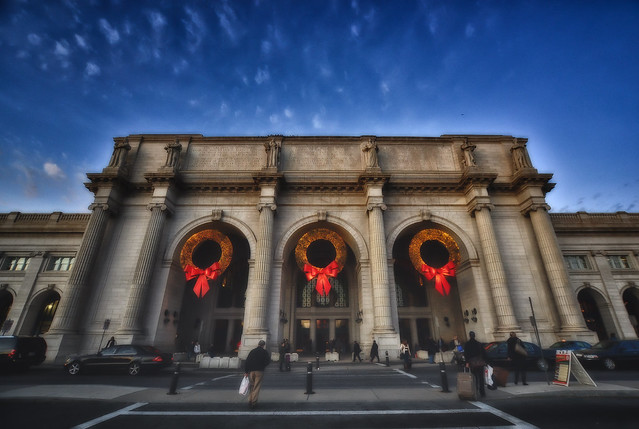
3.  Union Station courtesy staticflickr.com.


4.  White House courtesy twinamerica.net.


5.  Arlington Cemetery, Virginia, courtesy www.toledoblade.com.


Thursday, 4 December 2014

Christmas in New York City


1.  December 1950 courtesy blogspot.com.


2.  New Yorker courtesy pinimg.com.


3.  December 15, 2008 courtesy bikeportland.org.


4.  December 1959 courtesy pinimg.com.


5.  December 1948 courtesy pinimg.com.


6.  December 1942 courtesy poppygall.com.


7.  December 1996 courtesy tcj.com.


8.  December 1963 courtesy blogspot.com.


\

9.  December 1957 courtesy pinterest.com.


10.  December 1949 courtesy printspast.com.


Wednesday, 3 December 2014

All I Want for Christmas is a Pair of Skates

"Jean Beliveau in Quebec is like Joe DiMaggio or Mickey Mantle in the United States.  When Jean Beliveau walks down the street in Quebec, the women smile, the men shake his hand and the little boys follow him." (New York journalist Leonard Shecter)


Three year old Jean Beliveau wished for a pair of skates for Christmas.  And that's exactly what he found under the tree on Christmas Eve.  Those skates would lead him to 10 Stanley Cups, an Art Ross Trophy, a Conn Smythe Trophy, two Hart Memorial Trophies and a place in the Hockey Hall of Fame.

Jean Beliveau's family history is the history of many French Canadians.  He was born in 1931 in Trois Rivieres, Quebec, the first of eight children.  His parents, Roman Catholics, believed in family values, strict religious observance and hard work.  Moving to Victoriaville at age 6, Jean used to play shinny on his family's backyard rink, like so many Quebecois children did.  At the age of 12, he played his first formal hockey.  Jean grew up with the Montreal Canadiens, listening to NHL broadcasts on the family radio.

While he was a Montreal fan, his loyalty remained with Quebec City, where he signed with the Citadelles and later the Aces, despite the recruiting tactics of the Canadiens.  By his mid teens, Beliveau was a 6 foot 3 and 200 pounds, a gentle giant.  Despite his size, he skated with long, fluid strides.  Soon he was pulling in twice the salary of the average NHL player.

The Montreal Canadiens invited him to play in 1950, and he agreed for a short stint.  However, his loyalty kept drawing him back to Quebec.  Finally, in order to sign him, the Canadiens bought the whole Quebec league.  Now he was one of their players and his contract dictated that he had to play for Montreal.  Nicknamed "Le Gros Bill" after a French Canadian folkhero, he quickly became one of the strongest players on the team.  While Maurice "Rocket" Richard was known for his fiery temper, Jean Beliveau became known for his grace and poise.  A natural leader, he wore the 'C' on his bleu, blanc et rouge jersey for 10 years, a Canadiens record.  

Beliveau drank champagne from the Stanley Cup ten times during his 20 seasons with the Canadiens. A favourite with the fans, he took pride in answering every piece of fan mail himself, at least until health problems prevented him from doing so in 2012.  He remembered his father's words "Loyalty is another form of responsiblity."

Beliveau's loyalty showed both on and off the ice.  He and his wife were married for 61 years.  After his daughter Helene's husband, a Montreal police officer, committed suicide, Beliveau declined the Prime Minister's offer to be governor general to spend time with Helene and her two young children.

Jean Beliveau passed away yesterday, surrounded by his family.  The legend lives on.

For more information, please see the news clip here:
http://www.sportsnet.ca/hockey/nhl/beliveau-obituary/


www.sportsnet.ca


Tuesday, 2 December 2014

Nothing Sweeter than Gingerale for Christmas

"Would you believe that the champagne I have drunk on six occasions from the Stanley Cup didn't have the same tang [as the gingerale I drank once a year at Christmas as a boy].  Being poor doesn't necessarily mean no enjoyment in life."


Jacques Plante was born in Mauricie, Quebec in a wooden farmhouse.  The first of eleven children, Jacques' parents struggled to make ends meet.  Mr. Plante soon acquired a job at the aluminum factory in Shawnigan falls and the family moved there.

While the family was poor, that wasn't about to stop Jacques from playing hockey.  His father carved him a hockey stick out of a tree root.  He used a tennis ball as a puck.  Unable to afford skates, he slid around the ice in his boots.  His ears would get frostbitten in the frigid Quebec winters.  Soon he taught himself how to knit his own tuques, which would not only keep him warm but later became a good luck charm.

As a young boy, he fell off a ladder and broke his wrist,  Still he did not let the injury discourage him from playing hockey.  In 1936, his Dad gave him his first regulation hockey stick.  Once he received a pair of skates, he became an avid skater.  However, he developped asthma and could not skate for long periods of time.  To solve the problem, he switched from defenseman to goaltender.  His father made him homemade goalie pads by stuffing potato sacks and inserting wooden panels.  He felt comfortable in net.  The asthma was a blessing in disguise:  Plante maintained that if he had remained on defense he wouldn't have made it past high school hockey.  But as a goalie, he shined.

Life was not all play, however.  As the oldest of 11 children, Jacques had many chores including cooking, scrubbing floors and changing diapers.  He even learned how to sew since the family couldn't afford to buy new clothes.  Shoes were reserved for Sunday mass; the rest of the week Jacques went barefoot.  Treats were a luxury in the Plantes household.  The highlight of the year for Jacques was Christmas Eve when his father would stop on his way home from work and buy two bottles of gingerale.  It was the only time Jacques and his siblings drank pop -- how sweet it was!

Another treat for Plante was listening to professional hockey games.  Plante became a fan of the NHL early on.  However, his family could not afford a radio.  No problem -- the man upstairs would blast the hockey broadcasts so loud that if Jacques stood on his sister's bureau, he could hear them perfectly.  In the 1940's, standing on the bureau, he listened to the greats play, including Maurice "Rocket" Richard.

By 14 years of age, Plante was playing for four teams including the local factory team.  His dad said he should demand a salary considering all of the adult players were getting one.  The coach agreed to 50 cents per game.  Despite other offers to play hockey, Plante stayed in high school and graduated with honours in 1947.

The Quebec Citadelles hired him to play for 85 dollars per week.  By this time, Plante had acquired the nickname "Jake the Snake".  He pioneered the idea of playing the puck outside the crease, unorthodox for a goalie.  Plante figured that the more time he was in control of the puck, the less time that his opponent had to shoot on him.  Although his coach at the time hated the idea, it was later adopted by all goalies.

By 1949. Plante was invited to play for the Royal Montreal Hockey Club.  In 1953, he played his first game in the NHL with the Montreal Canadiens.  While his play was impressive, coach Dick Irvin didn't like the fact that he wore a tuque.  The two argured and Plante's tuques disappeared from his dressing room.  Even without his good luck charm, Plante played good hockey.  Within a couple of seasons, he was the starting goaltender with the Habs.  They won five consecutive Stanley cups and six in total with Plante in net.

Plante started wearing a face mask during practices to protect himself.  However, coaches forbid him to wear it in regulation play.  In 1959, Plante's nose was broken during a game.  In the dressing room he received stitches.  He refused to return to the game unless he could wear his mask.  Without another goalie available, the coach relented.  Plante came out on the ice with the mask, which he never took off, making history.


Read Jacques Plante:  The Man Who Changed the Face of Hockey.  Here is an excerpt:
http://www.hockeybookreviews.com/2009/10/exclusive-excerpt-from-jacques-plante.html


Jacques Plante, wearing his trademark tuque, circa 1948 courtesy upload.wikimedia.org.

Monday, 1 December 2014

The Boy Who Laughed at Santa Claus

In Baltimore there lived a boy
He wasn't anybody's joy
Although his name was Jabez Dawes
His character was full of flaws.

In school he never led his classes
He hid old ladies' reading glasses
His mouth was open when he chewed
And elbows to the table glued
He stole the milk of hungry kittens
And walked through the door marked NO ADMITTANCE
He said he acted thus because
There wasn't any Santa Claus.

Another trick that tickled Jabez
Was crying "Boo" at little babies
He brushed his teeth, they said in town
Sideways instead of up and down
Yet people pardoned every sin
And viewed his antics with a grin
Til they were told by Jabez Dawes
That there isn't any Santa Claus!

Deploring how he did behave
His parents swiftly sought their grave
They hurried through the portals pearly
And Jabez left the funeral early.

Like whooping cough from child to child
He sped to spread the rumours wild
"Sure as my name is Jabez Dawes
There isn't any Santa Claus!"
Slunk like a weasel of a marten
Through nursery and Kindergarten
Whispering low to every tot
"There isn't any, no there's not."

He sprawled on his untidy bed
Fresh malice dancing in his head
When presently with scalp a-tingling
Jabez heard a distant jingling:
He heard the crunch of sleigh and hoof
Crisply alighting on the roof
What good to rise and bar the door?
A shower of soot was on the floor.

What was beheld by Jabez Dawes?
The fireplace full of Santa Claus!
When Jabez fell upon his knees
With cries of "Don't" and "Pretty Please"
He howled:  "I don't know where you read it
But anyhow I never said it!"
"Jabez," replied the angry saint,
"It isn't I, it's you that ain't.
Although there is a Santa Claus
There isn't any Jabez Dawes!"

Said Jabez then with impudent vim
"Oh yes there is, and I am him!
Your magic don't scare me, it doesn't"
And suddenly he found he wasn't!
From grimy feet to grimy locks
Jabez became a jack in the box
An ugly toy with springs unsprung
Forever sticking out his tongue.

The neighbours heard his mournful squeal
They searched for him but not with zeal
No trace was found of Jabez Dawes
Which led to thunderous applause
And people drank a loving cup
And went and hung their stockings up.

All you who sneer at Santa Claus
Beware the fate of Jabez Dawes
The saucy boy who mocked the saint
Donner and Blitzen licked off his paint.


Ogden Nash


Odgen Nash courtesy www.poets.org.