Showing posts with label rhythm. Show all posts

Friday, 15 May 2015

The Ballad: From Samuel Taylor Coleridge to B. B. King

A ballad is a narrative poem, often of folk origin and intended to be sung, consisting of simple stanzas and usually having a refrain. (http://www.thefreedictionary.com/ballad)


The ballad, based on the French word "ballade", has been around for a millenium.  The poetry form has a rhythmic 4-3-4-3 line beat and is divided into quatrains.  Religion, love, tragedy and politics were all early subjects for ballads.  The "ballade" first appeared in Provencal folk music in France. Troubadour poets developped the cadence of the poetic form.  Later the ballad spread to Spain, Italy and post-Norman England.


Medieval troubadours set the rhythm for the ballade courtesy 


The French form of the ballade, based on three rhyming sounds, follows the following pattern:

A
B
A
B
B
C
B
C2

Note:  First stanza is repeated three times.

Envoy (4 line version)
B
C
B
C2

Envoy (5 line version)
B
C
B
C2

There are variations on this format, but the cadence of the poem is the same.

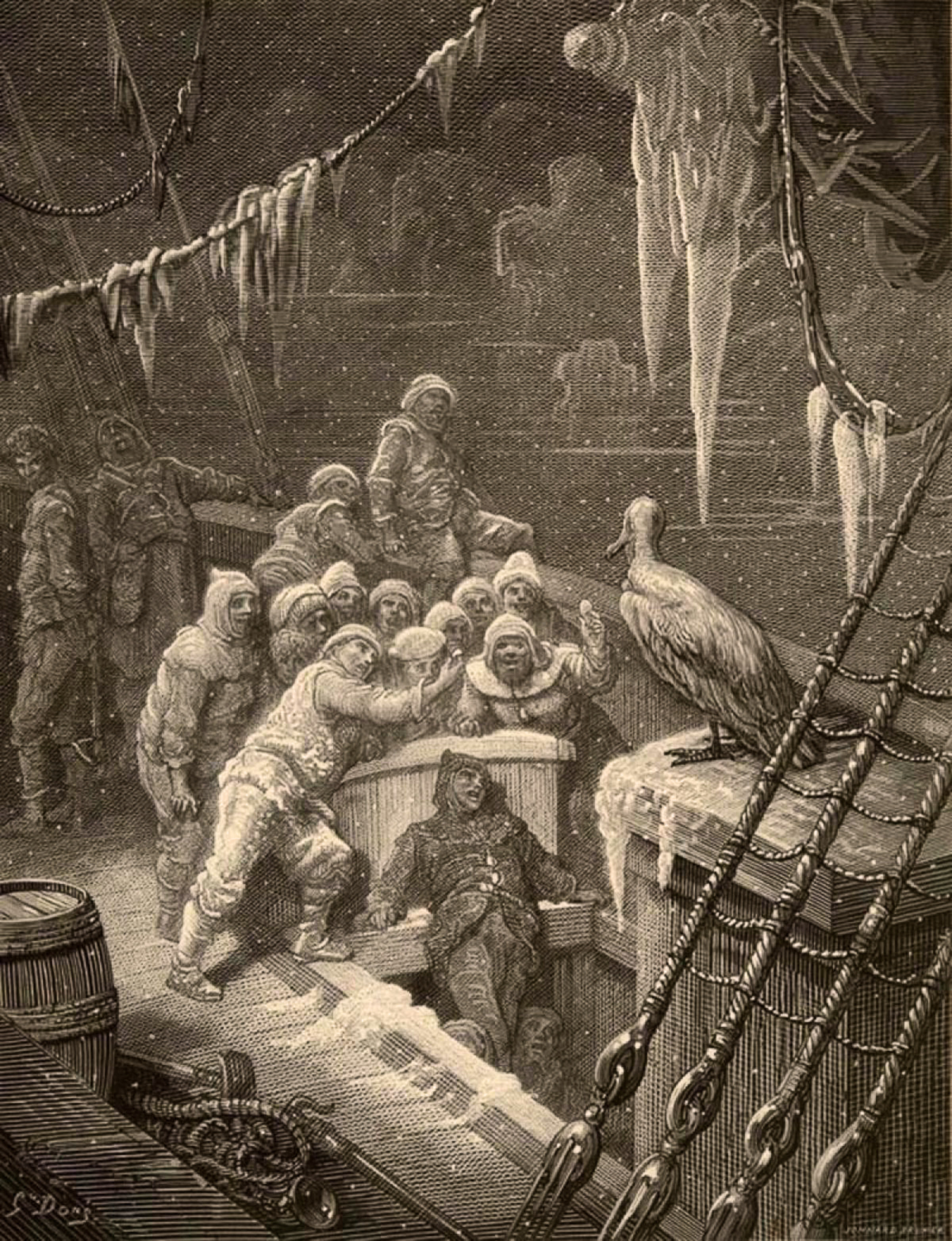
Romantic poets like Lord Byron, John Keats and Percy Bysshe Shelley all wrote ballads, but the form wasn't immortalized until the next generation of poets which included William Wordsworth, Thomas Percy and Samuel Taylor Coleridge.  Perhaps the most famous ballad, "The Rime of the Ancient Mariner", was penned by the latter in 1834 (http://www.poetryfoundation.org/poem/173253).


Gustave Dore etching for Rime of the Ancient Mariner published in 1798, courtesy http://upload.wikimedia.org/wikipedia/commons/2/26/Rime_of_the_Ancient_Mariner-Albatross-Dore.jpg.


British street ballads were popular during the Victorian era.  Printed on thin sheets of paper, they were sold on the streets for a penny or half penny.  Besides the traditional subjects, street ballads centred on humorous anecdotes, social reform and crime (http://www.library.kent.edu/street-ballads-victorian-england).

Not all ballads have adult like themes; some are geared for children.  Because of the ballad's strong rhythm, repetition and rhyme, it does appeal to young minds (http://en.wikipedia.org/wiki/List_of_the_Child_Ballads).


The Three Ravens circa 1919 courtesy 

English folk and American blues musicians popularized the music ballad.  B. B. King's blues ballad, Sneakin Around can be viewed at http://www.metrolyrics.com/sneakin-around-lyrics-bb-king.html.

Dudley Randall's Ballad of Birmingham was written during the Civil Rights Movement. Visit http://www.poetryfoundation.org/poem/175900 to view the poem.


Four black girls perished in the bombing of a Baptist Church circa 1963 prompting Dudley Randall to write Ballad of Birmingham courtesy http://thyblackman.com/2013/09/13/thy-racial-ghosts-of-the-birmingham-church-bombing-still-haunt-america/.


Monday, 6 April 2015

Anyone Can Write a Children's Book!

When Tara Lazar tells people that she writes picture books, she gets the common response:  "Anyone can write a children's book!"  That seems to be the standard response.  Publishers' desks are inundated with picture book manuscripts which melt into the slush pile.  However, once you start the process, and see what is involved, you realize it's much more difficult than you anticipated.  How do you get into the mind of a child?  How do you avoid the overdone subjects?  Here are some tips to follow when writing for children.


Choose a topic for your book.  Let your imagination run wild.  Write down all of your thoughts and ideas.  Tara Lazar suggests participating in PiBoIdMo, short for Picture Book Idea Month at http://taralazar.com/piboidmo/.  Each day, write down one idea for your book.  At the end of the month, pick your best idea. You should have an underlying theme:  love, friendship, fitting in.  Avoid overdone topics like a new pet, a new baby or a new home.


Consider the length of your manuscript.  Picture books are usually 32 pages in length.  When you account for the end page, the title page, the copyright page, etc. you are left with 24 pages for text and illustrations.  Therefore, plan for about 12 double page spreads.  Emma Blackburn, picture book editor at Bloomsbury Publishing (www.writersandartists.co.uk/writers/advice/327/dedicated-genre-advice/writing-for-children/) suggests a mixture of double page spreads, single page images and vignettes.


Rhyme only if you can do it well.  Tara Lazar says that many rhymes are either forced or exhibit inconsistent metre.  Don't let rhyme dictate your story.  However, if you are an expert at rhyming, go for it.  Follow the masters:  Jane Yolen, Jack Prelutsky, Karma Wilson, and of course, Dr. Seuss.


How Do Dinosaurs Say Merry Christmas? by Jane Yolen courtesy http://www.scholastic.ca/titles/howdodinosaurs/images/How_do_dinosaurs_say_merry_xmas_spread.jpg.


Keep your manuscript under 1000 words.  In fact, the ideal length for a picture book these days is 500 words.  Books that are 800 to 1000 words tend to be harder to sell.  Tara Lazar reminds you not to be overly descriptive; let your illustrations do the talking.


Don't preach.  Share your underlying theme, but don't beat it over the reader's head.  Begin your story with a unique hook, to catch the reader's interest.

Read as many picture books as you can get your hands on for inspiration.  Ms. Lazar recommends reading 500 picture books before you even start your manuscript.  Examine the cadence and rhythm of the stories.  Look not only at what is said, but what is left unsaid.  Look at how tight the writing is. The tighter you write, the lower your word count.


Choose a strong, appealing protagonist.  Is he or she loud or shy, funny or scary, friendly or cold? Make sure you develop your main character enough to keep your reader hooked.  Give him or her a name that reflects his or her personality or gives a hint about the story.  If possible, think about a string of adventures for your protagonist for a possible series.  For example, A Pocket for Corduroy features Corduroy Bear, a bear who wears corduroy overalls.


Devise a plot that leaves the reader wanting more, that makes the reader want to turn the page.  Keep pacing in mind as you write.  While your beginning should catch the reader's interest, your ending should leave the reader satisfied.  Include an unexpected twist as Rosie Reeve did in her story When Tom Met Tallulah (http://www.amazon.ca/When-Tom-Tallulah-Rosie-Reeve/dp/1408836998).


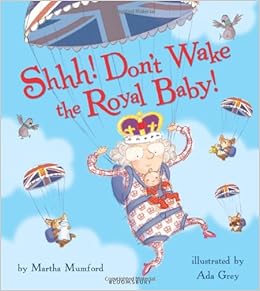
Design a striking cover.  Emma Blackburn prefers single images to scenes.  Make your title snappy and reflective of the story ex. SH! Don't Wake the Royal Baby (http://www.amazon.ca/Shhh-Dont-Wake-Royal-Baby/dp/140884463X) by Martha Mumford, is about a royal baby's life in the palace.


Design illustrations that are reflective of the story.  Lauren Child, author of Who's Afraid of the Big Bad Book (www.amazon.ca/Whos-Afraid-Big-Bad-Book/dp/0786809264), provides a combination of creative design and strong text in her picture books.


Know your audience.  Prepare a dummy book and test it out on children.  Ask for feedback about the title, characters, plot, etc.