Showing posts with label illustrations. Show all posts

Monday, 6 April 2015

Anyone Can Write a Children's Book!

When Tara Lazar tells people that she writes picture books, she gets the common response:  "Anyone can write a children's book!"  That seems to be the standard response.  Publishers' desks are inundated with picture book manuscripts which melt into the slush pile.  However, once you start the process, and see what is involved, you realize it's much more difficult than you anticipated.  How do you get into the mind of a child?  How do you avoid the overdone subjects?  Here are some tips to follow when writing for children.


Choose a topic for your book.  Let your imagination run wild.  Write down all of your thoughts and ideas.  Tara Lazar suggests participating in PiBoIdMo, short for Picture Book Idea Month at http://taralazar.com/piboidmo/.  Each day, write down one idea for your book.  At the end of the month, pick your best idea. You should have an underlying theme:  love, friendship, fitting in.  Avoid overdone topics like a new pet, a new baby or a new home.


Consider the length of your manuscript.  Picture books are usually 32 pages in length.  When you account for the end page, the title page, the copyright page, etc. you are left with 24 pages for text and illustrations.  Therefore, plan for about 12 double page spreads.  Emma Blackburn, picture book editor at Bloomsbury Publishing (www.writersandartists.co.uk/writers/advice/327/dedicated-genre-advice/writing-for-children/) suggests a mixture of double page spreads, single page images and vignettes.


Rhyme only if you can do it well.  Tara Lazar says that many rhymes are either forced or exhibit inconsistent metre.  Don't let rhyme dictate your story.  However, if you are an expert at rhyming, go for it.  Follow the masters:  Jane Yolen, Jack Prelutsky, Karma Wilson, and of course, Dr. Seuss.


How Do Dinosaurs Say Merry Christmas? by Jane Yolen courtesy http://www.scholastic.ca/titles/howdodinosaurs/images/How_do_dinosaurs_say_merry_xmas_spread.jpg.


Keep your manuscript under 1000 words.  In fact, the ideal length for a picture book these days is 500 words.  Books that are 800 to 1000 words tend to be harder to sell.  Tara Lazar reminds you not to be overly descriptive; let your illustrations do the talking.


Don't preach.  Share your underlying theme, but don't beat it over the reader's head.  Begin your story with a unique hook, to catch the reader's interest.

Read as many picture books as you can get your hands on for inspiration.  Ms. Lazar recommends reading 500 picture books before you even start your manuscript.  Examine the cadence and rhythm of the stories.  Look not only at what is said, but what is left unsaid.  Look at how tight the writing is. The tighter you write, the lower your word count.


Choose a strong, appealing protagonist.  Is he or she loud or shy, funny or scary, friendly or cold? Make sure you develop your main character enough to keep your reader hooked.  Give him or her a name that reflects his or her personality or gives a hint about the story.  If possible, think about a string of adventures for your protagonist for a possible series.  For example, A Pocket for Corduroy features Corduroy Bear, a bear who wears corduroy overalls.


Devise a plot that leaves the reader wanting more, that makes the reader want to turn the page.  Keep pacing in mind as you write.  While your beginning should catch the reader's interest, your ending should leave the reader satisfied.  Include an unexpected twist as Rosie Reeve did in her story When Tom Met Tallulah (http://www.amazon.ca/When-Tom-Tallulah-Rosie-Reeve/dp/1408836998).


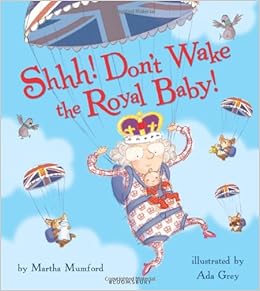
Design a striking cover.  Emma Blackburn prefers single images to scenes.  Make your title snappy and reflective of the story ex. SH! Don't Wake the Royal Baby (http://www.amazon.ca/Shhh-Dont-Wake-Royal-Baby/dp/140884463X) by Martha Mumford, is about a royal baby's life in the palace.


Design illustrations that are reflective of the story.  Lauren Child, author of Who's Afraid of the Big Bad Book (www.amazon.ca/Whos-Afraid-Big-Bad-Book/dp/0786809264), provides a combination of creative design and strong text in her picture books.


Know your audience.  Prepare a dummy book and test it out on children.  Ask for feedback about the title, characters, plot, etc.


Wednesday, 1 April 2015

The History of Picture Books: The Illustrations

"Caldecott's work heralds the beginning of the picture book." 
(Maurice Sendak, author of Where the Wild Things Grow)


Ralph Caldecott courtesy upload.wikimedia.org.


One hundred and thirty years ago, artist Randolph Caldecott was one of the first artists "to elevate the image into a storytelling vehicle" (http://www.brainpickings.org/2012/02/24/childrens-picturebooks/).  As Maurice Sendak explained:

"Caldecott's work heralds the beginning of the picture book.  He devised an ingenious juxtaposition of picture and word, a counter point that never happened before.  Words are left out -- but the picture says it.  Pictures are left out, but the words say it.  In short, it is the invention of the picture book."

The House That Jack Built and Ride a Cock Horse to Branbury Cross are but two of Caldecott's "toy books".  The precursor to the picture book, the toy book, popular in Victorian-era England, featured six illustrations, a small amount of text, and sold for six pence.


Caldecott's work was so influential that a picture book award was named in his honour.  The first Caldecott Medal, awarded in 1938 for "the most distinguishable American picture book for children", went to Animals of the Bible by Dorothy Lathrop.  It has been awarded every year since.

Walter Crane, another Victorian era illustrator, wrote toy books as well including Baby's Own Aesop, which included several fables, and The Alphabet of Old Friends, an early ABC book. 


According to blogger Maria Popova, picture books blossomed in the late 1800's and early 1900's thanks to the advances in print technology, the changing attitude towards children and the new class of artists.  

Picture books really came into their own in the 1920's.  The Story of Dr. Doolittle, which debuted in 1920, is about a man who discovers he can talk to animals.  It is one of twelve books written by Hugh Lofting.  The highly successful Millions of Cats, illustrated by painter Wanda Gag, appeared on bookshelves in 1928.  Gag penned over a dozen picture books.


While many successful picture books came out of Britain, we cannot neglect to talk about France. Cecile de Brunhoff used to tell her young sons a story at bedtime about an elephant who escapes from the zoo to a city which resembles Paris, marries and raises a family.  Her sons recommended to their dad, a painter, that he make the story into a picture book.  The result was Histoire de Babar which first appeared in print in 1931.  Two years later, it was translated into English as Babar the Elephant
Jean de Brunhoff, who wrote seven books, passed away in the 1940's, but his son Laurent took over the series, producing dozens more.


Cover of the first Babar story, Histoire de Babar (Story of Babar), published 1931


In 1937, Theodor Geisel debuted in the children's book field with his story And to Think that I Saw it on Mulberry Street.  To learn how the former cartoonist broke into the children's book business, see my post "From Madison Ave to Mulberry St" at http://alinefromlinda.blogspot.ca/2012/04/april-29.html. Full of unmistakable rhythm and rhyme, Geisel's books were an immediate success.  While his earliest works were drawn with pencil, he used pen and ink after the Second World War.  Later books, like The Lorax, were filled with colour.  Under the nom de plume Dr. Seuss, he published over 60 books.

And to Think That I Saw It on Mulberry Street.png


While World War II limited the supply of paper and manpower in the publishing houses, new children's books still rolled off the presses.  Curious George, the creation of the Reyersbach's, a Jewish couple who fled Paris immediately before the Nazi invasion, was based on a monkey and his mishaps.  To learn more about how the book came to be published, read "The Journey that Saved Curious George" at http://alinefromlinda.blogspot.ca/2012/10/october-21.html.  Still popular today, the series has sold 25 million copies.


Front Cover


The line between author and artist started to blur in the 1950's.  Paul Rand, a proponent of visual thinking, produced such books as Sparkle & Spin, Little 1, and Listen!  Listen!

British artists, known for their use of vibrant paint and colours, appeared in the 1960's.  Maurice Sendak produced his famous story Where the Wild Things Are (1963).  Meanwhile, in eastern Europe, Miroslav Sasek, a Czech immigrant to Germany, wrote Stone is Not Cold (1961) and This is Paris (1959) the first of 18 such books.  


Political subjects infiltrated the world of picture books with stories like The Butter Battle Book (1984), a Cold War tale, by Dr. Seuss, and No Hay Tiempo Para Jugar or No Time to Play (2004), based on child labourers in Mexico.  


Today, e-books are all over the Internet.  It's a Book (2010) by Lane Smith features a character examining a good old fashioned book and asking:  How do you scroll down?  Does it need a password?  Can it tweet?  But good old fashioned books continue to grace the shelves of our bookstores and libraries, full of beautiful artwork and compelling stories.

Note:  For more information, read Children's Picturebooks:  The Art of Visual Storytelling by Martin Salisbury & Morag Styles.