Showing posts with label rhyme. Show all posts

Saturday, 2 May 2015

The Rules of Writing Poetry

"Painting is poetry that is seen rather than felt, and poetry is painting that is felt rather than seen." (Leonardo da Vinci)


You're ready to write your first poem.  What points should you keep in mind as you compose each line, each stanza?  Firstly, Kara Zeihl recommends that you set a goal for your poem (http://jerz.setonhill.edu/writing/creative1/poetry-writing-tips-how-to-write-a-poem/#1).  Is your purpose to describe an event or to protest an injustice or to tell a tale?  Robert Lee Brewer offers five examples that might inspire you to write a poem:  

  • capture a moment
  • steal a conversation
  • describe something or someone
  • respond to something
  • use someone else's line

Choose a theme for your poem.  Remember that a theme isn't just an idea, it's an idea plus an opinion. For example, the Vietnam War is an idea.  The senselessness of the Vietnam War is a theme.  


Kara Zeihl reminds you to avoid cliches, overused metaphors, similes or expressions.  Use images to stimulate the reader's senses.  Metaphors and similes are part of the poet's repertoire.  Use concrete rather than abstract words as much as possible.  The reader is more apt to have a sensory response to words that he or she can imagine like bird or sky or stream rather than peacefulness, happiness and serenity.  

Kara Zeihl suggests that you subvert the ordinary.  To subvert literally means to turn something upside down.  See everyday events in a new way.  Come at it from a different perspective.  "The best poems get written not by going in the front door of the subject, but round the back or down the chimney or through the window."

Tap into your own feelings.  Write about subjects that matter to you.  If it matters to you, you're likely to be more passionate about it.  Let that passion show in your writing.

Use everything in your toolbox, says Alison Feeney-Hart http://www.bbc.com/news/entertainment-arts-29538180).  Remember the literary devices you learned about in school like personification and  alliteration?  Well, poetry has poetic devices:

  • assonance ex. repeated vowel sounds in words near each other ex. "He's a bruisin' loser!"
  • cacophony:  a series of harsh unpleasant sounds to convey disorder ex. "My stick fingers click with a snicker/And chuckling they knuckle the keys"
  • repetition:  the re-use of words and phrases for effect ex. "Cannon to the right of them, Cannon to the left of them, Cannon in front of them, Volley'd and thunder'd"
  • rhyme:  words that have different beginning sounds but endings that are alike ex. time, slime, chime (Note:  Remember rhymes should be natural, not forced.  Kara Ziehl suggests that you stick to free verse and save rhyming until you are a more experienced poet.  However, I enjoy the challenge of writing a poem that rhymes.)
  • contrast:  closely arranged things with strikingly different characteristics ex. He was dark, sinister and cruel; she was radiant, pleasant and kind.
  • oxymoron:  two words back to back which have opposite meanings ex. open secret, tragic comedy, foolish wisdom
  • personification:  attributing human characteristics to an inanimate object ex. The days crept by slowly, sorrowfully.
  • irony:  a contradictory statement to reveal a reality different to what appears to be true ex. Edgar Allan Poe's The Raven
For a more complete list, visit http://www.chaparralpoets.org/devices.pdf.

Ideas are great, but if you don't put aside the time to write, you'll never be a poet.  Find a regular time to write each day.  When I took my online poetry writing course, my daughter was very young.  I waited until she and my son were in bed at 9 pm before I started to write.  I would get in a solid two or three hours of writing.

Now it's time to grab a pen and paper and start composing the first line of your poem.


Monday, 6 April 2015

Anyone Can Write a Children's Book!

When Tara Lazar tells people that she writes picture books, she gets the common response:  "Anyone can write a children's book!"  That seems to be the standard response.  Publishers' desks are inundated with picture book manuscripts which melt into the slush pile.  However, once you start the process, and see what is involved, you realize it's much more difficult than you anticipated.  How do you get into the mind of a child?  How do you avoid the overdone subjects?  Here are some tips to follow when writing for children.


Choose a topic for your book.  Let your imagination run wild.  Write down all of your thoughts and ideas.  Tara Lazar suggests participating in PiBoIdMo, short for Picture Book Idea Month at http://taralazar.com/piboidmo/.  Each day, write down one idea for your book.  At the end of the month, pick your best idea. You should have an underlying theme:  love, friendship, fitting in.  Avoid overdone topics like a new pet, a new baby or a new home.


Consider the length of your manuscript.  Picture books are usually 32 pages in length.  When you account for the end page, the title page, the copyright page, etc. you are left with 24 pages for text and illustrations.  Therefore, plan for about 12 double page spreads.  Emma Blackburn, picture book editor at Bloomsbury Publishing (www.writersandartists.co.uk/writers/advice/327/dedicated-genre-advice/writing-for-children/) suggests a mixture of double page spreads, single page images and vignettes.


Rhyme only if you can do it well.  Tara Lazar says that many rhymes are either forced or exhibit inconsistent metre.  Don't let rhyme dictate your story.  However, if you are an expert at rhyming, go for it.  Follow the masters:  Jane Yolen, Jack Prelutsky, Karma Wilson, and of course, Dr. Seuss.


How Do Dinosaurs Say Merry Christmas? by Jane Yolen courtesy http://www.scholastic.ca/titles/howdodinosaurs/images/How_do_dinosaurs_say_merry_xmas_spread.jpg.


Keep your manuscript under 1000 words.  In fact, the ideal length for a picture book these days is 500 words.  Books that are 800 to 1000 words tend to be harder to sell.  Tara Lazar reminds you not to be overly descriptive; let your illustrations do the talking.


Don't preach.  Share your underlying theme, but don't beat it over the reader's head.  Begin your story with a unique hook, to catch the reader's interest.

Read as many picture books as you can get your hands on for inspiration.  Ms. Lazar recommends reading 500 picture books before you even start your manuscript.  Examine the cadence and rhythm of the stories.  Look not only at what is said, but what is left unsaid.  Look at how tight the writing is. The tighter you write, the lower your word count.


Choose a strong, appealing protagonist.  Is he or she loud or shy, funny or scary, friendly or cold? Make sure you develop your main character enough to keep your reader hooked.  Give him or her a name that reflects his or her personality or gives a hint about the story.  If possible, think about a string of adventures for your protagonist for a possible series.  For example, A Pocket for Corduroy features Corduroy Bear, a bear who wears corduroy overalls.


Devise a plot that leaves the reader wanting more, that makes the reader want to turn the page.  Keep pacing in mind as you write.  While your beginning should catch the reader's interest, your ending should leave the reader satisfied.  Include an unexpected twist as Rosie Reeve did in her story When Tom Met Tallulah (http://www.amazon.ca/When-Tom-Tallulah-Rosie-Reeve/dp/1408836998).


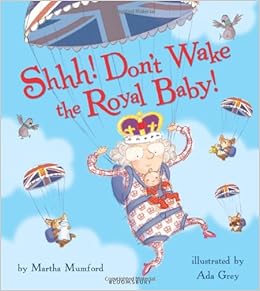
Design a striking cover.  Emma Blackburn prefers single images to scenes.  Make your title snappy and reflective of the story ex. SH! Don't Wake the Royal Baby (http://www.amazon.ca/Shhh-Dont-Wake-Royal-Baby/dp/140884463X) by Martha Mumford, is about a royal baby's life in the palace.


Design illustrations that are reflective of the story.  Lauren Child, author of Who's Afraid of the Big Bad Book (www.amazon.ca/Whos-Afraid-Big-Bad-Book/dp/0786809264), provides a combination of creative design and strong text in her picture books.


Know your audience.  Prepare a dummy book and test it out on children.  Ask for feedback about the title, characters, plot, etc.