Showing posts with label characters. Show all posts

Tuesday, 21 April 2015

The Snowflake Method: How to Plan and Write a Novel

"Good fiction doesn't just happen, it is designed." (Randy Ingermanson)


Randy Ingermanson, author of six books, has a foolproof way to write a novel called the Snowflake Method.  You start small, with a basic triangle, and build it up using many interconnecting triangles. It's a way to manage your creativity, to keep your writing on track. Follow the steps at http://www.advancedfictionwriting.com/articles/snowflake-method/.  Here is a synopsis of the Snowflake Method.


The steps of the Snowflake Method courtesy http://www.thesecretcode.co.uk/page_2461704.html.


Step 1

Take an hour and compose one sentence to summarize the story ex. "A rogue scientist travels back in time to kill apostle Paul."  Think of the big picture.  Your sentence should be short, no more than 15 words.  Do not mention any character's names in the sentence.  Tie together the big picture and the personal story.  Read one line blurbs from the New York Times bestseller list to get ideas.  You can use this sentence as your pitch when you try to publish your book.  This is the triangle step of your snowflake.

Step 2

Take an hour to expand your sentence to a paragraph.  It should be five sentences in length.  The first sentence describes your story's set up.  The next three sentences describe ensuing disasters and the last sentence summarizes the ending.  This paragraph can be used as your story proposal.  This is the second triangle step of your snowflake.

Step 3

Devote an hour to writing a one page summary of each character in your book which includes:

  • the character's name
  • the character's motivation
  • the character's goal
  • the character's conflict
Keep in mind that it doesn't have to be perfect.  Keep the forward momentum going.

Step 4

Take several hours and expand each sentence of the summary to a paragraph.  All but the last paragraph should end in a disaster.  

Step 5

Take a day or two and write a one page description of each major character.  Tell the story from the character's point of view.  "Great fiction is character driven" according to Mr. Ingermanson.  Editors will eat it up.

Step 6

Take a week and expand your one page plot synopsis to four pages.  Your triangle is starting to look like a basic snowflake by this point.

Step 7

It's time to make a character chart.  Give each character a birth date, description, history, motivation and how he or she changed during the course of the story.  This is the stage where a published novelist would start writing the first draft or an unpublished novelist would write the proposal.

Step 8

Write a four page synopsis.  Use a spreadsheet to make a list of the scenes to turn the story into a novel.  It's like a "story at a glance".  Devote one line to each scene, point of view, plot and number of pages.  Mr. Ingermanson's spreadsheets usually total 100 lines.  Your snowflake should be acquiring much more detail by now.

Step 9

Take one week to write a narrative description of your story.  The one line descriptions in your spreadsheets should now be paragraphs detailing the essential conflict, important dialogue.  Write one to two pages per chapter, making about 50 pages in total.  This is your chance to revise.

Step 10

Pound out your first draft.  The story should fly off your fingertips.  According to Randy Ingermanson, planning out your story in such detail can triple your fiction writing speed.  "No reason to spend 500 hours writing a wandering first draft of your novel when you can write a solid one in 150," he explains.  Midway through your draft, fix any broken parts of your design document.  You will be thrilled at how deep your story has become, according to Mr. Ingermanson.  

Note:  Snowflake Pro software is available to order online at http://www.advancedfictionwriting.com/product/snowflake-pro-software/.

For more information, read Randy Ingermanson's book Writing Fiction for Dummies.


Monday, 13 April 2015

Plot: The Most Essential Ingredient of a Story


Plot is the most essential ingredient of a story according to Writer's Digest.  A successful story is one that gives the reader the feeling:  "I've got to know what happens next." (http://www.writersdigest.com/writing-articles/by-writing-genre/young-adult-childrens/crafting_an_effective_plot_for_childrens_books)

In a picture book, usually 32 pages, the writer has about 25 pages of plot to work with.  Something different should happen in each picture.  For example, the reader should see:

-a change of scene
-a change of expression
-a closeup
-a panorama
-a change of viewpoint
-a change of mood
-a surprise
-meanwhile (what's happening elsewhere)

Writer's Digest states that logic and cause & effect are the two most important components of plot. The plot should illustrate the theme of the book.  A picture book, with limited words, should take place in one time frame.  The movement should be linear.  Begin the story where it starts to become interesting.  Eliminate the preliminaries.  Here are examples of how to start your story:

-the main character makes a decision
-dramatic dialogue
-the day begins
-the main character's present situation
-the main character's typical response to a specific situation
-the start of a journey
-the main character sends/receives an important message

What drives plot?  According to Writer's Digest, "strong consistent characters drive the action forward".  For example, Harriet and the Promised Land demonstrates powerful characters.  To learn about more picture books with strong character development, visit http://www.readwritethink.org/files/resources/lesson_images/lesson803/803BookList.pdf.


a


A chapter book with a strong main character is Amelia Bedelia, which focusses on a girl who takes everything literally.  When someone asks her to "draw the curtains" she gets out a pencil and paper and draws the curtains.


Cover

Amelia Bedelia, which debuted in 1963, is a series consisting of dozens of titles, the latest of which appeared in 2014 at http://en.wikipedia.org/wiki/Amelia_Bedelia.


As I stated in yesterday's post, you need to make your reader care about your characters.  The reader is interested in the story because he knows the protagonist, he knows his plight, he knows the choices he has made and he's curious about how he will proceed.  For example, the main character Jo in the novel Little Woman is a passionate one.  Her father writes from the Civil War front stating that he's suffering from an illness.  Jo immediately sells her hair to raise money for her father's care.  Jo's feelings drive the book's plot.


Illustration of Jo's father coming home from the Civil War courtesy 


When writing your picture or chapter book, don't forget to follow the story arc or narrative arc which refers to the chronological construction of the plot.  "It is the rising and falling of the tension, and the pacing and timbre of the plot." (https://fcmalby.wordpress.com/2014/05/14/narrative-arc-shaping-your-story/)

While every story contains a beginning, a middle and an ending, don't forget it also must contain a crisis, a struggle and a discovery.  There must be "a transformation in the life of the main character". Otherwise, it is only a report, not a story. (http://www.writersdigest.com/online-editor/the-5-essential-story-ingredients)


Sunday, 12 April 2015

Fall in Love with Your Characters

"Maybe the plot is the number one reason people keep reading, but characters essentially are what make them stay." 


"Good characters make you fall in love with a story.   Maybe the plot is the number one reason people keep reading, but characters essentially are what make them stay," according to blogger Tori (http://theweirdworder-awritersworld.blogspot.ca/2013/07/the-importance-of-characters.html). Picture books tend to have only a few, basic characters.  Chapter books have room for more characters and more character development.  Some chapter books are plot driven, like Harry Potter, while others are character driven, like Catcher in the Rye.

Characters create conflict and resolution in a story.  You want characters to bring your plot to life.  Start by giving your main character, or protagonist, a motivation or desire.  Roz Morris recommends:  "Make the character want something badly enough to step outside of his comfort zone," (https://www.writersandartists.co.uk/writers/advice/410/a-writers-toolkit/story-and-plot/).  The character should keep working towards his goal, even when things go from bad to worse.  

Get your readers emotionally involved with your characters.  "Until the writer reveals the character's humanity, he's just a name on a page," explains Roz Morris.  Reveal your character's history and relationships through his thoughts, feelings and actions.  Is your character static, like a brilliant detective or a cruel stepmother?  Or is he developping, a character who grows throughout the story? Ideally you want three dimensional characters rather than stereotypes.  

Do you have a villain or antagonist in your book?  An antagonist's interests oppose those of the protagonist.  However, a villain "intends evil", has different moral rules and brushes with the dark side, according to Roz Morris.  


                                http://www.best-childrens-books.com/picture-book-series.html


Picture Books with Well-Developped Characters

1.  Chrysanthemum (Kevin Henkes

2.  Thomas' Snowsuit (Michael Martchenko)

3.  Martha Speaks (Susan Medaugh)

4.  The Polar Express (Chris Van Allsburg)

5.  The Lemonade Club (Patricia Polacco)

6.  Harold and the Purple Crayon (Crockett Johnson)


Chapter Books

1.  Little House on the Prairie (Laura Ingalls Wilder)

2.  Flat Stanley (Jeff Brown)

3.  Amelia Bedelia (Peggy Parish)

4.  Stuart Little (E. B. White)

5.  Charlotte's Web (E. B. White)

6.  Big Nate (Lincoln Peirce)

Monday, 6 April 2015

Anyone Can Write a Children's Book!

When Tara Lazar tells people that she writes picture books, she gets the common response:  "Anyone can write a children's book!"  That seems to be the standard response.  Publishers' desks are inundated with picture book manuscripts which melt into the slush pile.  However, once you start the process, and see what is involved, you realize it's much more difficult than you anticipated.  How do you get into the mind of a child?  How do you avoid the overdone subjects?  Here are some tips to follow when writing for children.


Choose a topic for your book.  Let your imagination run wild.  Write down all of your thoughts and ideas.  Tara Lazar suggests participating in PiBoIdMo, short for Picture Book Idea Month at http://taralazar.com/piboidmo/.  Each day, write down one idea for your book.  At the end of the month, pick your best idea. You should have an underlying theme:  love, friendship, fitting in.  Avoid overdone topics like a new pet, a new baby or a new home.


Consider the length of your manuscript.  Picture books are usually 32 pages in length.  When you account for the end page, the title page, the copyright page, etc. you are left with 24 pages for text and illustrations.  Therefore, plan for about 12 double page spreads.  Emma Blackburn, picture book editor at Bloomsbury Publishing (www.writersandartists.co.uk/writers/advice/327/dedicated-genre-advice/writing-for-children/) suggests a mixture of double page spreads, single page images and vignettes.


Rhyme only if you can do it well.  Tara Lazar says that many rhymes are either forced or exhibit inconsistent metre.  Don't let rhyme dictate your story.  However, if you are an expert at rhyming, go for it.  Follow the masters:  Jane Yolen, Jack Prelutsky, Karma Wilson, and of course, Dr. Seuss.


How Do Dinosaurs Say Merry Christmas? by Jane Yolen courtesy http://www.scholastic.ca/titles/howdodinosaurs/images/How_do_dinosaurs_say_merry_xmas_spread.jpg.


Keep your manuscript under 1000 words.  In fact, the ideal length for a picture book these days is 500 words.  Books that are 800 to 1000 words tend to be harder to sell.  Tara Lazar reminds you not to be overly descriptive; let your illustrations do the talking.


Don't preach.  Share your underlying theme, but don't beat it over the reader's head.  Begin your story with a unique hook, to catch the reader's interest.

Read as many picture books as you can get your hands on for inspiration.  Ms. Lazar recommends reading 500 picture books before you even start your manuscript.  Examine the cadence and rhythm of the stories.  Look not only at what is said, but what is left unsaid.  Look at how tight the writing is. The tighter you write, the lower your word count.


Choose a strong, appealing protagonist.  Is he or she loud or shy, funny or scary, friendly or cold? Make sure you develop your main character enough to keep your reader hooked.  Give him or her a name that reflects his or her personality or gives a hint about the story.  If possible, think about a string of adventures for your protagonist for a possible series.  For example, A Pocket for Corduroy features Corduroy Bear, a bear who wears corduroy overalls.


Devise a plot that leaves the reader wanting more, that makes the reader want to turn the page.  Keep pacing in mind as you write.  While your beginning should catch the reader's interest, your ending should leave the reader satisfied.  Include an unexpected twist as Rosie Reeve did in her story When Tom Met Tallulah (http://www.amazon.ca/When-Tom-Tallulah-Rosie-Reeve/dp/1408836998).


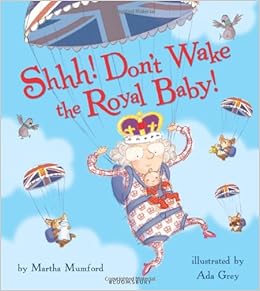
Design a striking cover.  Emma Blackburn prefers single images to scenes.  Make your title snappy and reflective of the story ex. SH! Don't Wake the Royal Baby (http://www.amazon.ca/Shhh-Dont-Wake-Royal-Baby/dp/140884463X) by Martha Mumford, is about a royal baby's life in the palace.


Design illustrations that are reflective of the story.  Lauren Child, author of Who's Afraid of the Big Bad Book (www.amazon.ca/Whos-Afraid-Big-Bad-Book/dp/0786809264), provides a combination of creative design and strong text in her picture books.


Know your audience.  Prepare a dummy book and test it out on children.  Ask for feedback about the title, characters, plot, etc.