Showing posts with label published. Show all posts

Wednesday, 22 April 2015

How to Write a Novel the Nano Way

Yesterday I blogged about how to write a novel using the Snowflake Method, a ten-step plan to follow to assemble your story.  Today, I'm writing about how to write a novel without an outline. There's something to be said about sitting down at a keyboard, staring at a blank page, and letting your fingertips take you away.  It's called "Nanowrimo:  30 days and nights of literary abandon".


I am a four time Nanowrimo (National Novel Writing Month) participant http://nanowrimo.org/ ). Set aside 30 days in November (or any month).  You need at least two hours per day.  That's 60 hours in a month.  Your quota is just under 1700 words per day.  In total you will write 30,000 words, the size of a small novel (although it doesn't have to be fiction; I wrote non-fiction).  At the end of the month, you have your first draft.


Southwestern Pottery by John Hritz

The quantity vs quality argument at http://thewritepractice.com/quantity-v-quality/.


The focus of Nanowrimo is quantity not quality.  The problem with an outline is you are constantly editing your thoughts.  The beauty of Nanowrimo is that you turn off that internal edit.  You are constantly writing, pushing forward, building the momentum of your story. As Snoopy found out the hard way, one of the Ten Commandments of Writing is "Thou shalt not edit when thou writes." (See http://killzoneblog.com/2011/06/10-commandments-for-writers.html).  But at the same time, Nanowrimo is not complete abandon:  you do have a deadline.  


Snoopy is breaking one of the Ten Commandments of Writing "Thou shalt not edit when thou writes" courtesy https://www.pinterest.com/proofeditwrite/writer-humour/.


There's something to be said for leaving your writing and letting it sit.  It's difficult to spot your errors when the ink has barely dried on the page, so to speak.  Let a couple of months pass and come at it with a new set of eyes (and maybe a new set of ideas).  Which begs the question:  When do you edit? Your opportunity to edit arrives in March, when Nanoedmo (National Novel Editing Month) arrives. If Nanowrimo is 30 days and nights of literary abandon, Nanoedmo is 50 hours of literary editing. That's one and a half hours per day.  Roll up your sleeves and get ready:  it's time to get your hands dirty.  This is where the real writing begins.  It's time to revise, rewrite, rework, remove, expand and proofread that first draft.


Now is your chance to check for the essential ingredients of a solid story.  Reread your story and listen for the rhythm of your words.  Just as a musician has an "ear for music", a writer has an "ear for words" says blogger Roni Loren (http://nanoedmo.com/2013/03/17/5-steps-roni-loren/).  Check for pacing of your plot.  Is there enough conflict?  Check for context.  When I wrote my great-grandmother's story, set in the early 1900's, I had to research details:  How many compartments did a cast iron stove have?  Was mail delivered to your door in small town Canada?  What did a Canadian map look like in 1903?  Examine your characters.  Are they three dimensional or flat?  Look for your dominant theme.  Does your main idea permeate every chapter of your book?  As author Larry Brooks points out in Story Engineering, "Theme can get you published".  For more, visit the site http://www.amazon.ca/Story-Engineering-Larry-Brooks/dp/1582979987.
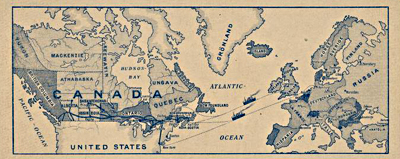


A Canada map circa early 1900's, quite different from current day, courtesy 


Are you ready to put down your pen at this point?  While you have a solid second draft, my recommendation is that you let your manuscript sit for a few weeks, and look at it yet again.  Or better yet, let a fellow writer look at it and point out any errors, omissions or inconsistencies.  Scour it for those smaller details.  Look for "le mot juste" (see link "Ten Tips for Finding the Right Words" below).  Look for words that you have overused.  Vary your sentence length.  Make sure your verb tense is consistent.  Check for a consistent point of view. Your third draft will be much more polished than your second.  Your novel is complete.


But it's not over.  Submit your novel for publication.  You might join the long list of Nanowrimo participants who have become published authors.  Sara Gruen's Water for Elephants, published in 2007 by Harper Collins, even hit number one on the New York Times bestseller list. Visit http://nanowrimo.org/published-wrimos for a complete list.


Note:  For more information about Nanowrimo, read "Nanowrimo Rules!" at http://alinefromlinda.blogspot.ca/2014/11/nanowrimo-rules.html.


Tuesday, 25 November 2014

Tickets to the Game


I just received another rejection letter this morning for my chapter book I'm Just Daisy.  I placed it in an enveloppe called "Tickets to the Game" along with the six other tickets.  Why would I call it a ticket when it's a rejection letter?  I read a post online in which the author called her rejection letters "tickets".  Rather than seeing each letter as preventing her from getting published, she saw it as a ticket, bringing her one step closer to the game.

What a great idea!  Since rejection is part and parcel of the writing and publishing world, writers have to get used to it.  Why not see it as a step in the process?  Why not see it as an opportunity rather than a shut out?  As a beginning rather than an ending?  I used one of my rejection letters, which was very detailed and helpful, to write an improved second version of my book.

It's a talent in life to be able to see the good side of something bad.  I could have easily shredded those tickets.  But instead, they are tucked away in an 8 1/2 by 11 envelop.  It's like I'm treasuring them.  They are proof that I've written a book and that I'm getting it out there.  It's like Babe Ruth.  He was the strike out king. of baseball.  But he was also the home run king. I want to be the strike out-home run queen of writing.

So, as I carefully slide my tickets into my envelop, the way Babe Ruth slid into home plate, I am one step closer to the game.  I can actually smell the juicy hotdogs and buttery popcorn.  I can hear the crack of the bat when it hits the ball.  I can feel the rumbling of Yankee Stadium as the fans cheer. Let's play ball!


Monday, 24 November 2014

Getting a Book Published Through a Sponsor


When My Dad published his book, Meet Me at the Lakeview Casino (http://www.abebooks.com/book-search/title/meet-me-at-the-lakeview-casino/author/tufts-norman-ross/) he did so with money given to him by the Women's Institute of Grand Bend.  They were interested in promoting local history and they had just received a generous donation from an elderly resident named Mrs. McElroy.  My Dad wrote a letter to the Institute president who put it to a vote.  The committee voted in favour of the book, with about a three quarter majority.  Published in 1999, the book sold enough copies in the first two years for the Women's Institute to recoup their initial donation.

I'm thinking maybe this is the route I should pursue for my books.  I looked up Ontario Historical Societies and found a list of almost 400.  My chapter book I'm Just Daisy, based on the life of my British Home Child great-grandma, would be perfect for a British Historical Society.  My chapter book On Prussian Plains, based on my mother-in-law's family, would be suitable for a German Historical Society or cultural club like the Germania Club in Hamilton.  After all, the Germania Club is where Rob's mom met his dad.  It's also where they celebrated their wedding reception and 25th anniversary.

It's time to write letters and make contacts.  Wish me luck!