Showing posts with label New York Times bestseller list. Show all posts

Sunday, 8 January 2017

The Purpose Driven Life

"Life isn't about finding yourself, it's about discovering who God created you to be."
(Evan Carmichael)


It sat on the New York Times Bestseller List for over 90 weeks.  It sold 30 million copies in its first five years.  NFL legend Ray Lewis gave it to Michael Phelps to read when he entered rehab.  It became and remains the bestselling non-fiction hardcover book of all time.  Why?  According to its author Rick Warren, it speaks to people, to their "spiritual emptiness".

The Purpose Driven Life poses the $64,000 question "What on earth am I here for?"  Rick Warren says that you are not an accident.  That God put you here for a purpose.  It's not a self-serving purpose.  Warren starts his book with the simple phrase:  "It's not about you."  No, it's about your "stewardship of influence".  For example, one of Rick Warren's stewardship of influences is his commitment to care for the environment, to leave this planet a little bit better for his children and grandchildren.  

The author, also a pastor of an affluent church in California, made a substantial amount of money on his book.  It would have been easy to start living the good life.  However, Rick Warren and his wife, who used to tithe, decided to start re-tithing.  Rather than giving 10% of their income to charity, they now give 90% of their income to charity.  He also set up numerous foundations to help those in need around the world.  He explains:  "Every time I give, it breaks the grip of materialism on my life.  Living the good life means being good, doing good."

In The Purpose Driven Life, Rick Warren says that everyone has a world view.  It governs our behaviour, our relationship, every area of our lives.  Our world view is only truly tested when we go through the valleys, not when we're on the mountaintop.  God calls us to look after the widows and the orphans.  

The pastor mentions the story of Moses and his staff, which God turns into a snake and then returns it to its original form.  Moses staff was everything to him:  it represented his identity (a shepherd), his assets (his job) and his influence (his status in society).  Moses' staff was similar to an NBA player's basketball; again, it represented his whole world.  Rick Warren's question to you is:  "What are you going to do with your "staff"?  What are you going to do with what God has given you?  You don't have to be rich.  You don't have to be powerful.  God rejoices when he sees you do what he wired you to do.  Are you going to fulfill your God-given purpose?

Note:  To watch Rick Warren's TED talk about The Purpose Driven Life, visit https://www.ted.com/talks/rick_warren_on_a_life_of_purpose.


Sunday, 26 April 2015

The Power of a Book Club to Boost Sales

"Having an Oprah Book Club selection is pretty much like having the pinnacle of the community." (Michael McKenzie, Publicity Directory)


Ever since Oprah Winfrey debuted her book club in 1996, she has been influencing book sales worldwide.  It started with the debut novel, The Deep End of the Ocean by Jacquelyn Mitchard, and ended with the classic, Great Expectations by Charles Dickens.  First time author David Wroblewski's novel The Story of Edgar Sawtelle became a selection in 2008 and quickly became a New York Times bestseller.  When Oprah's show went off the air in 2011, she had endorsed 70 titles with an estimated sale of 55 million Oprah editions.  For more information, read Reading with Oprah:  The Book Club that Changed America by Kathleen Rooney.  In 2012, the former talk show host launched Oprah Book Club 2.0, focussing on digital media.

Mark Zuckerburg, who started Facebook, launched his own book club in January of 2015.  His first title, The End of Power by Moises Naim, was sold out on Amazon within the first 24 hours of being announced as a selection.

Online book clubs are all the rage these days.  BookTalk.org (http://booktalk.org/) and the New York Times Book Forum (https://www.nytimes.com/books/forums/index.html) are two such clubs.

Goodreads (http://www.goodreads.com/), with 12 million members, is another powerful book club.  "Reading Lolita in Tehran stayed on the New York Times bestseller list for more than 100 weeks and became book club fodder worldwide," says a Goodreads interview with the book's author Azar Nafisi.

Library Thing (https://www.librarything.com/), another online book club, has catalogued 96 milion books and reviewed almost 2 1/2 million titles.  Among the top 25 books are selections like:  Harry Potter, The Da Vinci Code, Twilight, The Kite Runner and The Curious Incident of the Dog in the Night Time.

BookShout (https://bookshout.com/bookshout-marketing/) an e-reader, endorses bestselling authors Bill Nye, Jane Green and Beth Moore among others.

If you end up on a book club list, whether a traditional book club or an online one, it's likely to boost your sales.  If you want to learn more about marketing your book, read Sell Your Book Like Wildfire by Rob Eager.


Saturday, 25 April 2015

How to Land on the New York Times Bestseller List

The New York Times bestseller list is the gold standard for success in the writing field.  As editor Alan Rinzler asserts:  "It shouts:  'Read me!  I'm certified!'"  Some authors even buy their way onto the list.  However, most do it by good old fashioned hard work.  Here are nine tips to landing on the bestseller list, according to Mr. Rinzler (http://www.alanrinzler.com/blog/2011/09/12/what-authors-can-learn-from-the-bestseller-lists/).

1.  A Diverse List

As Anne Rice says:  "You can look at the New York Times bestseller list and you can be pretty sure that the writers on the list don't know each other very well."  The authors are diverse as well as the 23 different categories:  Combined Print and E-book Fiction, Hardcover, Advice, Political, Business, children's, etc.  There is no dominant category.  Alan Rinzler advises not to worry about trends. What's popular now might not be by the time your story is published. Visit http://www.nytimes.com/best-sellers-books/hardcover-fiction/list.html for a current list.


2.  Book Length Varies

"A book should be as long as it needs to be and no longer," states Alan Rinzler.  Don't pad it or cut it short and avoid going off on tangents, advises the editor.  The Help, by Kathryn Stockett, is 544 pages while Blind Faith, by C. J. Lyon, is 392 pages.  Heaven is for Real, by Todd Burpo, is only 192 pages while Unbroken, by Laura Hillenbrand, is 496 pages.


3.  E-books Rule

Alan Rinzler says that you can sell a large quantity of books in virtual e-book form.  Between 2008 and 2010, e-books experienced a 1039.6% hike in sales.  During the latter year, 114 million units were sold.


https://digitalreader.wordpress.com/2011/08/23/risi-study-shows-20-decline-in-paper-usage-by-2015/


4.  Self-Published Books are Legitimate Competition

Self-published works are landing on the New York Times bestseller list including Blind Faith (#4), The Mill River Recluse (#5) and The Abbey (#6) in 2011.  Customers are no longer waiting for the cheaper paperback versions of books to come out, but purchasing the E-book instead.  Alan Rinzler says that E-books are "faster, give the author more control and a bigger share of the profits".


5.  Film & TV Adaptations

The Help spent 107 weeks on the Fiction bestseller list in 2009.  Two years later the movie debuted grossing over $123 million.  Don't assume that your novel has no chance of being adapted for the big screen.


The Help movie poster courtesy http://thehelpsummerhomework.tumblr.com/.


6.  Bestselling Authors are Avid Self-Marketers

Top Ten Fiction and Non-Fiction Authors know how to market themselves including:  Lee Childs, Kathy Reichs, James Patterson, J. A. Jances, John Grisham and Johanna Lindsey.  "Non one can sell your book as well as you can," explains Alan Rinzler.  Readers prefer direct contact with the author through blogs, online reviews, websites, Twitter and Facebook.


All of Johanna Lindsey's novels landed on the New York Times bestseller list, many reaching #1, courtesy 
http://blogs.rediff.com/kansurespe1975/2015/04/18/download-defy-not-the-heart-book/.


7.  Write a Brilliant Book

Garth Stein, author of New York Times bestseller Racing in the Rain, says the surest way to land on the bestseller list is to write a "brilliant book".  You can buy your way on to the list, but it won't last. If you write a page turning book, however, you will enjoy lasting success.


8.  Find the Right Distributor or Become a Book of the Month Selection

"Target can make sleepy titles into bestsellers," says New York Times contributor Motoko Rich. When Sarah's Key, penned by Tatiana de Rosnay, was first published in 2007, its sales were dismal.  However, in 2008, Target chose the title as its Book of the Month Selection and it took off, landing on the New York Times bestseller list for over two years.  To read about the success of other Target selections, visit http://www.nytimes.com/2009/07/22/books/22target.html?pagewanted=all.


9.  Become a Book Club Selection

Divine Secrets of the Ya-Ya Sisterhood, by Rebecca Wells, had an unspectacular debut in 1996. However, it was chosen as a book club selection and its sales soared, hitting #1 on the bestseller list two years later.  It also became a motion picture starring Bette Midler.  For more information about the surprise bestseller, read http://www.people.com/people/archive/article/0,,20126454,00.html.


Wednesday, 22 April 2015

How to Write a Novel the Nano Way

Yesterday I blogged about how to write a novel using the Snowflake Method, a ten-step plan to follow to assemble your story.  Today, I'm writing about how to write a novel without an outline. There's something to be said about sitting down at a keyboard, staring at a blank page, and letting your fingertips take you away.  It's called "Nanowrimo:  30 days and nights of literary abandon".


I am a four time Nanowrimo (National Novel Writing Month) participant http://nanowrimo.org/ ). Set aside 30 days in November (or any month).  You need at least two hours per day.  That's 60 hours in a month.  Your quota is just under 1700 words per day.  In total you will write 30,000 words, the size of a small novel (although it doesn't have to be fiction; I wrote non-fiction).  At the end of the month, you have your first draft.


Southwestern Pottery by John Hritz

The quantity vs quality argument at http://thewritepractice.com/quantity-v-quality/.


The focus of Nanowrimo is quantity not quality.  The problem with an outline is you are constantly editing your thoughts.  The beauty of Nanowrimo is that you turn off that internal edit.  You are constantly writing, pushing forward, building the momentum of your story. As Snoopy found out the hard way, one of the Ten Commandments of Writing is "Thou shalt not edit when thou writes." (See http://killzoneblog.com/2011/06/10-commandments-for-writers.html).  But at the same time, Nanowrimo is not complete abandon:  you do have a deadline.  


Snoopy is breaking one of the Ten Commandments of Writing "Thou shalt not edit when thou writes" courtesy https://www.pinterest.com/proofeditwrite/writer-humour/.


There's something to be said for leaving your writing and letting it sit.  It's difficult to spot your errors when the ink has barely dried on the page, so to speak.  Let a couple of months pass and come at it with a new set of eyes (and maybe a new set of ideas).  Which begs the question:  When do you edit? Your opportunity to edit arrives in March, when Nanoedmo (National Novel Editing Month) arrives. If Nanowrimo is 30 days and nights of literary abandon, Nanoedmo is 50 hours of literary editing. That's one and a half hours per day.  Roll up your sleeves and get ready:  it's time to get your hands dirty.  This is where the real writing begins.  It's time to revise, rewrite, rework, remove, expand and proofread that first draft.


Now is your chance to check for the essential ingredients of a solid story.  Reread your story and listen for the rhythm of your words.  Just as a musician has an "ear for music", a writer has an "ear for words" says blogger Roni Loren (http://nanoedmo.com/2013/03/17/5-steps-roni-loren/).  Check for pacing of your plot.  Is there enough conflict?  Check for context.  When I wrote my great-grandmother's story, set in the early 1900's, I had to research details:  How many compartments did a cast iron stove have?  Was mail delivered to your door in small town Canada?  What did a Canadian map look like in 1903?  Examine your characters.  Are they three dimensional or flat?  Look for your dominant theme.  Does your main idea permeate every chapter of your book?  As author Larry Brooks points out in Story Engineering, "Theme can get you published".  For more, visit the site http://www.amazon.ca/Story-Engineering-Larry-Brooks/dp/1582979987.


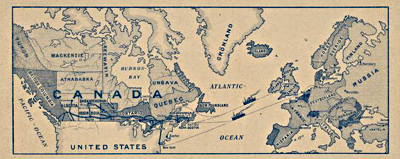
A Canada map circa early 1900's, quite different from current day, courtesy 


Are you ready to put down your pen at this point?  While you have a solid second draft, my recommendation is that you let your manuscript sit for a few weeks, and look at it yet again.  Or better yet, let a fellow writer look at it and point out any errors, omissions or inconsistencies.  Scour it for those smaller details.  Look for "le mot juste" (see link "Ten Tips for Finding the Right Words" below).  Look for words that you have overused.  Vary your sentence length.  Make sure your verb tense is consistent.  Check for a consistent point of view. Your third draft will be much more polished than your second.  Your novel is complete.


But it's not over.  Submit your novel for publication.  You might join the long list of Nanowrimo participants who have become published authors.  Sara Gruen's Water for Elephants, published in 2007 by Harper Collins, even hit number one on the New York Times bestseller list. Visit http://nanowrimo.org/published-wrimos for a complete list.


Note:  For more information about Nanowrimo, read "Nanowrimo Rules!" at http://alinefromlinda.blogspot.ca/2014/11/nanowrimo-rules.html.