
I am a four time Nanowrimo (National Novel Writing Month) participant http://nanowrimo.org/ ). Set aside 30 days in November (or any month). You need at least two hours per day. That's 60 hours in a month. Your quota is just under 1700 words per day. In total you will write 30,000 words, the size of a small novel (although it doesn't have to be fiction; I wrote non-fiction). At the end of the month, you have your first draft.

The quantity vs quality argument at http://thewritepractice.com/quantity-v-quality/.
The focus of Nanowrimo is quantity not quality. The problem with an outline is you are constantly editing your thoughts. The beauty of Nanowrimo is that you turn off that internal edit. You are constantly writing, pushing forward, building the momentum of your story. As Snoopy found out the hard way, one of the Ten Commandments of Writing is "Thou shalt not edit when thou writes." (See http://killzoneblog.com/2011/06/10-commandments-for-writers.html). But at the same time, Nanowrimo is not complete abandon: you do have a deadline.

Snoopy is breaking one of the Ten Commandments of Writing "Thou shalt not edit when thou writes" courtesy https://www.pinterest.com/proofeditwrite/writer-humour/.

http://www.examiner.com/article/polish-your-completed-manuscript-during-national-novel-editing-month
Now is your chance to check for the essential ingredients of a solid story. Reread your story and listen for the rhythm of your words. Just as a musician has an "ear for music", a writer has an "ear for words" says blogger Roni Loren (http://nanoedmo.com/2013/03/17/5-steps-roni-loren/). Check for pacing of your plot. Is there enough conflict? Check for context. When I wrote my great-grandmother's story, set in the early 1900's, I had to research details: How many compartments did a cast iron stove have? Was mail delivered to your door in small town Canada? What did a Canadian map look like in 1903? Examine your characters. Are they three dimensional or flat? Look for your dominant theme. Does your main idea permeate every chapter of your book? As author Larry Brooks points out in Story Engineering, "Theme can get you published". For more, visit the site http://www.amazon.ca/Story-Engineering-Larry-Brooks/dp/1582979987.
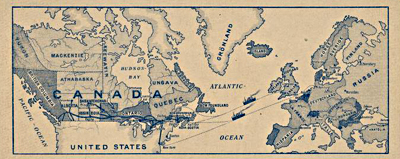
A Canada map circa early 1900's, quite different from current day, courtesy
Are you ready to put down your pen at this point? While you have a solid second draft, my recommendation is that you let your manuscript sit for a few weeks, and look at it yet again. Or better yet, let a fellow writer look at it and point out any errors, omissions or inconsistencies. Scour it for those smaller details. Look for "le mot juste" (see link "Ten Tips for Finding the Right Words" below). Look for words that you have overused. Vary your sentence length. Make sure your verb tense is consistent. Check for a consistent point of view. Your third draft will be much more polished than your second. Your novel is complete.

But it's not over. Submit your novel for publication. You might join the long list of Nanowrimo participants who have become published authors. Sara Gruen's Water for Elephants, published in 2007 by Harper Collins, even hit number one on the New York Times bestseller list. Visit http://nanowrimo.org/published-wrimos for a complete list.

Water for Elephants courtesy http://www.goodreads.com/book/show/43641.Water_for_Elephants.
Note: For more information about Nanowrimo, read "Nanowrimo Rules!" at http://alinefromlinda.blogspot.ca/2014/11/nanowrimo-rules.html.

