Showing posts with label picture books. Show all posts

Saturday, 11 April 2015

How Setting is Crucial to Your Story

Setting is the time, place and social background of your story.  Setting helps set the mood or atmosphere of the story.  It can also influence characters' behaviour, affect dialogue, foreshadow events, invoke emotion and reflect society, according to The Writing Place (https://thewritingplace.wordpress.com/2010/04/13/story-elements-importance-of-the-setting/).

As a writer, you can show setting by:

1.  Dialogue

A teenager from Chicago speaks differently than one from rural Kentucky.  Someone who orders a caramel mocchiato might be of a more sophisticated social class than someone who orders an orange soda.

2.  Weather

A hurricane might suggest that you are in New Orleans whereas a blizzard might suggest you are in New England.  Fragrant flowers infers springtime whereas swirling leaves infers fall.

3.  Foreshadowing

A dark, gloomy house foreshadows danger.  Flickering candles foreshadows romance or a religious ceremony.

4.  Behaviour

A story set during 9/11 would be a good place for heroic behaviour.

5.  Society

If our protagonist lives in Victorian era London, the customs are quite different than current day New York City.

6.  Emotion

Victorian era London, its streets filled with wide eyed orphans with rumbling tummies, evokes more emotion than present day London.

Darcy Pattison suggest turning the familiar into the unfamiliar.  For example, Where the Wild Things Are starts in the protagonist's bedroom but ends up in a jungle.  King Bidgood's in the Bathtub transforms a nightly bath into a wild adventure.  You can do the reverse as well.  Turn something unfamiliar into something familiar as Brinton Turkle does in her story about a Quaker family called Rachel and Obadiah.

No matter what setting you choose, make sure you have a working knowledge of the locale and time period.  If not, do thorough research before you start writing.  Here are some picture books and chapter books whose authors have done an excellent job of setting the scene:

Picture Books

1.  Cloudy with a Chance of Meatballs (Judi Barrett)

2.  The Lorax (Dr. Seuss)

3.  Thundercake (Patricia Polacco)

4.  Ghost's Hour, Spook's Hour (Eve Bunting)

5.  The Hockey Sweater (Roch Carrier)

6.  One Splendid Tree (Marilyn Helmer)

Chapter Books

1.  Summer of the Gypsy Moths (Sara Pennypacker)

2.  To the Mountaintop:  My Journey Through The Civil Rights Movement (Charlayne Hunter-Gault)

3.  The Impossible Rescue:  The True Story of an Amazing Arctic Adventure (Martin W. Sandler)

4.  Crow (Barbara Wright)

5.  The One and Only Ivan (Katherin Applegate)

6.  Making Bombs for Hitler (Marsha Skrypuch)


Tuesday, 7 April 2015

Picture Books: Not Just for Young Children

"The picture book, a mainstay of children's literature, with its lavish illustrations, cheerful colours and large print wrapped in a glossy jacket, has been fading...Publishers cite pressures from parents who are mindful of increasingly rigorous standardized testing in school." 


I remember visiting a used bookstore with my daughter and her friend.  Jacqueline, an avid reader, was perusing the picture books.  Her friend said:  "My Mom says that I'm too old for picture books" and moved on to the chapter books.  That mom seems to be part of the majority these days.  Many parents see picture books as books for babies or toddlers, not for school age children, and certainly not for preteens.  

Picture book sales are down.  In 2010, Simon & Schuster reported that only 10% of their children's book sales were picture books, down from 35% a few years before.  Scholastic reported a 5% to 10% drop in their picture book sales over the years 2007 to 2010.  Consequently, publishers are less likely to offer contracts to picture book authors.    

"[Yet] literary experts are quick to say that picture books are not for dummies," says Julie Bosman of the New York Times (http://www.nytimes.com/2010/10/08/us/08picture.html?_r=0).  While chapter books have more text, picture books often have a richer vocabulary.  After all, in most cases, it's a parent who reads the picture book to the child.  Therefore, the picture book has to appeal to both child and adult, a demand that the chapter book need not fulfill.  

Karen Lotz, a publisher at Candlewick Press, maintains that picture books promote an analogue way of thinking.  "From picture to picture, as the reader interacts with the book, their imagination is filling in the missing themes."


Bill Glaister points out that picture books, especially advanced picture books (1000-2000 words), can be used in the classroom at all levels across the curriculum.  Here are some reasons why. 

1.  Picture books present complex ideas in a concrete manner.

2.  Picture books introduce moral issues.  They are a great way to start a discussion.  I met a Grade 7 & 8 teacher who used picture books to introduce Social Studies units.  For instance, a unit about Canadian Civil Rights could be introduced with the picture book Viola Desmond Won't Be Budged.

3.  Picture books lend humour to topics.  They can be a launching pad for drama.  I remember using The Berenstains Bears Tell the Truth for a Kindergarten skit about the importance of being honest, complete with a Little Tikes buggy (aka a shopping cart).

4.  Picture books often use complex literary devices.

5.  Picture books are a great way to introduce other genres.  If you want to discuss poetry, read Dr. Seuss books.

6.  Picture books can serve as models for the students' writing.

7.  Wordless picture books can serve as story starters.  Journey, by Aaron Becker, is a Caldecott Honor book.

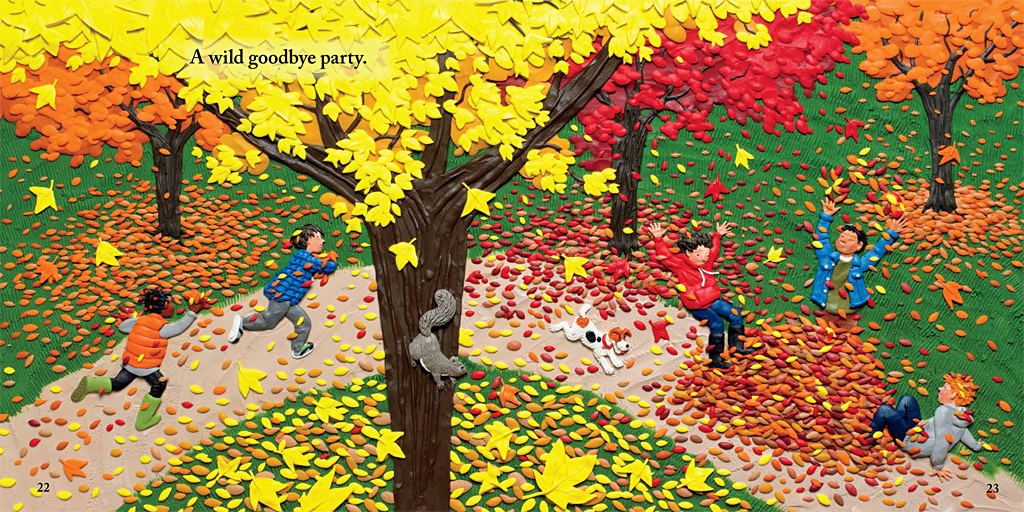
8.  Picture books can be a resource for budding artists.  For example, Picture a Tree by Barbara Reid is a great example of plasticene art.

For the entire article, visit (http://www.uleth.ca/education/sites/education/files/PictureBooksForOlderReaders.pdf).


Thursday, 2 April 2015

The History of Picture Books: The Text

"See Spot.  See Spot Run.  Run, Spot, run!" (excerpt from Dick & Jane book)

Before the advent of the picture book, parents read to their children from collections of fables and fairytales.  Mother Goose, written by Charles Perrault and Grimm's Fairytales were two popular titles. In Germany, Der Strubbelpeter, which my father in law read to my husband as a boy, was common.


But the fables and fairytales gave way to the picture books by the mid-20th Century.  The Dick & Jane basal readers, written by William S. Gray and Zerna Sharp, first appeared in American schools in the 1930's.  Using the sight word method of teaching reading, the books were full of repetition and followed a simplistic formula.  Characters included a boy named Dick, a girl named Jane and a dog named Spot.  


In 1942, Simon & Schuster brought the picture book to the masses with the debut of Little Golden Books.  Previously picture books were priced at $2 to $3, too expensive for the average Joe; but at 25 cents a copy, these books were affordable for almost anyone.  The company recruited illustrators from The Artists and Writers Guild.  Janet Sebring Lawry wrote the original title, The Poky Little Puppy, which has sold 15 million copies to date.  Famous authors like Lucy Sprague Mitchell, a proponent of realistic children's books, penned other stories, along with Margaret Wise Brown, author of Goodnight Moon. While the original set of Little Golden Books numbered 12, now there are almost 900 titles.  For more information, visit my post "How a Poky Little Puppy Brought the Picture Book to the Masses" at 


Despite the success of the Little Golden Books, it was still the Dick & Jane series that sat on the shelves of the American public schools.  In 1955, Rudolf Flesch published a book called Why Johnny Can't Read? which cited statistics on childhood literacy in America, which was far behind its European counterpart.  He condemned the Dick & Jane readers, suggesting phonics, rather than sight words, as the correct strategy for teaching children how to read.  


Two year later William Spaulding, the head honcho at Houghton Mifflin, got involved in the debate. He made a list of 200 words which he gave to Theodor Geisel, challenging him to write a children's book with just those words.  Mr. Geisel added some words to the list and the result was The Cat in the Hat.  For more information, read my post "How the Cat in the Hat was Born" at http://alinefromlinda.blogspot.ca/2013/02/how-cat-in-hat-was-born.html.


Mr. Geisel went on to write 46 more picture books, all with basic vocabulary words.  He also added a few of his own made up words.  But with his energizing tone, and his use of repetition, his books were an instant hit, never losing their appeal.  On a recent top 100 list of children's hardcover books, Dr. Seuss had 16 titles including Green Eggs & Ham, Cat in the Hat and One Fish, Two Fish, Red Fish, Blue Fish.  


Dr. Seuss was promoted to editor at Vanguard Press.  A young couple pitched a series about a bear family; their debut title was Freddy Bear's Spanking (later changed to The Big Honey Hunt).  While Dr. Seuss liked their illustrations and story idea, he didn't like the choice of a bear.  However, when the book appeared on the bookstore shelves, it sold like hotcakes.  The Berenstains' wrote dozens of titles, each including a moral or safety lesson, each the same length of 1100 words.  The story formula remained the same:  the cubs had a problem, Papa Bear presented a solution which made it worse and Mama Bear fixed everything.  According to the Berenstains, Mama and Papa were largely based on themselves.  Today, The Berenstain Bears series consists of over 300 titles and has sold over 260 million copies.  For more information, read "How the Berenstain Bears Got Their Name" at 


The Berenstain Bears Too Much Junk Food courtesy http://www.sunshine-book.com.tw/images/upfile/2011/2011101118593164019.jpg.


The more recent Froggy book series by Jonathon London helped my daughter learn how to read. Again, the repetition was key to giving her a sense of confidence.  I found that the variation of the print colour helped as well.  When Froggy's mother yelled his name, it was always in red capital letters.


For a picture book timeline, visit, 


Wednesday, 1 April 2015

The History of Picture Books: The Illustrations

"Caldecott's work heralds the beginning of the picture book." 
(Maurice Sendak, author of Where the Wild Things Grow)


Ralph Caldecott courtesy upload.wikimedia.org.


One hundred and thirty years ago, artist Randolph Caldecott was one of the first artists "to elevate the image into a storytelling vehicle" (http://www.brainpickings.org/2012/02/24/childrens-picturebooks/).  As Maurice Sendak explained:

"Caldecott's work heralds the beginning of the picture book.  He devised an ingenious juxtaposition of picture and word, a counter point that never happened before.  Words are left out -- but the picture says it.  Pictures are left out, but the words say it.  In short, it is the invention of the picture book."

The House That Jack Built and Ride a Cock Horse to Branbury Cross are but two of Caldecott's "toy books".  The precursor to the picture book, the toy book, popular in Victorian-era England, featured six illustrations, a small amount of text, and sold for six pence.


Caldecott's work was so influential that a picture book award was named in his honour.  The first Caldecott Medal, awarded in 1938 for "the most distinguishable American picture book for children", went to Animals of the Bible by Dorothy Lathrop.  It has been awarded every year since.

Walter Crane, another Victorian era illustrator, wrote toy books as well including Baby's Own Aesop, which included several fables, and The Alphabet of Old Friends, an early ABC book. 


According to blogger Maria Popova, picture books blossomed in the late 1800's and early 1900's thanks to the advances in print technology, the changing attitude towards children and the new class of artists.  

Picture books really came into their own in the 1920's.  The Story of Dr. Doolittle, which debuted in 1920, is about a man who discovers he can talk to animals.  It is one of twelve books written by Hugh Lofting.  The highly successful Millions of Cats, illustrated by painter Wanda Gag, appeared on bookshelves in 1928.  Gag penned over a dozen picture books.


While many successful picture books came out of Britain, we cannot neglect to talk about France. Cecile de Brunhoff used to tell her young sons a story at bedtime about an elephant who escapes from the zoo to a city which resembles Paris, marries and raises a family.  Her sons recommended to their dad, a painter, that he make the story into a picture book.  The result was Histoire de Babar which first appeared in print in 1931.  Two years later, it was translated into English as Babar the Elephant
Jean de Brunhoff, who wrote seven books, passed away in the 1940's, but his son Laurent took over the series, producing dozens more.


Cover of the first Babar story, Histoire de Babar (Story of Babar), published 1931


In 1937, Theodor Geisel debuted in the children's book field with his story And to Think that I Saw it on Mulberry Street.  To learn how the former cartoonist broke into the children's book business, see my post "From Madison Ave to Mulberry St" at http://alinefromlinda.blogspot.ca/2012/04/april-29.html. Full of unmistakable rhythm and rhyme, Geisel's books were an immediate success.  While his earliest works were drawn with pencil, he used pen and ink after the Second World War.  Later books, like The Lorax, were filled with colour.  Under the nom de plume Dr. Seuss, he published over 60 books.

And to Think That I Saw It on Mulberry Street.png


While World War II limited the supply of paper and manpower in the publishing houses, new children's books still rolled off the presses.  Curious George, the creation of the Reyersbach's, a Jewish couple who fled Paris immediately before the Nazi invasion, was based on a monkey and his mishaps.  To learn more about how the book came to be published, read "The Journey that Saved Curious George" at http://alinefromlinda.blogspot.ca/2012/10/october-21.html.  Still popular today, the series has sold 25 million copies.


Front Cover


The line between author and artist started to blur in the 1950's.  Paul Rand, a proponent of visual thinking, produced such books as Sparkle & Spin, Little 1, and Listen!  Listen!

British artists, known for their use of vibrant paint and colours, appeared in the 1960's.  Maurice Sendak produced his famous story Where the Wild Things Are (1963).  Meanwhile, in eastern Europe, Miroslav Sasek, a Czech immigrant to Germany, wrote Stone is Not Cold (1961) and This is Paris (1959) the first of 18 such books.  


Political subjects infiltrated the world of picture books with stories like The Butter Battle Book (1984), a Cold War tale, by Dr. Seuss, and No Hay Tiempo Para Jugar or No Time to Play (2004), based on child labourers in Mexico.  


Today, e-books are all over the Internet.  It's a Book (2010) by Lane Smith features a character examining a good old fashioned book and asking:  How do you scroll down?  Does it need a password?  Can it tweet?  But good old fashioned books continue to grace the shelves of our bookstores and libraries, full of beautiful artwork and compelling stories.

Note:  For more information, read Children's Picturebooks:  The Art of Visual Storytelling by Martin Salisbury & Morag Styles.

Saturday, 22 November 2014

A Christmas Book Basket

A few weeks ago, I saw a great idea on Pinterest for Christmas.  Gather a collection of 25 Christmas picture books.  Wrap them up.  Put the collection under the tree.  Every day in the month of December, have your child unwrap one book and read it to him/her.

Now, it gets expensive to buy 25 picture books.  But I did go shopping with my friend Heather in Niagara Falls, New York yesterday.  I bought a couple of hardcover books for $3.99 at Ollie's Discount Store. Two days ago, I visited Brantford Public Library's Catalogue and requested 22 Christmas books, many of which Jacqueline has never read.  I couldn't believe the selection they had.

It remains to be seen whether I will wrap them since that costs more money and is time consuming. Besides, I will be returning the library books in three weeks.  But I will put the collection in a basket or box and set it under the Christmas tree.  I look forward to Jacqueline delving into the basket.

Here is the list of books I bought or borrowed for our Christmas library this year:

1.  One Splendid Tree (Marilyn Helmer)
2.  Christmas from Heaven (Tom Brokaw)
3.  The Christmas Tapestry (Patricia Polacco)
4.  A Charlie Brown Christmas (Charles Schulz)
5.  How the Grinch Stole Christmas (Dr. Seuss)
6.  The Polar Express (Chris Van Allsburg)
7.  My Pen Pal Santa (Melissa Stanton)
8.  Yes, Virginia, There is a Santa Claus (Christopher J. Piehal)
9.  Boris and Stella and the Perfect Gift (Dara Goldman)
10.  Christmas in the City (Loretta Krupinski)
11.  Cobweb Christmas (Shirley Climo)
12,  How Many Miles to Bethlehem? (Kevin Crossley-Holland)
13.  The Finest Christmas Tree (John Hassett)
14.  The Tale of Baboushka (Elena Pasquali)
15.  The Great Reindeer Rebellion (Lisa Trumbauer)
16.  The Message of the Birds (Kate Westerlund)
17.  Jackie's Gift (Sharon Robinson)
18.  The Little Crooked Christmas Tree (Michael Cutting)
19.  The Carpenter's Gift:  A Christmas Tale about the Rockefeller Center Tree (David Rubel)
20.  The Night Before Christmas (Clement C. Moore)
21.  Mortimer's Christmas Manger (Karma Wilson)
22.  Aunt Olga's Christmas Postcards (Kevin Major)
23.  Arthur's Christmas (Marc Brown)
24.  Can't Wait Til Christmas (Mike Huckabee)
25.  The Christmas Cookie Sprinkle Snitcher (Robert Kraus)


Here is the original link:  http://www.pinterest.com/pin/18295942212097925/


Christmas book basket courtesy faithfulprovisions.com.