Showing posts with label fiction. Show all posts

Friday, 5 June 2015

Essay vs Short Story: What is the Difference?

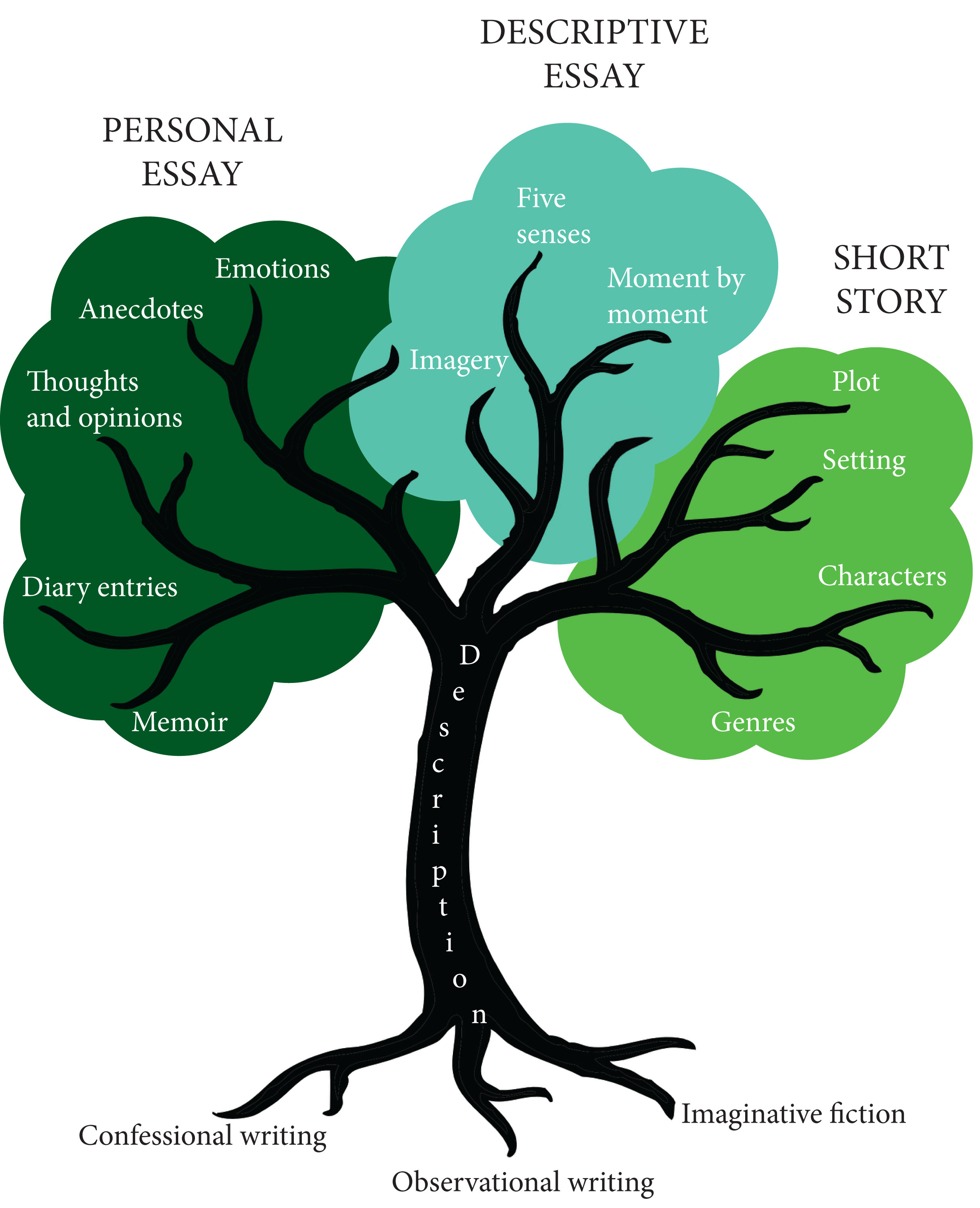
What are the basic differences between an essay and a short story?  An essay is non-fiction whereas a short story is fiction.  An essay can be anywhere from 1000 to 10,000 words.  A short story "should be able to be read in one sitting".  See Edgar Allan Poe's "Philosophy of Composition" (1846) at http://xroads.virginia.edu/~hyper/poe/composition.html.  An essayist shares his or her thoughts and beliefs.  A short story writer describes an experience or event.  An essay follows strict reason whereas a short story has the elements of plot, dialogue, setting, character and theme.

However, Sharon Lippincott points out that it doesn't hurt for an essay to have a bit of action and a short story to include a bit of self-reflection.  In fact, these are the stories that will connect with the reader.  Annie Dillard maintains that the essayist has more at his disposal than the short story writer. "The essay is and has been all over the map.  There's nothing you cannot do with it; no subject matter forbidden, no structure proscribed.

The "godfathers" of the essay are Thoreau, Twain and Poe while the expert short story writers are O'Henry, Stephen Crane and Jack London.  To learn more about essay writing, read Writing and Publishing Personal Essays by Sheila Bender.  Tom Bailey's On Writing Short Stories is a good source for writers as well.


Saturday, 25 April 2015

How to Land on the New York Times Bestseller List

The New York Times bestseller list is the gold standard for success in the writing field.  As editor Alan Rinzler asserts:  "It shouts:  'Read me!  I'm certified!'"  Some authors even buy their way onto the list.  However, most do it by good old fashioned hard work.  Here are nine tips to landing on the bestseller list, according to Mr. Rinzler (http://www.alanrinzler.com/blog/2011/09/12/what-authors-can-learn-from-the-bestseller-lists/).

1.  A Diverse List

As Anne Rice says:  "You can look at the New York Times bestseller list and you can be pretty sure that the writers on the list don't know each other very well."  The authors are diverse as well as the 23 different categories:  Combined Print and E-book Fiction, Hardcover, Advice, Political, Business, children's, etc.  There is no dominant category.  Alan Rinzler advises not to worry about trends. What's popular now might not be by the time your story is published. Visit http://www.nytimes.com/best-sellers-books/hardcover-fiction/list.html for a current list.


2.  Book Length Varies

"A book should be as long as it needs to be and no longer," states Alan Rinzler.  Don't pad it or cut it short and avoid going off on tangents, advises the editor.  The Help, by Kathryn Stockett, is 544 pages while Blind Faith, by C. J. Lyon, is 392 pages.  Heaven is for Real, by Todd Burpo, is only 192 pages while Unbroken, by Laura Hillenbrand, is 496 pages.


3.  E-books Rule

Alan Rinzler says that you can sell a large quantity of books in virtual e-book form.  Between 2008 and 2010, e-books experienced a 1039.6% hike in sales.  During the latter year, 114 million units were sold.


https://digitalreader.wordpress.com/2011/08/23/risi-study-shows-20-decline-in-paper-usage-by-2015/


4.  Self-Published Books are Legitimate Competition

Self-published works are landing on the New York Times bestseller list including Blind Faith (#4), The Mill River Recluse (#5) and The Abbey (#6) in 2011.  Customers are no longer waiting for the cheaper paperback versions of books to come out, but purchasing the E-book instead.  Alan Rinzler says that E-books are "faster, give the author more control and a bigger share of the profits".


5.  Film & TV Adaptations

The Help spent 107 weeks on the Fiction bestseller list in 2009.  Two years later the movie debuted grossing over $123 million.  Don't assume that your novel has no chance of being adapted for the big screen.


The Help movie poster courtesy http://thehelpsummerhomework.tumblr.com/.


6.  Bestselling Authors are Avid Self-Marketers

Top Ten Fiction and Non-Fiction Authors know how to market themselves including:  Lee Childs, Kathy Reichs, James Patterson, J. A. Jances, John Grisham and Johanna Lindsey.  "Non one can sell your book as well as you can," explains Alan Rinzler.  Readers prefer direct contact with the author through blogs, online reviews, websites, Twitter and Facebook.


All of Johanna Lindsey's novels landed on the New York Times bestseller list, many reaching #1, courtesy 
http://blogs.rediff.com/kansurespe1975/2015/04/18/download-defy-not-the-heart-book/.


7.  Write a Brilliant Book

Garth Stein, author of New York Times bestseller Racing in the Rain, says the surest way to land on the bestseller list is to write a "brilliant book".  You can buy your way on to the list, but it won't last. If you write a page turning book, however, you will enjoy lasting success.


8.  Find the Right Distributor or Become a Book of the Month Selection

"Target can make sleepy titles into bestsellers," says New York Times contributor Motoko Rich. When Sarah's Key, penned by Tatiana de Rosnay, was first published in 2007, its sales were dismal.  However, in 2008, Target chose the title as its Book of the Month Selection and it took off, landing on the New York Times bestseller list for over two years.  To read about the success of other Target selections, visit http://www.nytimes.com/2009/07/22/books/22target.html?pagewanted=all.


9.  Become a Book Club Selection

Divine Secrets of the Ya-Ya Sisterhood, by Rebecca Wells, had an unspectacular debut in 1996. However, it was chosen as a book club selection and its sales soared, hitting #1 on the bestseller list two years later.  It also became a motion picture starring Bette Midler.  For more information about the surprise bestseller, read http://www.people.com/people/archive/article/0,,20126454,00.html.


Thursday, 9 April 2015

The Silver Birch Award

The Silver Birch Award debuted in 1994 under the umbrella of the Ontario Library Association. Honouring books geared to Grades 3 to 6, this award recognized both Fiction and Non-Fiction books. Registered classes and/or groups read at least five books from an Official Selections List. They cast their votes in the Spring.  The first winner was Daniel's Story, written by Carol Matas.  Here are some of the titles that stand out for me:

1995 Polar:  The Titanic Bear (Daisy corning Stone Spedden)

The true story of a Steiff bear that, along with his owner, a 7 year old boy, survived the sinking of the Titanic.


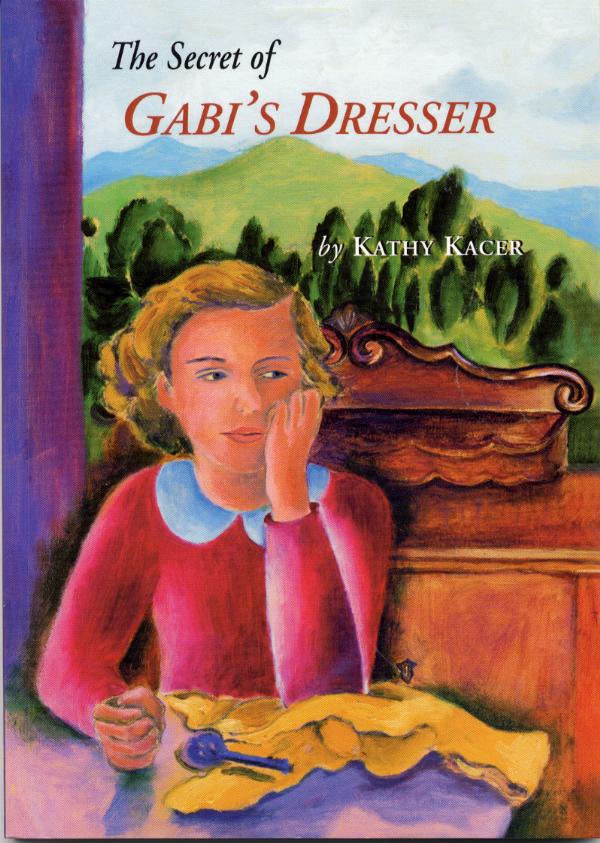
2000 The Secret of Gabi's Dresser (Kathy Kacer)

When the Nazis conducted house searches for Jewish children in Eastern Europe during WWII, Gabi hid in a dresser in her dining room.  The only piece of furniture that survived the war, it now sits in her daughter Kathy Kacer's Toronto home.


2003 Hana's Suitcase (Karen Levine)

Holocaust education centre operator Fumiko Ishioka received an empty suitcase from Auschwitz. Children visiting the centre asked her about the owner, whose name was written on the suitcase.  A year of research revealed that Hana Brady, born in Czechoslovakia in 1931, was deported along with many other Jews in her town, to Auschwitz during WWII.


2008 The Secret of Grim Hill (Linda De Meulemeester)

Cat Peters wins a soccer match and accepts the prize of going to a private school.  However, inside the halls of the old school, a mystery waits to be revealed about what happened to the last soccer team that attended the school and then disappeared.


2010 At the Edge:  Daring Acts in Desperate Times (Larry Verstraete)

Over twenty stroies about ordinary people who show extraordinary courage during the Halifax Explosion, the Tianamen Square protests, 9/11, Hurricane Katrina, etc.


2012 Undergrounders (David Skuy)

Twelve year old Jonathon's mom dies and his landlord kicks him out.  Facing life on the streets, he finds a group of kids living underground who steal to survive.  Jonathon steals hockey gear, suits up and is welcomed by his new "family", a hockey team.  How does he keep his homelessness a secret?


2013 Making Bombs for Hitler (Marsha Skrypuch)

Lida is kidnapped by the Nazis during WWII and forced to work as an Ostarbeiter in a German munitions factory making bombs.


2014 One Step at a Time:  A Vietnamese Child Finds Her Way (Marsha Skrypuch)

Brought up in a Vietnamese orphanage, Tuyet is rescued during the last airlift out of Saigon. Adopted by a Canadian family, she now faces surgery to correct her leg, crippled by polio.


For more information, visit http://www.bookcentre.ca/awards/silver_birch_award.