Showing posts with label imagination. Show all posts

Wednesday, 18 November 2015

J. K. Rowling's Harvard Commencement Address

"...I was still alive, and I still had a daughter whom I adored, and I had an old typewriter and a big idea." (J. K. Rowling)


On a Spring Day in 2008, J. K. Rowling delivered the commencement address at Harvard University. Her two themes were the fringe benefits of failure and an imagination.  She talked about how her parents, who shared an impoverished background, wanted her to get a "real job".  However, all she ever wanted to do was write stories.  While she wanted to study English Literature, they wanted her to study a more lucrative subject:  they settled on Modern Languages.  However, J. K. immediately switched to the Classics.  

J. K. said she didn't fault her parents for not wanting her to live in poverty.  As she explained;

"I cannot fault my parents for hoping that I would never live in poverty.  They had been poor themselves, and I have since been poor, and I quite agree with them that it is not an ennobling experience.  Poverty entails fear, and stress, and sometimes depression; it means a thousand petty humiliations and hardships.  Climbing out of poverty by your own efforts that is indeed something on which to pride yourself, but poverty itself is romanticized only by fools."

J. K. went on to point out that she suffered a failed marriage and ended up unemployed with a young child to raise.  She felt like the biggest failure.  However, ironically, out of her failure came her success.  She was more determined than ever to prove that she could make a success of her writing.  

"So why do I talk about the benefits of failure?  Simply because failure meant a stripping away of the inessential.  I stopped pretending to myself that I was anything other than what I was and began to direct all my energy into finishing the only work that mattered to me.  Had I really succeeded at anything else, I might never have found the determination to succeed in the one arena I believed I truly belonged.  I was set free because my biggest fear had been realised, and I was still alive, and I still had a daughter whom I adored, and I had an old typewriter and a big idea." 

J.K. went on to talk about her other point, the importance of having an imagination.  Of course, her imagination contributed immensely to the writing of the Harry Potter series.  However, having an imagination is important not only for a writer, but also for all human beings.  It gives of a greater gift:  empathy.  

"Now you might think that I chose my second theme, the importance of imagination, because of the part it played in rebuilding my life, but that is not wholly so.  Though I will personally defend the value of bedtime stories to my last gasp, I have learned to value imagination in a much broader sense. Imagination is not only the uniquely human capacity to envision that which is not, and therefore the fount of all invention and innovation.  In its arguably most transformative and revelatory capacity, it is the power that enables us to empathise with humans whose experiences we have never shared."

Note:  To find out how the Harry Potter series came into being, visit http://alinefromlinda.blogspot.ca/2015/10/jk-rowling-never-happier-than-when-she.html.


060508_COM_JC_425.jpg


Tuesday, 7 April 2015

Picture Books: Not Just for Young Children

"The picture book, a mainstay of children's literature, with its lavish illustrations, cheerful colours and large print wrapped in a glossy jacket, has been fading...Publishers cite pressures from parents who are mindful of increasingly rigorous standardized testing in school." 


I remember visiting a used bookstore with my daughter and her friend.  Jacqueline, an avid reader, was perusing the picture books.  Her friend said:  "My Mom says that I'm too old for picture books" and moved on to the chapter books.  That mom seems to be part of the majority these days.  Many parents see picture books as books for babies or toddlers, not for school age children, and certainly not for preteens.  

Picture book sales are down.  In 2010, Simon & Schuster reported that only 10% of their children's book sales were picture books, down from 35% a few years before.  Scholastic reported a 5% to 10% drop in their picture book sales over the years 2007 to 2010.  Consequently, publishers are less likely to offer contracts to picture book authors.    

"[Yet] literary experts are quick to say that picture books are not for dummies," says Julie Bosman of the New York Times (http://www.nytimes.com/2010/10/08/us/08picture.html?_r=0).  While chapter books have more text, picture books often have a richer vocabulary.  After all, in most cases, it's a parent who reads the picture book to the child.  Therefore, the picture book has to appeal to both child and adult, a demand that the chapter book need not fulfill.  

Karen Lotz, a publisher at Candlewick Press, maintains that picture books promote an analogue way of thinking.  "From picture to picture, as the reader interacts with the book, their imagination is filling in the missing themes."


Bill Glaister points out that picture books, especially advanced picture books (1000-2000 words), can be used in the classroom at all levels across the curriculum.  Here are some reasons why. 

1.  Picture books present complex ideas in a concrete manner.

2.  Picture books introduce moral issues.  They are a great way to start a discussion.  I met a Grade 7 & 8 teacher who used picture books to introduce Social Studies units.  For instance, a unit about Canadian Civil Rights could be introduced with the picture book Viola Desmond Won't Be Budged.

3.  Picture books lend humour to topics.  They can be a launching pad for drama.  I remember using The Berenstains Bears Tell the Truth for a Kindergarten skit about the importance of being honest, complete with a Little Tikes buggy (aka a shopping cart).

4.  Picture books often use complex literary devices.

5.  Picture books are a great way to introduce other genres.  If you want to discuss poetry, read Dr. Seuss books.

6.  Picture books can serve as models for the students' writing.

7.  Wordless picture books can serve as story starters.  Journey, by Aaron Becker, is a Caldecott Honor book.

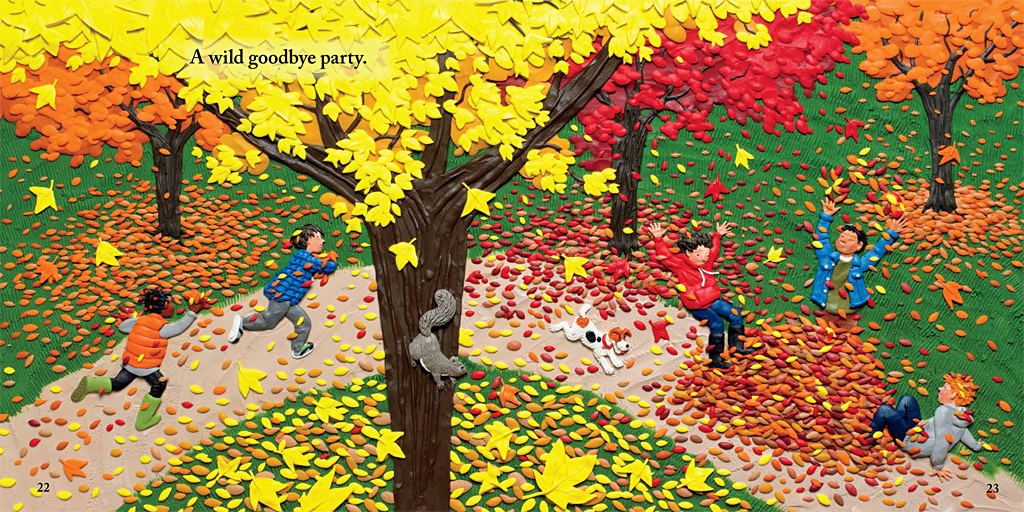
8.  Picture books can be a resource for budding artists.  For example, Picture a Tree by Barbara Reid is a great example of plasticene art.

For the entire article, visit (http://www.uleth.ca/education/sites/education/files/PictureBooksForOlderReaders.pdf).


Wednesday, 28 January 2015

Glenna's Goal Book

"Ask and it shall be given you; seek and you shall find; knock and the door shall be open." 
(Matthew 7:7)


In 1977, Glenna Salsbury was a single mom with three daughters, a car payment and a house payment.  She also had big dreams.  She attended a seminar about goal setting where the speaker talked about a principle called I x V + Reality (Imagination x Vividness = Reality).  Glenna put the theory to the test.  Knowing that the brain works in images rather than words, she decided to make a goal picture book.  She bought a scrapbook and filled it with pictures from old magazines which represented her dreams, including:

1.  a good looking man
2.  a woman in a wedding gown & a man in a tuxedo
3.  a bouquet of flowers
4.  a diamond
5.  a Caribbean Island
6.  a lovely new home
7.  new furniture
8.  a Vice President of a corporation

She studied her goal book regularly, imprinting the images on her brain.  Eight weeks later, a good looking man pulled up beside her in his sports car.  He asked her out on a date, where he presented her with a bouquet of flowers.  Within a year, he presented her with a diamond ring.  After two years of dating, they married in California.  They honeymooned on St. John's Island in the Caribbean.  A year later, they moved into their lovely home filled with new furniture.  At that point, Glenna showed her husband her goal book.  At the same time, she became vice president of human resources at her company.  Never give up on your dreams!  Glenna is living proof.

Source:  "Glenna's Goal Book", Chicken Soup for the Soul (1993) at http://www.chickensoup.com/book-story/36234/glennas-goal-book.

Click here to read about one woman's attempt to make a goal book:
http://thatprecariousgait.com/2011/04/24/you-cant-get-it-if-you-dont-ask-for-it/.


Thursday, 1 January 2015

Conceive, Believe, Achieve

"Imagination rules the world." (Napoleon Bonaparte)


Since today is the first day of 2015, I thought it would be a good day to focus on goals.  Anyone who reads my posts regularly knows that my dream is to publish a book.  My goal is easily identifiable.  Is it achievable, though?

Read my post "Whoever Believes Will Achieve" (http://alinefromlinda.blogspot.ca/2012/11/whoever-believes-will-achieve.html).  What stuck out in my mind when I re-read it recently was that the mind makes little or no distinction between image and reality if the image is vivid enough.  That is powerful stuff!  

Successful athletes use visualization techniques to improve their performance.  Once such athlete, Mary Lou Retton, used to carry around index cards to help her visualize nailing a gymnastics routine. Her Olympic medal haul included one gold, two silver and two bronze.

"Whatever the mind of man can conceive and believe, it can achieve." 

Napoleon Hill, author of the above quote, is a believer in visualization.  According to Brian Tracy, author of Goals:  How to Get Everything You Want -- Faster Than You Ever Thought Possible (see http://www.amazon.ca/Goals-Everything-Faster-Thought-Possible/dp/1605094110visualization) visualization activates "the law of attraction", drawing people, circumstances and resources into your life to help you achieve that goal.  Tracy also maintains that visualization activates "the law of correspondence".  If you change your mental pictures inside, it will change your outside world. You become what you think about most of the time.  

Brian Tracy says visualization includes four parts:

1.  frequency:  how often do you spend visualizing an image 
2.  duration:  how long do you spend visualizing an image 
3.  vividness:  how vivid or clear is your image
4.  intensity:  the amount of emotion you put into that image

If you are an archery expert, you will appreciate Tracy's analogy:  You can't hit a target if you can't see it.  The author recommends that you visualize late at night, thereby enabling your mind to accept that at a deeper level during sleep.  The other optimum time to visualize is early in the morning, before the mind is filled with the day's activities.  

"Have complete faith that your pictures will materialize."

According to Tracy, "[Visualization] can do more to help you step on the accelerator of your own potential than any other exercise you engage in."  So, as you write a list of new year's resolutions for 2015, remember:  Conceive a goal.  Believe that you can reach that goal!  Achieve it!