Showing posts with label Brooklyn. Show all posts

Tuesday, 4 April 2017

Bette Midler's New York Restoration Project

"These are a few of Bette Midler's unfavorite things:  litter on sidewalks; cars idling curbside; mattresses dumped along woodland trails; a grocery bag snagged in the branch of an elm.  It is things like these that make Bette Midler indignant." (http://www.travelandleisure.com/articles/bette-midlers-park-restoration-project)


It all started on a stretch of littered roadside in the Bronx in 1995.  Bette Midler, intent on effecting change, adopted a highway.  The singer and actress had fled southern California in the mid-1990's after a series of natural and man-made calamities:  "There were floods, wildfires, riots, the Northridge earthquake and then O.J.  I decided, 'I'm done.'"  The entertainer decided to move to New York City with her husband and daughter.  In the five boroughs of New York, she discovered so many problems she didn't know where to start.  She began with the basic task of picking up garbage and then branched out.  Midler noticed that garbage seemed to be a symptom of a much bigger problem.  A cleaner city could affect the city's psyche.

Before she knew it, Midler was planting trees and flowers in an effort to beautify the Big Apple.  The New York Restoration Project was born.  The project's current goals are to plant one million trees by 2017 (a goal achieved in 2015), revitalize the 52 New York City gardens owned by NYRP and bring back to life under-resourced parks and they are well on their way to achieving these aims.  The million trees were already planted by late 2015 and the city's parks and gardens are being transformed, one at a time.  Midler, who is not afraid to get her hands dirty, has remained committed to the project.


McCleod Community Garden after restoration courtesy 


Tuesday, 27 September 2016

Finnish Immigrants Murray, Isaac & Adelle Youman

"If you ever want to see Hell, take a boat in the middle of a hurricane in the middle of the Atlantic.  I was so sick that they had to tie me outside of the ship to keep me from going overboard.  I was watching waves that looked over a hundred feet high, the boat looked one quarter of its size." (Murray Youman)


A group of soldiers with snowsuits and skies lies on the snow, guns pointing to the right.

Finnish ski troops in Northern Finland circa 1940 https://en.wikipedia.org/wiki/Winter_War#/media/File:Finn_ski_troops.jpg


Isaac and Adelle Youman were born and raised in Helsinki, Finland.  Their brother, Murray, was born in Warsaw, Poland.  When their father, Herman, first set eyes on their mother, Greta, he said:  "She was the prettiest girl in town."  However, he was ten years older than her and she wasn't ready to marry.  

Herman was already working as a tailor at the age of fourteen; his employees were married men.  Later, Greta worked with him at their men's clothing factory.  The family lived in an upper middle class apartment with their parents, grandmother and uncle, along with two maids.  Isaac points out that, with their parents working all the time, they were brought up by the maids.  "We were a noisy Jewish family that spoke Yiddish as a primary language in Finland," explained Adelle.

While the family follolwed their Jewish religion, they also recognized the Christian traditions celebrated by their fellow Finns who were 99% Christian (Lutheran).  The siblings would go to the Helsinki synagogue to pray, three of only 2000 Jews in the city, but at home they would eat whatever they wanted.  

Murray remembers dodging bombs during the Finnish-Russian War. (also called the Winter War because it was fought on skis).  He saw his father dash into a burning building to save someone, only to have it blow up as soon as he emerged.  "Living next to a country which could swallow you up in no time at all was scary."  When Murray returned years later to get his birth certificate, he found that the hospital in which he had been born was destroyed during the war.  Adelle pointed out that it was the war that precipitated their immigration  Otherwise, they would not have left a country that had treated them so well for 12 years.  While they did not know English, America was safe:  free of pogroms, free of wars.

Herman and Greta only attended school for a few years.  As adults, they both signed up for night school.  While Herman quit shortly thereafter Greta stuck it out and received her high school diploma.  Adelle said that she was very bright, very gifted mathematically.  While Herman was had a knack for handling their customers, Adelle was the brains behind the business.  She took care of the books.

In 1940, the family decided to immigrate.  They took a train to Stockholm, Sweden, stopping every time their was an air raid, the passengers diving into the snow.  They took a second train to Oslo, NOrway where they boarded to the S. S. Bergensfjord.  The war was already underway and the trans-Atlantic crossing could have been a dangerous one.  The captain kept changing the flag on the ship to fool the submarines.   

To top it all off, the family experienced a hurricane.  "If you ever want to see Hell, take a boat in the middle of a hurricane in the middle of the Atlantic," explained Murray.  "I was so sick that they had to tie me outside of the ship to keep me from going overboard.  I was watching waves that looked over a hundred feet high, the boat looked one quarter of its size."

The boat reached America safely.  Murray reminisced:  "When I first saw it [the Statue of Liberty] I had tears in my eyes."  Because the family's papers were not in order, they were detained at Ellis Island for six weeks.  Segregated, Isaac and Adelle stayed with their mother while Murray stayed with their father.  Isaac remembers the Orientals being separated from the Causcasians, the officials fearful that the former would be bringing in infectious diseases.  In 1986, when the renovation started on the immigration station, Adelle asked her mother if she would like to visit.  "I'll never set foot there [Ellis Island] again."   


Settling in Brooklyn, it was the first time that the siblings had lived alongside Blacks.  Murray found it strange the divide between Blacks and Whites.  Across the street was a park filled with Black children playing.  Herman grabbed his kids, placed them right in the middle of the Black kids, and snapped a photo.

It was quite an adjustment for the family which was privileged enough to send their children to private schools back in Finland, and now they attended public schools.  While they lived as part of the upper middle class back home, they lived in a ghetto neighbourhood in Brooklyn.  Isaac remembers being made fun of for his heavy accent.  However, they persevered.  Today, all three siblings are professionals, happy to live in America.


Children playing hopskotch on a Brooklyn street circa 1950 courtesy http://iconsofnewyork.com/.


Sunday, 25 September 2016

Portuguese Immigrant Roberta Estobar

"I certainly feel like I'm very much a part of the American dream." (Roberta Estobar)


Alto Douro wine region of Portugal courtesy http://whc.unesco.org/en/list/1046.


Roberta Estobar was born and raised in Portugal where her father ran a rubber plantation.  Her mother taught school to the children of the plantation workers in a building with a dirt floor and tin roof.  Living in a subtropical country, they constantly battled mosquitoes.  Roberta contracted malaria and was treated with quinine.  Feverish, she alternated between hot flashes and cold sweats, on the verge of a coma.  The doctor recommended that she, along with her father who had also contracted the disease, leave the country.

Roberta's mother nursed her and her father on the boat ride to Portugal.  They settled in a suburb of Porto,  Once Roberta and her father's health returned, they used to dance in the kitchen to the church chimes.   Roberta played with her pet rabbits that she kept on their property.  The countryside surrounding Porto had lots of vineyards.  They would wash down the men's feet and legs and then the men would climb into giant vats and crush the grapes.


Wine treaders in Alto Douro region of Portugal courtesy 


Roberta's father commuted two hours to work in the bank in the city.  After three years, he realized there was no future in Portugal.  His brother in law kept urging him to come to America.  The family booked a cabin on the S. S. Olympic in 1925.  At Ellis Island, they gave Roberta biscuits and milk.  After a few months, her father found work at a New York City factory.  That day, he played the violin, an instrument he had first learned when he was seven years old.  Her mother was hired at the Ansonia Clock Factory.  The family settled in Brooklyn.

While they did live in an immigrant neighbourhood, Roberta's mother shopped at English speaking stores in order to learn the language.  Roberta quickly picked up English once she started school.  Mrs. Osley would look after Roberta when her parents were at work.  Mrs. Osley was the first one to pull Roberta in a sled; it was the native Brazilian's first snowfall.

At 21, Roberta voted for the first time, giving her father's citizenship number.  However, after hearing about a woman from Cuba denied the vote because she had been born in another country, she decided to pursue American citizenship.  "I certainly feel like I'm very  much a part of the American dream," explained Roberta.


Ansonia Clock made at the Brooklyn Factory which operated from 1851 to 2006 courtesy https://www.pinterest.com/pin/482588916295733855/.

Friday, 9 September 2016

German Immigrant William Reinhart

"We walked up Broadway, our father and mother in the lead, and the eight little ducklings following behind." (William Reinhart)


Williamsburg Bridge | Call# HERZ 0471

David's barbershop in Williamsburg, Brooklyn courtesy http://www.bklynlibrary.org/ourbrooklyn/williamsburg/.


Born in Milan, Italy, William Reinhart was one of twelve children born to a glassware manufacturer from Stuttgart, Germany.  His much older brothers, who served in the German military, warned their father that war was imminent and that if he didn't want to serve, he should leave the country.  In 1909, Mr. Reinhart immigrated to America.  His wife and children followed a year later, enduring a 21 day boat ride in close quarters over "The Big Pond".  "We walked up Broadway, our father and mother in the lead, and the eight little ducklings following behind."  Little William and his siblings had never seen tall buildings before.  


Looking west on Broadway along the elevated train tracks circa 1920's? courtesy http://wahcenter.net/about/about-the-landmark-building/.


The family settled in a cold water flat in a German neighbourhood in Brooklyn.  A short time later, two men from Tammany Hall, the New York Democratic headquarters, paid the Mr. Reinhart a visit.   In exchange for his pledge to vote Democrat, along with his eight children, the Tammany men said that they would secure his citizenship papers in six months (normally a five year process).  Mr. Reinhart, smelling a rat, refused.  Every since William could vote, he has voted Republican.  As an adult, William was hired at an international steamship company where "he worked his way up from a lowly billing clerk to traffic manager".  As of 1997, William was alive and well living in Harrisburg, Pennsylvania. (https://www.amazon.com/Ellis-Island-Interviews-Immigrants-Stories/dp/0760753091)


Ellis Island immigrants circa early 1900's courtesy 

Tuesday, 6 September 2016

Norwegian Immigrants Lisa & Laura Tollessen

"Lisa celebrated her eighth birthday on the boat ride.  After their mother's death in 1929, they returned with their father in Norway, lived there for five years and returned in 1935."


.

Arendal, Norway postcard circa 1920s courtesy https://www.unc.edu/~rowlett/lighthouse/nors1.htm


Lisa and Laura Tollessen were born and raised in Norway, two of eleven children born to Mrs. Tollessen.  Sadly only four survived.  Their mother was a dark haired beauty with velvety brown eyes.  She was "very good natured" and "a lot of fun".  Their father, on the other hand, was very strict.  He would spend two years on the sea with the merchant seamen as a chief engineer.  

Lisa remembers one Christmas when she found a doll hanging from the Christmas tree given to her by her grandfather.  He was sad when he found out the family was planning to immigrate to America.  They arrived in New York in 1925.  They were met by their cousins who had a big bunch of bananas for them, something they had never seen in Norway.  

They found an apartment in Brooklyn and their father found a job as a dock builder.  Laura says that once they started school, they learned English quickly, despite the fact that the spoke Norwegian at home.  Their mother, however, did not learn English.  

Only four years after immigrating, their mother passed away.  In 1930, the family returned to Norway and the girls lived with their grandparents.  They enrolled again in school over there.  Five years later, they returned to America with their father, this time to stay.  

Lisa went on to marry and have five wonderful children  "They're my life.  That's what I live for," she explained.  Laura agreed.


Brooklyn apartments circa 1920s courtesy http://www.gettyimages.ca/.

Monday, 20 July 2015

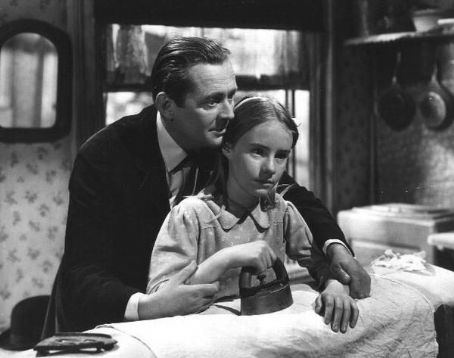
Elia Kazan's "A Tree Grows in Brooklyn"

Based on the novel by Betty Smith, A Tree Grows in Brooklyn follows an Irish American family lives in Brooklyn during the first two decades of the 20th Century.  The mother, Francie, got pregnant twice as a teenager and is raising her two children.  She is forced to be the main breadwinner as the father, Johnny, who is a singing waiter, cannot hold down a job due to his alcoholism.

The daughter, Francie, escapes from her family's poverty and her father's alcoholism through books.  She sits on the step of the apartment building and looks out the window at the Tree of Heaven, a tree native to China, which grows in vacant lots in New York City.  Francie is quite bright and her father tries to encourage her.  She attends a squalid overcrowded school in Brooklyn, but her father arranges for her to go to a much better school in the city.

Francie's brother, Neeley, has always been the healthy robust one of the two children.  The mother has always considered him to be her favourite, though she tries not to show it.

The mother discovers she is pregnant in 1915 and when the father finds out, he goes into a drunken stupor, dying of alcohol related pneumonia at Christmas time.  An unscrupulous undertaker absconds with the father's life insurance money.  Without money for high school, the two children are forced to find jobs.  Francie works in an artificial flower factory and press clipping office.  Her brother Neeley becomes a talented jazz piano player following in the artistic footsteps of his father.

Francie takes some courses and gets accepted at the University of Michigan.  She is courted by an older man and gets engaged.  Packing up her things to leave the apartment, she spies the Tree of Heaven again.  The tree is just like her family:  despite people's efforts to destroy it, it keeps growing.

The play A Tree Grows in Brooklyn premiered on Broadway in 1945, starring Peggy Ann Garners as Francie, Dorothy McGuires as the mother, James Dunn as the father and Ted Donaldson as the brother.


A scene from the movie A Tree Grows in Brooklyn courtesy http://catherinezhang.me/2013/05/14/movie-review-a-tree-grows-in-brooklyn/.