Showing posts with label American immigrants. Show all posts

Thursday, 15 September 2016

Russian Immigrant Betty Garoff

"When the soldiers came to look for us, we were hidden in a closet.  She fed them food and drinks until they were intoxicated." (Betty Garoff)


Shoemakers making army boots circa 1903 to 1905 courtesy http://www.thehistorialist.com/2012/11/at-museum-northampton-museums-art.html


In 1913, Betty's Garoff's father immigrated to the United States to avoid being drafted into the Russian Army during the First World War.  Her mother, still pregnant with Betty, sold salt illegally to put food on the table.  At the age of four or five, Betty and her brother were separated from their mother when their town was invaded by the enemy.  The children slept during the day in barns and travelled by night.  Eventually, a couple who knew Betty's grandfather, took them in and raised them as their own grandchildren.  "When the soldiers came to look for us, we were hidden in a closet.  She fed them food and drinks until they were intoxicated.

Reunited with her mother, her father had saved enough money to buy the family tickets to America. The family, with just the clothes on their back, made it as far as Amsterdam when Betty's brother developped an infection from a nail, thereby failing to pass the physical exam.  Their original visa had been for a particular ship on a particular day.  Now it was rendered null and void.  Betty's mother took her two children to Poland to apply for another visa.  They stayed with relatives in a Warsaw ghetto apartment.  Betty remembers the curfew that everyone had to observe; no one was permitted to leave or enter the gate after a certain hour.

In December of 1921, the Carmania set sail for America.  Betty and her family, staying in steerage, survived on hard boiled eggs and raw potatoes.  The Russian farm girl was bewildered by the sheer number of people coming and going at Ellis Island.  Betty waited and waited for her father to come and get her; all of her shipmates had already left when he finally arrived.  It was the first time he had laid eyes on her.  Her mother suggested:  "Stand up and show your father how tall you are."  The first time Betty saw New York's lower east side, she spotted immigrants huddled around metal drums filled with fire, warming their hands.


Betty and her family got a furnished apartment with an outdoor toilet in New York City.  Within a year and a half, her father opened a shoe repair business in the Bronx.  Because Betty only knew how to speak Yiddish, and not English, her classmates would help her to converse with the teacher.  Ten years after immigrating, Betty's mother gave birth to another girl, followed five years later by a boy.  Betty married a doctor, moved to Chicago and "lived a wonderful life."


The Bronx circa 1930's courtesy

Saturday, 10 September 2016

Austrian Immigrant Estelle Miller

"Even the stones in the sidewalk are not kosher." (Estelle Miller's grandfather)


Estelle Miller grew up in a small town in Austria, part of one of 50 Jewish families.  Bilche Zlote had a synagogue and a church.  While the majority of its citizens were Christian, they lived in harmony with the Jews.  Estelle lived on a farm with apple, cherry and plum trees.  Her family owned their own cow and chickens.  Her mother would collect eggs and sell them to the locals.  While they had enough to eat, the Miller's were poor.  Frau Miller worried about providing a dowry for her two daughters when they married.  Her brother, who had immigrated to America, urged her to come.  


A family in Bilche Zlote announced they were immigrating to America and Estelle's sister wanted to go with them.  However, her grandfather, not wishing her to leave Austria, warned:  "Even the stones in the sidewalk are not kosher."  After Estelle's grandfather passed away, her sister sailed to the New World.  Her father followed a short time after.  Eventually, Estelle's mother sold the farm and the animals and planned her passage to America, along with her daughter.  Worried about a china bowl which was a family heirloom, she refused to pack it in her suitcase and gave it to Estelle to carry, all the way to Hamburg, Germany.

In 1909, the mother and daughter made it to America in only six days on the Hamburg-American Line, the first boat to do so.   Estelle's older sister's trip had lasted a month, during which she got sick and almost died. They travelled in steerage, refusing to eat the meat because it was not kosher.  Upon entering New York Harbor, Estelle spotted a giant statue.  No one knew who it was.  "Don't you know?" asked one passenger.  "That's Columbus."  

At the immigration station on Ellis Island, the doctor examined Estelle for glaucoma in a rough manner.  Amidst the screaming babies, all of a sudden a door opened and a black man walked into the room.  Estelle, never having seen a black person before, dropped the china bowl which shattered.  


Austrian farmhouse circa 1900 courtesy http://zelltree.net/ZStephanDescendants.htm.


Tuesday, 6 September 2016

Norwegian Immigrants Lisa & Laura Tollessen

"Lisa celebrated her eighth birthday on the boat ride.  After their mother's death in 1929, they returned with their father in Norway, lived there for five years and returned in 1935."


.

Arendal, Norway postcard circa 1920s courtesy https://www.unc.edu/~rowlett/lighthouse/nors1.htm


Lisa and Laura Tollessen were born and raised in Norway, two of eleven children born to Mrs. Tollessen.  Sadly only four survived.  Their mother was a dark haired beauty with velvety brown eyes.  She was "very good natured" and "a lot of fun".  Their father, on the other hand, was very strict.  He would spend two years on the sea with the merchant seamen as a chief engineer.  

Lisa remembers one Christmas when she found a doll hanging from the Christmas tree given to her by her grandfather.  He was sad when he found out the family was planning to immigrate to America.  They arrived in New York in 1925.  They were met by their cousins who had a big bunch of bananas for them, something they had never seen in Norway.  

They found an apartment in Brooklyn and their father found a job as a dock builder.  Laura says that once they started school, they learned English quickly, despite the fact that the spoke Norwegian at home.  Their mother, however, did not learn English.  

Only four years after immigrating, their mother passed away.  In 1930, the family returned to Norway and the girls lived with their grandparents.  They enrolled again in school over there.  Five years later, they returned to America with their father, this time to stay.  

Lisa went on to marry and have five wonderful children  "They're my life.  That's what I live for," she explained.  Laura agreed.


Brooklyn apartments circa 1920s courtesy http://www.gettyimages.ca/.

Sunday, 4 September 2016

The New Colussus

Image result

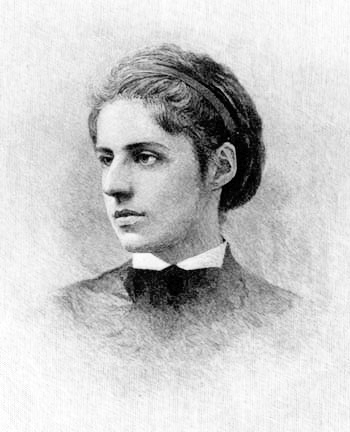
Emma Lazarus circa 1872 courtesy https://en.wikipedia.org/wiki/Emma_Lazarus/.


Not like the brazen giant of Greek fame,
With conquering limbs astride from land to land;
Here at our sea-washed, sunset gates shall stand
A mighty woman with a torch, whose flame
Is the imprisoned lightning,and her name
Mother of Exiles.  From her beacon-hand
Glows world-wide welcome; her mild eyes command
The air-bridged harbor that twin cities frame.

"Keep ancient lands, your storied pomp!" cries she
With silent lips.  "Give me your tired, your poor,
Your huddled masses 
yearning to breathe free
The wretched refuse of your teeming shore.
Send these, the homeless, tempest-tost to me
I lift my lamp beside the golden door."

The Statue of Liberty, dedicated in 1886, sits on Liberty Island.  New immigrants used to pass by it on their way to the immigration station on Ellis Island.  Emma Lazarus' sonnet, The New Colussus, was written in 1883 and inscribed on the base of the State of Liberty in 1903. 


State of Liberty circa early 1900's when poem was inscribed courtesy http://cityroom.blogs.nytimes.com/2011/10/26/how-a-sonnet-made-a-statue-the-mother-of-exiles/?_r=0.

Sunday, 10 July 2016

Ellis Island

Germans, Italians, Irish and Chinese stood in long queues, all with hopes for the Promised Land.  Exhausted from their arduous journeys, they had to undergo a registration process including a six second medical exam and a language test.  Many would pass the tests, others would fail, returning to their homeland with their hopes dashed.  Still others would find a way to cut through the red tape (see "The Memory Coat" at http://alinefromlinda.blogspot.ca/2013/05/may-27.html).

The rust coloured brick building, resembling something from 19th Century Russia, served for 32 years as the portal to America for 12 million immigrants (see /"The Ghosts of Ellis Island" at http://alinefromlinda.blogspot.ca/2012/08/august-10.html).  Now the 27-acre island is the site of an immigration station which traces the history of the immigrants and serves as an archive for their data.


U.S. Stamp courtesy http://www.zazzle.ca/gifts