Monday, 10 April 2017

Boston 1915: The City That Is To Be

"Insisting that the city needed only to cultivate cooperation and wise planning in order to build a better world, the movement's optimistic leaders hoped the promise of this glimmering future could unite commercial tycoons and labor organizers, clergymen and politicians, Harvard professors and immigrant families." (https://www.bostonglobe.com/ideas/2015/01/02/how-boston-dreamed-its-future-century-ago/28AZpbZkcrp8fgbS4PawpL/story.html)


The campaign, called Boston-1915, is little-remembered today, but it was a movement with great sweep and ambition. They launched publicity campaigns and publications, including a reform-minded magazine called New Boston, and began an assault on urban problems from almost every possible angle.

The New Boston magazine circa 1911 includes the "Boston 1915" plan to revitalize the city courtesy https://www.bostonglobe.com/ideas/2015/01/02/how-boston-dreamed-its-future-century-ago/28AZpbZkcrp8fgbS4PawpL/picture.html?p1=Article_Gallery.


Boston was a city on the move.  From 1860 to 1910, its population had nearly doubled.  The establishment, previously run by old line Yankees, was being challenged by immigrants and working class families.  The gap between rich and poor widened as housing prices grew and living spaces shrunk.  The city feared that without major changes, it would lose its ranking as an enlightened, yet bustling, metropolis.


                                Leaders convened a committee on housing, which took aim at the private real estate market and the tenement owners who devoured workers’ wages, proposing strict building codes and better inspections.


Businessman Edward Filene and lawyer/journalist Louis Brandeis championed the Boston 1915 urban renewal project.  Forty years of unregulated capitalism had produced a city that was undesirable to live in.  The planners maintained that one could not separate the city's commercial and social elements and therefore devised a plan that would meet both needs.  Looking at the run down tenements in the city centre, they proposed strict building codes.  Another suggestion was for the city to "finance downtown subways and rural trolleys to connect good housing with good jobs".


Rural trolleys connecting "good jobs with good housing" circa early 1900's courtesy https://www.bostonglobe.com/ideas/2015/01/02/boston-future-early-century/uMA0jiwmk1LKTu7BGTfdpL/story.html?pic=7.


There was a socialist, "cradle-to-the-grave" element to their rhetoric:  "We propose that it shall be possible for a willing worker earning an average wage to live, himself and his family, healthfully and comfortably; to bring up his children in good surroundings; to educate them so they may be truly useful, good citizens; and to lay aside enough to provide himself and his wife in their old age."


Jewish businessman and philanthropist Edward Filene believed in all Bostonians working together, commercial and government, Jews and Catholics, rich and poor, to make a better Boston courtesy http://archivesofthecentury.org/myportfolio/edward-filene/.


In 1909, a Copley Square exhibit gave the public images of what Boston 1915 would look like.  One exhibit served as a metaphor for civic cooperation:  one set of rotating discs spun disconnectedly, failing to move the hands of a clock; the other set worked together and successfully moved the clock forward.  Another exhibit featured "talking arc lights" while the "parks and playgrounds' exhibit included zoo, aquarium and freshwater garden.  A third displayed a regional transit systems connecting all corners of the city.


Insisting that the city needed only to cultivate cooperation and wise planning in order to build a better world, optimistic leaders behind the exhibit hoped the promise of this glimmering future could unite commercial tycoons and labor organizers, clergymen and politicians, Harvard professors, and immigrant families.


Mayor John Fitzgerald, the grandfather of President John F. Kennedy, stated:  "The time has gone by when our whole duty as citizens consisted of the casting of a ballot and the payment of a tax bill."  Filene, one of Boston's richest businessman, called for the Boston 1915 planners and the labour unions to work together in a common cause.  Brandeis, the journalist, created a new publication New Boston with the article "What a City Plan Could Do for Boston".  For more on John Fitzgerald, visit http://www.jphs.org/20thcentury/woodbourne-and-the-boston-1915-movement.html.


These issues have largely remained with Boston as 2015 begins. Increasingly we find ourselves in what historian Daniel Rodgers calls an “age of fracture,” as the glue of commonality dissolves and our shared future falls apart.


Sunday, 9 April 2017

Philadelphia Design Influenced by Vienna Ringstrasse

tour gallery

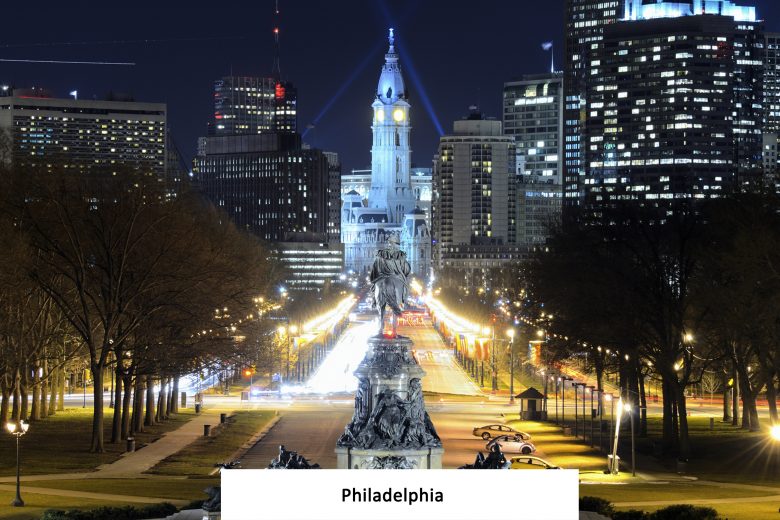
Philadelphia was rated as one of the Top Ten Cities for Parks in the World by Frommers courtesy https://comforttour.com/holiday/philadelphia-gettysburg-bus-tours-from-toronto/.


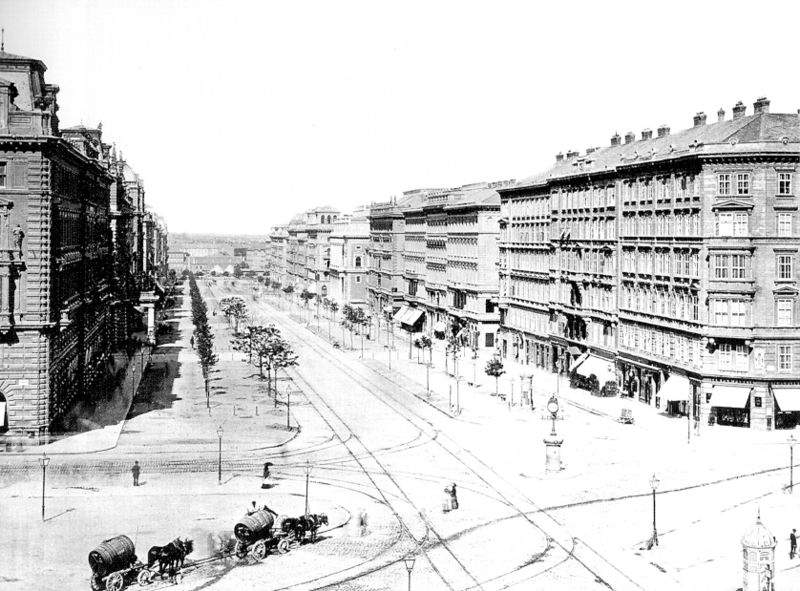
The City Beautiful Movement of the 1890's and early 1900's not only influenced Washington DC and Chicago, but also Philadelphia.  The movement came about as a reaction to the physical decay and congestion of America's urban centres.  Architects Danile Burnham and Andrew Jackson Downing were influenced by projects in Europe such as Vienna's Ringstrasse, Baron Haussmann's redesign of Paris and Idefons Cerda's work in Barcelona.  The goal was to create urban areas with "wide boulevards,ennobling buildings and manicured parklands to allow people of all backgrounds spaces for reflection and recreation."


After the Civil War, the city of Brotherly Love had grown to 700,000 people.  Its factories, refineries and shipyards emitted significant amounts of pollution which called for a beautification of the city.  Environmental groups like the City Parks Association and the Garden Club of Philadelphia campaigned for grand Beaux Arts architecture, boulevards in North Philadelphia, a city wide playground system, a park along the Schullkill River and a system of radial boulevards for South Philadelphia similar to Washington DC's.


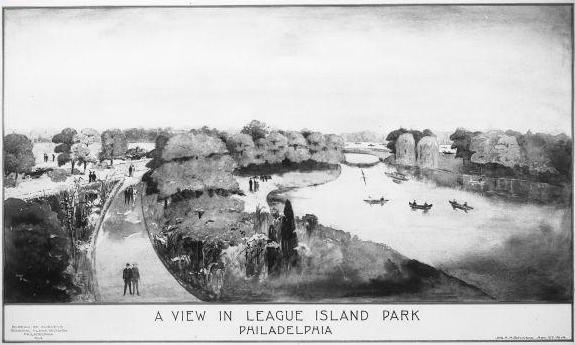
Black and white illustration of a park along a body of water with trees and wide walkways.

League Island Park (later FDR Park) circa 1912 courtesy http://philadelphiaencyclopedia.org/archive/city-beautiful-movement/.


Local architects Albert Kelsey and David K. Boyd proposed the clearing of two city blocks to make Independence Hall, the original city of the Capital, more visible.  While it took decades, the resulting Independence Mall came to fruition after World War II.  A Parisian style parkway connecting Center City and Fairmount Park got underway in 1907.  The City Parks association created League Island Park in 1912.  Today it is called FDR Park.  By 1930, much of Fairmount Parkway, which included the Free Library, Rodin Museum, Municipal Court, Logan Circle and the Philadelphia Museum of Art was completed or under construction.


Image result

Independence Mall circa 1952 courtesy https://en.wikipedia.org/wiki/Independence_Mall_(Philadelphia).


Washington Square was beautified with statuary and refurbished fountains thanks to the Philadephia Fountain Society.  Two high rises, Penn Mutual and the Curtis Buildings, reflected "City Beautiful sensibilities".  In 1933, Alfred P. Shaw designed 30th Street Station in the Neoclassical/Art Deco Design, commissioned by the Pennsylvania Railroad.


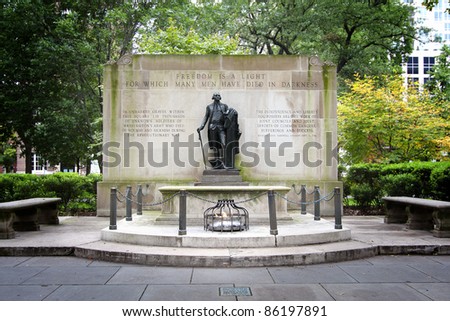
Grave of the Unknown Soldier at Washington Square courtesy https://www.shutterstock.com/search/washington+square.

Saturday, 8 April 2017

Richmond, Virginia's Monument Ave


The unveiling of the Robert E. Lee monument circa 1890 courtesy https://en.wikipedia.org/wiki/Monument_Avenue#/media/File:1890_Lee_statue_unveiling.jpg.


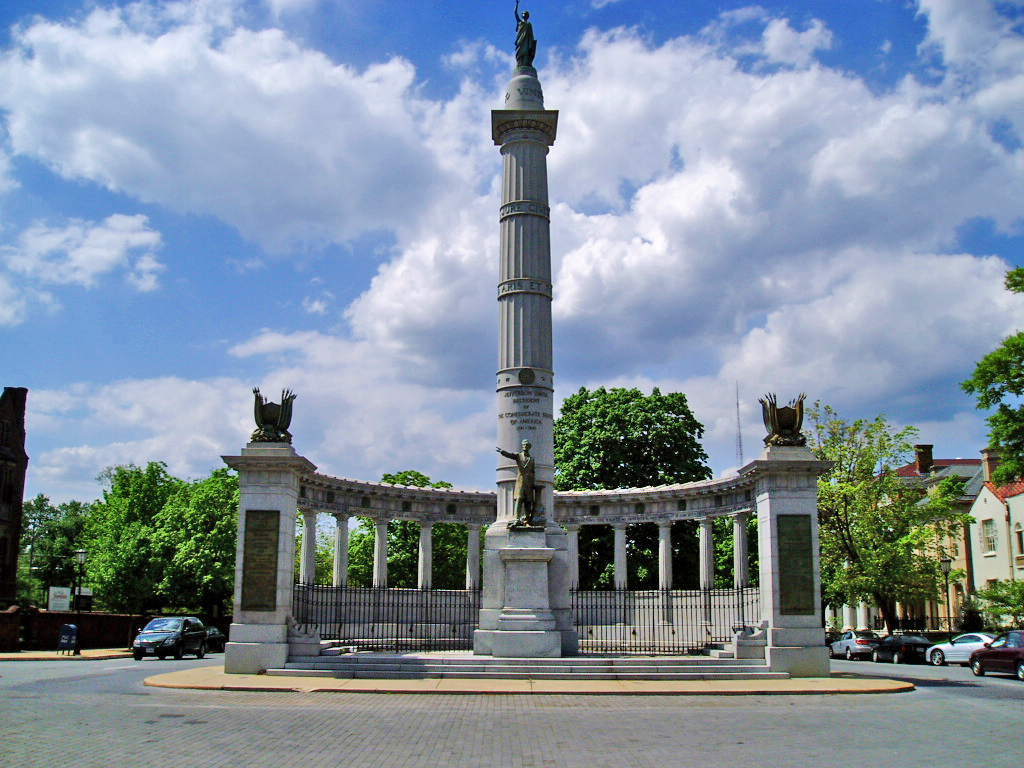
Richmond Virginia's Monument Ave is a tree lined grassy mall separating the east and west bound lanes punctuated by statues of Civil War leaders Robert E. Lee, Thomas "Stonewall" Jackson, JEB Stuart and Jefferson Davis.  On May 29, 1890 the crowd swelled to 100,000 to watch the unveiling of the first monument, General Lee.  Oceanographer Matthew Fontaine Maury was added in 1929. Between 1900 and 1925, Monument Ave saw the construction of architecturally significant houses, churches and apartment buildings.

The avenue, filled with mansions, was originally home to Richmond's upper class.  However, by the 1950's and 1960's, many of the mansions were divided into apartments and sublet.  In 1970, the Monument Ave Preservation Society was established to protect the beautiful buildings.

Monument Ave is the site for many events including Robert E. Lee's birthday, the Sons of Confederate Veterans, the Monument Ave 10K Race and the Easter on Parade where Richmond residents show off the latest styles in Easter bonnets.


Jefferson Davis Monument courtesy https://en.wikipedia.org/wiki/Monument_Avenue.


Friday, 7 April 2017

Cleveland: Part of the City Beautiful Movement


Daniel Burnham, who designed the World's Columbian Exposition in 1893, also designed a plan for the city of Cleveland in 1903.  The plan was part of the City Beautiful Movement of the early 1900's which believed that "beautification, personified by ample park space and grand, dignified buildings, would instill civic and moral virtue in city residents and revitalize urban areas that were increasingly perceived by the wealthy as undesirable places to work and live."(https://clevelandhistorical.org/items/show/56#.WOfHmGnyuM8)

Following the Roman Classicism School of Beaux Arts, Burnham sketched out six buildings clustered around a Mall, similar to the Washington Mall.  The buildings included:


  • the Federal Building of 1910 (now the Howard Metzenbaum US Courthouse
  • the Cuyahoga County Courthouse (1911)
  • City Hall (1916)
  • Public Auditorium (1922)
  • Cleveland Public Library (1926)
  • The Board of Education Building (1930)
  • a 7th building, the Cuyahoga Administration Building (1957) was torn down in 2014 to make way for a Hilton Hotel
While Cleveland has lost much of its former glory and population after the decline of the steel industry, all six buildings from the original city plan remain intact.  For more information about Cleveland, visit http://alinefromlinda.blogspot.ca/2013/09/cleveland-mistake-on-lake-vs-best.html.


Thursday, 6 April 2017

The Chicago Plan: Paris of the Prairie

"The lakefront belongs to the people.  Not a foot of its shores should be appropriated to the exclusion of its people." (Daniel Burnham)


The World's Columbian Exposition of 1893 held in Chicago helped spark America's City Beautiful Movement.  Architect Daniel Burnham planned the Exposition grounds, featuring the White City, and known for its grand boulevards, classical building facades, monuments and lush gardens.  His style, Classicism, was adopted for the next 15 years in cities like Washington D.C., Cleveland and San Francisco.  For more information about The World's Columbian Exposition, visit http://alinefromlinda.blogspot.ca/2014/07/july-1.html.


World's Columbian Exposition in Chicago circa 1893 courtesy https://www.pinterest.com/oasispam/meet-mythamerica-1893-columbian-exposition/.


Daniel Burnham, who studied cities in Europe, co-designed the 1909 Chicago Plan, a sort of "Paris on the Prairie".  Burnham, whose motto was "Make no little plans", called for:  lakefront improvements, a regional highway system, railway terminal improvements, new outer parks, systemic arrangement of streets and civic or cultural centres. (https://en.wikipedia.org/wiki/Burnham_Plan_of_Chicago)


Chicago's Museum of Science & Industry, the former Palace of Fine Arts from the World's Columbian Exposition circa 1893 courtesy 


The Chicago Plan recommended using landfill to expand its lakefront, a plan which was implemented.  Today, only 4 miles out of the 29 lakefront miles are not public parkland.  Locals and tourists walk or cycle along the lakefront.  Sailboats anchor offshore.  Chicago's lakefront is one of its best features.


Chicago's lakefront courtesy 


As for the systemic arrangement of Chicago's streets, many of the planned recommendations were followed.  The city widened and extended Michigan Ave, the famous shopping boulevard.  Roosevelt Road was also widened.  Wacker Drive and Congress Parkway were created.

Burnham proposed a cultural centre in Grant Park, a plan that was shot down due to a Supreme Court decision not to build any further in the Park.  However, Burnham's partner, Edward Bennett, designed the Buckingham Fountain in Grant Park, influenced by a similar fountain at the Palace of Versailles in France.  The rococo wedding cake style fountain was the biggest in the world at the time of its construction in 1927.  For more information about Grant Park, visit http://alinefromlinda.blogspot.ca/2014/07/july-12.html.


Wednesday, 5 April 2017

Detroit Rises From The Ashes

While about one third of Detroit's abandonned buildings have been scheduled for demolition, some have been restored.  The once glorious city was the site of architectural marvels.  At its peak in 1950, the Motor City had 2 million people.  Immediately after the Detroit Riot in 1967, 140,000 whites left the city.  Thousands more followed in the following years.  Today, the city has less than 700,000 people.  President Obama set aside federal funds to help Detroit get back on its feet.  Here is the evidence that initiative.

1.  The Kendrick Manufacturing Co.


2.  Grand Army of the Republic Building

Grand Army of the Republic Building Then

Grand Army of the Republic Building Now


3.  Hotel Shelby Ballroom

Hotel Fort Shelby Ballroom Then

Hotel Fort Shelby Ballroom Now


4.  The Book Cadillac Hotel Dining Room

The Book-Cadillac Hotel Dining Room Then

The Book-Cadillac Hotel Dining Room Now


5.  Orchestra Hall

Orchestra Hall Then

Orchestra Hall Now


6.  Studebaker Plant

Studebaker Plant Then

Studebaker Plant Now


7.  David Whitney Building


8.  Fisher Building


Tuesday, 4 April 2017

Bette Midler's New York Restoration Project

"These are a few of Bette Midler's unfavorite things:  litter on sidewalks; cars idling curbside; mattresses dumped along woodland trails; a grocery bag snagged in the branch of an elm.  It is things like these that make Bette Midler indignant." (http://www.travelandleisure.com/articles/bette-midlers-park-restoration-project)


It all started on a stretch of littered roadside in the Bronx in 1995.  Bette Midler, intent on effecting change, adopted a highway.  The singer and actress had fled southern California in the mid-1990's after a series of natural and man-made calamities:  "There were floods, wildfires, riots, the Northridge earthquake and then O.J.  I decided, 'I'm done.'"  The entertainer decided to move to New York City with her husband and daughter.  In the five boroughs of New York, she discovered so many problems she didn't know where to start.  She began with the basic task of picking up garbage and then branched out.  Midler noticed that garbage seemed to be a symptom of a much bigger problem.  A cleaner city could affect the city's psyche.

Before she knew it, Midler was planting trees and flowers in an effort to beautify the Big Apple.  The New York Restoration Project was born.  The project's current goals are to plant one million trees by 2017 (a goal achieved in 2015), revitalize the 52 New York City gardens owned by NYRP and bring back to life under-resourced parks and they are well on their way to achieving these aims.  The million trees were already planted by late 2015 and the city's parks and gardens are being transformed, one at a time.  Midler, who is not afraid to get her hands dirty, has remained committed to the project.


McCleod Community Garden after restoration courtesy