Saturday, 10 September 2016

Austrian Immigrant Estelle Miller

"Even the stones in the sidewalk are not kosher." (Estelle Miller's grandfather)


Estelle Miller grew up in a small town in Austria, part of one of 50 Jewish families.  Bilche Zlote had a synagogue and a church.  While the majority of its citizens were Christian, they lived in harmony with the Jews.  Estelle lived on a farm with apple, cherry and plum trees.  Her family owned their own cow and chickens.  Her mother would collect eggs and sell them to the locals.  While they had enough to eat, the Miller's were poor.  Frau Miller worried about providing a dowry for her two daughters when they married.  Her brother, who had immigrated to America, urged her to come.  


A family in Bilche Zlote announced they were immigrating to America and Estelle's sister wanted to go with them.  However, her grandfather, not wishing her to leave Austria, warned:  "Even the stones in the sidewalk are not kosher."  After Estelle's grandfather passed away, her sister sailed to the New World.  Her father followed a short time after.  Eventually, Estelle's mother sold the farm and the animals and planned her passage to America, along with her daughter.  Worried about a china bowl which was a family heirloom, she refused to pack it in her suitcase and gave it to Estelle to carry, all the way to Hamburg, Germany.

In 1909, the mother and daughter made it to America in only six days on the Hamburg-American Line, the first boat to do so.   Estelle's older sister's trip had lasted a month, during which she got sick and almost died. They travelled in steerage, refusing to eat the meat because it was not kosher.  Upon entering New York Harbor, Estelle spotted a giant statue.  No one knew who it was.  "Don't you know?" asked one passenger.  "That's Columbus."  

At the immigration station on Ellis Island, the doctor examined Estelle for glaucoma in a rough manner.  Amidst the screaming babies, all of a sudden a door opened and a black man walked into the room.  Estelle, never having seen a black person before, dropped the china bowl which shattered.  


Austrian farmhouse circa 1900 courtesy http://zelltree.net/ZStephanDescendants.htm.


Friday, 9 September 2016

German Immigrant William Reinhart

"We walked up Broadway, our father and mother in the lead, and the eight little ducklings following behind." (William Reinhart)


Williamsburg Bridge | Call# HERZ 0471

David's barbershop in Williamsburg, Brooklyn courtesy http://www.bklynlibrary.org/ourbrooklyn/williamsburg/.


Born in Milan, Italy, William Reinhart was one of twelve children born to a glassware manufacturer from Stuttgart, Germany.  His much older brothers, who served in the German military, warned their father that war was imminent and that if he didn't want to serve, he should leave the country.  In 1909, Mr. Reinhart immigrated to America.  His wife and children followed a year later, enduring a 21 day boat ride in close quarters over "The Big Pond".  "We walked up Broadway, our father and mother in the lead, and the eight little ducklings following behind."  Little William and his siblings had never seen tall buildings before.  


Looking west on Broadway along the elevated train tracks circa 1920's? courtesy http://wahcenter.net/about/about-the-landmark-building/.


The family settled in a cold water flat in a German neighbourhood in Brooklyn.  A short time later, two men from Tammany Hall, the New York Democratic headquarters, paid the Mr. Reinhart a visit.   In exchange for his pledge to vote Democrat, along with his eight children, the Tammany men said that they would secure his citizenship papers in six months (normally a five year process).  Mr. Reinhart, smelling a rat, refused.  Every since William could vote, he has voted Republican.  As an adult, William was hired at an international steamship company where "he worked his way up from a lowly billing clerk to traffic manager".  As of 1997, William was alive and well living in Harrisburg, Pennsylvania. (https://www.amazon.com/Ellis-Island-Interviews-Immigrants-Stories/dp/0760753091)


Ellis Island immigrants circa early 1900's courtesy 

Thursday, 8 September 2016

Lithuanian Immigrant Rita Seitzer

"There were a lot of people standing and chewing.  I was thinking to myself:  'What is that?  Is there a sickness here?  They all keep chewing.'  Until I talked to my family later they explained to me that this was chewing gum.  Nobody's sick." (Rita Seitzer)


Lithuanian folkdress courtesy https://www.pinterest.com/pin/168814686005004643/.


Rita Seitzer was born in raised in Sveksna, Lithuania in the early 1900's.  She was the only girl in the family.  Her two older brothers, Bennie and Max, not wanting to join the Russian Army, skipped the border and went to America.  Rita's father passed away from a mysterious illness when she was very young.  

Rita grew up in a four room wooden house with a wood stove.  She was raised by her mother and her grandmother who pampered her.  Her grandmother cooked the meals which consisted of meat and potatoes.  They did not have a garden to grow vegetables in.  

Their neighbour Germany featured prominently in their every day lives.  Rita had a German tutor.  The Germans occupied Lithuania during the First World War.  Once peace was restored, the two countries became friends once again.  The townspeople in Sveksna used to travel via horse and buggy to Memel, Germany to shop.  By the Second World War, the Lithuanians helped the people of Memel who were fleeing the Red Army.

But Rita did not stay until the Second world War.  In 1921, she and her mother decided to join her brothers in America.  Rita's mother sold the house and spent months getting the necessary papers to immigrate.  "It was such an empty feeling to leave," explained Rita.  The mother and daughter travelled by horse and buggy to Germany where they boarded a train for Hamburg.  They set sail for America aboard a small ship, all one class.

Ellis Island was a strange experience for Rita.  "There were a lot of people standing and chewing.  I was thinking to myself:  'What is that?  Is there a sickness here?  They all keep chewing.'  Until I talked to my family later they explained to me that this was chewing gum.  Nobody's sick." 

Rita and her mother moved in with her brothers in an apartment in Harlem.  It took a long time for Rita, accustomed to the country, to get used to city life.  Despite the proliferance of people, she felt "lonesome".  

Rita went to work at the factory that her brothers owned.  It was there that she met her future husband.  They married in 1923 and had two daughters.  Rita attended night school where she learned English.  Her mother, however, not learned the language.  Still accustomed to the Old World, she did not like the fact that her sons kept their business open on the Sabbath and they did not always eat kosher meat.  However, she was happy to have all of her children together again.


Wednesday, 7 September 2016

Danish Immigrant Garth Svenson

"I remember how frustrating it was not to be able to understand what people were saying.  I'll tell you, if somebody would have said, "I'll give you the money, and you can take the boat back to Denmark." (Garth Svenson)


Copenhagen circa 1930 courtesy 


Garth Svenson grew up in Copenhagen where a quarter of Denmark's population lived.  His father, a furrier by trade, was on a business trip to Sweden or Norway, he contracted double pneumonia.  Even though he was a rugged man, he passed away, leaving Garth and his sister fatherless.  

When Garth's sister grew up, she became a nurse while he became a gardener.   Garth was fascinated with motorcycles and cars, but in order to own either, you had to be very wealthy in Denmark.  That is what motivated him to immigrate to the United States.  Garth purchased a trans-Atlantic ticket and packe dhis suitcase. 

In 1923, he and a friend, who spoke English, travelled by ferry to Liverpool, England where they boarded a British ship.  Travelling second class, they were told to wake up early on the last evening so that they could see the Statue of Liberty.  At Ellis Island, they were detained for a few hours in which they were stripped by the doctors and examined.  

Upon reaching New York Ciy, Garth took a train to Hartford, Connecticut to connect with a girl he had met in Denmark.  He found lodging in a boarding house owend by a Danish woman.  He tried to get work at Bushnell Park, but to no avail, but was successful at Cole's Park. The going was tough at first:  "I remember how frustrating it was not to be able to understand what people were saying.  I'll tell you, if somebody would have said, "I'll give you the money, and you can take the boat back to Denmark." 

Later he got a job with Hoffman Wallpaper in Hartford.  Garth's mother sailed across the Atlantic for a visit in 1929, after the Stock Market Crash and stayed for several months.  She absolutely loved it in America, but struggled with the hot weather once spring arrived, forcing her to return to Denmark.


Tuesday, 6 September 2016

Norwegian Immigrants Lisa & Laura Tollessen

"Lisa celebrated her eighth birthday on the boat ride.  After their mother's death in 1929, they returned with their father in Norway, lived there for five years and returned in 1935."


.

Arendal, Norway postcard circa 1920s courtesy https://www.unc.edu/~rowlett/lighthouse/nors1.htm


Lisa and Laura Tollessen were born and raised in Norway, two of eleven children born to Mrs. Tollessen.  Sadly only four survived.  Their mother was a dark haired beauty with velvety brown eyes.  She was "very good natured" and "a lot of fun".  Their father, on the other hand, was very strict.  He would spend two years on the sea with the merchant seamen as a chief engineer.  

Lisa remembers one Christmas when she found a doll hanging from the Christmas tree given to her by her grandfather.  He was sad when he found out the family was planning to immigrate to America.  They arrived in New York in 1925.  They were met by their cousins who had a big bunch of bananas for them, something they had never seen in Norway.  

They found an apartment in Brooklyn and their father found a job as a dock builder.  Laura says that once they started school, they learned English quickly, despite the fact that the spoke Norwegian at home.  Their mother, however, did not learn English.  

Only four years after immigrating, their mother passed away.  In 1930, the family returned to Norway and the girls lived with their grandparents.  They enrolled again in school over there.  Five years later, they returned to America with their father, this time to stay.  

Lisa went on to marry and have five wonderful children  "They're my life.  That's what I live for," she explained.  Laura agreed.


Brooklyn apartments circa 1920s courtesy http://www.gettyimages.ca/.

Monday, 5 September 2016

Ukrainian Immigrant Esther Rosenbaum

"We both cried -- cried like never before to see each other, and that he was released.  It was a joy..."(Esther Rosenbaum)


Jewish wedding photo in Poland courtesy http://www.bh.org.il/jewish-community-zelechow-poland/.


Esther Rosenbaum, one of eight children, was born and raised in a small railroad town in the Ukraine. One of Esther's earliest memories is of a pogrom in her village.  Her brother, Yasha, was getting married when a train of bandits raided the town.  Esther's mom had the presence of mind to tell the bride to change out of her wedding dress.  She hid her in the basement.  The bandits, demanding to know the whereabouts of the bride, threw eggs at Esther's mother.  They turned their wrath on three musicians present at the wedding whom they hanged.  

Esther's mother put the rest of the family members in a wagon and covered them with straw.  They escaped the village and travelled 200 kilometres to Esther's grandparents house.  About a week later, the grandparents town was also raided by a pogrom.  Esther remembers her aunt being raped by Polish bandits.  

The family got back into the wagon and headed for the Russian border.  "We had to pay someone, what you would call a contraband to take us across the border.  We crossed and we all landed on the Romanian side  I remember walking up to our knees in mud.  I remember my father carry my brother, he was five, six years old...on his back."

Esther and her family lived in Romania for two years until they secured American visas.  Esther's mother was forced to stay behind to nurse her sister Tanya who had tuberculosis.  In 1923, they sailed across the Atlantic on the Byron.  Staying in the hold of the ship, Esther recalls everyone being sick.  They ate nothing but sardines for three weeks.  

Esther's aunt and uncle met them at Ellis Island.  The family settle din an apartment in the Bronx.  Esther's father followed her uncle into the banana business.  Esther and her siblings enrolled in school.  Being one of the older girls, it fell to Esther to cook and clean for her six siblings.  When Esther was 18, her father remarried.  "I was delighted.  I liked her.  She took a burden off my hands."

"The day I met my husband, I was taking a walk [with] a friend of mine.  It was the Fourth of July, and the two of us took a walk to Katonah Park, and there was my husband sitting there on the grass in the park..." Esther considered him to be handsome and ambitious.  It was the start of a marriage that would last 36 years.

Esther returned to Russia in 1958 to visit her brother Yasha, the one whose wedding had been interrupted by the pogrom.  However, when she arrived she was disappointed to hear that she couldn't see him:  he was in jail.  Yasha, who had fallen on hard times in his secondhand merchant business, was accepting help from his workers.  Someone squealed on him and he was arrested.

Finally, eight years later, released from prison, Yasha was reunited with "his little sister".  Esther pointed out however that she was no longer his little sister, she was a grandma.  Yasha maintained however that she would always be his little sister.  Esther recalled:  "We both cried -- cried like never before to see each other, and that he was released.  It was a joy..."


Banana docks circa 1906 courtesy https://www.pinterest.com/pin/248120260693484161/.

Note:  All of my September posts are taken from Ellis Island Interviews:  In Their Own Words by Peter Morton Coan.

Sunday, 4 September 2016

The New Colussus

Image result

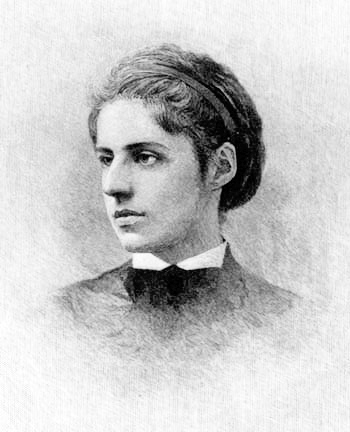
Emma Lazarus circa 1872 courtesy https://en.wikipedia.org/wiki/Emma_Lazarus/.


Not like the brazen giant of Greek fame,
With conquering limbs astride from land to land;
Here at our sea-washed, sunset gates shall stand
A mighty woman with a torch, whose flame
Is the imprisoned lightning,and her name
Mother of Exiles.  From her beacon-hand
Glows world-wide welcome; her mild eyes command
The air-bridged harbor that twin cities frame.

"Keep ancient lands, your storied pomp!" cries she
With silent lips.  "Give me your tired, your poor,
Your huddled masses 
yearning to breathe free
The wretched refuse of your teeming shore.
Send these, the homeless, tempest-tost to me
I lift my lamp beside the golden door."

The Statue of Liberty, dedicated in 1886, sits on Liberty Island.  New immigrants used to pass by it on their way to the immigration station on Ellis Island.  Emma Lazarus' sonnet, The New Colussus, was written in 1883 and inscribed on the base of the State of Liberty in 1903. 


State of Liberty circa early 1900's when poem was inscribed courtesy http://cityroom.blogs.nytimes.com/2011/10/26/how-a-sonnet-made-a-statue-the-mother-of-exiles/?_r=0.