Friday, 14 April 2017

Memphis, Tennessee: Nation's Cleanest City

The Memphis riverfront

Riverside Drive before picture courtesy http://memphiscitybeautiful.org/about-us/history.


The City Beautiful Commission, established in 1930, championed the cause of cleaning up Memphis, Tennessee.  In 1935, at the cost of nearly $1 million, the Riverside Drive Project got underway.  The City Beautiful Commission landscaped the bluffs with crepe myrtle, redbuds, magnolias, dogwoods and Paul Scarlet roses.  Memphis gained the title of the cleanest city in Tennessee from 1940 to 1946.  It also received the title of the nation's cleanest city from 1948 to 1951.


The Riverside Drive project in 1935.

Riverside Drive after picture courtesy http://memphiscitybeautiful.org/about-us/history.

Thursday, 13 April 2017

Kansas City Embraces Beaux Arts Architecture

"The City Beautiful Movement...transformed Kansas city from a sparse, dirt-road laden town to a thriving metropolis." (Joey Hill)


Kansas City Board of Trade Building opened in 1908 courtesy 


Educated in the art of city planning in Paris, Moscow, Germany and New York City, Kessler was hired to redesign the boomtown Kansas City in the early 1900's.  Kessler believed that people need "beautiful, natural scenery", his motivation behind the series of wide boulevards and public parks that he designed.


Penn Valley Park

Penn Valley Park courtesy http://www.kchistory.org.


Kansas City opened a new library in 1897, built at the cost of $200,000.  It housed not only books but also an art gallery and museum artifacts.  The Board of Trade Building opened its doors in 1908.  The Kansas City Museum is also built in the Beaux Arts style in 1910, is the former residence of Robert Alexander Long.  Union Station, a magnificent building constructed in 1914, saw train service peak in 1945 and decline in the 1950's.  While the train station shut down in 1985, it reopened a few years later as a museum.  One Beaux Arts Building which opened in 1923 is now The Sophian, renovated into modern condominiums.The Liberty Memorial, done in the Egyptian architecture style, opened in 1926.  


Kansas City Union Station under construction courtesy http://www.unionstation.org/timeline.

Wednesday, 12 April 2017

San Francisco Center Heart of City Beautiful Movement


The City Beautiful Movement arrived in San Francisco in 1904 when former mayor James Duval Phelan invited Daniel Burnham to town.  Burnham the architect of the Chicago World's Fair White City, was a student of classicism and the Beaux Arts.  He recommended a Civic Center at the heart of the city with boulevards radiating from it.  A landscaped park would begin at the Civic Center and extend to the Golden Gate Park panhandle.  A neo-classic library would overlook the Pacific Ocean.

The San Francisco Earthquake of 1906 was a cloud with a silver lining.  Much of the city was destroyed but this now gave the city planners a blank canvas to work with.  The final say, however, would be up to the merchants.  The City Hall and the Exposition Auditorium were both completed in time for the Pan Pacific Exposition of 1915, an exhibit that Little House on the Prairie author Laura Ingalls Wilder visited and wrote about in West From Home.  The War Memorial Opera House, the War Memorial Veterans Building, the Main Library and the State and Old Federal Buildings were completed in the 1920's and 1930's.  A central park, or civic center, brought all of the buildings together.  A reflective pool, surrounded by columns of London Plane trees, was the focus of the park.  Two banks, the Savings Union Bank and the Wells Fargo Bank, reflect the Beaux Arts design.


Tuesday, 11 April 2017

Harrisburg Rebuilds Capitol, Thumbs Nose at Philadelphia

Harrisburg Capitol Building


The City Beautiful Movement, which started in Chicago with the World's Fair in 1893, spread to Washington DC, Boston, Cleveland and Philadelphia.  Smaller cities were not to be outdone.  When a fire consumed the Capitol in Harrisburg, Pennsylvania, there was talk of moving the Capitol to Philadelphia.  However, the House of Representatives voted 103 to 75 to keep the Capitol. Concerned citizens, in the meantime, formed a city improvement committee.  Just as Chicago had risen from the ashes after the Great Fire of 1871, owing its reputation for great architecture from the subsequent rebuilding, so too could Harrisburg.

Conservationist Mira Lloyd Dock delivered a riveting speech, "The City Beautiful", to the Harrisburg Board in 1901.  Dock joined forces with Horace McFarland, president of the Civic Association, to promote the cause of civic improvement.  The same year, The City Telegraph printed a front page article pointing out Harrisburg's problems and highlighting Dock's message of beautification and recreation.  In February of 1901, the public voted to set aside $1.1 million for new buildings and city planning.

Harrisburg was bound and determined that they, not Philadelphia, deserved the title of state capital.  A contest was held to find an architect to build the new Capitol won by Joseph M. Huston.  Painters Violet Oakley and Edwin Austin Abbey along with sculptor George G. Barnard, were hired to decorate the building.  A Philadelphia newspaper called the new Capitol, built in 1906, "one of the most artistic monuments of the state".

The project  however was not without controversy.  Oakley's paintings, which highlighted that Pennsylvania was founded on religious freedom, offended some Roman Catholics.  The bas-relief heads on the Capitol doors, intended to represent the different men who lived in Pennsylvania, were mocked by political cartoonists.  The nude statues which arrived from France offended some Pennsylvanians and were covered up in 1911.

Nonetheless, the Times of Buffalo pointed out that it was the only Capitol to be completed within its estimates.  President Theodore Roosevelt presided over the official opening of the building on February 5, 1906.  Mary D. Fitzgerald called the new Capitol "perfectly wonderful, marvelously beautiful [and] a superb success."


8 final.tif


Monday, 10 April 2017

Boston 1915: The City That Is To Be

"Insisting that the city needed only to cultivate cooperation and wise planning in order to build a better world, the movement's optimistic leaders hoped the promise of this glimmering future could unite commercial tycoons and labor organizers, clergymen and politicians, Harvard professors and immigrant families." (https://www.bostonglobe.com/ideas/2015/01/02/how-boston-dreamed-its-future-century-ago/28AZpbZkcrp8fgbS4PawpL/story.html)


The campaign, called Boston-1915, is little-remembered today, but it was a movement with great sweep and ambition. They launched publicity campaigns and publications, including a reform-minded magazine called New Boston, and began an assault on urban problems from almost every possible angle.

The New Boston magazine circa 1911 includes the "Boston 1915" plan to revitalize the city courtesy https://www.bostonglobe.com/ideas/2015/01/02/how-boston-dreamed-its-future-century-ago/28AZpbZkcrp8fgbS4PawpL/picture.html?p1=Article_Gallery.


Boston was a city on the move.  From 1860 to 1910, its population had nearly doubled.  The establishment, previously run by old line Yankees, was being challenged by immigrants and working class families.  The gap between rich and poor widened as housing prices grew and living spaces shrunk.  The city feared that without major changes, it would lose its ranking as an enlightened, yet bustling, metropolis.


                                Leaders convened a committee on housing, which took aim at the private real estate market and the tenement owners who devoured workers’ wages, proposing strict building codes and better inspections.


Businessman Edward Filene and lawyer/journalist Louis Brandeis championed the Boston 1915 urban renewal project.  Forty years of unregulated capitalism had produced a city that was undesirable to live in.  The planners maintained that one could not separate the city's commercial and social elements and therefore devised a plan that would meet both needs.  Looking at the run down tenements in the city centre, they proposed strict building codes.  Another suggestion was for the city to "finance downtown subways and rural trolleys to connect good housing with good jobs".


Rural trolleys connecting "good jobs with good housing" circa early 1900's courtesy https://www.bostonglobe.com/ideas/2015/01/02/boston-future-early-century/uMA0jiwmk1LKTu7BGTfdpL/story.html?pic=7.


There was a socialist, "cradle-to-the-grave" element to their rhetoric:  "We propose that it shall be possible for a willing worker earning an average wage to live, himself and his family, healthfully and comfortably; to bring up his children in good surroundings; to educate them so they may be truly useful, good citizens; and to lay aside enough to provide himself and his wife in their old age."


Jewish businessman and philanthropist Edward Filene believed in all Bostonians working together, commercial and government, Jews and Catholics, rich and poor, to make a better Boston courtesy http://archivesofthecentury.org/myportfolio/edward-filene/.


In 1909, a Copley Square exhibit gave the public images of what Boston 1915 would look like.  One exhibit served as a metaphor for civic cooperation:  one set of rotating discs spun disconnectedly, failing to move the hands of a clock; the other set worked together and successfully moved the clock forward.  Another exhibit featured "talking arc lights" while the "parks and playgrounds' exhibit included zoo, aquarium and freshwater garden.  A third displayed a regional transit systems connecting all corners of the city.


Insisting that the city needed only to cultivate cooperation and wise planning in order to build a better world, optimistic leaders behind the exhibit hoped the promise of this glimmering future could unite commercial tycoons and labor organizers, clergymen and politicians, Harvard professors, and immigrant families.


Mayor John Fitzgerald, the grandfather of President John F. Kennedy, stated:  "The time has gone by when our whole duty as citizens consisted of the casting of a ballot and the payment of a tax bill."  Filene, one of Boston's richest businessman, called for the Boston 1915 planners and the labour unions to work together in a common cause.  Brandeis, the journalist, created a new publication New Boston with the article "What a City Plan Could Do for Boston".  For more on John Fitzgerald, visit http://www.jphs.org/20thcentury/woodbourne-and-the-boston-1915-movement.html.


These issues have largely remained with Boston as 2015 begins. Increasingly we find ourselves in what historian Daniel Rodgers calls an “age of fracture,” as the glue of commonality dissolves and our shared future falls apart.


Sunday, 9 April 2017

Philadelphia Design Influenced by Vienna Ringstrasse

tour gallery

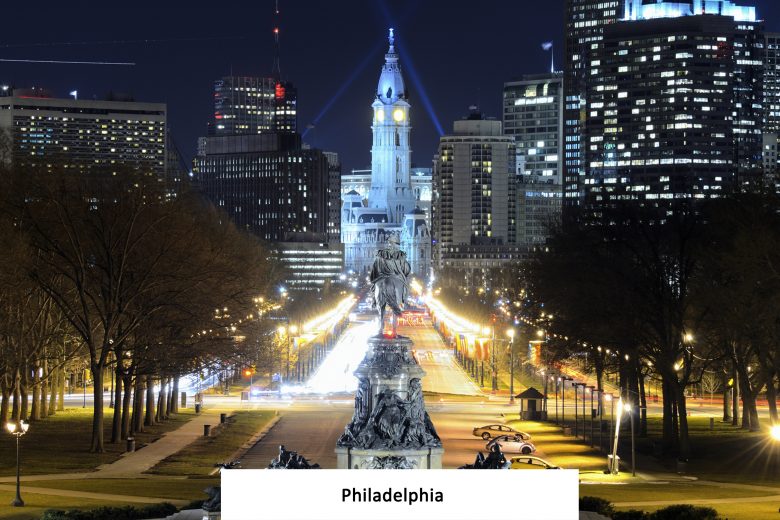
Philadelphia was rated as one of the Top Ten Cities for Parks in the World by Frommers courtesy https://comforttour.com/holiday/philadelphia-gettysburg-bus-tours-from-toronto/.


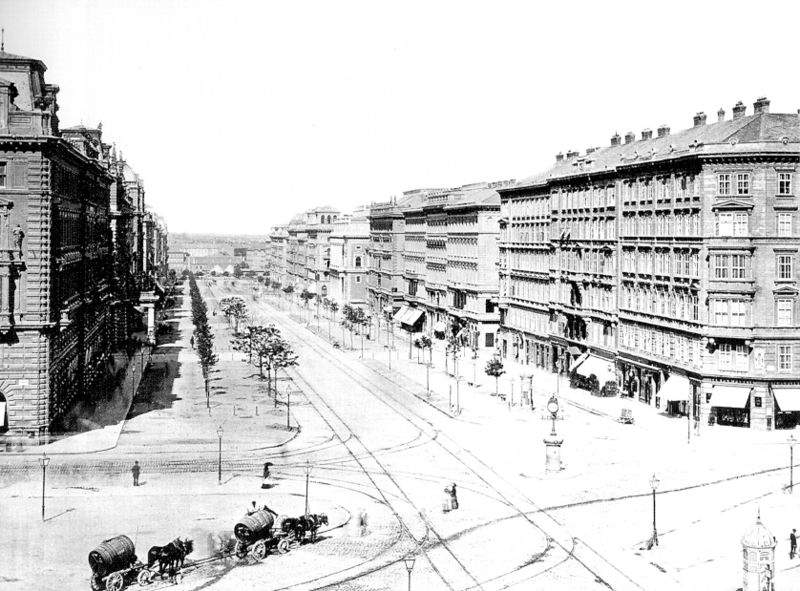
The City Beautiful Movement of the 1890's and early 1900's not only influenced Washington DC and Chicago, but also Philadelphia.  The movement came about as a reaction to the physical decay and congestion of America's urban centres.  Architects Danile Burnham and Andrew Jackson Downing were influenced by projects in Europe such as Vienna's Ringstrasse, Baron Haussmann's redesign of Paris and Idefons Cerda's work in Barcelona.  The goal was to create urban areas with "wide boulevards,ennobling buildings and manicured parklands to allow people of all backgrounds spaces for reflection and recreation."


After the Civil War, the city of Brotherly Love had grown to 700,000 people.  Its factories, refineries and shipyards emitted significant amounts of pollution which called for a beautification of the city.  Environmental groups like the City Parks Association and the Garden Club of Philadelphia campaigned for grand Beaux Arts architecture, boulevards in North Philadelphia, a city wide playground system, a park along the Schullkill River and a system of radial boulevards for South Philadelphia similar to Washington DC's.


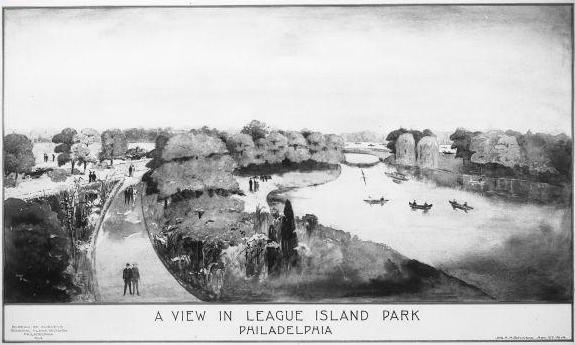
Black and white illustration of a park along a body of water with trees and wide walkways.

League Island Park (later FDR Park) circa 1912 courtesy http://philadelphiaencyclopedia.org/archive/city-beautiful-movement/.


Local architects Albert Kelsey and David K. Boyd proposed the clearing of two city blocks to make Independence Hall, the original city of the Capital, more visible.  While it took decades, the resulting Independence Mall came to fruition after World War II.  A Parisian style parkway connecting Center City and Fairmount Park got underway in 1907.  The City Parks association created League Island Park in 1912.  Today it is called FDR Park.  By 1930, much of Fairmount Parkway, which included the Free Library, Rodin Museum, Municipal Court, Logan Circle and the Philadelphia Museum of Art was completed or under construction.


Image result

Independence Mall circa 1952 courtesy https://en.wikipedia.org/wiki/Independence_Mall_(Philadelphia).


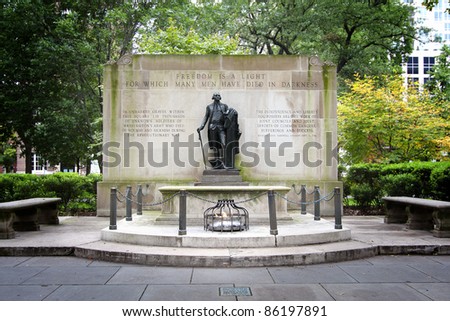
Washington Square was beautified with statuary and refurbished fountains thanks to the Philadephia Fountain Society.  Two high rises, Penn Mutual and the Curtis Buildings, reflected "City Beautiful sensibilities".  In 1933, Alfred P. Shaw designed 30th Street Station in the Neoclassical/Art Deco Design, commissioned by the Pennsylvania Railroad.


Grave of the Unknown Soldier at Washington Square courtesy https://www.shutterstock.com/search/washington+square.

Saturday, 8 April 2017

Richmond, Virginia's Monument Ave


The unveiling of the Robert E. Lee monument circa 1890 courtesy https://en.wikipedia.org/wiki/Monument_Avenue#/media/File:1890_Lee_statue_unveiling.jpg.


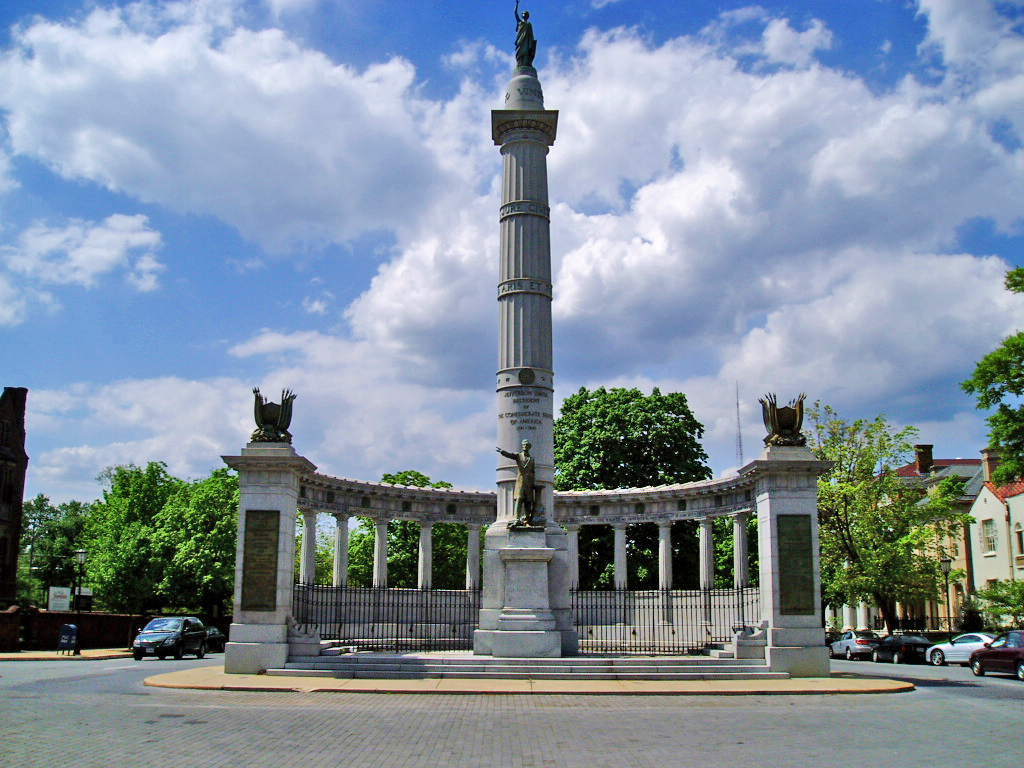
Richmond Virginia's Monument Ave is a tree lined grassy mall separating the east and west bound lanes punctuated by statues of Civil War leaders Robert E. Lee, Thomas "Stonewall" Jackson, JEB Stuart and Jefferson Davis.  On May 29, 1890 the crowd swelled to 100,000 to watch the unveiling of the first monument, General Lee.  Oceanographer Matthew Fontaine Maury was added in 1929. Between 1900 and 1925, Monument Ave saw the construction of architecturally significant houses, churches and apartment buildings.

The avenue, filled with mansions, was originally home to Richmond's upper class.  However, by the 1950's and 1960's, many of the mansions were divided into apartments and sublet.  In 1970, the Monument Ave Preservation Society was established to protect the beautiful buildings.

Monument Ave is the site for many events including Robert E. Lee's birthday, the Sons of Confederate Veterans, the Monument Ave 10K Race and the Easter on Parade where Richmond residents show off the latest styles in Easter bonnets.


Jefferson Davis Monument courtesy https://en.wikipedia.org/wiki/Monument_Avenue.