Thursday, 7 May 2015

Can You Haiku?

For the next couple of weeks, I am going to study a different type of poem each day.  Today I am focussing on the haiku.  Originating in Japan, a haiku often discusses subjects from nature:  seasons, months, animals, insects, even a blade of grass.  Notsume Soseki, the Charles Dickens of Japan wrote many poems, including the following haiku:

Over the wintry forest 
winds howl in rage
with no leaves to blow.

Haiku poems must be 17 syllables in length.  The first line is 5 syllables, the second is 7 syllables and the third is five.  It does not have to rhyme.  Punctuation is up to the poet.  The following poem, written by Charlotte Puddifoot, won first prize in a haiku contest last year:  

Dainty daffodil
your golden trumpet fanfares
the dawning of spring.

A haiku which ends with a surprising twist is considered very effective:

Crystal flakes
Hang on pine branches
Torn leaves fall.

Here is my first attempt at a haiku, Strawberries, written for an online poetry course several summers ago:

Red, ripe and ready,
Waiting to be picked today
In a plastic bowl.

Now it's your turn to try your hand at a haiku.  Although they are quite short, they are deceivingly difficult to write.  Measure your words carefully.  Every syllable counts!


Wednesday, 6 May 2015

Learning to Write Poetry Using the Five Senses

"When sensory details are used, your readers can personally experience whatever you're trying to describe, reminding them of their own experiences, giving your writing a universal feel." 
(Amy Anderson)


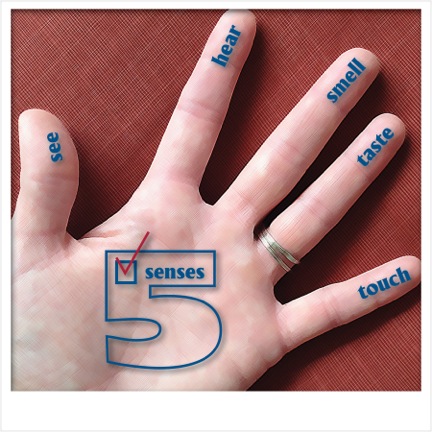
As a poet,  you need to get in touch with your emotions.  You need to employ all five senses to transport the reader to where you want him to be.  Darien Gee recommends doing exercises to strengthen your writing muscles.  Go to the beach and write about the texture of the sand.  Pretend that your reader has never touched it before.  Stand in line at the supermarket and listen to the customers' voices; describe the squeaky grocery cart, the crispness of the paper bags, the flipping of the magazine pages, the beep of the register.  Visit a Hawaiian restaurant and try poi. Describe its taste, smell, texture.  Visit www.dariengee.com/wp-content/uploads/2013/05/NHN-20120614.pdf for the entire post.

Amy Anderson maintains that:  "The writer's ability to create a gripping and memorable story [or poem] has much to do with engaging our five senses.  When sensory details are used, your readers can personally experience whatever you're trying to describe, reminding them of their own experiences, giving your writing a universal feel." (http://study.com/academy/lesson/sensory-details-in-writing-definition-examples.html)  They say that music is the universal language. Regardless of what culture we come from, we can all "feel" music; it moves us.  Just as musicians move their audience, poets need to move their readers.  

There is a hearing impaired man at my gym.  He says that something good has come out of him being hard of hearing.  He has experienced a heightening of all the other senses.  He picks up clues that others don't:  a person's gestures and facial expressions.  In the last 30 years he has become an excellent judge of character.  He can read a person like a book.  He doesn't take his senses for granted like the rest of us do.

Get your senses ready to record what you observe.  You have a poem in there just bursting to come out.  Visit http://www.familyfriendpoems.com/poem/article-5-senses-in-poetry for examples of poems which use all five senses.


Tuesday, 5 May 2015

How to Exercise Your Poetic Muscles

Just as a weight lifter exercises his muscles daily, so too must a writer.  John Hewitt lists several ways to get the creative juices flowing.  Here are ten of them:

1.  Make a list of poems with memorable lines.  Re-read them and determine why they stand out.


Far from the madding crowd's ignoble strife
Their sober wishes never learned to stray
Along the cool sequestered veil of life
They kept the noiseless tenor of their ways.
(Elegy Written in a Country Churchyard, Thomas Gray)

Note:  Far From the Madding Crowd is also a novel by Thomas Hardy.

2.  Every poet has written a bad poem, if not several.  Write the worst poem possible filled with cliches, pretentious words and a "beat the reader over the head" theme.  Write several if you have to.  Get it out of your system.  Now you are mind is free to write your "masterpiece".

You stood in the classroom
lean and lanky
and told us your genius poem
"Roses are red
Violets are blue"
I like tractors.
(The Coffee Shop Times, Starr)

3.  "Listen to criticism and try to learn from it, but don't live or die by it."  Everyone is a critic.  Sometimes people have constructive criticism.  Others are simply nitpicking.  Try to distinguish one type from the other.  Learn from the constructive advice and then move on.  Read the following blog: http://positivewriter.com/how-to-give-constructive-writing-criticism-that-actually-helps/.

4.  The bigger the theme, the more important the details are.  Use vivid language.  Employ all five senses.


5.  Write a poem that is the opposite of what you believe.  Suspend your belief system, just for one day.


6.  Listen to talk radio.  Great characters emerge from such sessions.


7.  Every line of your poem should be important.  If your poem has three great lines, it should be three lines long.


Whitecaps on the bay
A broken sign board banging
In the April wind.
(Richard Wright)


8.  When your write a great poem, immediately write another one.  Go with the momentum.


9.  Write in different places to gather inspiration ex. park, street corner, alley.


10.  Publish a poetry journal or website.  Get the word out about your writing.


*To read all of John Hewitts' suggestions, visit http://www.poewar.com/poetry-writing-tips/.

*For a list of creative writing prompts for poetry, visit http://www.creative-writing-now.com/creative-writing-prompts.html.

Monday, 4 May 2015

You Want to be a Proficient Poet? Read, Read, Read

"It seems odd to me that anyone who hates reading poetry should want to write it at all.  Are there amateur painters who never go to an art gallery?  Or amateur musicians who never listen to music?" (Wendy Cope)


"The best poets read widely.  How else do you know what makes a superb poem?" says Wendy Cope (http://www.theguardian.com/books/2008/sep/21/poetry.writing.wendycope).  She recommends that you read both recent poetry and poetry from centuries past.  Vague memories from a high school English class are not enough to go on.

Ms. Cope mentions writers who say that they don't want to be influenced by others, but she maintains that it is part of the learning process.  You must first acquire the technical skills, familiarize yourself with the various forms of poetry, and then branch out from there.  When Wendy Cope first started stringing stanzas together to create poems, her writing resembled that of Sylvia Plath or T. S. Eliot.  However, in time, she found her own voice.    As T. S. Eliot explains, one must distinguish between "what one really feels and what one would like to feel."  You need authenticity in your writing.  Ms. Cope reminds you to write for enjoyment, not just for the sake of getting published.

Visit http://www.poets.org/poetsorg/text/reading-recommendations for a recommended reading list of poetry.  Once you have read a wide selection of poems, you can start writing.  Once you have accumulated at least 50 poems of your own, you have acquired a portfolio that you may start submitting to anthologies for publication.


Sunday, 3 May 2015

How to Find Inspiration for Your Poetry

"Ideas come from  everything." (Alfred Hitchcock)


As I said in a recent post, keep a journal of ideas to serve as inspiration for your poetry.  Write down your emotions and descriptions.  The Writers Relief website recommends keeping a file for newspaper and magazine clippings, sketches and quotes to use as inspiration for your writing http://writersrelief.com/blog/2008/03/poetry-finding-your-inspiration/.

Wikihow suggests visiting a place that can serve as a setting for a poem.  Why not take a trip to a forest or garden, waterfalls or river?  "Find the natural rhythm of everyday life," suggests Wikihow (http://www.wikihow.com/Get-Inspiration-for-Poetry).  Use all five senses to take in the experience.  Brainstorm words and phrases to describe the experience ex. active verbs and vivid nouns.

Nature isn't the only source of inspiration.  Visit your local park or cafe.  Take a bus or train ride. Write down your observations.  You'd be amazed at how underneath the ordinary lies the extraordinary.

Keep your sense on alert at all times, even in your own home.  Keep a notebook at your bedside to record dreams or ideas that come to you in the middle of the night.  Go online to find writing prompts ex. "What if?" scenarios.  Scan the newspaper and magazine headlines for ideas.  Study paintings or photographs.  My poem "Sunset over the Ice" is based on a famous painting by Frederic Church. Study your scrapbooks; maybe a vacation photo will spark a memory.

Perhaps you have a family member who inspires you.  I wrote a poem about my husband's grandma who survived the war called "On Prussian Plains" which I read at her funeral in 2007.  Think of a special spot you like to visit.  I wrote a poem about a bridge that Rob and I like to stand on when we visit St. Mary's.  Study old postcards.  I found a postcard called "Greetings from Holly Beach" which spurred me on to write a poem about Hurricane Rita.  There's a map on the wall of my in-law's cottage called "The Ghostfleet of Long Point".  I penned a poem of the same name.

Maybe an injustice has taken place which has moved you to write a poem.  Oprah Winfrey talked about a young black mother of ten being gunned down on her way home from work as she searched in a ditch for her wallet.  Her story inspired me to write "Justice for Johnnie Mae".  An occasion is also a good reason to write a poem.  When my cousin Jeff got married I did a bit of research on his new bride and wrote a poem about the new couple.  

Note:  For more inspiration, read The Artist's Way by Julia Cameron.


Saturday, 2 May 2015

The Rules of Writing Poetry

"Painting is poetry that is seen rather than felt, and poetry is painting that is felt rather than seen." (Leonardo da Vinci)


You're ready to write your first poem.  What points should you keep in mind as you compose each line, each stanza?  Firstly, Kara Zeihl recommends that you set a goal for your poem (http://jerz.setonhill.edu/writing/creative1/poetry-writing-tips-how-to-write-a-poem/#1).  Is your purpose to describe an event or to protest an injustice or to tell a tale?  Robert Lee Brewer offers five examples that might inspire you to write a poem:  

  • capture a moment
  • steal a conversation
  • describe something or someone
  • respond to something
  • use someone else's line

Choose a theme for your poem.  Remember that a theme isn't just an idea, it's an idea plus an opinion. For example, the Vietnam War is an idea.  The senselessness of the Vietnam War is a theme.  


Kara Zeihl reminds you to avoid cliches, overused metaphors, similes or expressions.  Use images to stimulate the reader's senses.  Metaphors and similes are part of the poet's repertoire.  Use concrete rather than abstract words as much as possible.  The reader is more apt to have a sensory response to words that he or she can imagine like bird or sky or stream rather than peacefulness, happiness and serenity.  

Kara Zeihl suggests that you subvert the ordinary.  To subvert literally means to turn something upside down.  See everyday events in a new way.  Come at it from a different perspective.  "The best poems get written not by going in the front door of the subject, but round the back or down the chimney or through the window."

Tap into your own feelings.  Write about subjects that matter to you.  If it matters to you, you're likely to be more passionate about it.  Let that passion show in your writing.

Use everything in your toolbox, says Alison Feeney-Hart http://www.bbc.com/news/entertainment-arts-29538180).  Remember the literary devices you learned about in school like personification and  alliteration?  Well, poetry has poetic devices:

  • assonance ex. repeated vowel sounds in words near each other ex. "He's a bruisin' loser!"
  • cacophony:  a series of harsh unpleasant sounds to convey disorder ex. "My stick fingers click with a snicker/And chuckling they knuckle the keys"
  • repetition:  the re-use of words and phrases for effect ex. "Cannon to the right of them, Cannon to the left of them, Cannon in front of them, Volley'd and thunder'd"
  • rhyme:  words that have different beginning sounds but endings that are alike ex. time, slime, chime (Note:  Remember rhymes should be natural, not forced.  Kara Ziehl suggests that you stick to free verse and save rhyming until you are a more experienced poet.  However, I enjoy the challenge of writing a poem that rhymes.)
  • contrast:  closely arranged things with strikingly different characteristics ex. He was dark, sinister and cruel; she was radiant, pleasant and kind.
  • oxymoron:  two words back to back which have opposite meanings ex. open secret, tragic comedy, foolish wisdom
  • personification:  attributing human characteristics to an inanimate object ex. The days crept by slowly, sorrowfully.
  • irony:  a contradictory statement to reveal a reality different to what appears to be true ex. Edgar Allan Poe's The Raven
For a more complete list, visit http://www.chaparralpoets.org/devices.pdf.

Ideas are great, but if you don't put aside the time to write, you'll never be a poet.  Find a regular time to write each day.  When I took my online poetry writing course, my daughter was very young.  I waited until she and my son were in bed at 9 pm before I started to write.  I would get in a solid two or three hours of writing.

Now it's time to grab a pen and paper and start composing the first line of your poem.


Friday, 1 May 2015

If You Want to Be a Poet...

"Poetry is when an emotion has found its thought and the thought has found words." (Robert Frost)


For the month of May, I will be blogging about poetry.  When I took an online college poetry writing course eight years ago, I was struck by how difficult it is to write poems.  The process is not only artistic but also mathematical.  I really enjoyed measuring my words, counting the syllables, trying to follow a framework for each different type of poem.  It gave my brain quite a workout!  Here are some tips to becoming a poet.

If you want to be a poet, you need to be proficient.  "Painters paint, teachers teach, poets 'poem'", according to blogger Robert Lee Brewer (http://www.writersdigest.com/writing-articles/by-writing-genre/poetry/10-essential-rules-of-poetry).  Our writing instructor had us write thirty poems during the twelve week course (that's almost three per week).  I appreciated the momentum that I built by following a strict writing schedule.

If you want to be a poet, you need ideas.  Keep your mind open and nimble.  Read Julia Cameron's The Artists Way to find ways to get the creative juices flowing (http://juliacameronlive.com/). "Become sensitive to life," says John Timpane.  He recommends keeping a poetry journal in which you will store:

  • ideas
  • images
  • topics
  • drafts
  • other poems
  • inspirational objects (ex. a grocery list you found on the ground; a feather on the beach)
A poet's journal is the "office where the work of poetry takes place," explains John Timpane.  

If you want to be a poet, read as much poetry as possible.  Borrow poetry anthologies from the library.  Read poetry online (http://www.poetryfoundation.org/browse).  Subscribe to a poetry magazine (http://www.poetryfoundation.org/poetrymagazine/).  Participate in events for National Poetry Month held every April (http://www.poets.org/national-poetry-month/home).

Study poetic forms.  The form is the "skeleton that holds the content together," says Robert Lee Brewer.  Experiment with a variety of types of poetry.  Do you prefer rhyming or free verse, long or short poems?  Here is a partial list:

  • ballad
  • blank verse
  • diamant
  • epic
  • ode
  • free verse
  • limerick
  • pantoum
  • rondeau
  • sonnet
  • villanelle

If you want to be a poet, connect with other poets.  Attend poetry readings and open mics.  Poetry is just as much an oral as it is a written genre.  Take poetry workshops and classes.  Find a mentor. Becoming a part of a poetry community will keep you writing and submitting your work.  

Which brings me to my last point:  Showcase your work.  Enter poetry contests.  I entered a Haiku contest held by the Grand Erie Board of Education and won first prize ("My blue-eyed beauty/Full of innocence and grace/Just broke my last vase.")  Join a poetry club.  Assemble a collection of your work.  At the end of my online poetry course, we all selected two pieces to be shared in a collection of work which we named Measured Moments.  Submit your poetry to anthologies for publication.  Just beware of the vanity anthologies.  Anthologies publishers often push for you to buy their anthology once it's published.  You should not have to pay to have your work published.