Showing posts with label Langston Hughes. Show all posts

Monday, 6 July 2015

Lorraine Hansberry's "A Raisin in the Sun"

"What happens to a dream deferred?  Does it dry up like a raisin in the sun?" (Harlem, Langston Hughes)
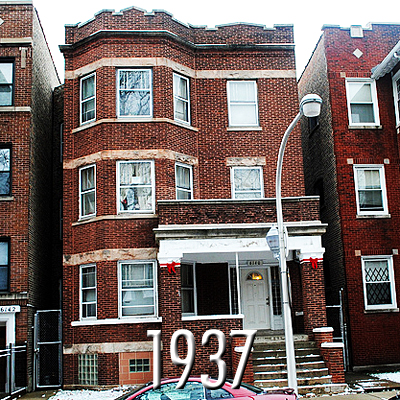


The home the Hansberry's purchased in the Washington Park neighbourhood of Chicago circa 1937 courtesy http://www.broadway.com/buzz/175286/the-evolution-of-a-raisin-in-the-sun-from-dream-deferred-to-broadway-masterpiece/.


Playwright Lorraine Hansberry, the daughter of a teacher and real estate broker, was born in Chicago.  Her parents purchased a house in the upper middle class, all-white neighbourhood of Washington Park.  Because they were black, Lorraine described their reception as "hellishly hostile".  Most people would have moved out, but the Hansberry's dug their heels in and refused to budge.  Three years later, in the case of Hansberry vs. Lee, the Illinois Supreme Court ruled that the Hansberry's could not stay in Washington Park.  However, it was overruled by the U.S. Supreme Court which ruled that the Hansberry's could stay.

In 1951, Lorraine came upon a poem written by Langston Hughes with the lines:  "What happens to a dream deferred?  Does it dry up like a raisin in the sun?"  She used the line as a title for her play, based on a black family who buys a house in an all white neighbourhood and is pressured to leave. The road to success was not easy:  it took over a year for the producer to raise enough funds to bring the play to Broadway.  But on March 11, 1959, "A Raisin in the Sun" debuted at the Ethel Barrymore Theatre, starring Sidney Poitier as Walter Lee Younger and Ruby Dee as his wife and Claudia McNeil as his mother, Lena.  It enjoyed a successful run of 530 performances.

"A Raisin in the Sun" explored territory never before explored on the American stage.  It was the first play to be written by a black female to be performed on Broadway.  Lorraine Hansberry did not think that it would be a success, given that it "introduced details of black life to the overwhelmingly white Broadway audiences."  However, the people kept buying tickets; it ran for 530 performances.  After closing, Lorraine Hansberry's play was adapted for the big screen in 1961, also starring Sidney Poitier.  


Sunday, 14 June 2015

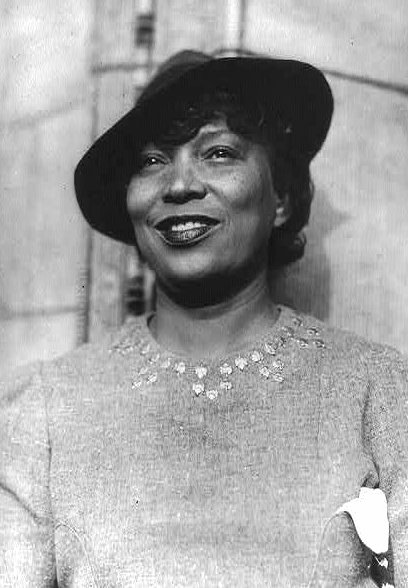
Zora Neale Thurston's "How it Feels to be Colored Me"

Zora Neale Thurston used to sit on her porch in Eatonville, Florida and watch the whites pass by in their carriages and automobiles.  That was the only contact she had with whites, given that Eatonville was an all black town.  Life was good until Zora turned 13 and her mom died.  Her dad remarried and he and his new wife sent Zora to boarding school in Jacksonville, an integrated community.  For the first time, rather than seeing herself as a girl, Zora saw herself as a black girl.  She missed the safety of her front porch back in Eatonville.  Zora's dad struggled to pay for her schooling, forcing her to leave the boarding school.  Later she was accepted at Howard University.  It was there that she blossomed as a writer.  She -- along with Langston Hughes and Wallace Wallace Thurman -- found herself at the centre of the Harlem Renaissance.  She penned four novels and 50 short stories, plays and essays.  Her most famous novel, Their Eyes Were Watching God, was published in 1936.  Thurston made a point of divorcing herself from the "sobbing school of Negrohood".  She moved beyond pride in her race to pride in herself, evident in her essay "How it Feels to be Colored Me" (http://www.enotes.com/topics/how-it-feels-to-be-colored-me).  The magazine A World Tomorrow, a journal "looking toward a Christian world", published her piece in 1928.  Here is an excerpt from her famous essay (http://xroads.virginia.edu/~ma01/grand-jean/hurston/chapters/how.html):

"But in the main, I feel like a brown bag of miscellany propped against a wall.  Against the wall, in company with other bags, white, red and yellow.  Pour out the contents and there is discovered a jumble of small things, priceless and worthless...On the ground before you is the jumble it held.  So much like the jumble in the bags could they be emptied that all might be dumped in a single heap and the bags refilled without altering the content of any greatly.  A bit of colored glass more or less would not matter.  Perhaps that is how the Great Stuffer of Bags filled them in the first place.  Who knows?"

Hurston-Zora-Neale-LOC.jpg


Wednesday, 27 May 2015

Civil Rights Poetry

From slavery to Black Power, poets have been moved to write about civil rights.

1.  To Mrs. Harriet Beecher Stowe (1854), was written in reaction to the anti-slavery novel Uncle Tom's Cabin, a novel loosely based on the slave life of Josiah Hensen
(http://utc.iath.virginia.edu/africam/afpo03at.html).


2.  The Hunters of Men (1835), written by John Greenleaf Whittier, brings to the forefront the hunting of escaped slaves, complete with hounds and whips (http://www.bartleby.com/372/236.html).


3.  I Have Seen Black Hands (1934), written by Richard Wright, who was denied a library card as a child because he was black (https://www.questia.com/magazine/1P3-44716921/i-have-seen-black-hands).


4.  Let America be America Again (1936), written by Langston Hughes, talks about all skin colours (http://www.crmvet.org/poetry/fhughes.htm#flabaa).


5.  A Seat on the Bus for Rosa, by Luke Easter, focusses on seamstress Rosa Parks who, in 1954, refused to give up her seat on an Alabama bus to a white person, prompting the famous bus boycott (http://www.poetrysoup.com/poem/a_seat_on_the_bus_for_rosa_22607).


6.  Ode to Emmett Till (2013) was written in honour of the black boy who was lynched for supposedly "whistling" at a white girl in 1955 (http://www.powerpoetry.org/poems/ode-emmett-till).

Emmett Till.jpg


7.  The Little Girl from Little Rock (2004), by Joan Dresner Bernstein, features the black girl who along with nine other helped integrate Little Rock High in 1957 (http://www.crmvet.org/poetry/pjoan.htm).


8.  Mississippi Burning Poem, written by blogger Leah (2011), talks about the four civil rights activists who were murdered in Mississippi in 1964 (http://until-im27.blogspot.ca/2011/06/mississippi-burning-poems.html).


9.  Here is my civil rights poem, Justice for Johnnie Mae (2008), written in honour of the mother of ten, Johnnie Mae Chappell, who was gunned down on her way home from work in Florida in 1964.

In the ditch at the end of the day
A black lady looked for her wallet.
Inside was all of her weekly pay,
This mother of ten named Johnnie Mae.

As a loud shot rang out, she was hit.
An ambulance marked "colored" was hailed.
Her husband held her hand for a bit,
Yet despite his pleas, her heart soon quit.

At the church, as her small children wailed
Murdered Johnnie Mae was laid to rest.
But five months went by with no one jailed
In old Jacksonville, justice had failed.

"Four white men killed her" detectives say.
But the sheriff freed them anyway.
Ten grown children continue to pray
All seeking justice for Johnnie Mae.