Showing posts with label Fall of Saigon. Show all posts

Sunday, 29 May 2016

Vietnam

"Television brought the brutality of war into the comfort of the living room.  Vietnam was lost in the living rooms of America -- not on the battlefields of Vietnam." (Marshall McLuhan)


Anti Vietnam War Rally at National Mall in Washington DC circa 1971 courtesy https://www.pinterest.com/pin/24980972904463946/.


It started with John F. Kennedy sending some troops into Southeast Asia.  It killed President Johnson's bid for a second term in office.  It led to a massacre at Kent State University.  It ended with President Ford's order to evacuate people via helicopter from the American Embassy roof at the Fall of Saigon.  The Vietnam War polarized the nation of America.  Some were deeply committed to the war, even laid down their lives for the cause. Others vehemently protested on college campuses.  Still others dodged the draft, even moving to Canada to avoid serving.  

Unlike the First World War and Second World War, the Vietnam War was televised (http://alinefromlinda.blogspot.ca/2012/04/girl-in-picture.html).  For the first time, the carnage was brought into people's living rooms via the evening news.  "Television brought the brutality of war into the comfort of the living room.  Vietnam was lost in the living rooms of America -- not on the battlefields of Vietnam," explained Marshall McLuhan.  Young American men were coming home from Southeast Asia in body bags at an alarming rate.  It became increasingly hard for American leaders to justify the death toll.

As Ken Burns explains:  "The Vietnam War...took the lives of 58,000 Americans and as many as 3 million Vietnamese, polarized American society as nothing has since the Civil War [and] fundamentally challenged America's faith in our leaders, our government and our most respected institutions..."  Ken Burns series, due out next year, attempts to explain why the war happened and why it polarized America.




Tuesday, 26 May 2015

Social Issues Poetry

Poets are inspired to write about social issues every day.  Here are some powerful poems about issues which have touched people over the last two hundred years.

1.  John Greenleaf's Whittier's The Barefoot Boy gives us a glimpse of child labour in America in the 1800's  (http://www.poetryfoundation.org/poem/174752).


2.  Charles Dickens' The Hymn of the Wiltshire Labourers talks about child labour in Britain in the 1800's (http://allpoetry.com/The-Hymn-Of-The-Wiltshire-Laborers).


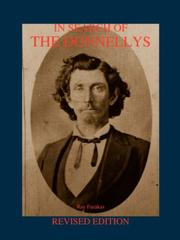
3.  The Ghosts of the Black Donnellys, refers to the Donnelly family who terrorized the town of Lucan, Ontario for 30 years and, when local justice failed, were murdered by a vigilante group (http://www.donnellys.com/Ghosts.html).


3.  Charlotte Anna Perkins Gilman's The Anti-Suffragists proves that not all women were for the vote back in the early 1900's (http://www.poetryfoundation.org/poem/182752).


4.  Dustbowl Days, by Nicole S. Porter, describes the suffering of the Okies during the Great Depression (http://www.fmschools.org/webpages/pwebsites/index.cfm?subpage=19850).  Hence, the term "dust bowl poetry".


5.  Requiem to a Fourteen Year Old, composed by Pierre Berton, features a young Steven Truscott, jailed for a murder he did not commit and sentenced to be hanged (http://viewfrominhere.blogspot.ca/2004/10/requiem-for-fourteen-year-old.html).


6.  Farewell Saigon Bride, by Joan Baez, addresses the issue of American soldiers' relationships with Vietnamese women during the Vietnam War, most of which ended with the Fall of Saigon (http://www.metrolyrics.com/saigon-bride-lyrics-joan-baez.html).


Wednesday, 4 March 2015

Underneath the Ordinary Lies the Extraordinary

About five years ago, I took an online writing course through Mohawk College.  One of our assignments was to put on our "journalist's cap", venture out into the streets, and find a newsworthy story.  I didn't think I'd find a story of any importance in the small city of Brantford, but I was willing to try.


I had some time to kill while I waited for an hour at the specialist's office, so I got out my pad and pencil, and started to write, remembering that a good observer makes use of all five senses.  I made note of the paintings and posters on the waiting room wall, the conversation going on between the receptionist and the unknown caller, the occasional traffic noises coming from the street when a patient opened the door, the antiseptic smell that permeated the room.

And then it happened...a big, juicy story started to unfold itself right under my nose.  The elderly man on my right struck up a conversation with the teenage girl on his right.  "How did you break your arm?" he asked, pointing to the arm in a cast and sling.

"I was involved in a shooting," she said.  All of a sudden, I leaned in closer, all ears now.

"How did that happened?" asked the elderly man.

"Do you remember hearing about a police chase in Brantford the other day?" asked the teenage girl.
The man nodded his head.  "Well, I was riding in a vehicle that got caught between the police cruiser and the vehicle it was chasing.  I was caught in the crossfire and got shot."


By now, I'm writing furiously, trying to keep up with the dialogue.  Thoughts were racing through my head.  What are the odds of hearing about a juicy story like this?  I've lived in Brantford for fifteen years and never heard of anything like this happening in town.  While shootings might be common in parts of Toronto, they certainly aren't common here.  And a police shooting at that...even less common.

I started to tune out as the elderly man talked about how the teenage girl's injury brought back memories of his deer hunting days.  I had the gist of the story, nonetheless.  But I wasn't finished for the day; I wasn't ready to take off my journalist's cap just yet.

After over an hour, I finally was ushered in to see the specialist.  What was on his wall?  One photograph showed the doctor wearing a gui and a black belt.  Another was a large portrait of him and his family.  He was dressed in a military uniform.  While he examined my finger, I broached the subject:  "Did you fight in a war?" I asked.


"Yes, I served as a medic in the Vietnam War," he answered.  We talked for a couple of minutes about the war, a war that ended when I was only 6 years old.  But I did know a bit about the conflict, thanks to my love of history.  We talked for a few minutes about the war, about the U.S. role and the fall of Saigon and the famous photograph of the helicopter on the rooftop of the U.S. embassy evacuating refugees in 1975.  

"When did you come to Canada?" I asked, moving on to a new topic.

"In 1979.  I was one of the boat people," he responded proudly.  My ears perked up -- newsworthy story #3.  "My family and I floated on the sea in a small boat until we reached land and freedom."  I couldn't believe it.  I was old enough to remember when the boat people arrived.  What incredible stamina and bravery they must have had to attempt such a journey!  And one was standing right in front of me, in the small city of Brantford.      


I commended the doctor for his bravery.  But the multi-talented doctor wasn't finished yet.  Somehow we got on the topic of jazz, and I told him how my dad was a jazz musician.  As the doctor finished up his exam, he gave me a free CD that he had just made with his jazz trio.  "Thank you very much!" I said, exiting the office.

I raced home, eager to finish jotting down what I had learned in the specialist's office.  It wasn't just about the teenage girl caught in the police crossfire; it wasn't just about the young doctor serving on the battlefield in Vietnam; it wasn't about his role as one of the Vietnam Boat People.  It was how I had found, in a doctor's office in little old Brantford, not one, but three newsworthy stories.  There, lying underneath the ordinary, I had found the extraordinary.  That's what happens when you don your journalist's cap.