Showing posts with label Canadian Army. Show all posts

Thursday, 29 June 2017

Prince Henry Refueling in Corsica

"I felt my job was simply to report.  I tried very hard to do the best stuff I could do as a war artist.  I thought at least because no one was shooting at me, I could try and do reasonably good work." 
(Alex Colville)


A sailor trains his telescope on the Canadian ship Prince Henry, stationed in the Mediterranean off the coast of Corsica.  Azure waters fill the foreground; partially bare foothills fill the background.

In 1942, artist Alex Colville enlisted in the Canadian Army and rose to the rank of second lieutenant. Two years later, he accepted an appointment as an official war artist, travelling to Yorkshire, the Netherlands, northern Germany and the Mediterranean.  It was while stationed at the latter that he painted the Canadian ship Prince Henry, in the process of refueling at the French island of Corsica.


Saturday, 5 November 2016

Five Miles of Mud

“Nevertheless, the competence, confidence, and maturity began in 1915 at Ypres a short distance away, and at Vimy Ridge earlier that spring, again confirmed the reputation of the Canadian Corps as the finest fighting formation on the Western Front.”


                            https://incredibleimages4u.blogspot.ca/2011/04/ww1-passchendaele.html

So wrote esteemed Professor of History Doctor Ronald Haycock at the Royal Military College of Canada.  How did a small country like Canada with a virtually non-existent military, not only build an army, but a convincing one, in the years 1914 to 1918?  With a victory at Vimy Ridge, the Canadians were in fighting form when they were asked to fight the Germans at Passchaendale, a task that both the British and Australians had failed to do, even though they had been trying for three months.

When the Canadians arrived in late October of 1917, all of that changed.  Led by Sir Arthur Currie, the Canadians slowly took foot by square foot of land on a swampy area that had filled with water.  Shelling had destroyed the drainage system and the existing water was just soaking into the ground, making it nothing but a quagmire of yellow mud.  Some soldiers and horses even drowned in the quicksand-like earth.  It was impossible to dig trenches in the mud and so troops built concrete pillboxes instead.

For some time, it looked like the battle would be a stalemate, but eventually the Canadians gained ground.  They were able to secure 5 square miles of mud, but at the cost of 15, 654 soldiers; this was a real blow to a country whose whose population stood at just over 8 million at the time.  Australians lost 36, 500 men and the British suffered 310,000 fatalities.  Although the Germans did take Passchaendale one more time, after the battle it was clear that the Canadian Army was a force to be reckoned with.  Nine soldiers were awarded Victoria Crosses for their valour on the Belgian battlefield.

Note:  Canadian actor Paul Gross wrote, directed and starred in a movie called Passchendaele in 2008, loosely based on the experience of his grandfather.


Paul Gross stars in Passchendaele courtesy http://rhombusmedia.com/film/passchendaele/.


Monday, 6 June 2016

D-Day: The Element of Surprise

"Our intention is to honour the survivors and their fallen comrades while the events of June 6, 1944 remain within living memory." (Bill Danard, Canada Post)


On the 60th anniversary of D-Day, Canada Post issued a stamp to commemorate the historic event of World War II. "With the imagery of this stamp, we aim to capture the experience of the very first Canadian troops to land on Juno Beach that day.  We tried to balance a sense of victory achieved with an acknowledgment of the human price," explained Bill Danard of Canada Post (https://www.canadapost.ca/web/en/blogs/collecting/details.page?article=2004/06/06/d-day&cattype=collecting&cat=stamps)

Much preparation went into the D-Day invasion, which included Canadian, American and British troops.  The Allies wanted to capitalize on a number of factors.  The moon had to be full (June 5, 6 or 7).  The tides had to be low.  The weather had to be appropriate (low winds, light cloud cover).  If all went well, they would catch the Germans sleeping.  The forecast for June 5, the original invasion day, was horrible:  a stiff wind, choppy seas and overcast.  Operation Neptune would have to be postponed for a day.  

The landing place also had to be perfect.  The Allies had dropped clues hinting that they would land at Pas de Calais.  However, it was too fortified.  In the end, they chose Normandy.  The word went out:  "Halycon Five finally and definitely confirmed."  On June 6, 1944, the Canadians debarked at Juno Beach.  By midday, the beachhead had been won.  "[By] nightfall, Canadians had penetrated further inland than any other seaborne forces."  The Canadian Army had proven once again, like in the First World War, that they were a formidable fighting force.  

Why were the Germans caught sleeping?  While the Allies employed expert meteorologists (two British teams and one American team) to predict the Normandy coast weather that month, so too did the Germans.  The former had decided that a Beaufort Scale rating of 4 or lower was acceptable for winds while the latter had decided that 4 was too strong.  Furthermore, General Eisenhower went ahead and made the ultimate decision to launch the D-Day invasion whereas General Rommel, shopping for birthday shoes with his wife in Berlin, waited for an ultimate order from Hitler, which never came.

Sadly, Canadians suffered 359 losses while the Allies suffered 12,000 deaths on D-Day.  However, the number was a lot lower than the 75,000 predicted without the element of surprise.  


What a glorious sight!  D-Day invasion on June 6, 1944 courtesy https://medium.com/@wwnorton/the-weather-on-d-day-85ea0491a14f#.29huzcj3c.


Friday, 3 June 2016

Tulip Festival

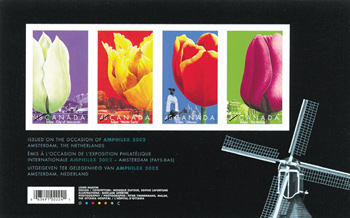
Canada Post issues commemorative stamps each month to recognize certain events in our history.  In August of 2002. it issued a stamp to commemorate Ottawa's Tulip Festival.  Back in 1944, under Nazi occupation, the Dutch were starving.  That winter, they survived on tulip bulbs and sugar beets. The American driven Operation Market Garden which attempted to drive the Germans out of Holland, largely failed.  Therefore, in 1945, it was up to the Canadian Army to liberate much of Holland, and that they did.  The Dutch will always have a special place in their hearts for Canadians for ending their oppression under the Nazis.


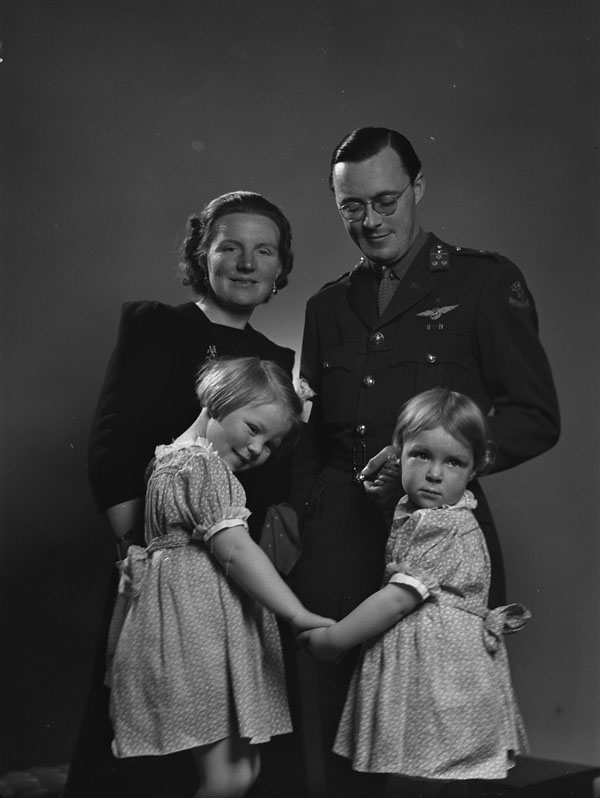
It was the Canadian government which took in Queen Juliana, the Dutch royalty who had fled her country when the Nazis occupied it in 1940.  She came to Canada with her husband and two daughters.  In 1943, she gave birth to a third child at an Ottawa hospital.  The hospital was declared an international zone in order that Queen Juliana's baby could be of Dutch citizenry and therefore eligible for the crown.


Princess Juliana and Prince Bernhard with two daughters in Ottawa circa 1942 courtesy https://en.wikipedia.org/wiki/Juliana_of_the_Netherlands.


After the Second World War, the Dutch government sent 100,000 tulip bulbs to Canada, the origin of Ottawa's Tulip Festival.  The tradition has continued ever since.