Saturday, 17 December 2016

Meet Me in St. Louis

"Have yourself a merry little Christmas, let your heart be light.
Next year all of our troubles will be out of sight.
Have yourself a merry little Christmas, Make the yuletime gay.
Next year all your troubles will be miles away."
(Judy Garland, Meet Me in St. Louis)


A lawyer and his wife are raising a family of four girls and a boy in St. Louis, a city busily preparing for the Louis Purchase Fair (World's Fair) in 1903.  The eldest daughter, Rose, expects a proposal from a local young man named Warren.  The second daughter, Esther, played by Judy Garland, has a crush on the next door neighbour, John, played by Tom Drake.  

The family's plans are upset when the father announces that they will be moving to New York City due to his work schedule.  The children, however, do not want to leave their beloved St. Louis and they don't want to miss the upcoming World's Fair.


On Christmas Eve, the family is invited to an elegant ball.  Esther is disappointed that John can't go since he has no tuxedo.  However, her grandfather offers to escort her instead.  At the ball,k Esther fills up a visiting girl's dance card with losers when she sees her as a rival to her sister Rose.  Esther is pleasantly surprised when her neighbour, John, shows up after all and they dance the night away.  Later in the evening, John proposes and Esther accepts.

Esther returns home to a distraught younger sister, Tootie.  She calms her down with her rendition of "Have Yourself a Merry Little Christmas".  Tootie however becomes upset again at the prospect of the family moving to New York City and she runs out into the snow and starts destroying the snowmen in the family's yard.  Esther consoles her amidst a family of snowmen.

The final scene features the family, complete with the two fiances,heading to the World's Fair in two carriages.  Upon arrival the group gazes at the Grand Lagoon as the lights illuminate the grand pavilions.


Friday, 16 December 2016

Christmas in Connecticut

"As she types the words 'From my living room as I write, the good cedar logs crackling on the fire...' the view is of clothes flapping on the line outside her bachelorette Manhattan apartment." (http://www.quotes.net/movies/2129)


Barbara Stanwyck is an early version of Martha Stewart in the movie Christmas in Connecticut which debuted in 1945.  She plays the role of Elizabeth Lane, a magazine columnist for Smart Housekeeping who writes a column about her life as a mother and homemaker on her Connecticut farm.  Her readers know her as "America's Best Cook".  One day, her boss, Mr. Yardley, invites a war hero to Elizabeth's Connecticut house for Christmas dinner, a fan who read all of her recipes when he was convalescing in the hospital.  Mr. Yardley, however, does not know that Mrs. Lane is a fraud:  she's not married, she has no children, she can't cook and she doesn't have a famous farm in Connecticut. "As she types the words 'From my living room as I write, the good cedar logs crackling on the fire...' the view is of clothes flapping on the line outside her bachelorette Manhattan apartment."  Knowing that her job will be on the line if Mr. Yardley finds out the truth, Elizabeth attempts to stage a scene of domestic bliss on Christmas Eve:  she hires a cook to make the meal and borrows a husband and a baby.  Things do not go as planned when the supposedly married Mrs. Lane falls in love with the war hero who has come to dinner.


Thursday, 15 December 2016

The Shop Around the Corner


Mr. Matuschek's Shop Around the Corner courtesy https://en.wikipedia.org/wiki/The_Shop_Around_the_Corner.


Many movie fans are familiar with the love story You've Got Mail starring Tom Hanks and Meg Ryan.  However, many are unfamiliar with its precursor, The Shop Around the Corner.  Based on a Hungarian play called Parfumerie, this classic film stars Jimmy Stewart as a shop clerk who starts up a pen pal romance with a dream girl.  Little does he know that his dream girl is his annoying co-worker at the shop, Klara.

The two plan to meet for a dinner date in which Alfred is ready to propose marriage if it goes well.  However, their boss, Mr. Matuschek, insists that they work late that night.  The shopkeeper seems in a miserable mood which the co-workers chalk up to his personality.  Later, he fires Alfred for no apparent reason.  Later, the delivery boy Pepi arrives at the shop to find Mr. Matuschek ready to commit suicide, despondent that his wife is having an affair.  He had suspected Alfred of being the other man, but a private investigator he hired tells him the culprit is another employee.

A second attempt at a dinner date ends with Alfred, realizing that Klara is his mystery woman, claiming that he is at Cafe Nizza to meet someone else.  Klara declares that the man whom she waits for is "far superior" to a "little insignificant clerk" like Alfred.

The shopkeeper re-hires Alfred and two weeks later, on Christmas Eve, the shop enjoys record sales.  Alfred wants to go out and celebrate but he has no one to join him.  Klara reads Alfred a letter from her admirer.  Alfred finally admits that he indeed is the admirer.


Wednesday, 14 December 2016

Going My Way

"Hail, Alma Mater, thy time-honoured halls shall echo with our praise till we die, and round our hearts are the ivy coloured of East St. Louis High." (Father O'Malley)


                         https://lightscameraclassics.wordpress.com/2013/05/01/going-my-way/


Going My Way, starring Bing Crosby, is the prequel to the famous Christmas movie, Bells of St. Mary's.  A young priest from St. Louis named Father O'Malley, played by Bing Crosby, arrives at an old parish in downtown Manhattan.  The old priest whom he is replacing, Father Fitzgibbon, is doubtful that Father O'Malley can resurrect the fledgling parish.  The two men clash on several occasions. However, O'Malley comes through when he inspires the youth of the congregation by starting a thriving children's choir, even recruiting some local gang members.  Father Fitzgibbon gains a new respect for the young priest and the two eventually get along famously.

Just when things seem to be falling into place, the church suffers a massive fire.  O'Malley is reassigned to a new parish.  However, before leaving, he manages to arrange a secret reunion of Father Fitzgibbon and his mother from Ireland, whom he hasn't seen in 45 years.

The movie is filled with music sung by the crooner Crosby including Silent Night, Ave Maria and the title song, Going My Way.  The movie, which debuted in 1944, earned ten Academy Awards including Best Picture and Best Actor.


Tuesday, 13 December 2016

Penguins of Madagascar Christmas Special


The Penguins of Madagascar Christmas Special, which takes place in the Big Apple, brings back sweet memories for me.  It was the inspiration for me to start saving Airmiles to send my brother and his wife to New York City for their wedding anniversary.  I called it "Operation Anniversary".  They loved the trip so much that my husband and I went for our anniversary a few years later.

The Penguins of Madagascar are on a mission:  one of their kind has disappeared in New York City and the remaining three must find him.  They venture out into the streets of the Big Apple where they come upon a crotchety old lady who is looking for a stuffie for her dog, Mr. Chew.  She purchases the lost penguin, squeezes him to see if he makes a squeak.  The Penguins follow the old lady home to her apartment building where they gain entrance by posing as a snowman.  They follow the lady to her apartment, which is beautifully decorated for Christmas.  It is there that the lost penguin is being held hostage by Mr. Chew.  One of the penguins says:  "Commence Operation Stocking Stuffer" and the trio proceeds to outsmart the vicious dog, who ends up stuffed in the stocking.  The four penguins escape through the door after planting a bomb.  The old lady declares:  "This is all your fault, Mr. Chew!  You are on a big time out!"


Movie


Monday, 12 December 2016

Frosty the Snowman

Producers Arthur Rankin Jr. and Jules Bass wanted to create a TV show based on the song Frosty the Snowman, first performed  by Gene Autry in 1950.  They hired Paul Coker Jr., a greeting card artist, as they wanted to give the production the image of a Christmas card.  Romeo Muller expanded the story for television.  Jimmy Durante was hired to narrate the  show and Jackie Vernon to play the title character.

Shortly before Christmas, a school hires a magician, Professor Hinkle, to perform for the students. Hinkle's assistant, the rabbit Hocus Pocus, steals his hat and puts it on Frosty who in turn comes to life.  Once Hinkle discovers the hat's magic powers, he wants it back.  In the meantime, Frosty realizes that if he doesn't travel north, he will melt.  The snowman, the rabbit and their new friend Karen, parade through the town to the train station, to the astonishment of the townspeople.

The train brings the trio to the North Pole where Frosty is quite comfortable, but Karen is freezing. Unbeknowst to the trio, Hinkle has sneaked aboard the train, determined to get his hat back.  Frosty finds a greenhouse full of poinsettias where he brings Karen to warm up.  Hinkle discovers the trio and attempts to steal the hat.  But Santa arrives just in time to catch Hinkle in the act.  He warns the magician that if he doesn't apologize, he won't get any more presents for Christmas.  Frosty's last words are "I'll be back on Christmas Day!"


Sunday, 11 December 2016

A Charlie Brown Christmas: It's Going to Run for a Hundred Years

Every year we watch A Charlie Brown Christmas which premiered in 1965.  Charlie Brown, frustrated with the materialism of Christmas, directs a Christmas pageant.  But he feels like he's failed when the centrepiece for the whole play is a sad little evergreen tree with a bit of tinsel draped over it.

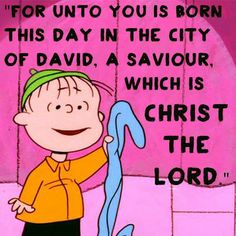
It is Linus who reminds him about the true meaning of Christmas.  A spotlight shines on Linus who, holding his blue "companion" blanket, takes the stage.  His speech opens with the words:  "And there were in the same country shepherds, abiding in the field, keeping watch over their flocks by night." A hush falls over the audience as we ponder Linus' message, that a baby, born in a lowly manger, has come into the world to save us.

You would think that given the enduring popularity of the TV show, that it would have been a success from the start.  However, A Charlie Brown Christmas had a bit of a rocky beginning.  Here are ten things you may not know about the Christmas special (http://thefw.com/10-things-you-probably-didnt-know-about-a-charlie-brown-christmas/).

1. Director Bill Melendez wanted to make the TV show as genuine as possible.  Therefore, he cast children from his Southern California neighbourhood in all of the roles except Charlie Brown, Linus and Lucy.


2.  In pursuit of sincerity, the director had to sacrifice practicality:  some of the children were so young they couldn't even read the script, including Linus, and he had to recite it to them line by line.


Lee with the voice actors and Bill Melendez


3.  Although it was standard practice at the time, Charles Schultz refused to have a laugh track inserted in the show, even walking out of a production meeting at one point.


4.  Charles Schultz, originally, was not a fan of jazz music.  However, it was Vince Guaraldi who had worked on the musical score for A Boy Named Charlie Brown.  Schultz had to admit that it gave the show a "childlike, bubbly tone" and for the sake of continuity, he asked Guaraldi to pen the score for the Christmas special too, a score which has now become its trademark.


5.  "The life of Jesus remained for Schulz a consuming subject."  Therefore, he wanted the story from St. Luke of Jesus' birth included in the TV show.  However, Melendez realized that Linus' speech took up an entire minute and suggested that it be cut.  However, Schultz insisted that it remain -- a speech that became the centre of the whole story.


6.  The network executives along with the chief sponsor, Coca Cola found the end product to be wry and melancholy rather than funny and upbeat.  They particularly worried about the TV show's religious overtones.  Therefore, they agreed to air it only once, and be done with it.


7.  Mendelson and Melendez feared that the public would not embrace the Christmas special.  However, "one of the animators -- he had had a couple of drinks -- said, 'It's going to run for a hundred years,' and then fell down.


8.  Snoopy was the easiest to animate and therefore got all of the action scenes.  The Peanuts gang all had large heads which made them difficult to work with.


9.  The original production included a plug for Coca Cola. While Snoopy tosses Charlie Brown and Linus around the ice as they skate, Linus goes flying into a sign advertising the famous soda.  The contract eventually ran out and the Coca Cola sign was replaced with a Danger one.


                   http://blog.fivecentsplease.org/2012/12/a-charlie-brown-christmas-coca-cola.html


10.  The drunken animator turned out to be right.  A Charlie Brown Christmas is the second longest running Christmas special of all time (next to Rudolph the Red Nosed Reindeer).  The original airing was watched by 15.4 million people.  TV critics gave it rave reviews.  Schulz and Mendelson earned an Emmy for Outstanding Children's Program.  It has aired every year since 1965 and still earns the highest ratings in its time slot.