Sunday, 7 June 2015

George Orwell's "Why I Write"

Eric Arthur Blair wanted to be a writer from the tender age of five or six.  He dabbled in poetry and in short stories, and became a "full fledged writer" with the publication of his first book, Down and Out in Paris in London.  It was also in England that he found a pen name, Orwell, after the Orwell River in East Anglia.

In Orwell's essay Why I Write (http://orwell.ru/library/essays/wiw/english/e_wiw), published in Gangrel magazine in 1946, he points out four reasons that authors take up the pen:

1.  ego:  "a desire to be talked about, to be remembered after death"

2.  aesthetic enthusiasm:  "Pleasure in the impact of one sound or another, in the firmness of good prose or rhythm of a good story"

3.  historic impulse:  "find out true facts and store them up for the use of posterity"

4.  political purpose:  "a desire to push the world in a certain direction"

It wasn't until 1936, after the outbreak of the Spanish Civil War, however, that Orwell found a definite purpose for his writing.  "Every line of serious work that I've written since 1936 has been written directly or indirectly against totalitarianism and for democratic socialism..." explained the famous author.  The political theme is evident in Animal Farm, published in 1945, and Nineteen Eighty Four, published in 1949.

Note:  Why I Write is listed as one of the Best American Essays of the Century by Joyce Carol Oates https://books.google.ca/books/about/The_Best_American_Essays_of_the_Century.html?id=XY1jAAAAMAAJ&redir_esc=y.


Saturday, 6 June 2015

Books on Essay Writing

Here are ten books on essay writing:

1.  The College Guide to Essay Writing (Jill Rossiter).

2.  The Nuts & Bolts of College Writing (Michael Harvey)

3.  Writing Essay Exams to Succeed (John C. Dernbach)

4.  The New Oxford Guide to Writing (Thomas Kane)

5.  100 Ways to Improve Your Writing (Gary Provost)

6.  501 Writing Prompt Questions (Learning Express Editors)

7.  Get Writing:  Paragraphs and Essays (Mark Connelly)

8.  Structuring Paragraphs and Essays:  A Guide to Effective Writing (A. Franklin Parks)

9.  The Situation and the Story:  The Art of Personal Narrative (Vivian Gornick)

10.  Writing Essays for Dummies (Mary Page)


Friday, 5 June 2015

Essay vs Short Story: What is the Difference?

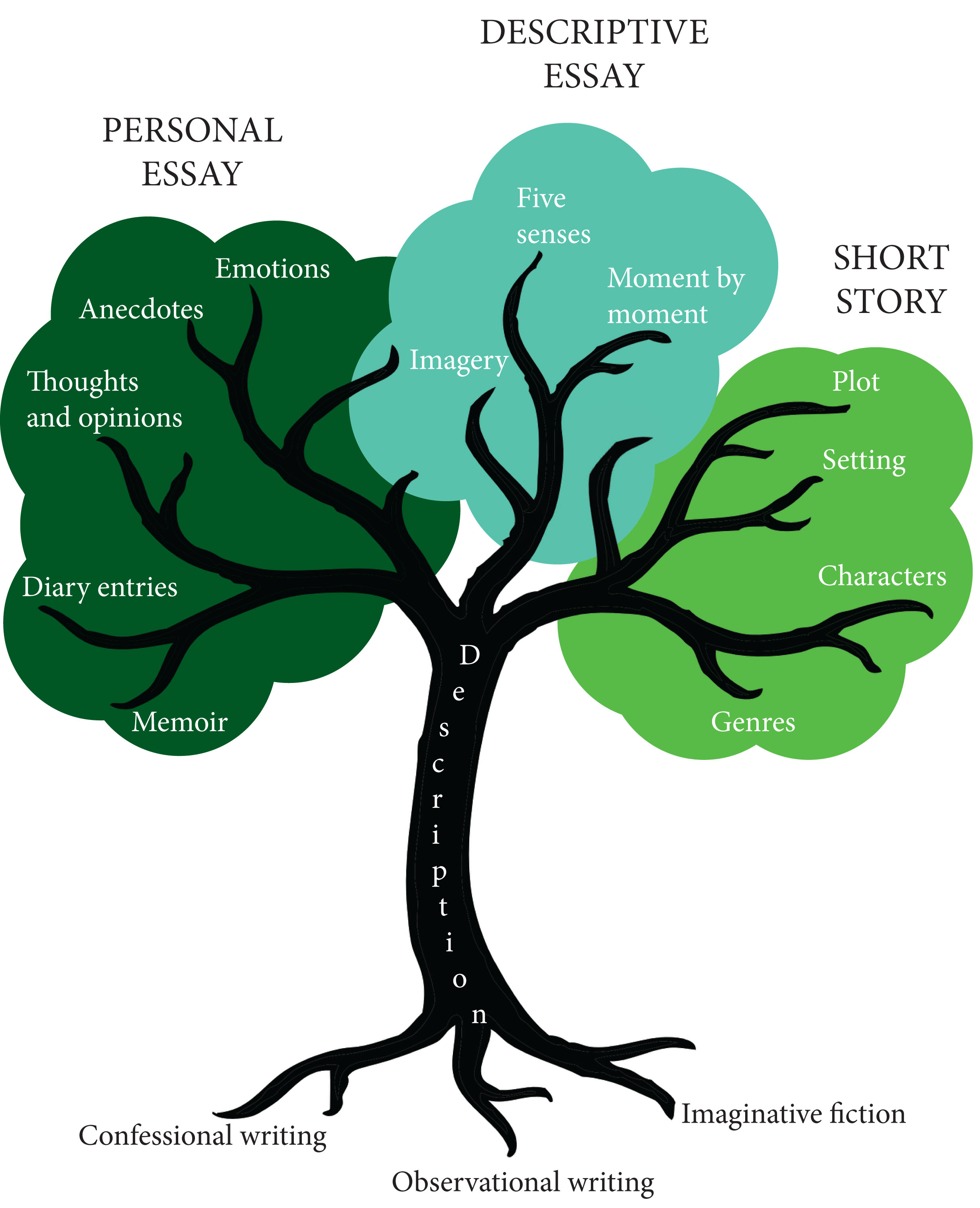
What are the basic differences between an essay and a short story?  An essay is non-fiction whereas a short story is fiction.  An essay can be anywhere from 1000 to 10,000 words.  A short story "should be able to be read in one sitting".  See Edgar Allan Poe's "Philosophy of Composition" (1846) at http://xroads.virginia.edu/~hyper/poe/composition.html.  An essayist shares his or her thoughts and beliefs.  A short story writer describes an experience or event.  An essay follows strict reason whereas a short story has the elements of plot, dialogue, setting, character and theme.

However, Sharon Lippincott points out that it doesn't hurt for an essay to have a bit of action and a short story to include a bit of self-reflection.  In fact, these are the stories that will connect with the reader.  Annie Dillard maintains that the essayist has more at his disposal than the short story writer. "The essay is and has been all over the map.  There's nothing you cannot do with it; no subject matter forbidden, no structure proscribed.

The "godfathers" of the essay are Thoreau, Twain and Poe while the expert short story writers are O'Henry, Stephen Crane and Jack London.  To learn more about essay writing, read Writing and Publishing Personal Essays by Sheila Bender.  Tom Bailey's On Writing Short Stories is a good source for writers as well.


Thursday, 4 June 2015

How to Write a Reader-Friendly Essay

"Good writing is never merely about following a set of directions." (Rachel Scheller)


While it is important to learn the basic rules of writing an essay, once you have done this, it is important to break away from tradition and find a fresh approach, says blogger Rachel Scheller (http://www.writersdigest.com/editor-blogs/there-are-no-rules/how-to-write-a-reader-friendly-essay).  Read other people's work with an analytical eye.  When you spot something "electric on the page", go back and determine what made it so.  Try to mimic the technique in your writing.  For instance, a young James Baldwin was heavily influenced by fellow black writer Richard Wright.  He likely incorporated some of Wright's techniques in his early works.  However, Baldwin soon found his own voice and style.  

First drafts of essays tend to be writer-based.  In your second draft, don't just edit the structure, organization, spelling and grammar of your work.  Translate it into a reader friendly essay.  Imagine someone else wrote it and come at it with an objective eye.   

"Be prepared to let it take on a shape of its own if this will create a more accurate, clearer, better argued essay," explains Stephen McClaren in Essay Writing Made Easy.  Take out anything irrelevant, anything that doesn't advance your argument.  When you take it out, it should be obvious that it didn't belong in the essay to start with.  McClaren likens an essay with a sentence or paragraph that doesn't fit to a painting of Sydney Harbour with a structure that doesn't belong (say, perhaps, the Statue of Liberty).  

McClaren offers a checklist to follow when crafting your essay:

  • is it writer-based or reader-based?
  • is there a clear argument?
  • is this material relevant?
  • what further information is needed?
  • is this statement backed up with evidence?
  • is there an organizational principle ordering the points discussed?
  • is the wording clear? (try it out on someone else)
  • how can I express this more clearly?


This artist, Alan Streets, brought his own flair to the painting of the Sydney Harbour.  The signature pieces of the harbour are there:  the bridge, the opera house, the water.  However, he did not copy a photograph.  Bring the same flair to your essay.  


Wednesday, 3 June 2015

The Art of the Personal Essay

"...all essays are an expression of the human voice addressing an imagined audience, seeking to shift opinion, to influence judgement, to appeal to another in his or her common humanity." 
(Joyce Carol Oates)


Yesterday I blogged about the educational or formal essay.  Today I am writing about the personal or informal essay.  If the goal of the educational essay is to inform the reader, the goal of the personal essay is to move the reader.  Joyce Carol Oates points out that "art should not be comforting...art should provoke, disturb, arouse one's emotions..." (http://www.amazon.com/Best-American-Essays-Century-Series/dp/0618155872).  

The personal essay writer shares his personal experience or opinion about a topic.  The topics can vary, but the theme should be universal.  Rather than a formal tone, the writer adopts a conversational tone.  The discourse should be natural.  The personal essay should be like a personal narrative which includes dialogue and characterization.  The writer should use scene building techniques.  The writer's emotions and feelings should be transparent.  It is an exercise in self-reflection for the writer.

While an article should be objective, a personal essay should be subjective.  It offers the reader "a glimpse into the writer's life", according to blogger Dave Hood (http://davehood59.wordpress.com/2010/05/02/what-is-a-personal-essay/).  Pay attention to the writer's unique use of language, or voice.  It is not what is said, but how it is said.  The reader needs to engage the writer's voice.

For more information, read Joyce Carol Oates' book The Best American Essays of the Century.


Tuesday, 2 June 2015

The Secrets to Writing an Effective Essay

According to the website "International Student", the standard college or university essay is constructed as follows:

1.  Introduction
2.  Paragraph 1
3.  Paragraph 2
4.  Paragraph 3
5.  Conclusion

Writer's Digest reminds us that, just as a rider wants to know where the bus is taking him, the reader wants to know where the writer is taking him (https://www.google.ca/webhp?sourceid=chrome-instant&ion=1&espv=2&ie=UTF-8#q=how%20to%20write%20an%20effective%20essay).  Announce your intentions in your introduction.  The website also mentions that the writer should never settle for the surface layer, but should lift the surface layer to find the deeper meaning.

Present a strong thesis statement and back it up with your three points.  Cite relevant and accurate sources.  Follow proper procedure for footnotes (http://www.wikihow.com/Do-Footnotes).  Don't just use books, but look for newspaper and magazine articles as well.  Anything that you find on the Internet can be full of errors.  Be weary.  Don't forget to include a bibliography (https://www.teachervision.com/research-papers/teaching-methods/1767.html).

Engage your reader right off the bat.  Start with an quote or anecdote.  Start with the familiar, something that your reader can relate to, and work your way up to the unfamiliar.

Start each paragraph with a sentence linking to the rest of the essay.  This gives your essay an easy flow and progression.

Use a variety of words so as not to bore the reader.  Vary your sentence length and complexity.

Adopt an educational, rather than a conversational, tone.  

Drive your point home with a strong conclusion.

For more information, read Essay Writing:  The Secrets Revealed by Cindy M. at https://www.facebook.com/essaysecrets.


Monday, 1 June 2015

Essay vs. Article: What is the Difference?

For the month of June, I am blogging about essays.  What is the difference between an article and an essay?  Here are some basic ways in which the two forms of writing differ.

1.  While articles are brief, about 500 to 1500 words in length, essays are long, up to 10,000 words in length.


2.  Essays include citations and references, both not required of an article.


3.  The purpose of an article is to give a factual account whereas the purpose of an essay is to focus on a central argument and its supporting arguments.


4.  Articles focus on topics like business, weight loss, health and travel, whereas essays focus on subjects such as historical events, characters or science experiments.


5.  Articles are usually accompanied by photographs; however, essays usually do not require photographs.


6.  Essays are usually subjective in nature whereas articles should be objective.

Subjective vs. Objective Writing


7.  Articles are often written in a conversational tone, but essays take on an educational tone.


Persuasive writing requires a credible tone.


8.  Essays, critical analyses, discuss the pros and cons of an argument, whereas articles, descriptive analyses, merely describe the topic.


9.  Essays require a conclusion, but articles do not.


End an Essay Step 5 Version 2.jpg


10.  Articles require headings and subheadings to help the reader follow along whereas essays do not.


For more information, visit http://www.projectguru.in/publications/difference-between-essay-article-and-journal/.