Showing posts with label persona. Show all posts

Tuesday, 19 May 2015

Persona Poetry: Wearing a Mask

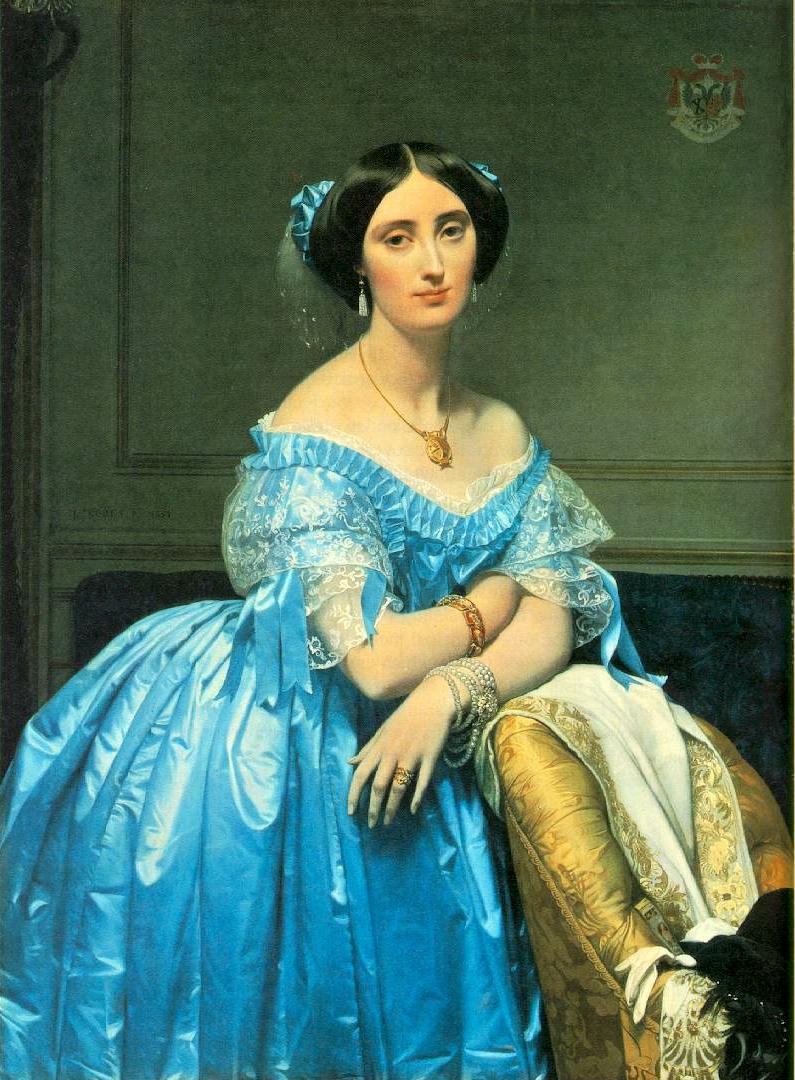
Character poems, or persona poetry, is a type of poetry where the author takes on the persona of another character.  Persona, comes from the Greek word "mask"; the author wears the mask of another character.  The author imagines the character's voice, age, interests and beliefs.  It is common to put a fresh twist on an old story when writing a persona poem.

The author can use the structure of the poem to mirror the speaker's circumstances.  For example, if the poem is the speaker is confused, the structure could be free verse.  Mary Ann's Samyn's "Alice Falling" is an example of such a poem   However, if the speaker is very structured, the poem should follow a rhyming scheme.  Robert Browning's "My Last Duchess" is written in Iambic pentameter to mirror the speaker's rehearsed speech, trying to convince the world he didn't poison his wife (http://www.sparknotes.com/poetry/browning/section3.rhtml).


A character poem is also a good vehicle for an author to retell an historical event.  For example, "Jessica from the Well" is written in the voice of Jessica McClure, the 18 month old baby who fell down a Texas well in 1987 (http://www.vqronline.org/jessica-well).  Similarly, the persona poem "34", by Patricia Smith, is written in the voice of the 34 New Orleans nursing home residents who were abandonned to die after Hurricane Katrina hit in 2005 (http://zooeysblogg.blogspot.ca/2009/09/patricia-smith-34.html).  Ms. Smith cleverly weaves the words of the Lord's Prayer into her poem.


Here is my character poem, The Captain, written in the voice of Captain Smith, on his maiden voyage of the Titanic, last voyage before retirement:

Wow!  She's a beauty and she's all mine.
What a chance to sail for the White Star Line.
Flaunting four funnels placed all in a row;
Four city blocks long with tugboats in tow.
Dropping the anchor twenty horses hauled.
I check my log for our first port of call.
We stop in Cherbourg, Southampton and Cork.
Now we're steaming on cue towards New York.
What a lovely evening; the stars are out.
It's a perfect night for a walkabout.
That crisp, fresh air makes me ready for bed.
but how about a cup of tea instead?
WAIT!  What was that awful, terrible crash?
The stewards ell me her side has a gash!
What should I do here?  What words should I say?
should I take action or should I now pray?:
They told me her compartments were airtight.
Yet it seems as if we're sinking tonight.
They told me there were no icebergs to check.
Yet I see pieces of ice on the deck.
Can I save my stately ship from demise?
Should I tell the truth or a bunch of lies?
Water's filling our hold due to the blast.
Where are the rowboats?  Let's fill them up fast!
Let all women and children get off first.
Another boiler is about to burst.
My S.O.S. is getting me nowhere;
That foll's completely ignoring our flares.
I should have retired when I had the chance.
Now I hear the brass band play the last dance.
There aren't enough lifeboats for everyone.
will my ship last 'til the rise of the sun?
We've only a short time left on this boat.
With so much water, we won't stay afloat. 
I pray my passengers' lives yo will spare.
Losing my crew would be too much to bear.
Please forgive me for this awful mistake!
Make it a nightmare from which i"ll awake.


Thursday, 26 February 2015

Fake It Till You Make It

American psychologist William James in his work "The Gospel of Relaxation" (www.uky.edu/~eushe2/Pajares/jgospel.html) said that not only can emotions drive our actions, but our actions can drive our emotions.  In other words, if you act differently, you will feel differently.  For example, if you're struggling with self-doubt, act confidently and eventually you will feel confident.

Can we translate this to the written word?  Is this theory something that bloggers can make use of?
According to D. Matriccino of Writer's Digest, it is (http://www.writersdigest.com/editor-blogs/there-are-no-rules/fun/fake-it-til-you-make-it).  Mr. Matriccino says that it's a neuroplasticity thing.  If you keep telling yourself that you are an expert, that you are a professional, sooner or later your brain will believe it.  As Mohammed Ali, the great boxer, once said:  "To be a great champion, you must believe you are the best.  If you're not, pretend you are."  According to Mr. Matriccino, sooner or later, you won't be pretending.

On the other hand, blogger Jeffrey Davis of Tracking Wonder, (http://www.productiveflourishing.com/confidence-make-it-dont-fake-it/) thinks the "fake it till you make it" theory isn't all it's cracked up to be.  Why not?

People do tend to be charmed by charisma.  Some consider it a way to compensate for incompetence and to overcome self-doubt.  However, according to Jeffrey Davis:  "Because faking it gets rewarded so often, we put more emphasis on learning to project confidence than on acquiring actual competence."

Jeffrey goes on to say that the "fake it till you make it" strategy is a result of the mistaken belief that humility equals weakness.  People in turn try to ooze confidence to convince others that they know what they're talking about.  In fact, it's vogue to hack education, to hack business and to hack mastery.  Everybody's an expert in their field.

However, the "fake it till you make it" advice is short sighted.  You can't be someone you're not.  The strategy diminishes merit and hard work.  Remember, there is no substitute for experience.  So, if you're a brand new blogger, come clean, admit it.  Yes, you won't come off as an expert.  But at the same time, you will be genuine.  And your readers will appreciate your candour.

Blogger Darrell Vesterfelt (http://goinswriter.com/fake-it/) agrees.  In the world of business, people feel a tremendous pressure to perform.  The blogosphere is no different.  As a new blogger, Darrell tried to pass himself off as a professional.  However, he only told his readers half the story:  he left out the part about sleeping on a futon in his friend's guestroom.  He was an impostor.

Furthermore, using the "fake it till you make it" strategy, Darrell lost sight of two important things in his writing. Firstly, he forgot about the message; he focussed on what others wanted him to say rather than what he wanted to say.  He neglected telling the weaknesses about his story.  "The irony is our weaknesses are what make our messages believable, because they are what make us, as storytellers and communicators, relatable and reliable."  Readers want to read a blog that is reliable.  See my post about consistency at http://alinefromlinda.blogspot.ca/2015/02/consistency-is-key-to-blogging-success.html.

Secondly, Darrell lost sight of his craft.  He wasted so much time and energy on faking it that he had none left for legitimate writing and for real growth.  In fact, he stopped writing on a daily basis, he stopped reading resources and he stopped inviting critiques of his work.  Darrell reminds us that if we can't write, we can't share our message.  "Don't lose your message because you're concerned with developping a persona."

Yes, confidence is important to writers.  However, you want to acquire it the right way.  Turn the saying around:  "Make it, Don't Fake It".  Then you'll feel that you've earned it.


http://herscoop.com/files/2013/08/mtzX6Dt.jpg