Showing posts with label Sweden. Show all posts

Sunday, 26 February 2017

Jorgen Kieler: Danish Resistance Fighter & Underground Newspaper Publisher


Danish underground newspaper courtesy https://www.pinterest.com/pin/409053578636788304/.

Danish physician Jorgen Kieler, along with his sister Elsebet Kieler, published the Frit Danmark or Free Denmark, an illegal newspaper circulated amongst the resistance in the Second World War.
While the Danes retained their radios, they still relied heavily on the news published in Frit Danmark, one of 600 different underground papers.  At its height, the Danish Resistance included 45,000 members.

Kieler helped dozens of Danish Jews avoid extermination by the Nazis.  In the Fall of 1943, rumour had it that the Gestapo was going to round up all of Denmark's Jews.  Kieler worked with the Resistance to co-ordinate the escape of Danish Jews.  In the dark of night, they met at the docks where they boarded fishing boats, cargo boats and any available, seaworthy vessels to cross the water to neutral Sweden.


\


The Danish Resistance sabotaging the Nazis courtesy 


Ordinary citizens like Kieler played a vital role in the escape.  There were obstacles to surmount, however.  First of all, to secure a place on an evacuation vessel could cost as much as $9,000 a head in today's dollars.  Second of all, the Gestapo became suspicious of activity around the harbours; eighty Jews were arrested in one escape attempt.  Therefore, the fleeing Jews had to be hidden while the preparations took place:  some were "admitted" to hospitals under false names; others took cover in churches; still others hid in holiday homes by the sea.  The crossing was rough.  Pregnant women found it particularly difficult.  The man in charge of one boat knew nothing about navigation.  When the passengers reached land, they realized they were right back where they started at the Danish docks.  All told, at least 7,500 Jews made it to safety in Sweden.

Jorgen Kieler was captured in 1944 and sent to a concentration camp where he remained for the duration of the war.  Upon liberation, he continued his medical studies in the United States.  He took on the fight against cancer just as passionately as the one against the Nazis.  In 1980, he became the director of the Danish Cancer Research Institute, tackling the disease just as passionately as he tackled the Nazis.  Kieler wrote books about both the German occupation and concentration camp syndrome.

Note:  Read Resistance Fighter:  A Personal History of the Danish Resistance Movement, 1940-1945 by Jorgen Kieler.


Danish Jews escape in the dead of night to Sweden courtesy 

Monday, 26 September 2016

Swedish Immigrant Caren Lundgren

"There was a lot of immigration [to America] when I was a child.  We used to go down to the train and watch the train.  There was a train station where I lived in Mattmar.  The people leaving had wreaths of flowers around their necks because that was the end.  They would never see them again, you see?  So those were funeral flowers practically around their necks." (Caren Lundgren)


Swedish train station circa 1920 courtesy 


Caren Lundgren was born in raised in Mattmar, Sweden, a settlement which consisted mainly of farmers.  Her father worked in the local mill.  She and her three younger brothers grew up in a modest house where they slept in the kitchen in the summer and the pantry in the winter.  They existed on fish as red meat was scarce.  

Caren finished school at 12 years of age.  She wanted to train to be a teacher, but had to wait until she was 16.  Her parents sent her to her grandparents house where she worked as a maid.  Her stingy grandfather, however, refused to pay her.  Caren longed to get out of the situation.  Her grandmother recommended:  "If I was a young girl, I would go to America."

That's exactly what Caren did.  "There was a lot of immigration [to America] when I was a child.  We used to go down to the train and watch the train.  There was a train station where I lived in Mattmar.  The people leaving had wreaths of flowers around their necks because that was the end.  They would never see them again, you see?  So those were funeral flowers practically around their necks."

In 1921, borrowing the passage money from her stingy grandfather, she packed her belongings in a square wooden box with a padlock, painted blue (perhaps for Sweden's flag).  Settled in steerage, Caren sailed on the M. S. Stockholm for America.  Arriving in New York Harbor, she waited three days until the immigration officials let the passengers disembark.  

Caren stayed for a few weeks at the Swedish Seaman's Home in New York City.  She secured a job as a kitchen maid in Long Island making $50 a week.  She worked with a Swedish cook who was insecure and took out her frustrations on Caren, calling her stupid every day.  Caren believed her.  She would wake up the next morning, her pillow soaked from the tears she had shed.

Caren was homesick for her family, but determined to stick it out.  "When I wrote home, I had to be so careful about getting tears on the paper.  I thought, 'I can't go back and admit i's so stupid.'  You know?  I was saving my money to pay back my grandfather and I did.  He couldn't understand how I could make that kind of money in such a short time."

Mercifully, Caren found another kitchen job and worked with a wonderful cook.  She saved enough money to visit her family twice, in 1926 and 1930.  They didn't have to wear the wreaths at the train station after all.


Villa Blue, a Long Island estate owned by Mr. Carter, circa 1910 courtesy http://www.oldlongisland.com/.


Sunday, 18 October 2015

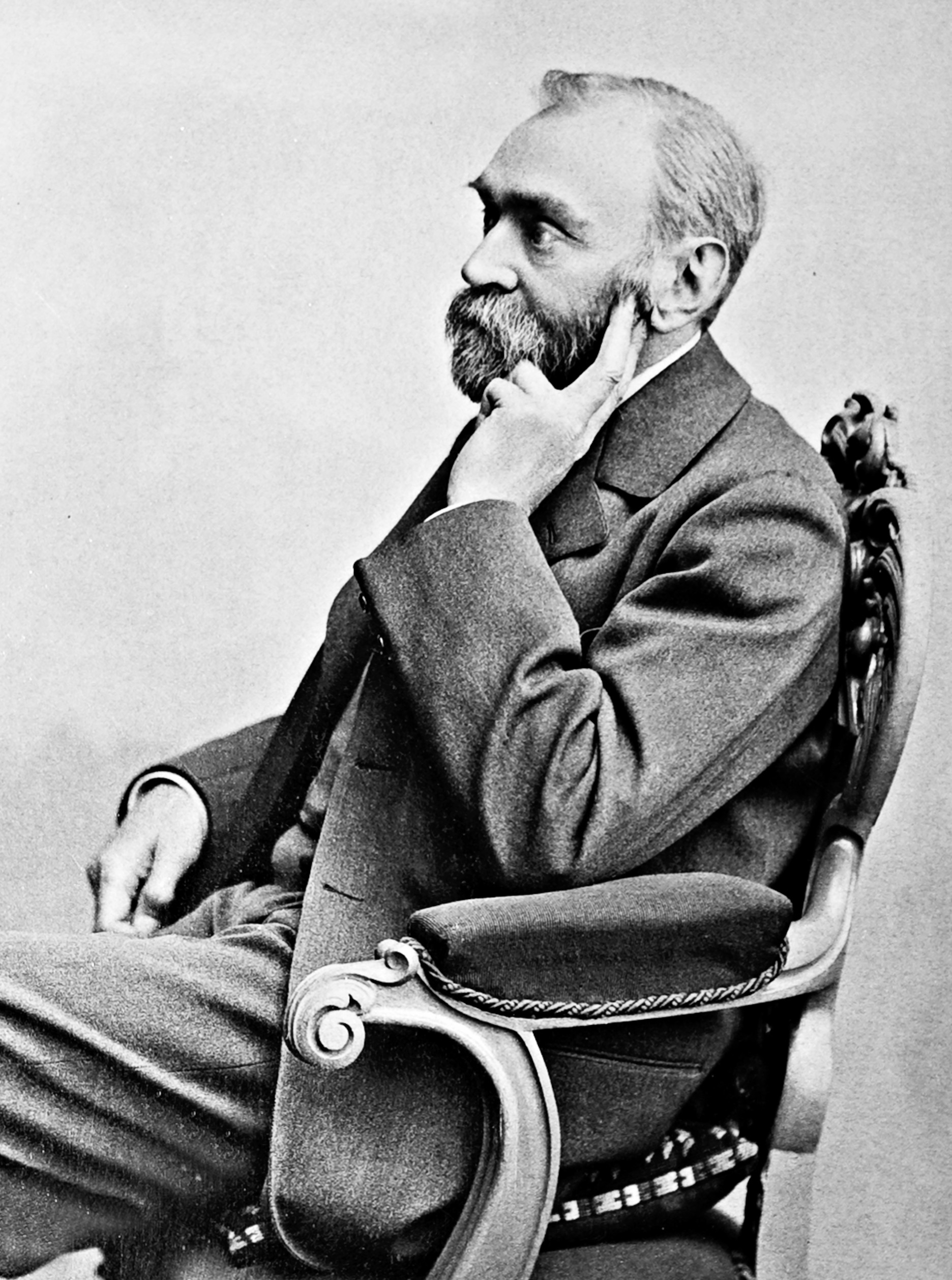
Alfred Nobel: Merchant of Death Became Champion of Peace

"The Merchant of Death is dead." (French newspaper, 1888)


"The Merchant of Death is dead," reported a French newspaper in 1888, mistaking Emil Nobel for his brother, Alfred.  Alfred Nobel, the inventor of dynamite, did not want to go down in history with such a moniker.  Childless and single, he decided to leave his fortune to a prize championing the cause of peace.  

Alfred Nobel was born into poverty in Stockholm, Sweden.  His father, an engineer, later built a decent career building bridges and buildings.  However, the economy suffered and downswing and Mr. Nobel declared bankruptcy.  Later, he moved to St. Petersburg, Russia where he finally enjoyed some financial success.

From a young age, Alfred demonstrated a passion for knowledge.  He particularly loved poetry and dabbled in it as a youth.  However, his father, wanting him to be an engineer, discouraged his study of literature.  Alfred also showed a passion for languages, becoming fluent in Swedish, German, French and Russian, English, which would serve him well in his world travels.  Alfred's knowledge of the latter was vast enough to write poetry in it.

Mr. Nobel sent his son to Paris, France to study science.  Later, Alfred moved to America to study under the engineer John Ericsson, who built the Civil War ship the USS Monitor.  While in Russia, Alfred studied under chemist Nikolai Zinin.  

Alfred fell in love with chemistry and devoted the rest of his life to studying it.  He was particularly interested in inventing a substance that would detonate nitroglycerin safely.  His patent for dynamite followed in 1867.  While he lost his brother Ludwig to a chemical experiment in 1888, he continued to work in the field.  Eventually he filed 355 patents and opened a worldwide network of almost 100 factories.  Alfred amassed a fortune of $9 million, which he donated to the Nobel Prize upon his death.

For more information, visit http://www.mensxp.com/special-features/today/10506-historys-best-inventors-alfred-nobel.html.