Showing posts with label Croix de Guerre. Show all posts

Tuesday, 21 February 2017

The White Mouse: The Socialite Who Killed a Nazi with Her Own Hands

"A little powder and a little drink on the way, and I'd pass their [German] posts and wink and say:  'Do you want to search me?'  What a flirtatious little bastard I was." (Nancy Wake)
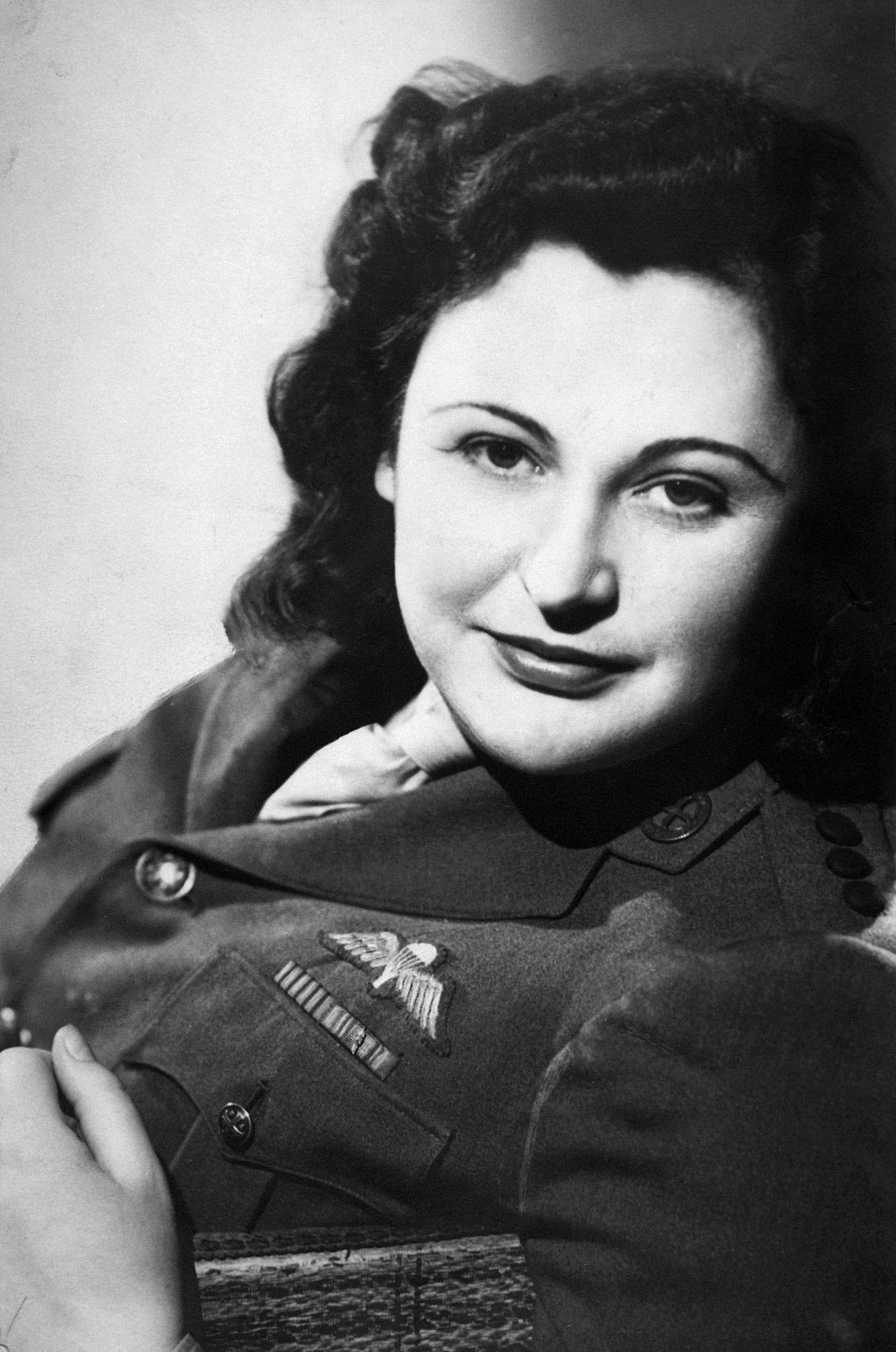


Nancy Wake (1945).jpg


She was nicknamed The White Mouse for her ability to elude capture by the Gestapo.  She killed a Nazi with her bare hands.  Five million francs were wanted on her head.  

Nancy Wake was born in New Zealand in 1912 and raised in Australia.  Her father abandonned the family and she ran away at 16, sailing to New York City and later to London.  In the 1930's, Nancy trained as a journalist and worked for the Hearst newspapers as a European correspondent.  She met and married a French industrialist in 1937.  The following year, Nancy "saw roves of Nazi gangs randomly beating Jewish men and women in the streets in Vienna".  

Vowing to help the Jews, she joined the French Resistance.  The Australian bombshell, an unlikely candidate as a spy, used her feminine wiles to distract the enemy.  "A little powder and a little drink on the way, and I'd pass their [German] posts and wink and say:  'Do you want to search me?'  What a flirtatious little bastard I was." When the Gestapo did catch on, they started tapping her phone and intercepting her mail.  However, unable to catch her in person, they nicknamed her "The White Mouse".  

With five million francs on her head, she fled to Marseilles.  Her husband, who remained in Paris, was captured, tortured and executed by the Gestapo, paying the price for his wife's role in the Resistance.  Unaware of her husband's fate, Nancy continued to carry out her daring work.  On the night of April 29, 1944, she parachuted into Auvergne, France to serve as a liasion officer for the local maquisards. From July of 1944 to the liberation of France, Nancy and her fellow maquisards fought 22,000 German soldiers and inflicted 1400 casualties while only sustaining 100 casualties. The White Mouse even killed a Nazi with her bare hands using a karate chop she learned in Resistance training.

Ever eluding the Gestapo, Nancy crossed the Pyrenees to Sapin on her sixth attempt.  To replace codes for her wireless operator, she rode a bicycle over 500 kilometres through German checkpoints.  The Second World War ended with no one claiming the prize on her head.

For her heroic efforts, Nancy Wake received the Croix de Guerre (3 fois), Medaille de la Resistance, Medal of Freedom and George Medal.  She married a RAF officer in 1957 and returned to Australia where they enjoyed a 40 year marriage.  


For more information, read:

1.  The White Mouse (Nancy Wake, 1985).
2.  The Socialite Who Killed a Nazi with Her Bare Hands (New York Times, 2012).

Thursday, 24 November 2016

Ian Fleming Patterned James Bond After World War II Agent

"Yeo-Thomas used a range of techniques to escape or evade his enemies, including jumping from a train, strangling a guard, wearing disguises and riding in a hearse.  These methods echo tactics later used by Bond.  And like Bond, Yeo-Thomas always carried a weapon.  In Paris, he once shot an enemy agent and threw him into a river." (www.dailymail.co.uk)


Memo: James Bond author Ian Fleming, who also worked in intelligence during the war, informed colleagues of Yeo-Thomas's escape from the Gestapo in this 1945 document


James Bond author Ian Fleming worked in intelligence during the Second World War.  In the closing days of the conflict, he sent a memo to his colleagues about the escape of Forest Yeo-Thomas, a special agent who had been parachuted into occupied France three times during the war.  Yeo-Thomas, who seemingly had nine lives, would serve as the inspiration for 007.

Forest Yeo-Thomas, born in London, England, moved to Dieppe, France at an early age, where he became fluent in French.  Forest Yeo-Thomas, nicknamed Tommy, served as a wing commander in the Polish Soviet war of 1919-1920, where he earned the Cross of Merit.  

After the Evacuation at Dunkirk early in the Second World War, Yeo-Thomas escaped back to England.  He was hired as an interpreter for DeGualle's Free French Forces.  However, the British Special Operations Executive soon lured him away to work in intelligence.  Yeo-Thomas became a liaison officer with the Bureau Central de Renseignements et d'Action.  

Yeo-Thomas parachuted into occupied France for the first time in February of 1943, armed with the assignment to obstruct the German occupation.  Donning a disguise, he dined with Klaus Barbie, the Butcher of Lyon, aboard a train.  

Yeo-Thomas returned to England where he begged five minutes with Prime Minister Winston Churchill.  Granted an audience, the special agent begged for more resources for the French Resistance.  

The fearless liaison officer parachuted again into occupied France in February of 1944 where he was captured at a Paris Metro station.  Recognized as "The White Rabbit", as the Gestapo nicknamed him, he was tortured with physical beatings, electric shock and submersion in ice-cold water for four days.  The latter caused him to pass out and be resuscitated by the guards.

The Gestapo sent Yeo-Thomas to Buchenwald Concentration Camp.  But they couldn't keep a good man down.  He escaped, was recaptured, posed as a French National and was sent to Stalag XX-B.  It was there that Yeo-Thomas donned a disguise, shot an enemy agent, escaped and reached Allied lines in April of 1945.  Commander Ian Fleming, also in British intelligence, learned about the escape and sent out a memo informing his colleagues of Yeo-Thomas' safe return.

Inspired by the daring exploits of the Special Agent, Fleming penned his first James Bond story Casino Royale in 1952.  "Yeo-Thomas used a range of tactics to escape or evade his enemies, including jumping from a train, strangling a guard, wearing disguises and riding in a hearse.  These methods echo tactics later used by Bond."

Yeo-Thomas' exploits did not go unrecognized.  He was honoured with about a dozen awards including:  the George Cross, Legion of Honour and Croix de Guerre.  However, his dangerous career did take its toll:  Yeo-Thomas suffered from recurring nightmares and illness.  He passed away in 1962, three years before Churchill, the leader who led his country through the infamous conflict.


Hero: Wing Commander Forest 'Tommy' Yeo-Thomas, has been identified as the inspiration behind Ian Fleming's character James Bond


For more information about Forest Yeo-Thomas:

1.  Watch Carve Her Name with Pride (movie starring Michael Caine).
2.  Watch The White Rabbit (BBC television mini-series).
3.  Read Churchill's White Rabbit:  The True Story of a Real Life James Bond (Sophie Jackson).


Wednesday, 12 August 2015

Ian Fleming Patterned James Bond After World War II Agent

"Yeo-Thomas used a range of techniques to escape or evade his enemies, including jumping from a train, strangling a guard, wearing disguises and riding in a hearse.  These methods echo tactics later used by Bond.  And like Bond, Yeo-Thomas always carried a weapon.  In Paris, he once shot an enemy agent and threw him into a river." (www.dailymail.co.uk)


Memo: James Bond author Ian Fleming, who also worked in intelligence during the war, informed colleagues of Yeo-Thomas's escape from the Gestapo in this 1945 document


James Bond author Ian Fleming worked in intelligence during the Second World War.  In the closing days of the conflict, he sent a memo to his colleagues about the escape of Forest Yeo-Thomas, a special agent who had been parachuted into occupied France three times during the war.  Yeo-Thomas, who seemingly had nine lives, would serve as the inspiration for 007.

Forest Yeo-Thomas, born in London, England, moved to Dieppe, France at an early age, where he became fluent in French.  Forest Yeo-Thomas, nicknamed Tommy, served as a wing commander in the Polish Soviet war of 1919-1920, where he earned the Cross of Merit.  

After the Evacuation at Dunkirk early in the Second World War, Yeo-Thomas escaped back to England.  He was hired as an interpreter for DeGualle's Free French Forces.  However, the British Special Operations Executive soon lured him away to work in intelligence.  Yeo-Thomas became a liaison officer with the Bureau Central de Renseignements et d'Action.  

Yeo-Thomas parachuted into occupied France for the first time in February of 1943, armed with the assignment to obstruct the German occupation.  Donning a disguise, he dined with Klaus Barbie, the Butcher of Lyon, aboard a train.  

Yeo-Thomas returned to England where he begged five minutes with Prime Minister Winston Churchill.  Granted an audience, the special agent begged for more resources for the French Resistance.  

The fearless liaison officer parachuted again into occupied France in February of 1944 where he was captured at a Paris Metro station.  Recognized as "The White Rabbit", as the Gestapo nicknamed him, he was tortured with physical beatings, electric shock and submersion in ice-cold water for four days.  The latter caused him to pass out and be resuscitated by the guards.

The Gestapo sent Yeo-Thomas to Buchenwald Concentration Camp.  But they couldn't keep a good man down.  He escaped, was recaptured, posed as a French National and was sent to Stalag XX-B.  It was there that Yeo-Thomas donned a disguise, shot an enemy agent, escaped and reached Allied lines in April of 1945.  Commander Ian Fleming, also in British intelligence, learned about the escape and sent out a memo informing his colleagues of Yeo-Thomas' safe return.

Inspired by the daring exploits of the Special Agent, Fleming penned his first James Bond story Casino Royale in 1952.  "Yeo-Thomas used a range of tactics to escape or evade his enemies, including jumping from a train, strangling a guard, wearing disguises and riding in a hearse.  These methods echo tactics later used by Bond."

Yeo-Thomas' exploits did not go unrecognized.  He was honoured with about a dozen awards including:  the George Cross, Legion of Honour and Croix de Guerre.  However, his dangerous career did take its toll:  Yeo-Thomas suffered from recurring nightmares and illness.  He passed away in 1962, three years before Churchill, the leader who led his country through the infamous conflict.


Hero: Wing Commander Forest 'Tommy' Yeo-Thomas, has been identified as the inspiration behind Ian Fleming's character James Bond


For more information about Forest Yeo-Thomas:

1.  Watch Carve Her Name with Pride (movie starring Michael Caine).
2.  Watch The White Rabbit (BBC television mini-series).
3.  Read Churchill's White Rabbit:  The True Story of a Real Life James Bond (Sophie Jackson).