Showing posts with label literacy. Show all posts

Tuesday, 26 July 2016

How Andrew Carnegie Built the Architecture of American Literacy

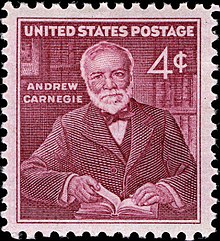
"A library is the best possible gift to a community for it gives people a chance to improve themselves." (Andrew Carnegie)


The United States had 1689 of these buildings while Canada had 125.  They were known for their turrets, columns and arches, "the architecture of American literacy".  


                                Image


Andrew Carnegie, an immigrant from Scotland to the United States, had been denied access to a Pittsburgh library was he was a boy (http://alinefromlinda.blogspot.ca/2014/06/andrew-carnegies-letter-to-editor.html).  After accumulating his wealth in the steel industry, he vowed to use it to educate those less fortunate.  Between 1893 and 1919, Andrew Carnegie donated $1.3 billion to finance the building of libraries dotting the American landscape.  Carnegie's legacy reached every state in the contiguous United States except Delaware and Rhode Island.  The majority, however, sat in what is now the Rust Belt (Indiana had the most at 165) and California.   


The castle like Carnegie Library in Braddock, Pennsylvania courtesy http://andrewcarnegie.tripod.com/photoalbumCL-AllegCo.htm.


"It was an expectation in communities across the country -- if you didn't have a library somehow you weren't supporting culture...What Carnegie did was simulated the desire for libraries in communities across the country," explains Wayne Wiegand, professor emeritus of library studies at Florida State University (http://www.citylab.com/design/2014/10/how-andrew-carnegie-built-the-architecture-of-american-literacy/381953/).


St. Pete Mirror Lake Library02.jpg

The St. Petersburg, Florida Carnegie Library reflects the local architecture courtesy https://en.wikipedia.org/wiki/List_of_Carnegie_libraries_in_Florida.


Many Carnegie libraries are known for their architecture.  While architects and librarians argued over the design of the buildings, Carnegie sided with the latter.  "Architecture was to be avoided.  Architecture was what was going to make the library expensive."  Like a true Scotsman, Carnegie wanted to preserve costs.


The plain design of the Ritzville, Washington Carnegie Library courtesy https://en.wikipedia.org/wiki/Ritzville_Carnegie_Library.


Carnegie's secretary, James Bertram, sent a pamphlet to communities planning the construction of a Carnegie library titled "Notes on the Construction of Library Buildings".  The pamphlet contained a crude design for six different templates; built into every design was a community centre or auditorium.  Ironically, the growth of each library's book collection crowded out its community centre.
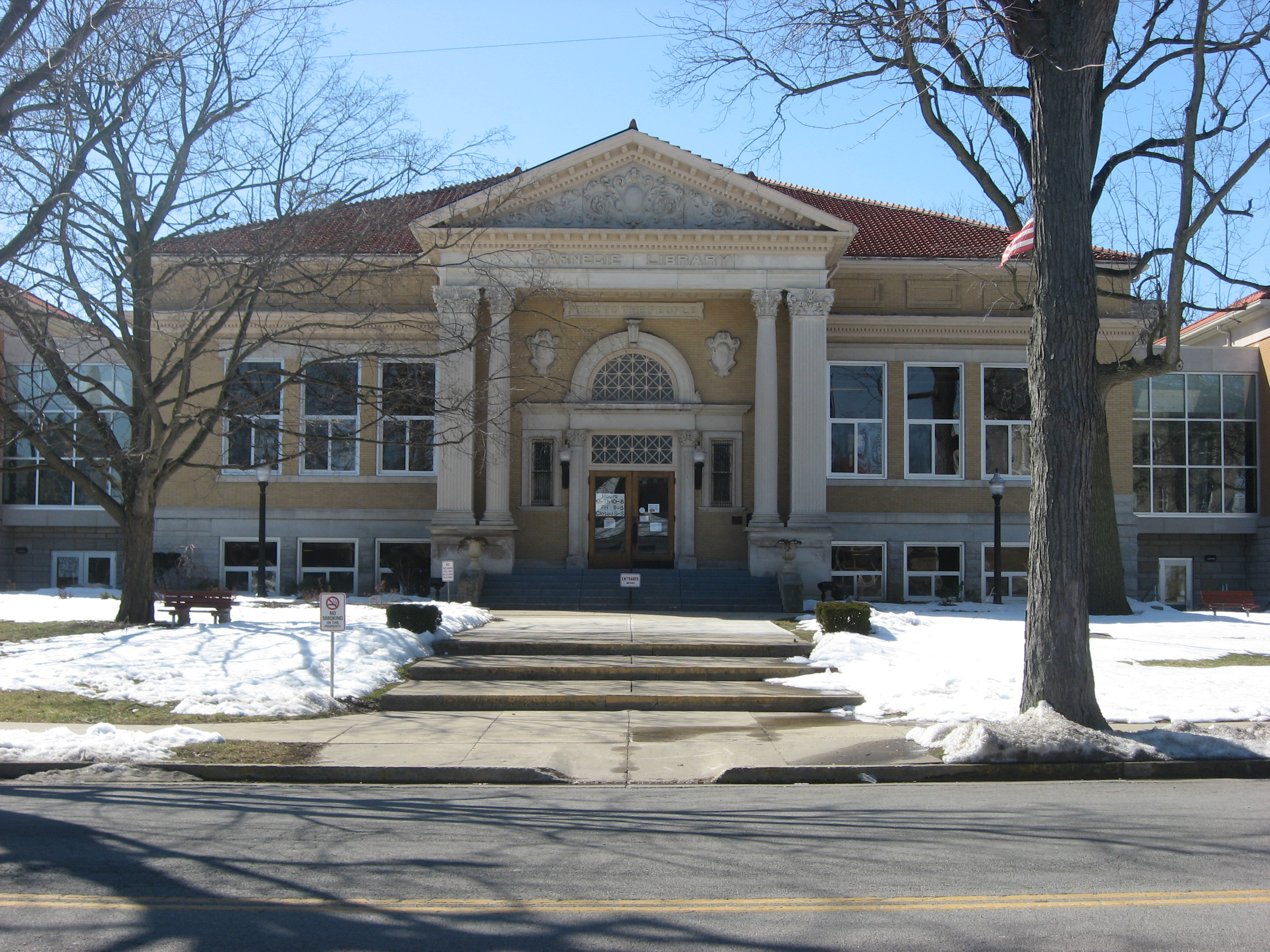

Greenville, Ohio Carnegie Library featured both an auditorium and a range of classrooms for the city's students courtesy https://en.wikipedia.org/wiki/Greenville_Carnegie_Library


Today, libraries are once again oriented around services to the community.  Close to 800 Carnegie libraries are still in use while 350 have been re-purposed as offices and cultural centres.  Sadly, 275 have been razed or destroyed.  Some, as in the case of the Cambridge Library in Southern Ontario, sit vacant, their massive columns standing testament to the Architecture of American Literacy.


Tuesday, 3 March 2015

Extra! Extra! Read All About It!

"The meteroic rise of the penny presses and their significant influence on thinking have only been eclipsed by the Internet and hypertext." 


The rise of the penny press contributed to a rise in the literacy rate in the United States.  Previously newspapers had been priced at 6 cents a copy, making them unaffordable for the middle and lower class.  However, with the invention of the penny paper, newspapers became accessible to the masses.  
By the 1830's, newspapers were being printed by a steam power press rather than handcrafted, speeding up the process.  Newspapers relied heavily on subscriptions and political parties for support.  However, the penny papers relied instead on advertisements to pay for their expenses.  


An early penny newspaper was the Boston Transcript which first rolled off the presses in 1830 featuring articles about literature and the theater.  In 1833, the New York City Morning Post offered "all the news of the day and a medium for advertisements" to New Yorkers.  The Morning Post followed the London Plan example, using newsboys on street corners to hawk its newspaper.

The same year, Benjamin Day debuted his paper, The Sun which featured human interest stories and prided itself on high quality reporting and writing.  It too relied on ads rather than subscriptions. With its simple vocabulary and diction, the Sun developped a readership not just among adults, but also children.  It was little Virginia O'Hanlon, in 1897, who wrote her famous letter to the Sun and received the response "Yes, Virginia, There is a Santa Claus."


As one writer pointed out, "In the cities of New York and Brooklyn, containing a population of 300,000, the daily circulation of the paper is not less than 7,000.  This nearly sufficient to place a newspaper in the hands of every man in the two cities and even of every boy old enough to read." With a rise in readership came a rise in literacy.  And with a rise in literacy a rise in the power of the working class.  Public education became a part of the American consciousness. 

Some would argue that the penny press dumbed down the newspaper.  Whereas before articles focussed on politics, public statement and commercial and foreign news, the penny papers featured articles about humour, sex, sports and crime.  Yet, the penny press was giving its readers what they wanted.  Its owners knew that if the content was interesting, it kept the readers coming back for more.


The newspaper continued to influence the literacy level in the United States into the 20th Century.  A young black boy growing up in the Deep South was denied a library card due to his skin colour,  His mother, a teacher, used to dig through garbage cans to find comics for him to read, comics which came from the newspapers of the day.   The young man grew up to become one of the most influential writers of his time, Richard Wright.

While some of the penny papers folded, some remain active, including The New York Daily Times, which is now The New York Times, which continues to influence readers, far and wide, young and old, rich and poor.  The only difference is that today the paper costs $2.50 rather than one penny.


Sunday, 1 March 2015

The History of the Newspaper: How it Sparked a Revolution

Newspapers are unique barometers of their age.  They indicate more plainly than anything else the climate of the society to which they belong. (Francis Williams, Daily Herald)


This month I am blogging about writing newspaper articles.  I thought I would start with the history of the newspaper.  While the printing press was invented way back in 1495, it was not until the 17th Century that its use became widespread.  The printing press paved the way for the newspaper.

According to Wikipedia, the Strasbourg Revelation, which debuted in Germany in 1609,  is considered to be the original newspaper.


http://en.wikipedia.org/wiki/History_of_newspapers_and_magazines#mediaviewer/File:Relation_Aller_Fuernemmen_und_gedenckwuerdigen_Historien_(1609).jpg


The avvissi or gazzette appeared in Venice in the mid-16th Century.  It consisted of a single sheet of paper folded into four pages and was published once a week.

The Dutch Courante uyt Italien Duytslandt appeared in 1618.  It was the first folio type paper rather than a quarto-size and was published in Amsterdam, home to many newspapers at the time.

In 1665, the London Gazette first started publishing.

France published its first newspaper, La Gazette, in 1631.


The first daily newspaper, The Daily Courant, appeared in 1702.  Readers were hungry for sensationalism, magic, public executions and disasters.

The first newspaper appeared in the Thirteen Colonies in 1690, called the Public Occurrernces both Forreign and Domestick.  It was divided into two columns on a single sheet of paper, both sides.

The year 1789 was a crucial year for the French, highlighted by the storming of the Bastille, on July 14, sparking the French Revolution. The Estates-General held numerous meetings of which the public was curious.  One hundred and thirty newspapers were created within that year alone to meet the demand.  Within the next decade, 2000 new French newspapers appeared in circulation, 500 of which debuted in Paris.  In fact, these newspapers were credited with helping stimulate the Revolution.

Anonymous - Prise de la Bastille.jpg

The storming of the Bastille, July 14, 1789, courtesy http://en.wikipedia.org/wiki/French_Revolution.


News agencies, which helped give stories country and later worldwide coverage, first appeared in 1859, spurred on by the invention of the telegraph.  Havas opened in France, offering 1800 lines of telegraph text daily.  Agenzia Stefani opened in Italy, Reuters in Britain and Wolff in Germany, and the Associated Press in the United States.

With the literacy level on the rise, the size of newspapers increased.  Newspapers devoted a large portion of their paper to war reporting, which was hastened by the rise of the telegraph.  The British paper, The Times, led the way with war coverage, reporting on the conflict in Crimea.  A new brisk writing style developped with London newspapers setting the pace.  By the mid 19th Century, London had no less than 52 publications.  See The Historical Dictionary of War Journalism at http://www.amazon.com/Historical-Dictionary-Journalism-Mitchel-Ph-D/dp/0313291713.


William Howard Russell was known for his excellent coverage of the Crimean War courtesy http://en.wikipedia.org/wiki/William_Howard_Russell.


While literacy helped the cause of the newspaper, the tax stamp, introduced in 1802, did not.  The next few decades saw a decrease in newspaper circulations as the public could not afford the new tax. However, in 1836, the stamp tax went down and London newspaper circulation bloomed from 39,000,000 to 122,000,000.

In 1880, the Pall Mall Gazette debuted The New Journalism, featuring maps, diagrams and catchy headlines to break up its longer articles.


Pall Mall Gazette map of Jack the Ripper murders courtesy 


The turn of the century saw the rise of the tabloid, something that we still see as we line up at the cashier in the grocery store.

World War I marks the end of the golden era of newspapers.  Men went off to war leaving the newspaper offices empty; women were not considered as a suitable replacement for men at the time. Rail transportation was rationed, as well as paper and ink, making it difficult to publish a newspaper. As the cover price increased, the circulation decreased.  Nevertheless, newspapers gave Americans and Canadians an opportunity to see the First World War up close, given that it was a whole ocean away.

World War II saw dictators like Hitler spread their propaganda.  The Nazi anti-semitic message was preached in Das Schwarze Korps, the official SS newspaper.


Das Schwarze Korps, the official SS newspaper, courtesy http://en.wikipedia.org/wiki/Nazi_propaganda.

The Soviet top propagandist during World War II, Ilya Ehrenburg, wrote for the newspaper Izvestiia. Part of a Soviet hate campaign, he managed to convince thousands of Russians that the Germans were subhuman in his article, "Kill the German".


By the 1990s, the advent of the computer saw the productivity of newspapers skyrocket.  Today more words are being printed every second than were printed every year in the fifteenth and sixteenth centuries http://www.hrc.utexas.edu/educator/modules/gutenberg/books/printing.  And yet with the computer came the Internet, averting the attention of readers from newsprint to the computer screen. Newspapers, however, as the New York Times editor once said, continue to publish "all the news that's fit to print".