What type of blog do you write? Here are the ten main types:
1. Rogue
The first type involves telling others your opinion. It often polarizes a subject, making you choose sides. One benefit of this blog is you get things off your chest. One drawback is that you invite negative comments from your readers. To write such a blog, you need lots of passion, knowledge and experience. A good example of a Rogue blog is Viperchill (http://www.viperchill.com/).
2. Guest Host
By guest host, I mean you invite people to create guest posts for your blog (not to be confused with guest posting, when you write for someone else's blog). Will Hoekenga gives the example of KISSmetrics which built a 400,000 visitor per month blog mainly using guest authors.
The benefits of using a guest host are you save time writing and your guest author can help with the promotion of your blog. The drawbacks are that you need a substantial following to start attracting guest hosts. Also, it requires time and energy to woo the right guest bloggers.
Will Hoekenga gives the example of OkDork.com, which has shared guest posts from famous bloggers like Garret Moon: "We Analyzed Nearly 1 Million Headlines. Here's What We Learned" (http://okdork.com/2014/07/22/we-analyzed-nearly-1-million-headlines-heres-what-we-learned/) and Buzz Sumo "Why Content Goes Viral: What Analyzing 100 Million Articles Taught Us" https://twitter.com/buzzsumo/status/526754023257698304.
3. Crash Test Dummy
Pat Flynn of SmartPassiveIncome (www.smartpassiveincome.com/category/podcast/) coined the phrase Crash Test Dummy in blogging. IN this type of blog, writers test strategies, techniques and tools, sharing what works and what doesn't. It's a detailed how-to article. The drawbacks of this type are that you need consistent results, you need to chronicle not only your successes but also your failures, it takes weeks or even months to create and you may in the end help your competitors. Willo Hoekenga recommends visuals like screenshots, charts and GIFs. The formula is as follows: a step by step process + results + teaching.
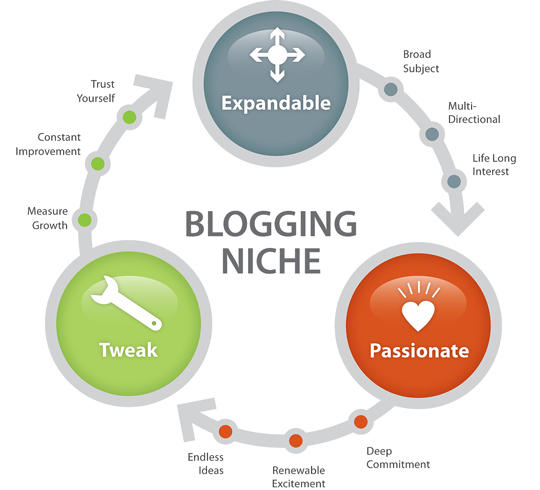
4. The Niche
The benefits of the niche are its narrow focus, you can easily define your readers and you transform your passion into your business. The drawbacks are that it is limiting and you need to constantly find new ideas. An example of the niche is Stephanie Le's I Am a Food Blog (http://iamafoodblog.com/) which contains "drool-worthy pictures", a clean layout, simple formatted recipes and good writing, according to Mr. Hoekenga.
5. The Giver
The Giver blog offers free bonus content. The benefits of this type are that you collect e-mail opt-ins, you delier more value and you have better content creation. The drawbacks are that you sepnd added time on preparing gifts and you need content upgrades relevant to the post. Here is how it works. You write a post about a certain topic. Then you offer free downloadable content about that post in subsequent posts in the form of an infographic , PDF checklist, etc. You can use a LeadBox to link any text, button or image in your post to a popup window. Bryan Harris' Videofruit blog (http://videofruit.com/) is a good example of the Giver.
6. The Guide
This blog type goes hand in hand with personal development, life coaching and spirituality. The positives of this blog are the personal connection that can develop between the blogger and the reader, the potential for personal growth and the fulfilling feeling of helping others. The negative aspects of the blog are the fact that it's an overpopulated category, you're dealing with a sensitive, delicate topics. Here a a good example of a Guide blog post "How to Believe in Yourself: Pursuing Happiness When It's Already Within You" (http://zenhabits.net/pursuing-happiness/).
When writing this type of blog, give readers a way to continue the conversation ex. include an action checklist. Don't neglect to share your own journey. Be honest and transparent. Empower your readers to solve their own problems.
7. The Homer
The poet Homer, who wrote The Iliad, was known for his long, narrative verse; his poems were the length of books. Therefore, Homer blog posts are long -- 2,500 words or more. The blogger starts at Point A and weaves his way to a very different Point B. Statistics show that longer articles get more shares. If the post is 1,000 to 2,000 words long, it will get an average of 6,000 shares. If the post is 2,000 to 3,000 words long, it will get on average 7,500 shares. Once the post length is over 3,000 words, the number of shares does not go up as dramatically. While you want to lengthen your post, don't pad it. Make sure your information is valuable and worthwhile. Check out JohnnyBTruant (http://johnnybtruant.com/) to read a Homer-type post.
8. The Tell-All
Will Hoekenga asks: "Have you ever walked to the top of the mountain and through the valley of the shadow of death?" If so, you might be a candidate for the Tell-All Blog. You have learned our lessons the hard way. Your posts are shockingly revealing and yet highly valuable. Readers relate because you have walked in their shoes.
The positives of this blog type are that you get to show lots of personality, you have the potential of building a strong brand and the results can be compelling. The negatives are that crazy experiences are a prerequisite, you need a lot of creativity and narration in your post, and you can't leave anything out -- include every juicy detail. As James Altucher, at The Altucher Confidential, (http://www.jamesaltucher.com/) explains: "For some reason I've turned myself inside out and all my guts have spilled into my blog."
When I think of a Tell-All book, I think of The Sixteenth Round written by Rubin "The Hurricane" Carter (http://alinefromlinda.blogspot.ca/2011/05/power-of-pen.html). Here's a man who was imprisoned for a murder he did not commit, as the result of a racially motivated verdict. While in prison, he sat down at his typewriter and poured out his soul on the page. He left nothing out. He laid his heart bare. The pages oozed raw emotion. He guarded that manuscript with his life. While his autobiography was published, he had a brief time in the spotlight and then people forgot about him. But about ten years later, a young Brooklyn boy read his book. He shared it with his lawyer friends who took on his cause and within three years, the Hurricane was released! It's a great story of the power of the pen. So, when you write your Tell-All blog, be like "The Hurricane" -- and your readers will eat it up.
9. The Personal Brand
Seek to be an expert in your field. Use your name on your URL and Facebook page. If you present yourself as an expert, people will more likely:
-ask you to be a consultant
-book you as a speaker
-invite you to guest post
-hire you
The positives about The Personal Brand type are that you position yourself as a speaker and you increase your name recognition. The negatives are that you must be comfortable in the spotlight and sometimes you have to treat yourself like a product or commodity. A good example of a Personal Brand blog is Marie Forleo's (http://www.marieforleo.com/).According to Will Hoekenga, she has mega personality. While she is a good writer, her bread and butter is in her MarieTV and helpful how-to's and interviews.
Here is Will's suggested formula for a personal brand blog post: struggle/failure + strategy/technique you've created + tools to achieve results + personal stance on divisive issue
10. The Enterprise
This type of blog is built for a company like Buffer, Hotspot or Coca-Cola. It consists of a team of writers who write content for customers where they learn more about a company's product. The positives are: it's a good marketing strategy, it can bring revenue to the company. Negatives are that it takes a lot of time to find trustworthy writers. Ideally, you want to convert readers to customers. See Leadpages for a good example (http://blog.leadpages.net/).
Choose One Dominant Type
Which blogger type are you? Will Hoekenga says that while you may touch upon more than one of these types of blogs, it is important to have a dominant type of post. This helps show consistency in your blogging. For more about consistency see http://alinefromlinda.blogspot.ca/2015/02/consistency-is-key-to-blogging-success.html.