Showing posts with label nature. Show all posts

Thursday, 7 May 2015

Can You Haiku?

For the next couple of weeks, I am going to study a different type of poem each day.  Today I am focussing on the haiku.  Originating in Japan, a haiku often discusses subjects from nature:  seasons, months, animals, insects, even a blade of grass.  Notsume Soseki, the Charles Dickens of Japan wrote many poems, including the following haiku:

Over the wintry forest 
winds howl in rage
with no leaves to blow.

Haiku poems must be 17 syllables in length.  The first line is 5 syllables, the second is 7 syllables and the third is five.  It does not have to rhyme.  Punctuation is up to the poet.  The following poem, written by Charlotte Puddifoot, won first prize in a haiku contest last year:  

Dainty daffodil
your golden trumpet fanfares
the dawning of spring.

A haiku which ends with a surprising twist is considered very effective:

Crystal flakes
Hang on pine branches
Torn leaves fall.

Here is my first attempt at a haiku, Strawberries, written for an online poetry course several summers ago:

Red, ripe and ready,
Waiting to be picked today
In a plastic bowl.

Now it's your turn to try your hand at a haiku.  Although they are quite short, they are deceivingly difficult to write.  Measure your words carefully.  Every syllable counts!


Friday, 17 April 2015

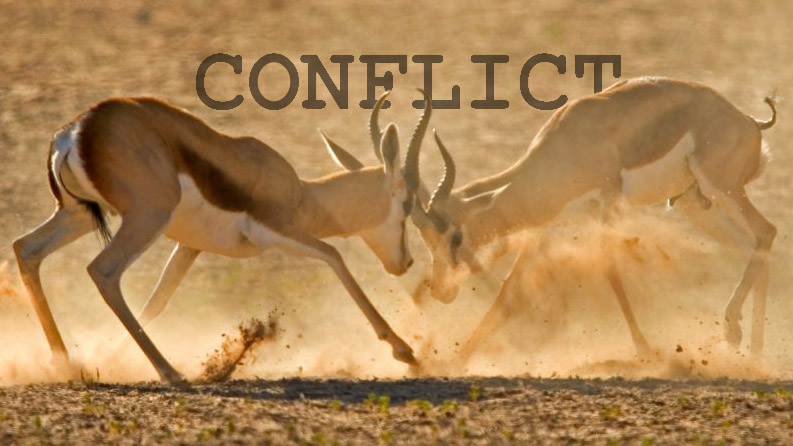
How Conflict Fuels Your Story

"Conflict is denying the character his or her goal." (Rebecca Talley)


According to blogger Francis Reid Roland (https://www.standoutbooks.com/5-essential-story-elements/) , each scene needs a main character.  Each main character needs a goal. Without a goal, without a villain or circumstance preventing the protagonist from reaching that goal, there is no conflict.  The reader wants to route for the protagonist to reach his goal. Give the reader what he wants.  

Ms. Roland recommends writing out each scene on an index card with three things:  a goal, a conflict (someone or something preventing the protagonist from reaching his goal) and a result (the regression or even disaster that ensues).  Lay the index cards out in order enabling you to see where in your story there is little or no conflict.  

Blogger Rebecca Talley lists seven types of conflict.  They are:

1.  person vs fate

The Odyssey is a good example of a book exemplifying this type of conflict.  Slaughterhouse Five, by Kurt Vonnegut is another example.

2.  person vs self

The protagonist is fighting against his own prejudices, doubts or inner conflict.  Koala Lou by Mem Fox is a good example of this conflict.  Shakespeare's Hamlet is another example of person vs. self. The Bell Jar by Sylvia Plath is yet another.

3.  person vs person

My Rotten Red Headed Older Brother by Patricia Polacco is one example.  The hero fights the villain in The Hundred Penny Box by Sharon Mathis.  The Nedley Papers by Scott Zibsendale is another example.

4.  person vs society

a.  triumph over corruption ex. Lewis R. Foster's The Gentleman from Montana (unpublished) which was adapted as the film Mr. Smith Goes to Washington.  Number the Stars by Lois Lowry is another example.

b.  reject society ex. Ray Bradbury's Fahrenheit 451

c.  succumb to corruption ex. George Orwell's 1984; Diary of Anne Frank; Suzanne Lieurance's The Lucky Baseball 

5.  person vs technology

The protagonist uses technology to gain power.  Technology becomes a bad influence on society as in Dr. Seuss' The Lorax.  Isaac Asimov's I, Robot is another example.  

6.  person vs nature

Robinson Crusoe features a family trapped on a desert island.  Moby Dick features a captain battling a whale.  Coyote Cry by Balor Byrd features the main character fighting a coyote.  Into Thin Air tells the story of a group of mountain climbers tackling Everest.

7.  person vs supernatural

Dr. Jekyll and Mr. Hyde is a good example of this type of conflict.

Layer the conflict into your story the way a scout layers his fire with twigs and brush.  Let the conflict fuel your story.  If you're lucky, a strong wind will pick up and before you know, you'll have a roaring fire -- the kind that everyone will pull up a chair and roast marshmallows at.





Sunday, 4 January 2015

Nurture Your Creativity

"The grass is always greener when you water it." (Unknown)


Just as grass needs watering, our creativity needs nurturing.  If we neglect grass, it could become dry and brown.  If we neglect our creativity, our creative juices can also dry up.  Here are ten ways to stimulate our imagination.  

1.  Simplicity and creativity go hand in hand.  De-clutter your life.  If you surround yourself with clutter, your mind might also feel cluttered.  Clear the mind for optimum creativity.  

2.  Relax.  Go for a walk or take a long shower.  

3.  Meditate or pray to focus the mind.    

4.  Set up a supportive space to create.  Artists like lofts.  Find a room where you feel comfortable and where you can find the tools you need to be creative.

5.  Exercise your creativity by getting the creative juices flowing.  Brainstorm.  Keep your internal editor at bay.  Embrace your imperfection.  Don't be too quick to veto your ideas.  Write them down. What might seem silly might actually work with a little tweaking.  

6.  Find a hobby.  Pursuing a hobby helps clear the mind and get the creative juices flowing.

7.  Visit nature.  Beautiful scenery and fresh air can also stimulate the brain.

8.  Read every day.  Be inspired by other people's ideas.  

9.  Be curious.  Be observant.  Employ the five senses.    

10.  Have a purpose for your writing, painting, sculpture.

Note:  Read The Artist's Way by Julia Cameron.  For more information, read my post at http://alinefromlinda.blogspot.ca/2013/06/june-18.html.


Thursday, 20 November 2014

Six Feet of Snow in Buffalo

I remember the winter of 1977 when Southern Ontario was buried under giant snowdrifts for weeks. But it seems like that winter pales in comparison to what Buffalo is facing this week.  My nephew Cody posted a photo of several people trying to clear the rooftop of a house in the American city. The house, surrounded by snow coated evergreens, is covered with a massive snowdrift.  The adults who chip away at it with shovels are dwarfed by its sheer size.    

The picture shows us how powerful nature is, and how powerless we are.  Standing on that rooftop must be a humbling experience.  It will probably take the Buffalonians all day to clear off that roof. But I'm sure they'll never forget this snowfall.  It will be etched in their memory.  They have the photograph to prove it.