Showing posts with label Montreal. Show all posts

Monday, 19 June 2017

Ocean Limited

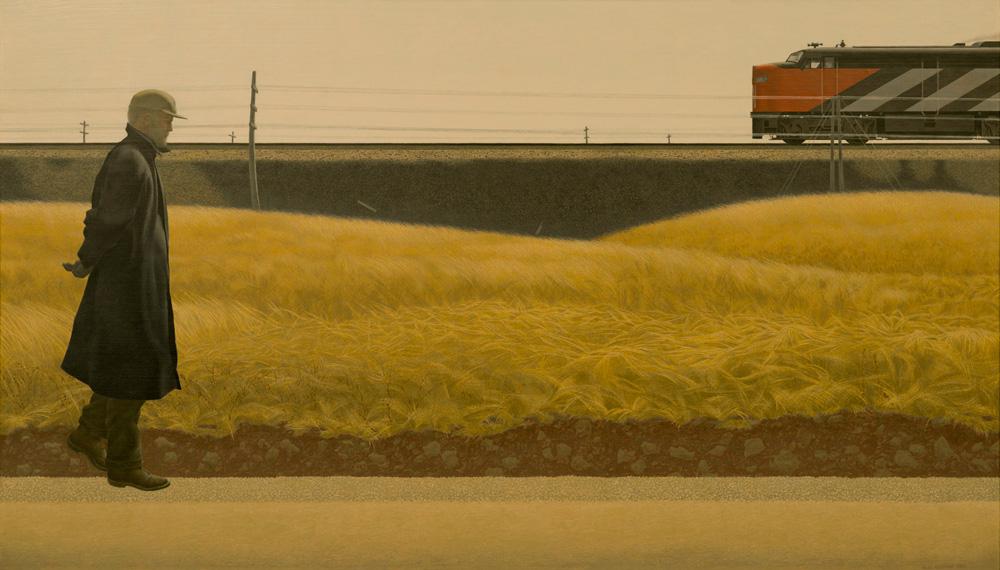
Alex Colville's Ocean Limited, circa 1962, features a train that runs between Montreal and Halifax through Sackville.  While Colville's famous 1953 painting includes a horse facing a train, this piece includes a man facing a train, only this time the two are not on a direct collision course.  The man, dressed in a trench coat and hat, appears to be deep in thought.

Colville's painting harkens back to a bygone era when trains were part of Canada's landscape.  Rather than driving, most people rode the train for long distance trips.  Before transport trucks, everything was shipped by rail.  Even hobos rode the rails during the Great Depression.  By the 1960's, passenger rail travel was in decline due to the increase in automobile and air traffic.


Monday, 17 April 2017

Mont Royal Park Designed by Central Park Architect


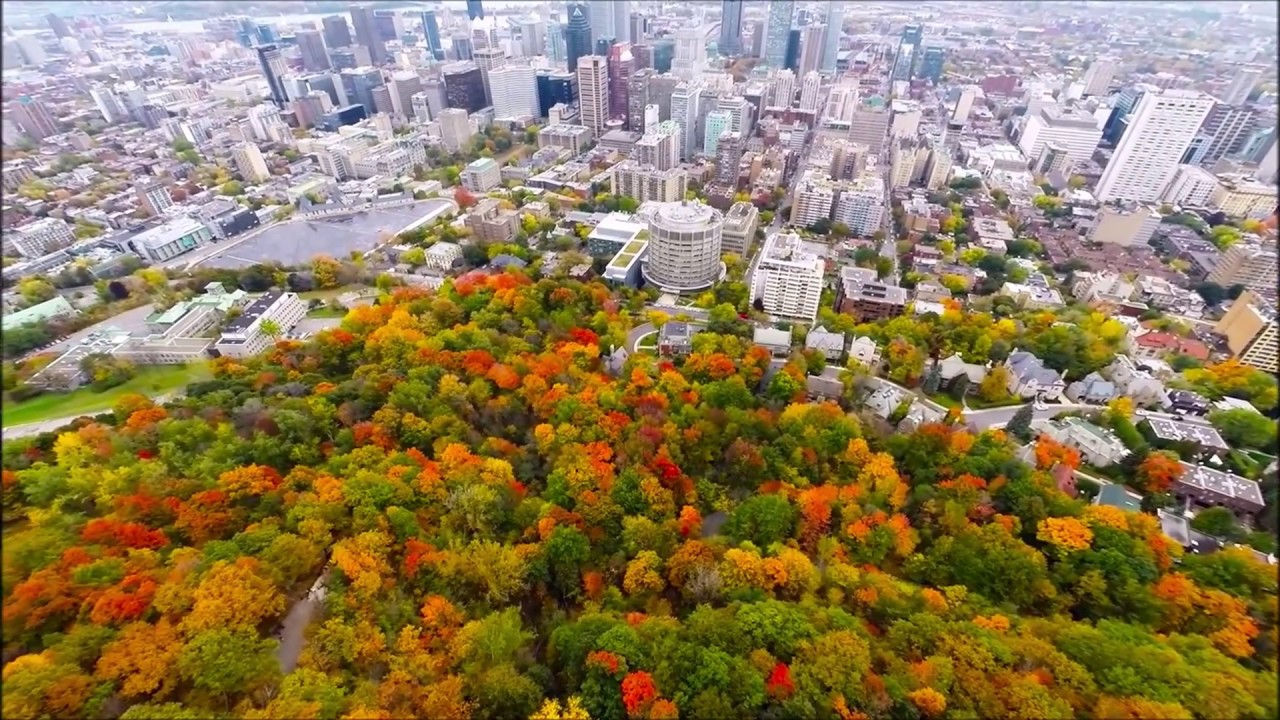
View of Montreal, Quebec from Mont Royal Park courtesy 


Mont Royal is a dormant volcano that sits in the Montregian Hills, a chain running between the Appalachians and the Laurentians.  The hill consists of three peaks, Colline de la Croix, or Mont Royal, Colline d'Outremont, or Mount Murray and Westmount Summit.  The mountain was created when the North AMerican Plate moved westward over the New England area, along with the other mountains of the Montregian Hills, creating a volcanic complex active about 125 million years ago. The first European to scale Mont Royal, the explorer Jacques Cartier, named it after Francis I of France.

Frederick Law Olmsted, the designer of New York City's Central Park, also mapped out Mont Royal Park in 1876.  He patterned the park's design after the mountainous topography:  shade trees at the bottom of the park resembled a valley; further up the trees became more sparse to make it look like the side of a mountain; a reservoir, planned for the top of the mountain was never built due to a depression.

The park features two belevederes, including Kondiaronk Belevedere, is a semi circular plaza with a chalet overlooking downtown Montreal.  Other highlights of the park include:


  • Beaver Lake
  • a sculpture garden
  • Smith House
  • an interpretive centre
  • toboggan runs
  • cross country trails
  • a gazebo (bandstand)
  • George-Etienne Cartier Monument
The forest has been damaged by both Mayor Drapeau's morality cuts (to prevent anyone from having sex in the bushes) and the Ice Storm of 1998.  The forest, which rises above Montreal, is particularly beautiful in autumn.

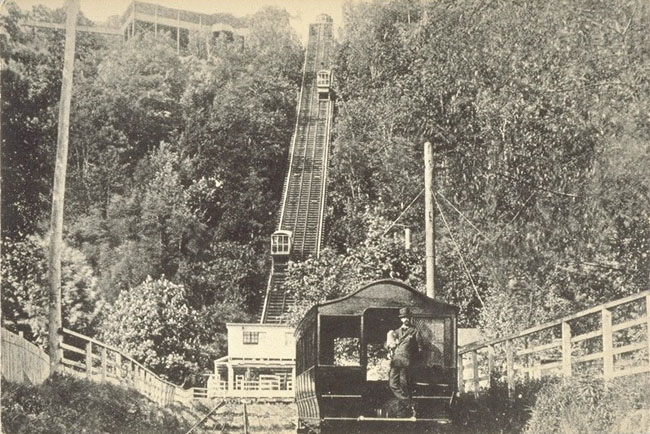
From 1885 to 1920, the Mont Royal Funicular Railway transported people to its peak; later Montreal's Number 11 streetcar took over the route.  A roadway now bisects the mountain named after former Mayor Camillien Houde who was jailed during the Second World War for his opposition to the war effort.

Monday, 27 June 2016

German U-Boats Offshore

Halifax Herald, May 13, 1942.<br />  Library and Archives Canada NL125952


Growing up in Toronto during the Second World War, my Dad remembers reading in the Toronto Star that German U-boats were spotted in the St. Lawrence River, that German soldiers were spotted entering a Montreal movie theatre.  He remembered air raid wardens marching up and down his street during blackouts in Toronto.  I had always thought that the World War Two theatre was restricted to Europe, not North America (with the exception of Pearl Harbor).  I couldn't believe that the Germans had come that close to home.


                             On September 11, 1942, <abbr title='Her Majesty's Canadian Ship'>HMCS</abbr> <em>Charlottetown</em> (I) was destroyed<br /> within sight of horrified onlookers on the shores near Cap-Chat. <br />Department of National Defence, CN-3636.


HMCS Charlottetown was one of the first targets of the German U-boats courtesy http://www.veterans.gc.ca/eng/remembrance/history/second-world-war/battle-gulf-st-lawrence/intro.


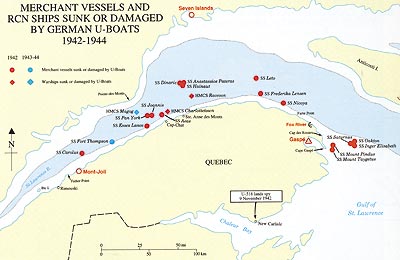
As part of the book that I'm writing about wartime Toronto and the Maple Leafs, I researched German U-boats in Canada and found out that a full battle took place here, the Battle of the St. Lawrence, from 1942 to 1944.  Submarines penetrated the Cabot Strait and the Strait of Belle Isle (my mother in law was born and raised on Belle Isle) to sail down the St. Lawrence.  There, they torpedoed and sunk an amazing 23 Allied ships, some within 300 kilometres of Quebec City.


German U-boats posed not only a military threat but also an economic one:  they decreased cargo shipments by 25%.  Quebec City, Trois Rivieres and Montreal were essentail ports, the latter accounting for "more tons of shipping than all over East Coast ports combined" (http://www.veterans.gc.ca/eng/remembrance/history/second-world-war/battle-gulf-st-lawrence/intro).


                                                Victory Bond advertisement in the <br /><em>Montreal Daily Star</em>, November 2, 1942.<br />  Library and Archives Canada NL12595.

http://www.veterans.gc.ca/eng/remembrance/history/second-world-war/battle-gulf-st-lawrence/intro


Some Canadian cities started imposing blackouts and employing air raid wardens.  The war campaign at home went into full swing.


Canadian stamp issued on the 50th Anniversary of the Battle of the St. Lawrence courtesy https://www.pinterest.com/agent713/war-stamps/.


Sunday, 12 June 2016

Oscar Peterson: Maharaja of the Keyboard

Oscar Peterson was born and raised in Montreal to immigrants from the West Indies.  Peterson's father worked as a porter for the Canadian Pacific Railway.  Growing up in an all black neighbourhood and surrounded by the jazz culture, Peterson first learned how to play the trumpet.  However, a bout of tuberculosis forced him to give up the horn for the piano.  His sister, Daisy, was one of his first piano teachers.  Peterson also studied under Hungarian born classical pianist Paul de Marky.  Thanks to his persistent practice of four to six hours per day, Peterson mastered the art.

At the age of fourteen, Peterson won a CBC national music competition and quit school to pursue music fulltime.  Peterson, drawn to jazz, was heavily influenced by Teddy Wilson, Nat King Cole, James P. Johnson and Art Tatum.  The young talent made his first recordings, I Got Rhythm and The Sheik of Araby, for RCA Victor in 1945.

Peterson was introduced to American audience through Jazz at the Philharmonic in 1949.  Peterson's first tour of Europe took place in 1952.  He made more than 200 albums with other bands or artists including "Ella and Oscar" with Ella Fitzgerald.  Peterson left his mark on Duke Ellington who called him the "Maharaja of the Keyboard".  Canadiana Suite, which came out in 1964, was a nod to Peterson's home and native land.  While he was an international success, he would never forget his Canadian roots.