Showing posts with label John Steinbeck. Show all posts

Monday, 23 May 2016

The Dust Bowl


Abandoned farm north of Dalhart, Texas circa 1938 courtesy http://www.pbs.org/kenburns/dustbowl/photos/.


John Steinbeck wrote books about it.  Dorothy Lange photographed it.  Woody Guthrie wrote ballads about it.  It was the Great American Dust Bowl.  In the 1930's, the American west was struck by Black Blizzards. Dust choked people's lungs and blinded their eyes.  It invaded people's houses and destroyed their crops. It stopped automobiles and derailed freight trains.   The resulting drought drove tens of thousands of families from their farms.  You can read about the Dirty Thirties in Don Brown's picture book The Great American Dust Bowl (https://www.amazon.ca/Great-American-Dust-Bowl/dp/0547815506).

Famous photo by Dorothea Lange courtesy http://www.pbs.org/kenburns/dustbowl/photos/.


Ken Burns "The Dust Bowl chronicles the worst man made ecological disaster in American history in which the frenzied Wheat Boom of the Great Plow Up, followed by a decade long drought during the 1930's nearly swept away the breadbasket of the nation" (http://www.pbs.org/kenburns/dustbowl/about/overview/).  


At the turn of the last century, European immigrants, as well as Americans, settled the Great Plains, a grasslands area that had not previously been farmed.  In the 1920's, these farmers enjoyed a wheat boom thanks to advanced technology and the thriving economy in the United States.  However, prices plummeted after the Stock Market Crash of 1929.  Rather than harvesting less wheat, farmers harvested more in an attempt to counteract the effects of the Great Depression.  Fields were left exposed and vulnerable to drought, which hit in 1932 (http://www.livinghistoryfarm.org/farminginthe30s/water_01.html).


Panic sets in on Wall Street in New York City after Stock Market Crash of 1929 courtesy 


The previously fertile soil turned into dirt.  The wind stirred it up and it accumulated into massive clouds called "black blizzards" (http://alinefromlinda.blogspot.ca/2012/05/black-blizzard.html). The dust lodged itself in people's homes and in their lungs.  Many developped "dust pneumonia".  No longer able to farm, they joined the mass exodus of Okies headed to California to pick fruit, a journey so aptly illustrated by Steinbeck in his novel The Grapes of Wrath (http://alinefromlinda.blogspot.ca/2015/11/tom-joads-ill-be-there-speech.html).


Black Blizzard approaches Elkhart, Kansas circa 1937 courtesy https://prairieskies.files.wordpress.com/2011/07/31.jpg.

Ken Burns says that The Dust Bowl is also a story of perseverance. Burns interviewed 26 survivors and shared their stories.  His documentary chronicles the families who struggled to hold onto their land, New Deal programs which kept families afloat, and attempts by government and farmers to develop new strategies of farming and land conservation (http://americanhistory.about.com/od/greatdepression/tp/new_deal_programs.htm).


FDR talks to farmer and his son circa 1936 courtesy http://www.pbs.org/kenburns/dustbowl/photos/.


Sunday, 29 November 2015

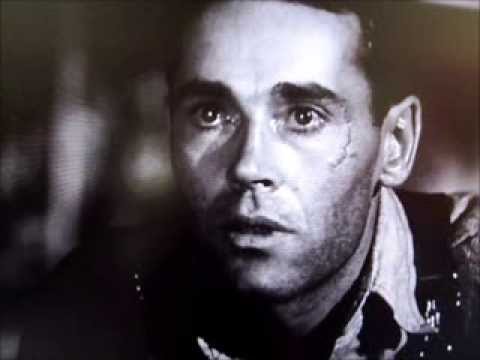
Tom Joad's "I'll Be There" Speech

"Whenever there's a fight so hungry people can eat.  I'll be there." (Tom Joad)


Okies piled into their Model T's, overloaded with their worldly possessions, and rumbled down a dusty Route 66 to California during the Great Depression, searching for work in the "Promised Land".  Tom Joad, the main character in John Steinbeck's The Grapes of Wrath, was fed up with begging for food, begging for a job, begging for dignity.  He parts ways with his family, delivering a tear-jerker speech to his mother.

"Well maybe it's like Casy says.  A fella ain't got a soul of his own -- just a little piece of a big soul.  The one big soul that belongs to everybody.  Then it don' matter.  I'll be around in the dark.  I'll be everywhere -- wherever you can look.  Whenever there's a fight so hungry people can eat.  I'll be there.  Whenever there's a cop beatin' up a guy.  I'll be there.  I'll be in the way guys yell when they're mad.  I'll be the way kids laugh when they're hungry and they know supper's ready.  And when the people are eatin' the stuff they raise, and livin' in the houses they build.  I'll be there, too."

To listen to the speech from the 1939 movie The Grapes of Wrath, visit https://www.youtube.com/watch?v=i2JR3FmvVAw.


Thursday, 28 May 2015

Dust Bowl Poetry

The Dust Bowl was a term coined by an American newspaperman, referring to the drought of the 1930's which forced tens of thousands of people off their farms.  To learn more about the Dust Bowl, read http://alinefromlinda.blogspot.ca/2014/05/the-great-american-dust-bowl.html.  The period of adversity produced some great writing, the most famous of which is likely John Steinbeck's The Grapes of Wrath.  Here are some poems which came out of the era:

1.  Leaving the Dustbowl by Bob Bradshaw (http://www.prairiepoetry.org/poetry04/poems/bradshawb1.html).

2.  Dust Bowl by Langston Hughes (http://anotherdailypoem.blogspot.ca/2015/03/08032015-dust-bowl-by-langston-hughes.html).

3.  Hard Luck Okie (http://thislandpress.com/08/06/2012/hard-luck-okie/).

4.  Storm:  February 17, 1934 (https://dustbowlstory.wordpress.com/29-storm-february-17-1934-visibility-9-miles-duration-27-hours/).

5.  Dust by Stella P. Bell (http://www.australian-information-stories.com/dust-bowl-poem.html).

6.  At Last by Edna Becker (http://www.kansasmemory.org/item/211010).

7.  The Great Dust Storm by Woody Guthrie (http://www.metrolyrics.com/the-great-dust-storm-dust-storm-disaster-lyrics-woody-guthrie.html).

8.  Dust Bowl Days by Nicole Porter (http://www.fmschools.org/webpages/pwebsites/index.cfm?subpage=19850).


Friday, 24 April 2015

Pulitzer Prize for Novels

In 1917, Hungarian-American Joseph Pulitzer donated money in his will to an award for the best author in newspaper, music composition, photography and literature.  Each April, twenty one awards are bestowed by 20 juries composed of 102 judges.  Here are some novels which stand out for me:

2015  All the Light We Cannot See (Anthony Doerr)

A novel about World War II, human nature and the "contradictory power of technology".

2006  The March (E.L. Doctorow)

Based on the closing year of the Civil War during which General Sherman and his troops marched (retreated) through the South, leaving a "60 mile wide scar of destruction in their wake".

I didn't read The March, but I did read E. L. Doctorow's Ragtime, based on the Jazz Era in the United States.

1999  The Hours (Michael Cunningham)

A story based on three generations of women and how the Virginia Woolf novel Mrs. Dalloway affected them.  It was adapted for the screen in 2002.

1994  The Shipping News (Annie Proulx)

A New York State newspaper journalist marries and raises two daughters.  His two timing wife "meets her just desserts" and he moves to his ancenstral home in Newfoundland to live with two other generations of his family.

1983  The Color Purple (Toni Morrison)*

A Black woman growing up in the Deep South experiences abuse at the hands of her father, and later, her husband.

1980  The Executioner's Song (Norman Mailer)

Based on the execution of Gary Gilmore for multiple murders by the state of Utah in 1977.

1961  To Kill a Mockingbird (Harper Lee)*

Set in the Deep South, this novel is based on the trial and conviction of a black man for the alleged rape of a white woman.  It was adapted for the big screen in 1962 starring Gregory Peck as the lawyer who defends the black man.

1952  The Caine Mutiny (Herman Wouk)

I didn't read The Caine Mutiny but I did read Herman Wouk's The Winds of War  and War and Remembrance, both based on World War II.

1948  Tales of the South Pacific (James Michener)*

Based on the author's experiences in the Pacific as a lieutenant commander in the US Navy during World War II.

1940  The Grapes of Wrath (John Steinbeck)*

A string of Okies, farmers driven off their parched land by drought, packed up their Model T's and road across the desert to California to pick grapes during The Great Depression.

1932  The Good Earth (Pearl S. Buck)

Family life in a Chinese Village before World War II.  This novel returned to the bestseller list when Oprah made it the book of the month club selection in 2004.

1927  Early Autumn (Louis Bromfield)

Based on a custody battle between a husband and wife and the man the latter hires to protect her son from being kidnapped by her ex-husband.  The bodyguard and the son form a strong bond.

1921  Age of Innocence (Edith Wharton)

An upper class couple's impending marriage in New York City in the 1870's.

*These are the titles I have read.